

Enchi Secures China's First Class II Medical Device Certification for AI-Powered Early Screening Software for Childhood Cognitive and Behavioral Disorders
In July 2022, the National Medical Products Administration officially approved the Class II medical device registration for Beijing Ingcare Technology Co., Ltd. (brand name: Enqi)’s “Early Screening and Assessment Software for Children’s Cognitive and Behavioral Abilities.” This isChina’s First Software Product for Early Screening of Children’s Cognitive and Behavioral Abilities Approved with Class II Medical Device Certification。
This product was jointly developed by Enqi, Beijing Anding Hospital of Capital Medical University, and the Tsinghua University Institute for Inclusive Development. It not only marks a milestone in Enqi’s development but also represents a major technological breakthrough in the field of autism diagnosis, treatment, and rehabilitation.
Enqi, established in 2014 and incubated by Tsinghua x-lab, is the first brand in China to leverage technological means to empower the autism rehabilitation industry.
In May 2022, Enqi passed the official review and was recognized as a “Specialized, Refined, Differential, and Innovative” (SRDI) small and medium-sized enterprise, leveraging its R&D innovation strengths and intelligent, digital product services. In June of the same year, Enqi launched the “Behavioral Intervention Course Series for Children with Autism,” which subsequently received certification from two major associations: the Chinese Association for Mental Health (CAMH) and the China Association of Rehabilitation of Disabled Persons (CARD), becomingThe only certification program in China currently endorsed by two major associations to enhance the professional competence and practical skills of autism rehabilitation therapists.
Recently,After obtaining the “first certificate for early screening software of children’s cognitive and behavioral abilities,” Enqi has also been applying for multiple other certificates and has now secured five invention-level patents in related fields.
How will this product continue to benefit “children of the stars”? What implications will it have for the industry? Furthermore, given that the product is not limited to autism applications, does this signal a broader strategic layout for Ingcare? With these questions in mind, VCBeat conducted an in-depth interview with Wang Wei, President of Ingcare, and Wu Jiarui, Co-founder, to uncover the insights behind the regulatory approval.
According to the results of China’s Seventh National Population Census, the population aged 0–14 years in China stands at 253.38 million. Based on the autism prevalence rate of 2.3% released by the U.S. Centers for Disease Control and Prevention (CDC) in December 2021, it is estimated that there are approximately 5.828 million children and adolescents aged 0–14 with autism spectrum disorder in China. Behind these figures lies the immense burden borne by children with autism and their families.
In the face of severe challenges, early screening and diagnosis are key for autism. Research indicates that ages 0–6 constitute a golden window for intervention in children with autism. Generally, obvious symptoms manifest before the age of three. Early screening, diagnosis, and intervention have significant effects on improving behavior, cognition, and emotion in children with autism during their development.
“But the reality is that only 11% of children with autism are diagnosed before the age of three, and hardly any seek medical attention before their first birthday. Even after diagnosis, children aged 0–3 still face a shortage of professional intervention and rehabilitation services. Moreover, given China’s large population of individuals with autism and the high demand for specialized rehabilitative education among their families, the country’s capacity for autism rehabilitation and education is severely inadequate, and the level of professionalism needs significant improvement,” sighed Wang Wei, President of Ingcare.
Therefore, early detection, early diagnosis, and early intervention have become a core consensus in the medical field. Through scientifically systematic psychological and behavioral interventions, the symptoms of children with autism can be significantly improved, which can greatly reduce the economic and social burden on the affected children and their families.
From the strategic perspective of “Healthy China 2030” and the “14th Five-Year Plan Action Plan for Improving Special Education Development,” the approval of the Class II medical device registration for the “Early Screening and Assessment Software for Children’s Cognitive Behavioral Abilities” not only delivers clinical value but also significantly boosts confidence in the development of the autism rehabilitation sector.
On the one hand, the application of artificial intelligence technology can significantly enhance the level of autism screening and diagnosis at the primary care level, helping to establish a comprehensive digital scientific management mechanism that spans screening, diagnosis, assessment, and rehabilitation. This approach addresses the challenges of insufficient medical resources and limited accessibility. On the other hand, early screening products enable more precise collection of data on children with autism, thereby supporting medical research and epidemiological studies. These advancements hold profound significance for China’s adolescent health initiatives and the rehabilitation industry.
“First Evidence” Proves: Digital Products Are Key Tools for Effectively Addressing the Shortage of Medical Resources
In Wang Wei’s view, early screening, diagnosis, and intervention for autism currently face three major challenges. First, there is a severe shortage of medical professionals; for instance, China has fewer than 500 child psychiatrists, and fewer than 200 physicians hold national qualifications for autism diagnosis, resulting in a pronounced mismatch between supply and demand. Second, there are significant regional disparities in diagnostic capabilities, with autism diagnosis services predominantly concentrated in first- and second-tier cities, leaving substantial gaps in grassroots and remote areas. Third, the supply of high-quality rehabilitation and educational resources is insufficient; the scarcity of rehabilitation therapists, particularly skilled ones, represents the most significant constraint on industry development.
Wu Jiarui, co-founder of Enqi, shared that the autism rehabilitation industry is currently dominated by empiricism, with insufficient emphasis placed on scientific methods and the value of data, resulting in a lag in the application of digital technologies. However, given the current landscape of autism diagnosis and treatment as well as prevailing needs, this field is highly compatible with digital healthcare. “The emergence of digital technologies such as artificial intelligence and big data has provided new pathways for achieving early screening, early diagnosis, and early intervention for autism.”
“There is a widespread shortage of psychiatrists across medical institutions at all levels in China. Due to the significant individual variability among patients with autism spectrum disorder and issues such as false positives, misdiagnoses and missed diagnoses frequently occur, which poses considerable challenges to the clinical diagnosis of affected children. Drawing on extensive clinical cases, and taking this recently approved product as an example, we found during the R&D process that digital therapeutics are far more than just assessment scales. They require the integration of multiple technological approaches, multidisciplinary collaboration, large-scale and rigorous data training, substantial accumulation of real-world rehabilitation cases for analysis, continuous refinement or even reconstruction of data models, and long-term tracking, guidance, and comparative analysis by numerous medical experts. Only through the provision of such data can we better standardize rehabilitation and educational protocols, thereby establishing a closed-loop system from medical care to rehabilitation,” said Wu Jiarui.
Therefore, over the past eight years since its establishment, Enqi has remained committed to a single mission: leveraging technological tools such as the internet, big data, and artificial intelligence to comprehensively enhance professional capabilities within the autism rehabilitation industry for children, and driving the industry’s digital transformation on the foundation of specialization, standardization, and scalability. Wang Wei stated candidly, “Enqi always focuses on three key considerations: whether our products and services are empowered by AI computing power; whether we possess the capability to evolve through big data; and whether we have the potential to create personalized services through machine learning, ultimately addressing the standardization of rehabilitation and education talent development.”
As the project lead, Wu Jiarui was deeply involved in the entire process of the “Early Screening and Assessment Software for Children’s Cognitive and Behavioral Abilities,” from research and development to regulatory approval. She recalled, “The project commenced in 2020. Although it faced multiple challenges, including the pandemic, we ultimately persevered.”
It is reported that the AI-powered digital diagnostic and therapeutic system approved this time—Early Screening and Assessment Software for Children's Cognitive Behavioral Abilities,ByEnqi, in joint research and development with Beijing Anding Hospital of Capital Medical University and the Institute for Barrier-Free Development at Tsinghua University, aiming to leverage digital technologies to reduce the cost of early screening, facilitate end-to-end management of autism through “early detection, early diagnosis, and early intervention,” and thereby improve the effectiveness of rehabilitation interventions.
Wu Jiarui introduced that the system is based on AI-driven detection and comparison technologies for facial features and human body behaviors in images, audio, and video. In accordance with the five early warning behavioral characteristics of autism outlined in the Chinese Medical Association’s “Expert Consensus on Early Identification, Screening, and Early Intervention for Children with Autism Spectrum Disorder”—namely, “limited or absent eye contact,” “limited or absent response,” “limited or absent pointing,” “limited or absent speech,” and “inappropriate behavior”—the system performs behavior localization, attribute recognition, and comparative analysis to generate an early risk screening report. This assists medical professionals in conducting rapid and precise screening and diagnosis of autism spectrum disorder in children.
From the perspective of product research and development, the system needs to establish patient disease progression curves after accumulating large-sample data to better identify patterns and clues. In this regard, Enqi has also built a core teacher database and a child development assessment database for China’s autism rehabilitation industry, laying the data foundation for the development of related products.
“We conducted large-scale, multi-center clinical studies to enhance the system’s effectiveness. In this process, we leveraged behavioral data and algorithms to analyze extensive volumes of trial videos—for instance, by calling a child’s name to observe the range of head turning, thereby matching corresponding positive indicators for autism spectrum disorder (ASD). Through iterative calculations and analyses, we ultimately determined the appropriate criteria for assessing a child’s risk of ASD. The medical device certification for early ASD screening was a first for both Enqi and the regulatory authorities, presenting numerous technical challenges. By conducting repeated tests to identify and resolve issues, we successfully completed product development and obtained approval from the National Medical Products Administration (NMPA),” said Wu Jiarui.
Wu Jiarui stated that, in addition to establishing autism rehabilitation institutions,The system has also been applied to the large-scale epidemiological survey of autism in Beijing, led by Beijing Anding Hospital, Capital Medical University, which will help promote academic research on autism epidemiology in China.This epidemiological survey will provide more data support and scientific basis for autism research, and accumulate experience for China to establish a nationwide screening and diagnostic system for childhood autism.
It is reported that this is not the first collaboration between Enqi, Beijing Anding Hospital of Capital Medical University, and the Tsinghua University Institute for Accessibility Development. While jointly developing this project, Enqi also brought together domestic and international industry experts and scholars from institutions such as Beijing Normal University, Capital Medical University, and Peking University to co-create the “Series of Behavioral Intervention Courses for Children with Autism,” aiming to better streamline the service loop of “early autism screening + rehabilitation.” This collaborative effort has laid a solid foundation for the recent regulatory approval.
Leverage “Autism Early Screening” to complete the construction of a closed-loop digital healthcare service.
Entering the Phase of Digitally-Driven Industry Development
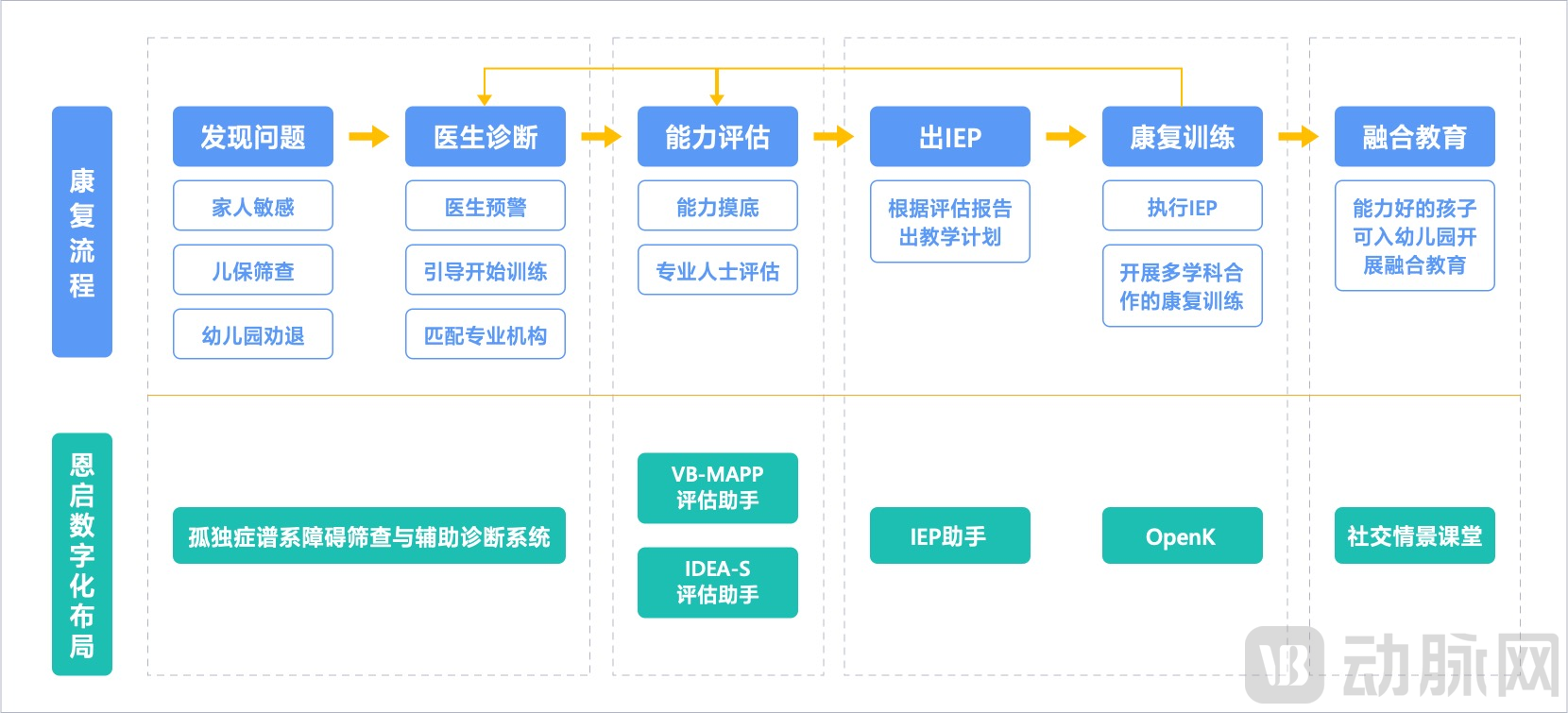
The approval of this system also marksEnqi has officially completed the closed-loop digital healthcare service system for children with autism, providing end-to-end digital management across the entire rehabilitation journey—from screening and diagnosis, to capability assessment, rehabilitative intervention, and subsequent inclusive education.
Wang Wei explained that the traditional medical process for autism involves six key stages: pre-diagnostic screening to identify issues; diagnostic assessment and capability evaluation by physicians during the clinical visit; post-discharge development of an Individualized Education Program (IEP) and rehabilitation training; and inclusive education as part of the rehabilitation phase.Enqi’s strategic approach entered the market through a dual-arrow cycle of therapist training and education alongside diagnostic screening, then expanded across the entire healthcare workflow, thereby establishing its current digitally driven rehabilitation closed loop that integrates “online + offline” and “in-hospital + out-of-hospital” services.
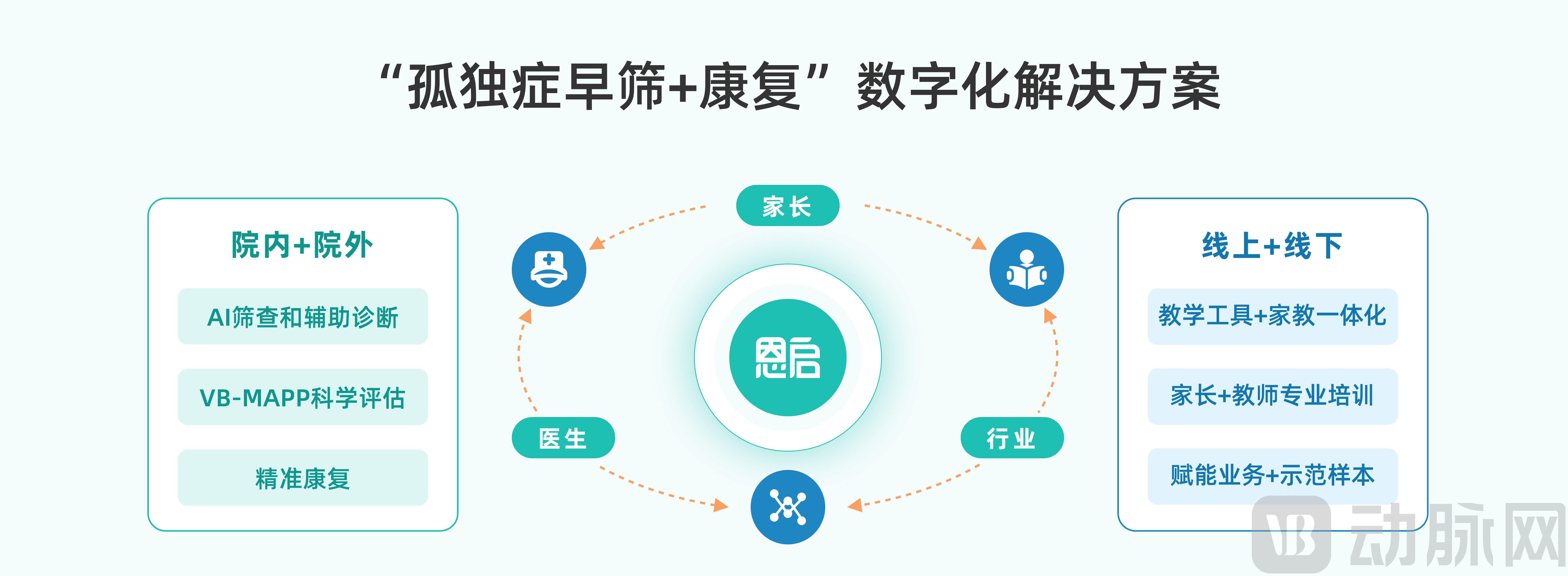
Prior to 2018, Enqi focused its business on addressing the challenges of a weak teaching workforce and significant disparities in professional competency within the industry. In terms of teacher training, Enqi was commissioned by the China Association of Rehabilitation for Disabled Persons to provide technical support services for the “On-the-Job Training for Autism Rehabilitation Educators,” helping practitioners acquire the essential knowledge and skills required for their roles. Regarding digital solutions, it successively launched the Enqi Cloud Classroom, an online education platform dedicated to therapist training; established a teacher training platform with a standardized talent development system; introduced IDEA at Home, which integrates home and school-based interventions; and developed OpenK, an intelligent rehabilitation decision-making management system. Additionally, it provided assessment tools for the clinical consultation phase, including the VB-MAPP Assessment Assistant and the IDEA-S Assessment Assistant.
Subsequently, to deliver high-quality rehabilitation services, validate the scientific rigor of its curriculum research and software systems, and establish teacher training bases and resource centers for technical empowerment, Enqi began laying out its offline IDEA Rehabilitation Centers in 2018. Wang Wei stated frankly that during these two development stages, Enqi completed the validation of its online and offline products and services, and successfully achieved refined internal management and a strategic digital transformation.
In 2020, Ingcare initiated research on an AI-based screening and computer-aided diagnosis system. Since its establishment in 2014, Ingcare has spent eight years striving to reengineer the healthcare delivery process and patient engagement interfaces for autism spectrum disorder (ASD), aiming to achieve early detection, early diagnosis, and early intervention, thereby improving diagnostic and treatment efficiency and patient experience. “Starting in 2022, Ingcare also entered a phase where digitalization drives the development of rehabilitation institutions in the industry,” shared Wang Wei.
From Enqi’s perspective, only by arming more professionals with more scientific methods and greater efficiency can we better provide effective rehabilitation services for children. In the future, Enqi will continue to “leverage digitalization to empower the entire process and all scenarios,” helping rehabilitation medical institutions achieve “capacity expansion, quality improvement, and efficiency enhancement”—that is, expanding capacity, improving quality, and increasing benefits.
Currently,Enqi has cumulatively served over 300,000 users, operating 10 directly-managed institutions, 2 partner institutions, and 7 empowerment centers. Enqi’s full-service industry chain covers more than 160 prefecture-level administrative regions across China. To date, it has trained over 67,000 special education teachers and conducted assessments for more than 110,000 children. Currently, Enqi collaborates with over 1,300 institutions, including 59 hospitals.
It is reported that many B-side users who have already adopted Enqi’s digital products have provided positive feedback. Moreover, a growing number of child healthcare hospitals and rehabilitation institutions have taken notice of Enqi’s digital solutions and are actively engaging in discussions to explore collaboration opportunities.