

CN Bio Launches NASH-in-a-Box and Expands European Footprint Amid Surging Organ-on-a-Chip Market
CN Bio Innovations
Biological Products Developer and Clinical Drug Tester
In April this year, CN Bio, a company specializing in the development of human organ-on-a-chip technologies, launched its NASH-in-a-Box (NIAB) kit for non-alcoholic steatohepatitis (NASH). The release of this kit overcomes the challenges associated with constructing preclinical NASH models, enabling researchers to obtain physiological and toxicological data on in vivo disease mechanisms and drug efficacy in NASH, marking a significant milestone in NASH drug development.
Dr. David Hughes, CEO of CN Bio, stated: “NASH represents a significant and growing burden on healthcare systems, yet there has been a lack of any approved therapies. The launch of ‘NASH-in-a-box’ marks an important step forward for organ-on-chip technology in the drug discovery industry, and this product will accelerate the development of therapeutics for NASH.”
“NASH-in-a-box demonstrates the full advantages of CN Bio’s microphysiological systems, enabling scientists to use liver models in their own laboratories, streamlining workflows and making the entire process faster and more cost-effective. NIAB allows for more thorough and accurate testing during drug development, which will increase the likelihood of new NASH drugs reaching the market,” added Dr. Ovidiu Novac, Senior Scientist at CN Bio.
Although founded in 2009, CN Bio not only possesses its independently developed NASH-in-a-Box kit but also ranks among the core global manufacturers of organ-on-a-chip technology. Together with major players such as Emulate, TissUse, Hesperos, and Tara Biosystems, it accounts for approximately 46% of the market share.
To meet the growing market demand for organ-on-a-chip technology, CN Bio announced on July 19 this year the opening of a new laboratory at the Cambridge Science Park. “In addition to expanding our footprint, we have introduced additional technologies and facilities: a Luminex analysis platform, three new microbiological safety cabinets, and four new PhysioMimix OOC systems to expand our project capacity,” Gareth Guenigault, Chief Scientist at CN Bio, revealed in an interview with FierceCRO. “This will enable CN Bio to double the number of organ-on-a-chip projects.”
Ten years ago, most pharmaceutical companies’ pipelines were dominated by small molecules. Today, however, they have diversified their portfolios to encompass a wide range of modalities, including small molecules, biologics, small peptides, siRNA, antisense oligonucleotides (ASOs), adenoviral vectors, and gene-editing technologies. Among these therapeutic approaches, some exhibit high human specificity; if their targets are not expressed in other species, animal testing fails to provide physiologically relevant data. Organ-on-a-chip (OOC) technology offers a precise solution to this challenge.
CN Bio’s PhysioMimix OOC, released in May 2018 and also known as a microphysiological system, is a small-scale fluidic device. It typically cultures patient-derived tissues to simulate interactions occurring within organs or tissues, and then uses microfluidics to perfuse these tissue constructs, mimicking blood flow through, across, or around them to provide nutrients and essential biomechanical stimuli while removing waste products.
PhysioMimix OOC leverages the aforementioned processes to identify and validate drug targets, investigate single-organ or multi-organ interactions and drug efficacy, and generate translationally relevant preclinical data to support decision-making from target discovery through the preclinical drug development stage.
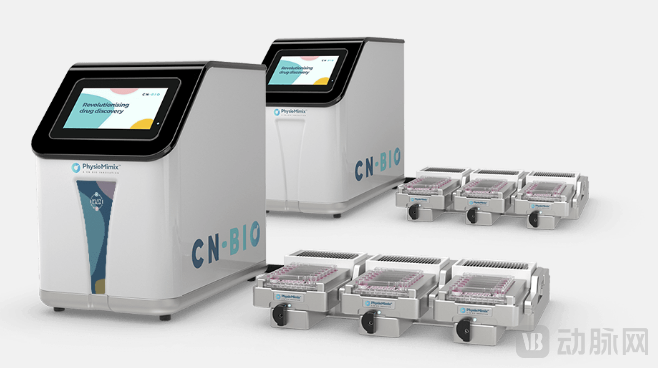
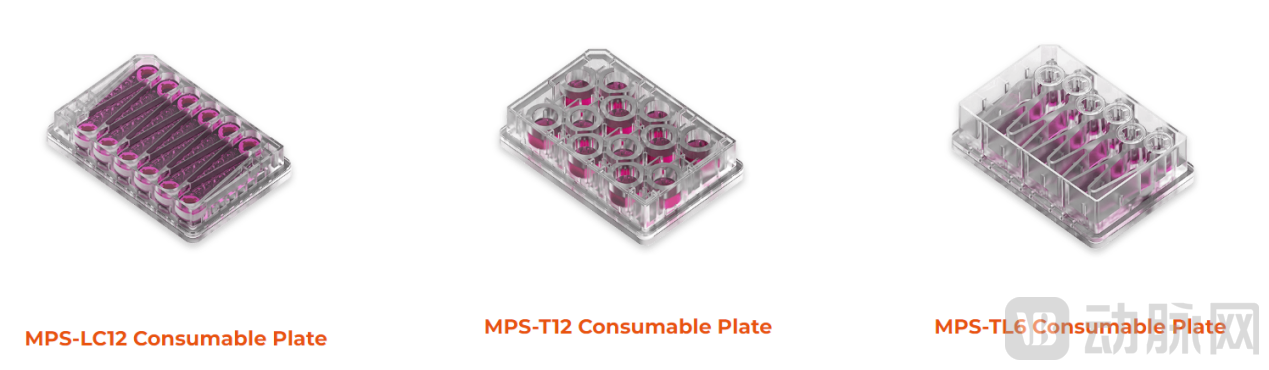
CN Bio offers three types of OOC consumable plates: Liver (MPS-LC12), Barrier (MPS-T12), and Multi-Organ (MPS-TL6), designed to meet the culture requirements of different models. Users can adjust models to satisfy diverse research needs, develop their own proprietary models, and even convert their “in-house” models into the PhysioMimix format.
Currently, CN Bio primarily leverages its PhysioMimix OOC platform for collaborative projects in three key areas: researching NASH therapeutics using organ-on-a-chip technology; conducting drug metabolism and safety toxicity testing; and collaborating on oncology drug development. These collaborations typically involve integrating the PhysioMimix OOC system into clients’ laboratory workflows or providing model-building services through CN Bio’s laboratory in Cambridge, UK.
Over the past few years, more than 25 pharmaceutical companies have incorporated CN Bio’s proprietary organ-on-a-chip models into their drug discovery and drug safety programs, with research institutions such as the Massachusetts Institute of Technology (MIT) among them. Numerous global pharmaceutical and consumer goods companies, as well as the U.S. Food and Drug Administration (FDA), are using PhysioMimix for organ-on-a-chip testing.
Tomasz Kostrzewski, Vice President of Technology at CN Bio Innovations, stated: “Our OOC systems are deployed globally, from Australia to the U.S. West Coast. The COVID-19 pandemic has further accelerated the adoption of our organ-on-a-chip systems in customer laboratories, enabling clients to have their OOC experiments up and running within hours of installation.”
As work progresses, CN Bio will continue to add organ-on-a-chip models to its existing product portfolio and connect these different tissue models via multi-organ systems to meet growing customer demands. In this regard, CN Bio has partnered with MIT to achieve the breakthrough of integrating ten organs onto a single chip, yet CN Bio remains committed to pushing beyond this milestone.
Since the launch of CN Bio’s products, collaborations have become a natural progression. As the number of partner companies continues to grow, CN Bio’s products are being continuously updated and refined, and their contribution to scientific research has become an undisputed fact within the industry.
On May 25 this year, CN Bio announced the appointment of Dr. Paul Brooks as Chief Commercial Officer. As a seasoned C-suite executive, Paul has over 25 years of experience in building businesses and leading high-performing research, product development, marketing, and sales teams within the life sciences industry. Paul will be responsible for formulating the company’s commercial business strategy and leading the expansion of its global commercial organization, which is critical to the company’s next phase of growth.
Allied Market Research mentioned in a recent report that the OOC market was valued at $103 million in 2020, with an annual growth rate of 31%, and is projected to reach $1.6 billion by 2030.
Commenting on the astonishing growth rate of the organ-on-a-chip market, Audrey Dubourg, Product Manager at CN Bio, analyzed: “First, data obtained from traditional in vivo or in vitro models during the drug development process lack sufficient predictability and cannot be effectively translated to clinical applications. Second, political pressure stemming from ethical concerns associated with animal models is mounting.”
Currently, the market can be further segmented by geography into five major regions: North America, Latin America, Europe, Asia-Pacific, and the Middle East & North Africa. The core global manufacturers of organ-on-a-chip technology are primarily concentrated in North America and Europe. The sector has developed particularly rapidly in European countries, a trend closely linked to Europe’s early start and substantial accumulation of research in organ-on-a-chip technology, as well as the significant ethical controversies surrounding animal models in the region.
Hubrecht Organoid Technology (HUB), founded by Hans Clevers, a pioneer in the organ-on-a-chip field, is the earliest research and development center for organoids. Based in the Netherlands, HUB serves as the “leader” in Europe’s organ-on-a-chip sector, and its technology licensing has facilitated the establishment and growth of a number of organ-on-a-chip companies, including Epistem, Cellesce, Crown Biosciences, and STEMCELL Technologies.
Furthermore, Mimetas, a Netherlands-based company, is one of Europe’s most representative developers and manufacturers of organ-on-a-chip platforms. The company has collaborated with multiple global top 20 pharmaceutical companies and holds an industry-leading position in terms of organ-on-a-chip sales volume. Moreover, after completing two rounds of financing, Mimetas is actively exploring strategies to establish its commercial presence in the Chinese market.
Currently, global organ-on-a-chip developers and manufacturers such as CN Bio Innovations, Nortis, and Xona in the UK, and TissUse in Germany, are advancing the field from multiple angles, including kidney chips, blood-brain barrier chips, tumor chips, and even multi-organ linked chips.
In recent years, the European Union has increasingly prioritized and supported research related to organ-on-a-chip technology. The EU’s Seventh Framework Programme (FP7), its most heavily funded global scientific and technological development initiative, included organ-on-a-chip projects. Additionally, initiatives such as the EU-ToxRisk project, launched in 2016, have also provided support for organ-on-a-chip research. These large-scale funding programs have advanced organ-on-a-chip research across Europe and attracted more projects and institutions to enter this field.
Although organ-on-a-chip technology still faces numerous technical bottlenecks that need to be overcome, and its commercial applications are not yet fully mature, it has gradually demonstrated significant value in toxicity assessment, disease modeling, and drug evaluation. In the future, with continuous technological advancements and iterations, organ-on-a-chip technology will bring about a transformation in the entire scientific research endeavor.