

Digital Healthcare as a Catalyst for China's New Medical Reform: WeDoctor's Triple Innovations—Internet Hospitals, Medical Supply Platforms, and Digital Health Communities—Address Industry Challenges
Recently, Forbes China released the “2022 Top 50 Innovative Companies in China” list, with five companies from the big health sector selected. Notably, WeDoctor became the only digital healthcare company on the list. This marks the third time the company has been included, following its appearances in 2018 and 2019.
The Forbes list is renowned for its rigor and scientific approach. Industry analysts attribute WeDoctor’s inclusion to its continuous breakthroughs and leadership in the digital healthcare sector. Particularly over the past decade, in response to three major pain points in China’s healthcare system—difficulty in accessing medical care due to “uneven” distribution of medical resources, high costs of care caused by “asymmetric” information in the pharmaceutical market, and overtreatment resulting from “ineffective” health insurance payment methods—WeDoctor has provided targeted digital solutions through three groundbreaking innovations:
First, establishedChina's First Internet Hospital, breaking down the traditional hospital walls; secondly, buildingPharmaceutical and Medical Device Trading Platform, guiding drug prices to return to reasonable levels; third, exploring implementationDigital Health Consortium, and promote value-based payment in medical insurance. Industry experts have commented that these “three innovations” have had a sustained and profound impact on the development of China’s digital healthcare industry, and to some extent have become the three foundational pillars supporting the digital transformation of China’s healthcare sector.
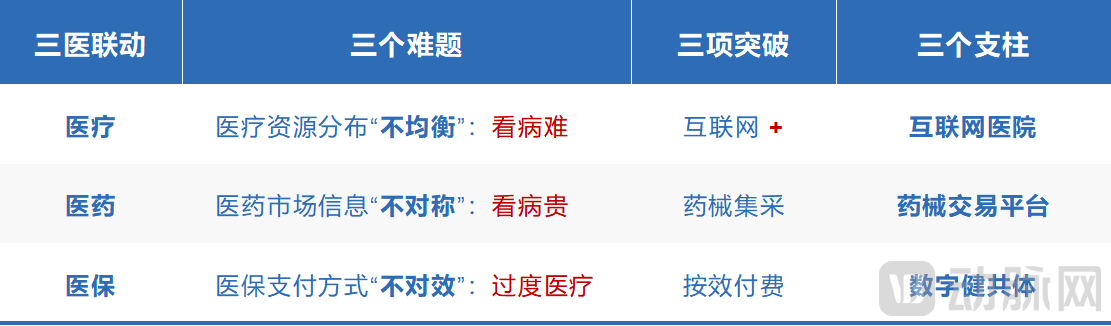 Three Innovations Driving the Upgrade of the Healthcare Industry Through Digitalization
The uneven distribution of medical resources has long been a prominent challenge facing China’s healthcare system and a major contributor to the public’s difficulty in accessing medical care.
Around 2011, China launched pilot programs to establish medical consortiums, aiming to decentralize medical resources. However, this did not fundamentally alter the concentration of high-quality medical resources in major cities and large hospitals. For a period, the proportion of outpatient visits at primary care institutions continued to decline. Relevant data show that the share of primary care visits accounted for 61.9% of total consultations in 2010, dropping to 56.4% by 2015. The “siphon effect” exerted by large hospitals, coupled with patient experiences described as “registration akin to the Spring Festival travel rush, and seeking treatment like going to war,” urgently needs to be alleviated.
“The rise of ‘Internet Plus’ has brought new opportunities. Internet technology can promote the decentralization of medical resources, enhance their mobility and the efficiency of healthcare services, and effectively facilitate the allocation of medical resources to grassroots levels. In the early stages, the industry began to conduct experimental explorations using internet technologies. For instance, in 2010, WeDoctor’s predecessor, ‘Guahaowang’ (Registration Network), started by offering online appointment registration services, leveraging technology to help medical institutions extend their registration services beyond physical windows.”
With the relaxation of regulatory policies and the maturation of technologies and concepts, China’s first internet hospital—Wuzhen Internet Hospital—was officially established in December 2015. It pioneered numerous innovations, including online prescribing, online follow-up consultations, and remote consultations, marking the formation of the “Internet + Healthcare” industry model. The emergence of internet hospitals has truly broken down the barriers between traditional medical institutions, enabling a leap from networked hospitals to smart hospitals, representing a significant advancement in the development of digital healthcare.
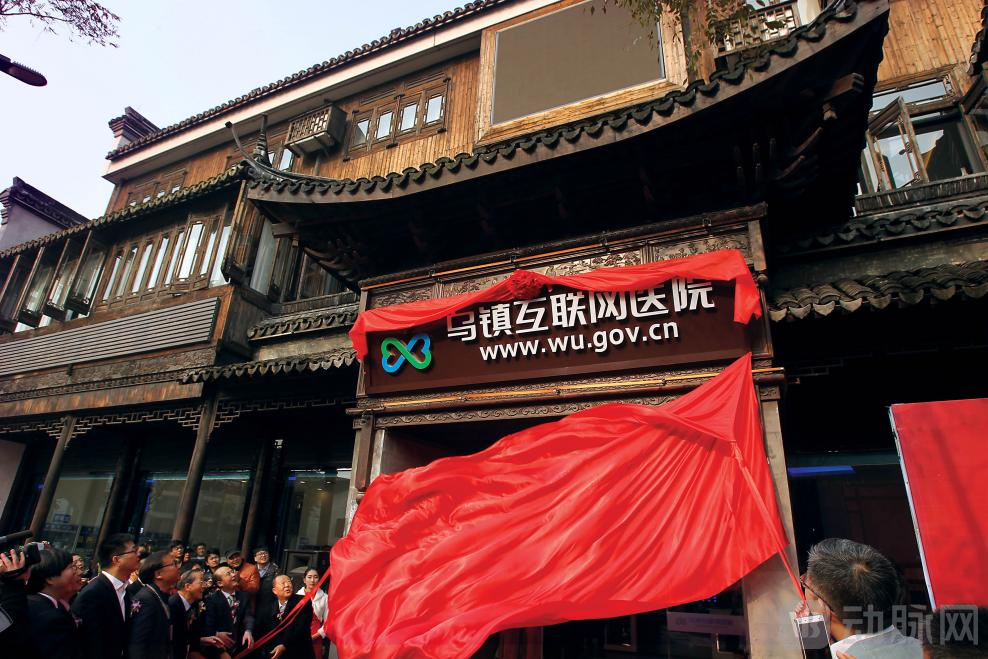 On the Eve of the 2nd World Internet Conference in 2015, Wuzhen Internet Hospital Was Unveiled
Starting from Wuzhen, internet hospitals have proliferated across China, with multiple provinces and cities, represented by Yinchuan, becoming active hubs for their development. After 2020, driven by the COVID-19 pandemic and supportive policies, the establishment of internet hospitals reached a peak. According to data from the National Health Commission, the number of internet hospitals in China has now reached 1,700, playing a positive role in meeting the public’s healthcare needs.
“WeDoctor,” the pioneer that “dared to be the first,” has achieved rapid growth in this wave of industry innovation. Currently, WeDoctor has connected with nearly 8,000 hospitals across China, with 300,000 registered physicians on its platform. It operates 34 internet hospitals nationwide, 20 of which have integrated medical insurance payment services. Serving 270 million real-name registered users, WeDoctor is the largest digital healthcare service platform in China.
Information asymmetry in the pharmaceutical market, which leads to issues such as artificially inflated drug prices and overtreatment, represents another prominent challenge in China’s healthcare sector.
Currently, China has established a National Essential Medicines System and implemented the policy of “separating prescribing from dispensing” to eliminate the practice of “subsidizing healthcare with drug profits,” thereby alleviating the burden of high medical costs for the public to some extent. However, as special commodities, drugs still account for a significant proportion of healthcare expenditures due to factors such as price controls and information asymmetry. Phenomena of overtreatment and overprescription have persisted for a long time. According to the China Health Statistics Yearbook, although the “drug revenue share” in China has continued to decline in recent years, it remains at approximately 30%–40%, which is significantly higher than the 10%–15% observed in OECD countries.
To this end, China has actively encouraged the implementation of centralized volume-based procurement (VBP) for pharmaceuticals and medical devices in recent years. By leveraging market-oriented mechanisms, this initiative has addressed information asymmetry in the pharmaceutical market, reduced costs associated with distribution, marketing, and hospital access, curbed artificially inflated prices for drugs and consumables, and facilitated the “teng long huan niao” strategy (replacing low-value services with high-value ones). The establishment of a digital VBP platform for pharmaceuticals and medical devices has become a key supporting pillar.
As early as the initial phase of Sanming’s healthcare reform, Sanming launched its 1.0 stage centered on “rectifying chaos and plugging waste,” severing the gray interest chain in pharmaceuticals and medical devices, and curbing artificially inflated drug prices. From 2012 to 2020, Sanming achieved relative savings of RMB 12.403 billion in expenditures on drugs and consumables. During this process, WeDoctor’s Xiamen Haixi Pharmaceutical Trading Center effectively supported Sanming’s healthcare reform by establishing a transparent online joint procurement platform with price caps for pharmaceuticals and medical devices, focusing on three core objectives: “lowering drug prices,” “improving efficiency,” and “facilitating regulation.”
In 2017, the platform also undertook the development of the National Healthcare Security Administration’s national platform for drug and medical consumable procurement and bidding management, and was exclusively commissioned by the Sanming Procurement Alliance to conduct cross-regional joint procurement of drugs and medical consumables. To date, the Sanming Procurement Alliance has expanded to cover 29 prefecture-level cities across 16 provinces and 4 national pilot counties for healthcare reform, serving a population of over 160 million.
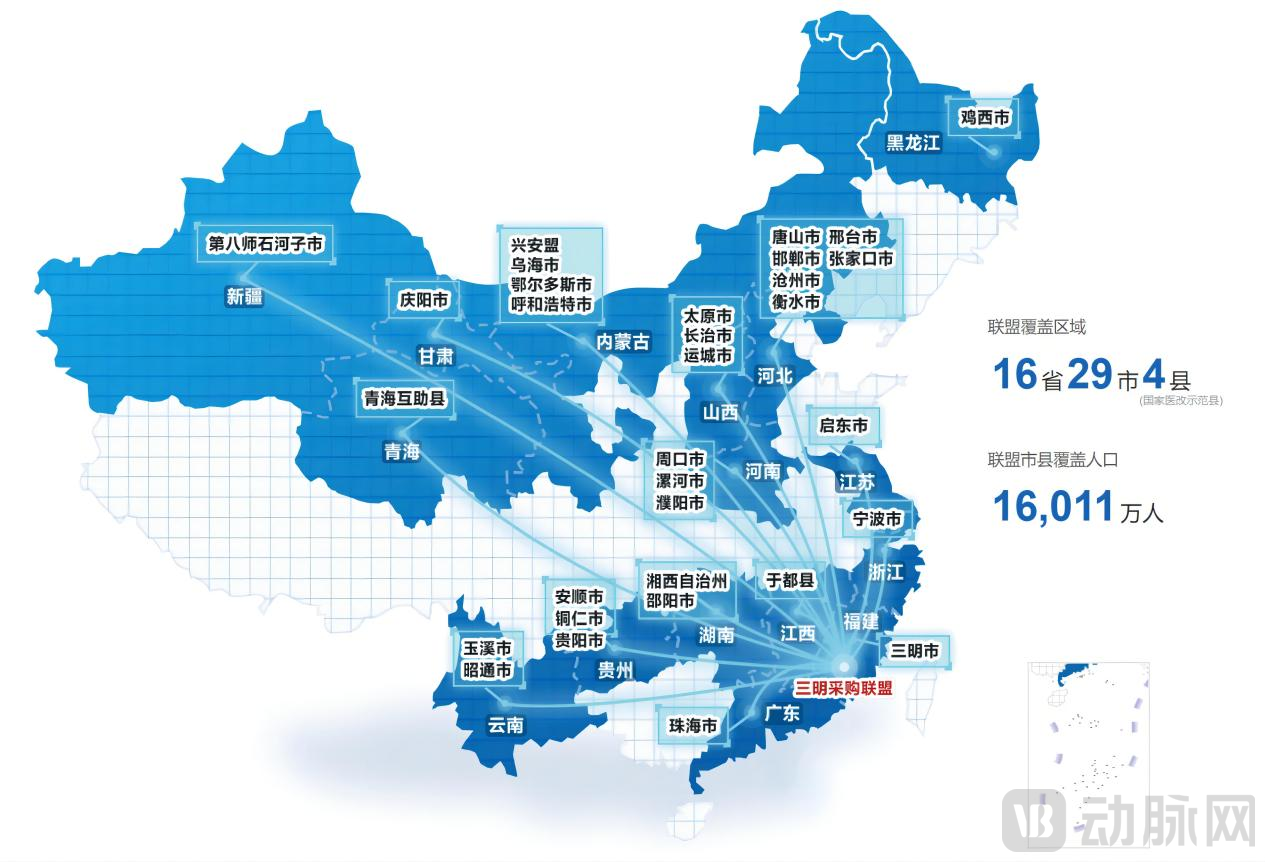 Weiyi Pharmaceutical and Medical Device Trading Platform Conducts Cross-Regional Joint Procurement of Drugs and Consumables on Behalf of the Sanming Procurement Alliance
In the field of Traditional Chinese Medicine (TCM), centralized drug procurement faces unique challenges, particularly the difficulty in unifying quality standards. The quality of TCM products is influenced by every stage from cultivation at the source to market distribution, meaning that a comprehensive traceability system spanning the entire industry chain must be established to ensure robust quality assurance. Furthermore, enhancing the quality of TCM products is a key component of China’s strategy to promote the high-quality development of the TCM sector. Leveraging its advantages in digital TCM platforms, WeDoctor has built and provided service and technical support for the Sanming Procurement Alliance’s Inter-provincial TCM (Herbal Materials) Procurement Alliance by establishing the Shandong Internet TCM (Herbal Materials) Trading Center. This center has implemented five core systems, including quality control and traceability, to ensure that TCM products procured by the alliance meet the goals of “quality assurance, grade improvement, and stable supply.” It also guides the industry away from price reduction as the sole objective, instead fostering healthy development based on the principle of “premium quality at fair prices.”
Currently, WeDoctor leverages multiple pharmaceutical and medical device trading platforms—including the Haixi Pharmaceutical Trading Center, the Shandong Internet Traditional Chinese Medicine (Herbal Materials) Trading Center, and the Northern Pharmaceutical and Medical Device Procurement Center—to innovate the “Internet + Healthcare” model. By capitalizing on the economies of scale in centralized procurement under the national basic medical insurance scheme, it eliminates artificially inflated prices and enhances the efficiency of medical insurance fund utilization. Meanwhile, it helps improve quality control standards for traditional Chinese medicine (TCM) and its raw materials, thereby driving the digital transformation of the TCM industry.
In the past, China’s medical insurance fund has consistently reimbursed healthcare institutions based on the volume of medical services provided. However, this “treatment-centered” payment model tends to induce and stimulate healthcare consumption, leading to a rapid rise in medical costs.
The report shows that China's total health expenditure reached RMB 7,217.5 billion in 2020, an increase of RMB 5,219.461 billion compared with 2010, with an average annual growth rate of 12.38%, far exceeding the GDP growth rate. As China enters an aging society and its economic development shifts into a new normal, the excessively rapid growth in healthcare spending has become unsustainable.
Guided by value-based healthcare, China is driving the transformation of its healthcare service system from a “disease-centered” to a “health-centered” model. Meanwhile, medical insurance funds are gradually shifting from the traditional fee-for-service and fee-for-visit payment methods to new models such as capitation and diagnosis-related group (DRG) payments.
Guided by this new philosophy of healthcare reform, WeDoctor first proposed and began implementing the “Digital Health Community” nationwide in 2019. This initiative integrates and synergizes capabilities across medical care, pharmaceuticals, and health insurance—collectively known as the “Three Medicals”—to alleviate pressure on large hospitals, enhance the capacities of primary care institutions, and improve the efficiency of payments from both basic medical insurance and commercial insurers, thereby raising regional health indices. Notably, the Health Community focuses on chronic disease management as its entry point, exploring payment models such as “global bundled payments” and “capitation-based bundled payments.” By tying financial incentives and constraints to assessments of healthcare and health management quality—specifically through a mechanism where surplus funds are retained by providers while deficits are not covered—it enables payers to purchase health outcomes at predetermined costs.
Over the past three years, this model has achieved rapid development in provinces and municipalities such as Shandong, Tianjin, Fujian, and Shanghai, where the business volume and revenue of digital health communities in multiple prefecture-level cities have reached or even surpassed those of large tertiary hospitals.
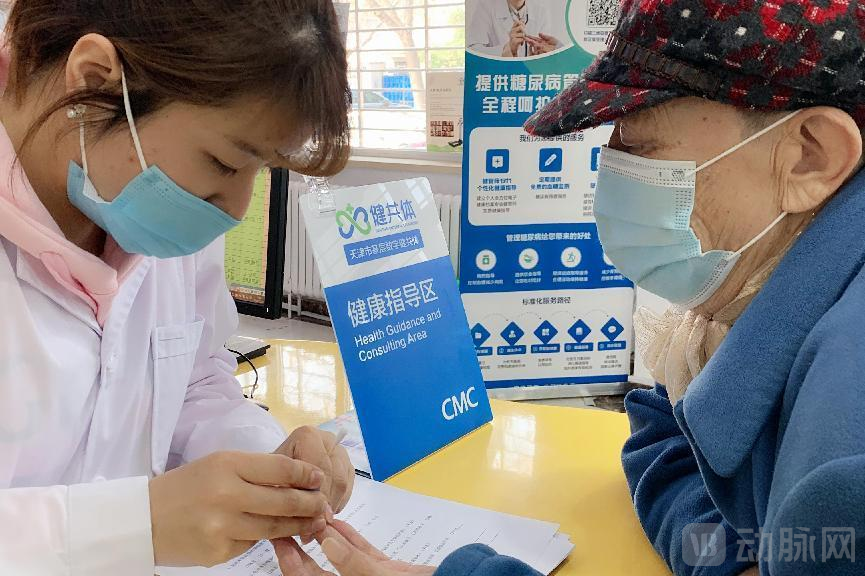
The Digital Health Community provides the public with health management and care services that span the “full life cycle and entire health journey.”
For example, the WeDoctor Tianjin Digital Health Community began construction in early 2020. Led by the Tianjin WeDoctor Internet Hospital, it deployed a unified “Four Clouds” platform—comprising cloud management, cloud services, cloud pharmacy, and cloud diagnostics—across 266 primary healthcare institutions in Tianjin. This initiative leveraged chronic disease management as an entry point to achieve digitalized, intensive, and standardized delivery of medical services. Meanwhile, through the WeDoctor Northern Pharmaceutical and Medical Device Joint Procurement Platform, it implemented disease-specific joint drug procurement and adopted value-based payment models for healthcare services, such as capitation and diagnosis-related group (DRG) payments. To date, the standardized management rate for diabetic patients in pilot primary healthcare institutions within the Health Community has reached 76.68%. The blood glucose control rate among patients enrolled in demonstration-level chronic disease management for more than three months was 13.5 percentage points higher than that of unmanaged patients. Furthermore, primary healthcare institutions implementing capitation payments have achieved medical insurance surplus rates ranging from 16% to 31%.
The Digital Health Community further validates the pioneering value of digitalization in driving the upgrade of healthcare service systems. In April this year, policy documents jointly issued by five ministries and commissions, including the Cyberspace Administration of China, the Ministry of Agriculture and Rural Affairs, and the National Development and Reform Commission, explicitly proposed guiding localities to explore the development of grassroots-level Digital Health Communities.
Not only in China, but also globally, healthcare management and service systems are generally plagued by challenges such as “uneven distribution of medical resources,” “information asymmetry in the pharmaceutical market,” and “misaligned health insurance payment mechanisms.” In response, some developed countries have incorporated digital health into their national strategies to drive the transformation and upgrading of their healthcare sectors.
In 2019, the WHO released the “Global Strategy on Digital Health 2020–2024” in Geneva, establishing digital health as a strategic priority to promote the development of digital health worldwide and strive to achieve universal health coverage and the sustainable development of health-related goals.
China’s “Outline of the ‘Healthy China 2030’ Plan” clearly stipulates that health shall be placed in a strategic position of priority development, leveraging the leading and supporting roles of technological innovation and informatization to establish an institutional system with Chinese characteristics that promotes comprehensive health.
Over the past decade, China has driven the deepening of the “Three-Medical Linkage” new healthcare reform, achieving significant breakthroughs, with digital healthcare emerging as a key element in advancing this reform.
"Internet Plus Healthcare" initiatives, such as online consultations and telemedicine, have alleviated the challenges of uneven distribution of medical resources and the difficulty grassroots populations face in accessing medical care. Centralized bulk procurement of pharmaceuticals, medical devices, and consumables has eliminated artificially inflated prices through open, transparent market bidding and economies of scale. Meanwhile, reforms to health insurance payment methods aim to shift healthcare services from fee-for-service and volume-based payment models toward a health-centered, value-based payment model focused on outcomes.
Correspondingly, the digital healthcare industry, represented by WeDoctor, has successively achieved three breakthrough innovations: internet hospitals, centralized procurement platforms for pharmaceuticals and medical devices, and digital health communities. These innovations have established a digital healthcare development pathway aligned with China’s comprehensive “Three-Medical Linkage” reform—integrating medical care, pharmaceuticals, and health insurance—and serve as three key pillars leading the digital transformation and upgrading of China’s healthcare sector.
Digital healthcare still holds immense potential for growth. A recent McKinsey study found that the healthcare sector ranks third from the bottom among 20 digital development areas globally, indicating substantial room for digital advancement. In the future, as institutional frameworks continue to improve, the industry will undoubtedly see more in-depth and widespread innovative practices in digital healthcare, further supporting the high-quality development of China’s—and indeed the global—healthcare system.