

2022 CGT Industry Innovation Summit Unveils Strategies to Decode Development Challenges and Accelerate Ecosystem Construction
Following small-molecule drugs and antibody-based therapeutics, cell and gene therapy (CGT) has emerged as one of the most closely watched sectors in biotechnology, hailed as the “golden track” for the next decade.
According to Frost & Sullivan data, the global CGT market is expected to maintain a growth rate of over 65% after 2021, with the market size projected to reach $30.539 billion by 2025.
The overall enthusiasm for the cell and gene therapy (CGT) sector in China is also steadily increasing. In 2022, the market size of CGT therapies in China was estimated to grow by 1025.21% year-on-year, and it is expected to maintain a high growth rate of over 100% thereafter, with the market size projected to reach RMB 17.885 billion by 2025.
The CGT industry is booming, with R&D enthusiasm fully ignited. However, compared to traditional small-molecule drugs, the development of cell and gene therapies involves significantly greater complexity. These therapies are characterized by more intricate technical mechanisms, higher barriers to process development and large-scale manufacturing, limited industrialization experience, and variable dosing requirements across different indications. These factors impose stringent demands on pharmaceutical companies.
In recent years, the state has introduced a series of policies to support the development of the cell and gene therapy (CGT) industry. The “14th Five-Year Plan for Bioeconomy Development,” issued by the National Development and Reform Commission (NDRC), explicitly states that China will build national strategic scientific and technological capabilities in biotechnology, accelerate breakthroughs in bottlenecks hindering bioeconomic growth, and achieve self-reliance and self-strengthening in science and technology.
Achieving rapid breakthroughs in biotechnology is by no means an easy task, as it requires the indispensable synergy of industrial elements such as policy, funding, talent, and services. In this regard, industrial parks, serving as primary carriers for industry agglomeration, play a crucial role in incubating biotech startups, aggregating resources, facilitating the commercialization of scientific achievements, and promoting the construction of industrial chains.
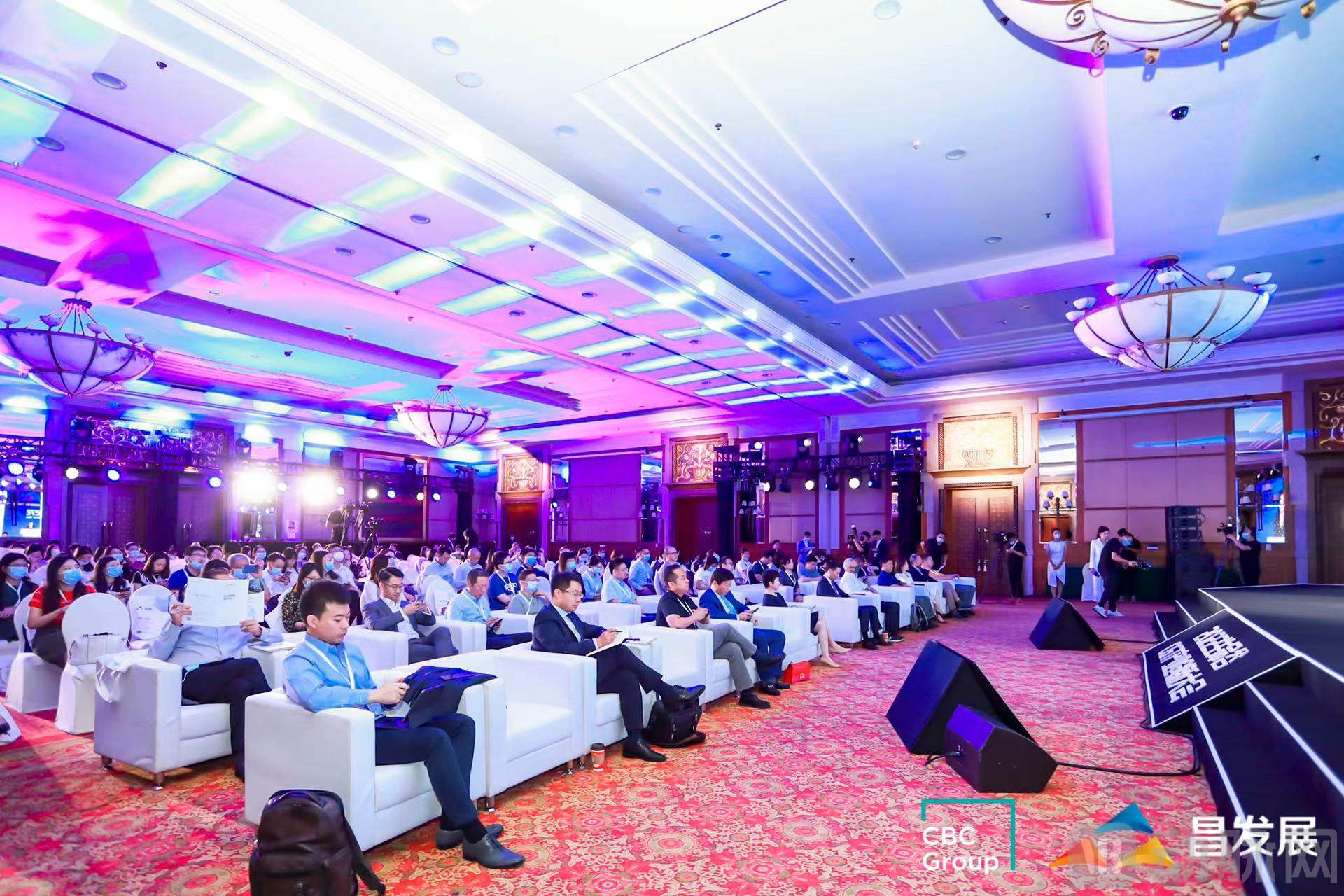
Conference Venue
On August 25, the “Smart Life Valley: A New Era in Medicine and Health—2022 Life Valley Industry Innovation Conference” was held in Beijing. As the annual flagship industry event of Changping Life Valley, the conference brought together leading figures from China and abroad in the life sciences sector and nearly 100 institutions to explore R&D and innovation opportunities in precision medicine, jointly build new heights in CGT (Cell and Gene Therapy) intelligence and industry, accelerate the development of a globally leading “Life Valley,” and usher in a new chapter for the growth of China’s CGT industry.
Co-hosted by the Kangqiao Medical and Health Industry Facility Platform and Chang Development, and guided by the People's Government of Changping District, Beijing, and the Management Committee of Beijing Zhongguancun Life Science Park, this Industrial Innovation Conference brought together nearly 100 institutions from fields including immune cell therapy, gene therapy, stem cell therapy, medical services, supply chain, CXO, and financial investment.
VCBeat conducted exclusive interviews with attending guests to gain deeper insights into and discuss trends and challenges in the cell and gene therapy (CGT) industry: What signals is this rapidly evolving sector sending? Which pain points require urgent attention? And how can these obstacles be overcome to usher in the next wave of explosive growth?
The CGT Track Is “Long” and “Wide,” with Challenges Including Homogenized Competition and Scalable Manufacturing
In the view of Mr. Kang Haihua, CEO of the Kangqiao Medical and Health Industry Facilities Platform, cell and gene therapy is a very “long” and also very “broad” track.
“Long” stems from the immense growth potential in the cell and gene therapy (CGT) sector, which is expected to remain in a phase of rapid development for an extended period.
“Broad”: On one hand, the CGT market offers substantial growth potential and covers a wide range of indications; on the other hand, China’s CGT industry is still in its early stages. Driven by talent and market participants, the sector is poised for further expansion, fostering the emergence of more innovative enterprises.
In recent years, as cell and gene therapies (CGT) have achieved a series of breakthroughs in cancer treatment, the entire CGT industry has entered a phase of large-scale industrialization. For instance, two domestically produced CAR-T cell therapy products were approved successively last year, and this year, Legend Biotech/J&J’s BCMA CAR-T therapy, ciltacabtagene autoleucel, successfully expanded into international markets. These developments have significantly boosted the industry’s confidence in the growth of the cell and gene therapy sector, further intensifying enthusiasm for this therapeutic avenue.
Compared with the fields of large molecules and small molecules, cell and gene therapy (CGT) products, as an emerging form of therapeutic agents, offer many advantages, primarily manifested in more durable efficacy, single-dose administration, and long-term benefits. Furthermore, for certain rare genetic diseases, CGT therapies hold the potential to cure the disease.
However, reviewing the development trajectories of major industries, every emerging industry inevitably faces challenges during its rapid growth phase. As mentioned at the beginning of this article, the research and development process for cell and gene therapy (CGT) products is highly complex. Issues such as homogeneous competition due to the clustering of pharmaceutical companies, manufacturing processes, and commercialization still stand as significant obstacles to the industrialization of CGT.
Addressing the phenomenon of homogenized competition, Mr. Kang Haihua stated, “The ‘clustering’ of pharmaceutical companies is not necessarily a bad thing; only by passing this test of competitiveness can Chinese innovative drugs gain a firmer foothold and achieve greater reach in the global market.”
On How to Achieve Industrialization of CGT, Shen Xinliang, Former Chief Scientist of China National Biotec Group (CNBG) and Member of the 11th Chinese Pharmacopoeia Commission, stated that from the perspective of manufacturing processes, cell and gene therapies are personalized medicines characterized by small batch sizes and difficulties in automated operations. Furthermore, significant inter-individual variability makes it challenging to ensure consistent product quality. The scaled-up production of CGT products remains a global challenge. To achieve mass production, urgent issues related to equipment and process optimization must be addressed, relying on digital and intelligent platforms to reduce costs and improve efficiency.
From this perspective, industrial parks can leverage their own strengths to build platforms or introduce CGT CDMO enterprises to enhance the industrial chain, helping CGT startups fill gaps in large-scale production capacity. This is an effective way to facilitate the translation of CGT innovations into practical applications.
Focusing on Capital, Talent, and Industrial Ecosystem to Boost the Rise of a CGT Industry Hub
At the event, Kangqiao Medical Health Industry Facilities Platform and Changping Development held a signing ceremony and jointly released the plan for the Changping Life Valley International Precision Medicine Industrial Park, working together to build a globally leading CGT industrial park.
The Life Valley International Precision Medicine Industrial Park is the inaugural project of Phase III of the Zhongguancun Life Science Park. The park targets precision medicine fields such as precision diagnostics, targeted therapy, and immunotherapy, while focusing on cutting-edge technological sectors including cell therapy, gene therapy, synthetic biology, and AI-driven healthcare. It is supported by industrial service platforms and supply chain platforms, such as CDMO/CMO services.
Currently, 13 companies, including Danxu Bio, Huaxia Yingtai, Boya Jiayin, Zhongyin Technology, and Anhe Jialier, have signed on as the first batch to settle in.
The International Precision Medicine Industrial Park is jointly developed by Changping Science and Technology Park Development Co., Ltd. and Qiao Capital. Leveraging Changfa’s specialized industrial operational strengths, along with Qiao Capital’s capabilities in industrial facility services and asset management, the park possesses inherent advantages in fostering the development of the cell and gene therapy (CGT) industry.
Fu Wei, CEO of CB Capital, stated that the industrial park will help biopharmaceutical companies and entrepreneurs overcome the challenges of securing research centers, laboratories, and production facilities. It aims to promote the deep integration of the innovation chain, supply chain, and industry chain within the pharmaceutical and healthcare sectors, thereby contributing to Beijing’s efforts to establish a critical growth hub for the pharmaceutical and healthcare industry.
Founded in 2014, Qianqiao Capital is the largest healthcare investment group in Asia, with assets under management totaling $6.7 billion. Qianqiao Capital aims to co-manage and grow alongside its portfolio companies through a unique post-investment management model, gradually building a business ecosystem capable of transforming the current state of the healthcare industry. As the largest investor and operator in the Asian healthcare sector for two consecutive years, Qianqiao Capital organically integrates key production factors—including clinical resources, regulatory approval capabilities, and industrial infrastructure—to help enterprises achieve rapid growth in the most innovative and effective ways.
Ms. Wang Ying, General Manager of Changfa DevelopmentThe interview highlighted Changfa Development’s three major strategic layouts in the life and health sector. First, focusing on the CGT (Cell and Gene Therapy) industry chain, it has successively established the International Precision Medicine Innovation Center and Acceleration Center, the Changping Life Valley Industrial Base, and jointly managed and operated the Zhongguancun Life Science Park. This comprehensive ecosystem covers every stage from incubators and accelerators to pilot-scale and production bases, as well as corporate headquarters, thereby meeting the development needs of enterprises at all stages.
Second, we are accelerating our strategic layout in industrial investment. By leveraging a multi-tiered investment system comprising fund-of-funds, subsidiary funds, direct investment funds, and equity incubation, we provide robust support for the rapid development of emerging innovative sectors, particularly precision medicine. To date, we have invested in over 60 healthcare enterprises in Changping District, with total investments amounting to nearly RMB 1.8 billion and an aggregate project valuation exceeding RMB 130 billion.
Third, establish a CXO platform targeting various segments of the life sciences industry chain. Upstream investments focus on animal model and animal testing companies; midstream investments cover preclinical platforms, independent pharmacology and safety assessment services, clinical trial CROs, and cell and gene therapy CDMOs, thereby providing specialized services to enterprises.
In addition, Changfazhan also provides tenant enterprises with services such as talent recruitment, policy analysis, and investment and financing matchmaking.
Changfa Zhan, in partnership with Qiao Capital, will provide park enterprises with more professional technical platforms, more stable financial support, and a richer talent pool, accelerating the rapid translation of scientific research achievements and the commercial development of blockbuster products, thereby boosting the rise of a CGT industry hub.