

Shanghai XinlvTong Life Science Technologies Files IPO Prospectus: Pioneering Innovation in Pulsed Field Ablation for Cardiac Arrhythmia
In 2018, U.S. cardiac electrophysiologists first applied pulsed field ablation technology to the treatment of human cardiac arrhythmias, achieving favorable clinical outcomes. This has provided a new ablation therapy for arrhythmic disorders such as atrial fibrillation and expanded the scope of applications for pulsed field ablation technology.
Subsequently, Medtronic’s clinical study protocol for its pulsed field ablation system, PulseSelect, was approved in January 2020; Johnson & Johnson’s pulsed ablation system initiated clinical studies in Europe in October 2020; and Boston Scientific acquired FaraPulse, a leading company in pulsed field ablation, for a total consideration of $450 million in June 2021.
As global multinational medical device companies expand their strategic footprints, a number of Chinese enterprises have chosen to follow suit. Among them, Shanghai Xinlutong Life Technology Co., Ltd. (hereinafter referred to as “Xinlutong”) is a deep-tech company specializing in the innovative research and development of pulsed field ablation systems.
According to Dr. Tan Jiahong, founder of Xinlvtong, he has held positions at prestigious institutions including Biosense Webster (a Johnson & Johnson company, Los Angeles), Abbott’s Cardiac Rhythm Management division (Los Angeles), Shanghai MicroPort, and the Chinese Academy of Medical Sciences. With over 30 years of experience in the research and development, manufacturing, and management of cardiac devices both domestically and internationally, including 16 years of study and work in North America, he also serves as a professor at Sichuan University and Donghua University. He is a former senior visiting scholar under the former State Education Commission of China and a former member of the National Technical Committee on Standardization for Biological Evaluation of Medical Devices.
In 2019, it reviewed the clinical study data published by FaraPulse, a company specializing in pulsed field ablation: The pulsed field ablation system achieved a 100% pulmonary vein isolation rate immediately post-procedure and at three months post-procedure for atrial fibrillation treatment. At the 6-month follow-up, 90.9% of patients remained free from recurrence, and at the 12-month follow-up, 87.4% of patients remained recurrence-free. Furthermore, no esophageal injury, phrenic nerve injury, or pulmonary vein stenosis was observed following the surgical procedure.
Drawing on clinical data and extensive industry R&D experience, Dr. Tan Jiahong believes that pulsed field ablation technology represents the future direction of electrophysiology. To this end, he founded Xinlutong, aiming to provide safer and more effective treatment options for patients with atrial fibrillation and other arrhythmias.
Experts believe that domestically produced pulsed field ablation systems will have significant growth opportunities in the market for treating arrhythmias such as atrial fibrillation.
First, the market size in the field of cardiac electrophysiology is substantial.Cardiac pulsed field ablation systems are primarily used for complex arrhythmias such as atrial fibrillation. According to “Prevalence and Risks of Atrial Fibrillation in China: A Nationwide Cross-Sectional Epidemiological Study,” the age-standardized prevalence of atrial fibrillation in China is 1.6%, with an estimated 20 million affected individuals.
Clinically, patients with atrial fibrillation often present with symptoms such as palpitations, dizziness, chest tightness, and fatigue; they may also experience presyncope (blackout) or even syncope, which significantly impair their quality of life. More importantly, atrial fibrillation predisposes patients to life-threatening and highly disabling conditions, including stroke and heart failure.
Driven by the large patient population and the severity of associated risks, cardiac electrophysiology procedures for treating arrhythmias such as atrial fibrillation in China have increased from 118,000 cases in 2015 to 212,000 cases in 2020, establishing them as one of the mainstream treatment modalities.
With the large-scale adoption of cardiac electrophysiology procedures, the cardiac electrophysiology market is expanding rapidly. According to data released by Frost & Sullivan, the market size of cardiac electrophysiology devices in China reached RMB 5.15 billion in 2020 and is projected to reach RMB 21.11 billion in 2024, with a compound annual growth rate (CAGR) of 28.3% from 2015 to 2020.
Secondly, there is significant potential for domestic substitution in the field of cardiac electrophysiology.Currently, the penetration rate of electrophysiology procedures in China remains below 1%, indicating substantial room for growth. Meanwhile, the domestic cardiac electrophysiology market is predominantly dominated by multinational medical device companies such as Johnson & Johnson, with Chinese brands holding less than a 10% market share, thereby presenting significant potential for import substitution.
Finally, pulsed field ablation systems offer distinct advantages over existing treatment modalities.Currently, regarding the treatment of arrhythmias, taking atrial fibrillation (AF) as an example, therapeutic options include pharmacological therapy, ablation therapy, and surgical maze procedure. Among these, pharmacological therapy cannot cure AF, while the surgical maze procedure is associated with significant trauma and is currently primarily indicated for AF patients with concomitant cardiac diseases. Therefore, ablation therapy has become the mainstream treatment for AF, which is mainly categorized into radiofrequency ablation and cryoballoon ablation.
According to the introduction, the principle of radiofrequency ablation is to destroy myocardial tissue by generating high temperatures through regulated electrical current, while cryoablation works by inducing freezing injury to the myocardial tissue. Both approaches rely on thermal effects to “heat-kill” or “freeze-kill” pathological cells, thereby achieving pulmonary vein isolation and restoring sinus rhythm. However, these ablation techniques may damage surrounding healthy tissues and carry certain risks.
In comparison, pulsed field ablation offers advantages such as shorter ablation times, superior therapeutic efficacy, and fewer complications, positioning it as a promising mainstream modality for future cardiac ablation procedures.
Driven by the aforementioned factors, domestically produced pulsed field ablation systems for treating arrhythmias such as atrial fibrillation are poised to embrace significant development opportunities.。
According to reports, unlike radiofrequency ablation and cryoballoon ablation, which treat atrial fibrillation by leveraging thermal effects, pulsed field ablation technology treats atrial fibrillation by selectively destroying myocardial tissue through the mechanism of irreversible electroporation.
Data indicates that the irreversible electroporation effect refers to the formation of permanent pores in the cell membrane under a specific electric field, which disrupts intracellular homeostasis and leads to apoptosis. Notably, pulsed field ablation technology exhibits tissue selectivity, meaning that only specific tissues undergo irreversible electroporation at corresponding pulse electric field intensities, while other tissues remain unaffected.
For example, at a specific electric field parameter of 400 V/cm targeting cardiomyocytes, irreversible electroporation occurs in cardiomyocytes, while endothelial cells, nerve cells, and smooth muscle cells remain unaffected. Based on these characteristics, pulsed field technology offers significant advantages in the treatment of arrhythmias such as atrial fibrillation.
Leveraging the irreversible electroporation effect and tissue selectivity, pulsed electric field ablation systems can precisely eliminate diseased cells while sparing surrounding critical structures such as nerves and blood vessels, thereby enhancing treatment safety and efficacy and reducing surgical complications. Additionally, these systems offer advantages including rapid ablation speed, ease of operation, and high controllability. Consequently, pulsed electric field ablation technology is regarded as the future direction in the field of electrophysiology.
Currently, Xinlvton’s independently developed pulsed field ablation system has completed animal studies and biocompatibility testing. The application for type testing was submitted in January 2022, with the type test report expected to be issued in September. Clinical trials are imminent, and Academician Ge Junbo from Zhongshan Hospital affiliated with Fudan University will serve as the principal investigator (PI) for the clinical study. The expert discussion meeting on the clinical protocol was successfully held on August 6, 2022. It is reported that Xinlvton has filed 10 patent applications based on its pulsed field ablation system, of which 5 have been granted, and 3 PCT applications have been submitted.
Dr. Tan Jiahong stated, “In animal studies, Xinlvton’s pulsed field ablation system achieved rapid and continuous electrical isolation of the pulmonary veins, left atrial posterior wall, roof, superior vena cava, and left atrial appendage. It also delivered transmural ablation in these regions without causing phrenic nerve or esophageal injury, and without inducing pulmonary vein stenosis, thereby demonstrating the efficacy and safety of the product.”
Compared with other products on the market, Xinlvtong’s pulsed field ablation system offers differentiated advantages. According to the introduction, its pulsed field ablation system employs a spline-basket ablation catheter, enabling simultaneous multi-channel ablation and mapping. It facilitates rapid, continuous circumferential pulmonary vein isolation and synchronous detection of electrical signals. The system is user-friendly for operators, eliminates the need for complex three-dimensional mapping, simplifies and streamlines surgical procedures, promotes broader adoption, and significantly reduces the financial burden on patients.
Furthermore, its pulsed field ablation system achieves an ablation depth of 3.5 mm, representing a world-leading level; its pulmonary vein isolation requires only 0.04 seconds, making it the fastest in the world.
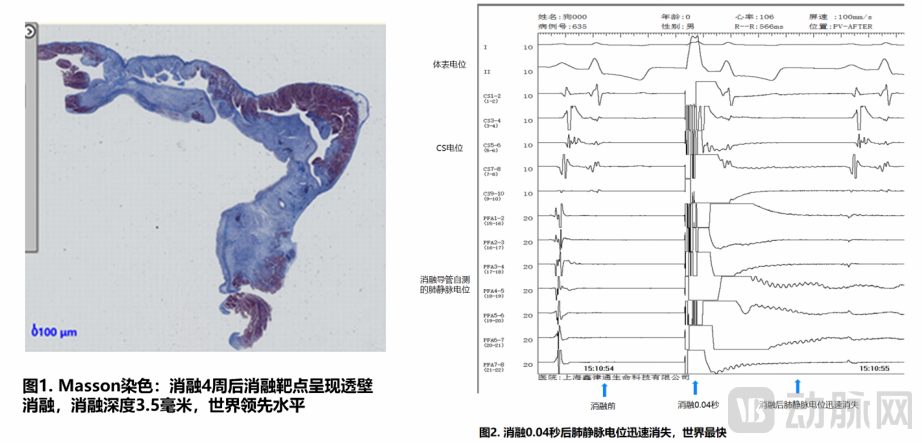
Dr. Tan Jiahong stated, “The aforementioned advantages and progress have been achieved thanks to Xinlvtong’s robust R&D team and the support of clinical experts.” On one hand, Xinlvtong’s R&D team is a multidisciplinary, comprehensive group with extensive research and development experience and strong innovation capabilities, covering specialties such as electrical and electronic engineering, software engineering, polymer materials, biomedical engineering, clinical medicine, biochemistry, and chemical engineering. On the other hand, Xinlvtong has collaborated with Zhongshan Hospital Affiliated to Fudan University, receiving substantial support from relevant clinical experts.
Leveraging these multifaceted advantages, Xinlüton has completed two rounds of financing, raising a total of nearly RMB 100 million. The company is currently undertaking a new round of financing, with proceeds earmarked for clinical studies, regulatory registration, and the research and development of new products.