

Exploring Objective Biomarkers for Precision Diagnosis and Treatment of Depression: An Interview with Dr. Tianmei Si of Peking University Sixth Hospital
According to statistics from the World Health Organization (WHO), depression has become a common mental disorder worldwide. Globally, there areMore than 350 million people suffer from depression, with the patient population growing at an approximate rate of 18% over the past decade.
In China,Over 95 Million People Suffer from Depression, that is to say, one in every 15 people suffers from depression. The high incidence, high disability rate, and high rate of missed diagnosis associated with depression have drawn significant attention from psychiatrists, clinicians, and society at large.
However, the diagnosis of depression currently relies primarily on phenomenological assessment, requiring clinicians to conduct thorough psychiatric examinations to identify psychiatric symptoms and clarify their presentation before applying diagnostic criteria. This implies that the recognition and diagnosis rates of depression remain to be improved at this stage.
Furthermore, the treatment of depression is predominantly pharmacological. However, existing medications have a slow onset of action, typically taking one to two weeks to become effective, while adverse reactions may occur during the initial phase of treatment. This discrepancy somewhat discourages some patients, leading to reduced medication adherence.
Previous studies have shown that the recurrence rate of depression in patients with their first episode is as high as 50% within five years, and for those who experience a second episode, the risk of recurrence within five years rises to 70%. One reason for the high recurrence rate is that patients do not undergo full-course pharmacological treatment.
Therefore, optimizing the diagnosis and treatment of depression to improve diagnostic accuracy and therapeutic efficacy is an urgent issue that needs to be addressed.Si Tianmei, Deputy Director of Peking University Sixth Hospital, and her team have sought to identify specific biological markers for depression from a clinical perspective, thereby providing a pathway for the precision diagnosis and treatment of the disorder.
Identifying Objective Biomarkers to Pave the Way for Precision Diagnosis and Treatment of Depression
Identifying Objective Biomarkers for the Diagnosis of Mental Disorders Is a Major Trend in Psychiatric Research.
The Si Tianmei team was the first to clinically collect data on symptoms, cognition, imaging, and hematological characteristics in patients with depression, and then analyzed the patient data and clinical symptoms to identify objective biological markers that help predict clinical response.
Based on basic and clinical features, Si Tianmei’s team has achieved four major breakthroughs in the research of biomarkers for the diagnosis and treatment of depression.
One is to validate biological markers that can be used for the objective diagnosis of depression.
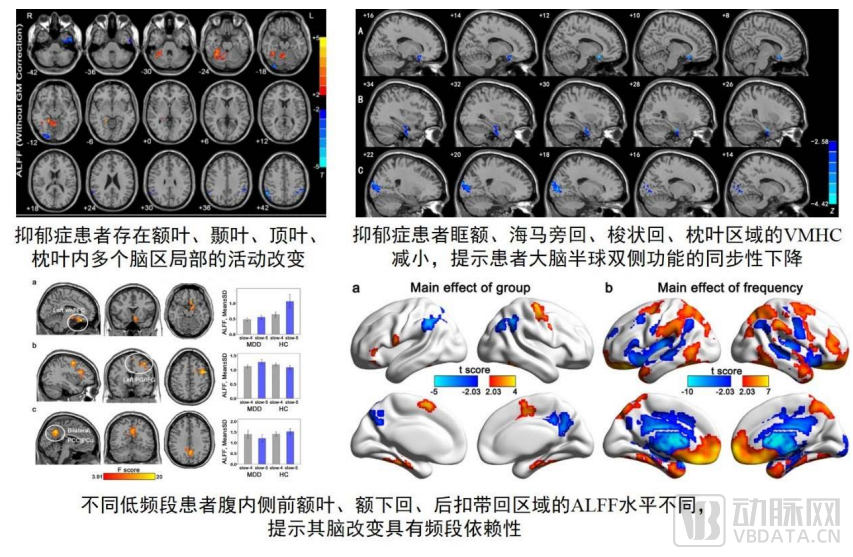
Through a series of imaging observations, the team led by Si Tianmei discovered localized alterations in brain activity across multiple regions within the frontal, temporal, parietal, and occipital lobes in patients with depression. These patients exhibited reduced voxel-mirrored homotopic connectivity (VMHC) in the orbitofrontal cortex, parahippocampal gyrus, fusiform gyrus, and occipital regions, suggesting decreased interhemispheric functional synchrony.
Furthermore, ALFF (amplitude of low-frequency fluctuation) levels in the ventromedial prefrontal cortex, inferior frontal gyrus, and posterior cingulate cortex varied across different low-frequency bands in patients, indicating that functional alterations in these brain regions are frequency-band dependent.
By measuring the dynamic functional patterns in the brains of patients with depression through magnetic resonance imaging (MRI) scans and mapping their brain network atlases, we can identify the specificity of regional brain images, thereby improving the accurate detection rate of depression.
This discovery can help psychiatrists move beyond the limitations of relying solely on “phenomenological diagnosis,” paving the way for subsequent precision treatment. Si Tianmei told VCBeat that the findings from brain network atlas research are undergoing further validation and will eventually be extended to more hospitals and patients across a broader range of age groups.
The second is to identify objective biological markers that can be used for personalized treatment of depression.
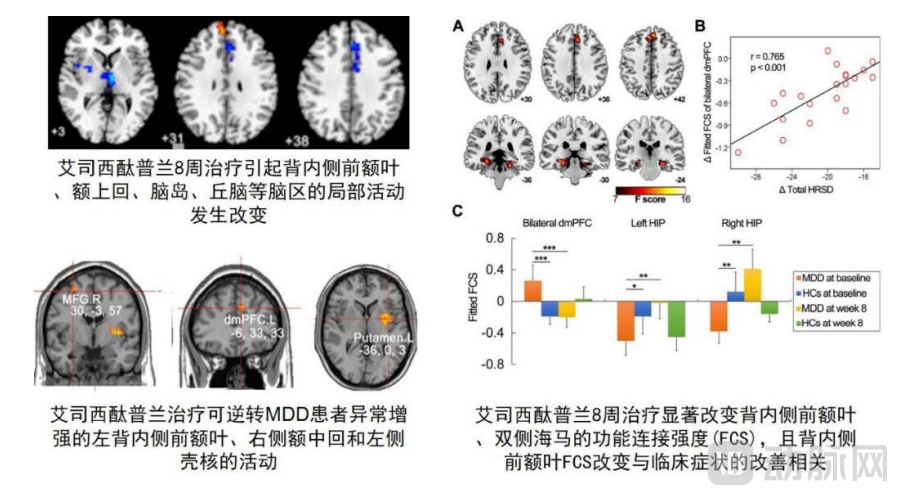
Based on prospective observational studies of clinical samples, core members of Si Tianmei’s team discovered that TPH2 gene polymorphisms modulate the antidepressant efficacy of escitalopram—patients carrying the TPH2 rs4570625 genotype exhibited significantly greater improvement when treated with escitalopram for depression.
This achievement appears to advance the goal of personalized treatment for depression: in the future, genetic polymorphism profiles may help guide the selection of medications with better therapeutic efficacy for individual patients.
Third, the dopamine pathway has been identified as an effective therapeutic target for depression.
In recent years, a growing body of research has indicated that anhedonia is a core feature of depression. Si Tianmei’s team was the first to introduce into China a scale for assessing anhedonia in depression, further optimizing and refining it to enable effective identification and screening of clinical anhedonia.
Furthermore, the core members of their team evaluated anhedonia-related behavioral manifestations in animal models and observed significant alterations in brain regions associated with the dopaminergic reward pathway. Consequently, they proposed that the dopaminergic reward pathway may represent a novel and effective therapeutic target for depression.
This achievement has paved new avenues for understanding the pathogenesis of depression and for drug development from the perspective of anhedonia.
Fourth, to elucidate the mechanism by which the CRHR1–nectin3–calbindin–IMPase signaling pathway mediates the adverse effects of early-life stress.
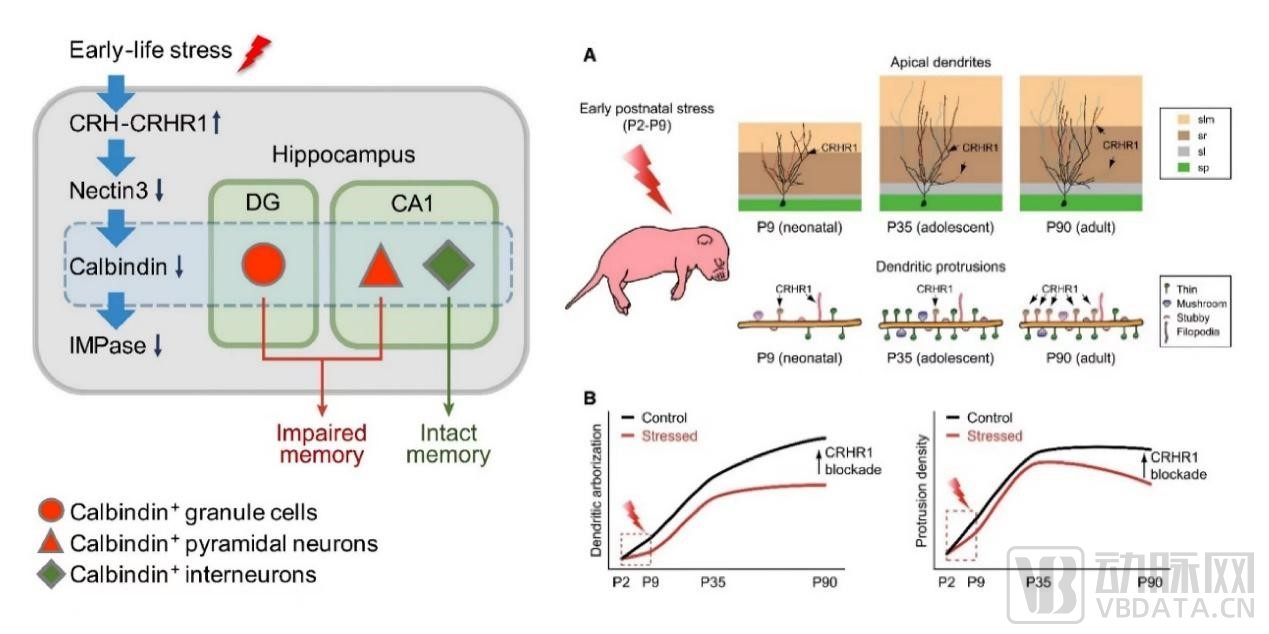
Numerous clinical studies have demonstrated that individuals exposed to negative psychosocial stress in early life are at an increased risk of developing mental disorders in adulthood.
Leveraging animal models of early-life stress, Si Tianmei’s team investigated behavioral and cerebral changes in model animals across different developmental stages, revealing that early-life stress specifically disrupts brain structure and function in mice. They were the first to identify that abnormalities in the CRHR1-nectin3-calbindin-IMPase signaling pathway constitute one of the critical factors underlying aberrant stress responses.
Si Tianmei further pointed out, “Every component of the CRHR1-nectin3-calbindin-IMPase signaling pathway can serve as a potential target for new drug development; modulating the function of proteins within this pathway can help prevent and treat mental disorders.”
It is reported that when Si Tianmei’s team first published their finding that CRHR1 antagonists can reverse the negative effects of early-life stress, it attracted significant attention and commentary from numerous psychiatry experts both in China and abroad.
The Path to Diagnosis and Treatment of Depression Is Long, but There Are “Guidelines”
In 1990, Si Tianmei graduated from university and joined the psychiatric department of a hospital, becoming a psychiatric resident. At that time, the working environment and treatment techniques in psychiatry were relatively underdeveloped.
By around 2000, a surge of various psychotropic drugs had entered the market, gradually expanding the demand for clinical trials related to drug development, and leading to rapid advancements in psychiatric diagnosis, treatment practices, and research. In Si Tianmei’s words, personal growth resonates with the development of the times.
Decades have passed in the blink of an eye, and psychiatry is now receiving increasing attention. The growing demand for diagnosis and treatment, a clean working environment, and support and understanding from society as a whole have become essential conditions for the rapid development of psychiatry. However, at present, the diagnosis and treatment of depression still face many challenges that need to be addressed.
According to a survey published in The Lancet Psychiatry,Currently, in China, the consultation rate for patients with depression is only 9.5%, and the treatment rate is merely 6.8%, which means that the vast majority of patients with depression are not receiving treatment., what are the reasons?
From the perspective of service supply, there is an overall shortage of mental health medical resources.Currently, in China, there are 5.13 professional psychiatric nurses and 2.13 psychiatrists per 100,000 population. Furthermore, the distribution of psychiatric healthcare resources in China is uneven, with a heavy concentration in more developed cities. Therefore, strengthening the development of mental health services is particularly important.
From the perspective of patient demand, there is also an urgent need to enhance the popularization of mental health knowledge and public awareness of disease diagnosis and treatment.Survey data indicate that 82% of patients with depression initially seek care at general hospitals, yet the average recognition rate of mood disorders by internal medicine physicians in these settings is only 15.9%. Patients’ insufficient awareness of their condition, coupled with a certain degree of stigma, constitutes another major factor contributing to low rates of healthcare-seeking and treatment adherence.
In summary, enhancing mental health services and increasing the dissemination of knowledge related to mental health are effective measures for improving psychiatric diagnosis and treatment.
In this regard, Si Tianmei’s team has also dedicated their efforts by founding a WeChat official account exclusively for depression-related science communication—“Heartfelt Guidance” aims to provide the public with popular science knowledge about depression from the perspective of professional doctors.。
Based on their accumulated clinical experience, our team of physicians provides professional answers to the public’s most pressing concerns and publishes these insights as articles on our official WeChat account. This approach serves two key purposes: first, it disseminates professional knowledge to a broader audience, thereby enhancing public awareness of mental disorders; second, by offering resources such as self-assessment tools for mental status and intervention strategies, the account helps individuals understand their emotional well-being, identify effective stress-relief methods, and ultimately improve their mental health.
“Mood Guide” has been in operation for four years, publishing an original popular science article every week. “Although maintaining its operation is challenging, it is highly significant in raising public awareness and understanding of mental illnesses,” said Si Tianmei. “No one should ignore the problems brought about by emotions. What we need to do is to understand the causes of emotional changes, and actively accept, adjust, and manage our emotions.”
Meanwhile, Si Tianmei’s team also launched a monthly lecture series on depression specifically for healthcare professionals. This initiative enables medical teams to stay abreast of domestic and international advances in basic research and standardized diagnosis and treatment of depression, fostering exchange and learning to enhance professional competencies and better serve patients.
In the interview, Si Tianmei repeatedly emphasized that scientific research is not an end in itself; rather, its purpose is to apply research findings to improve clinical diagnosis and treatment outcomes. Adopting a goal-oriented approach centered on enhancing clinical care, Si Tianmei’s team not only identified biological markers for the diagnosis and treatment of depression but also undertook numerous additional initiatives beyond their research efforts.