

Aegicare Files IPO Prospectus: Pioneering AI-Driven Precision Diagnosis for Rare Diseases with Integrated Genomic Testing and Bioinformatics Solutions
“The average time to diagnose rare diseases is 5–7 years, leaving many patients in prolonged uncertainty due to diagnostic challenges and exhausting journeys through misdiagnoses. Improving the current situation for these patient populations and advancing the integration of precision medicine into mainstream clinical practice remain our long-term mission.”Aegicare(Aegicare, formerly known as "Anjikanger")General Manager Yan Panstated in an interview,To improve the current situation of patients with rare diseases, precision diagnosis based on genetic testing is an essential step.。
In recent years, multiple studies have shown thatThere is a close relationship between genetic mutations and the occurrence of diseases., such as rare deleterious and potentially deleterious variants in monogenic diabetes genes are associated with early-onset diabetes (Pezzilli S., et al. 2022), neonatal epilepsy andKCNQ2associated with gene mutations (Catellanos M., et al. 2021), among others. Deep intronic regions, previously considered irrelevant to disease pathogenesis, are now increasingly being revealed as relevant through in-depth scientific research.
Based on long-term deep cultivation in the fields of gene sequencing and disease research,AegicareLeveraging our team’s comprehensive research capabilities in bioinformatics, medical genetics, high-throughput sequencing technology, functional genomics, artificial intelligence, and cloud computing,Comprehensive Solutions for Precision Diagnosis and Treatment of Rare Diseases, Designed for Patients, Healthcare Institutions, and Research Organizations, includingWhole-Genome Genetic Disease Testing (CompleteCare), Whole-Exome Sequencing (WE-SeqCare), Mitochondrial Disease Genetic Testing (MtCare)etc., and inRecently launched the transcriptomic genetic disease test (RNA-SeqCare) as a complement to WES and WGS testing methods。
Since its inception, Aegicare has remained committed to precision diagnosis and treatment in the vertical field of rare diseases, a strategic choice rooted in the company’s long-standing focus on the rare disease community. “There are currently more than 7,000 known types of rare diseases. Although the total patient population is substantial, the low prevalence and small number of patients for each individual condition have resulted in long-unmet diagnostic and therapeutic needs for this community, while social awareness also requires further enhancement,” stated Yan Pan. “Therefore, our mission is to integrate precision medicine into mainstream clinical practice, enabling rare disease patients to avoid unnecessary detours, achieve earlier etiological diagnosis, and receive better treatment.”
To achieve this goal,The company independently developed AEGISTMIntelligent Diagnostic Platform, relying onWEAVER with Independent PatentsTMBioinformatics Analysis System, leveraging a multi-omics knowledge graph encompassing hundreds of thousands of Chinese patients with rare diseases, to provide clinicians with precise and efficient bioinformatics analysis and genetic interpretation services for rare diseases.
Since 2014, influenced by the global development of precision medicine, China has attached great importance to precision medicine at the policy and strategic levels, with capital gradually flowing into this field.Aegicare completed its angel round of financing in 2017. By 2020, it had secured four rounds of funding over three years, totaling nearly RMB 200 million.
Aegicare entered the precision medicine arena at an early stage, garnering capital attention while also strengthening its own capabilities by establishing the 1,500-square-meter Shenzhen Anjikaer Medical Laboratory, which isOne of the First Laboratories in China to Apply Whole-Genome Sequencing to Genetic Disease Testing, compliant with US CLIA/CAP standards and certified by the American Board of Medical Genetics and Genomics (ABMGG), has achieved perfect scores in over 40 external quality assessment programs. It is now capable of providing comprehensive solutions based on multiple testing technologies for the diagnosis of neurological diseases, covering genetics, pathogens, immunology, and more.
Aegicare’s precision diagnostic solutions for rare diseases primarily include laboratory-based gene sequencing and AEGIS, driven by its proprietary patented algorithms.TMIntelligent Diagnostic Platform.
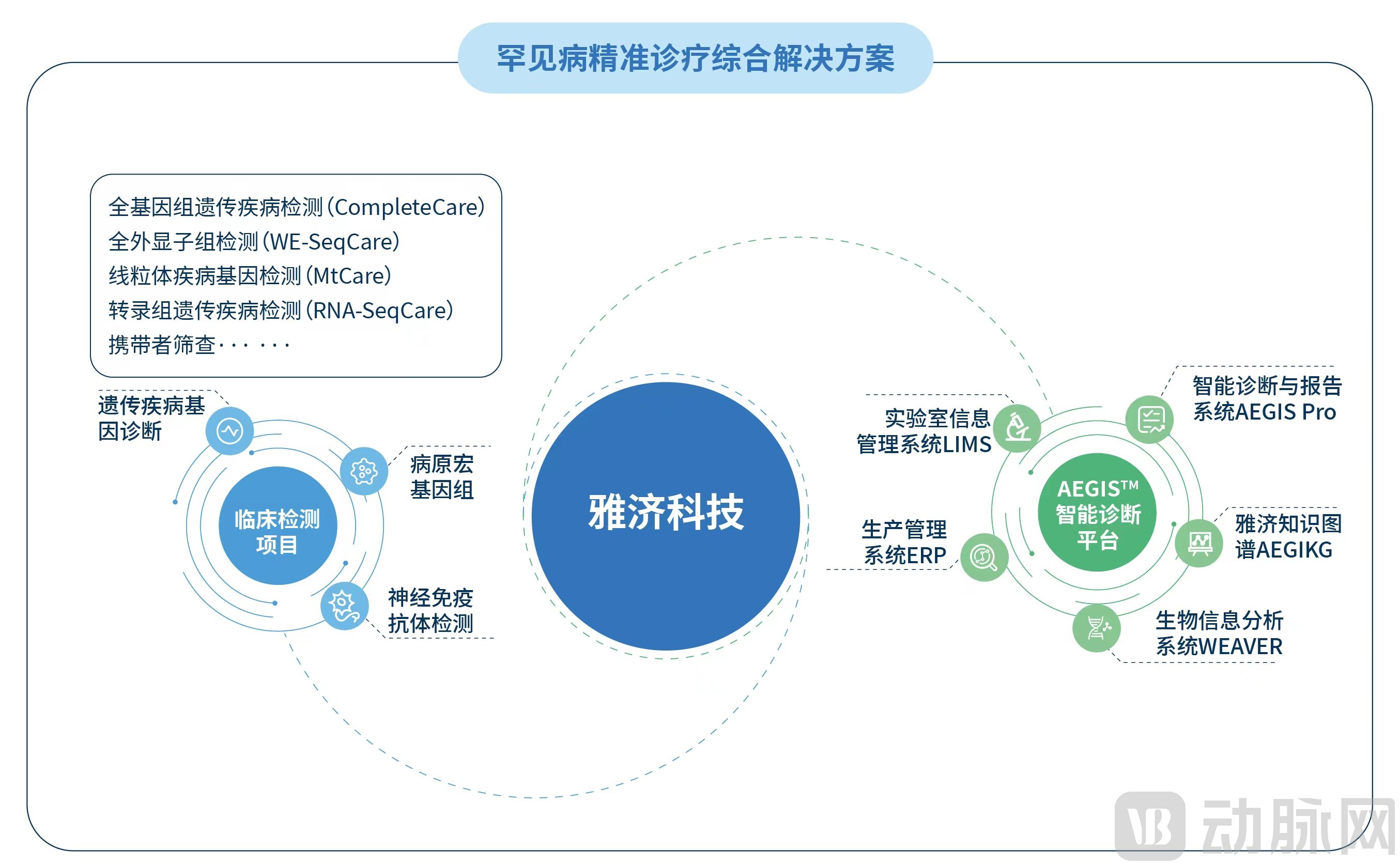
AEGISTMIt is Aegicare's proprietary digital intelligent diagnosis platform.Leveraging diverse biomedical big data sources, including omics data and genetic knowledge graphs, with artificial intelligence algorithms as the core technology, this approach integrates multidisciplinary methods from bioinformatics, applied genetics, and clinical medicine. By comprehensively analyzing patient phenotypes, disease history, and family history, it provides efficient and accurate genetic information analysis along with comprehensive, in-depth interpretation for submitted patients. Ultimately, it delivers an integrated solution for clinical decision support that is comprehensive, efficient, accurate, and convenient for clinicians and third-party laboratories.
Among them, WEAVERTMAs Aegicare's bioinformatics analysis system with independent patents,AEGIS leverages self-developed algorithms and massive datasets to build AI models, which are continuously trained to enhance efficiency and accuracy. While fully harnessing the power of AI technology, it continuously optimizes its algorithms. It is primarily applied to quality control, variant analysis, and annotation of NGS sequencing data, as well as automated variant classification based on the proprietary AegiVar algorithm.TMA key component of the intelligent diagnostic platform. The system boasts advantages such as strong applicability, rich data resources, automated high efficiency, stringent quality control, proprietary technology, and high precision.
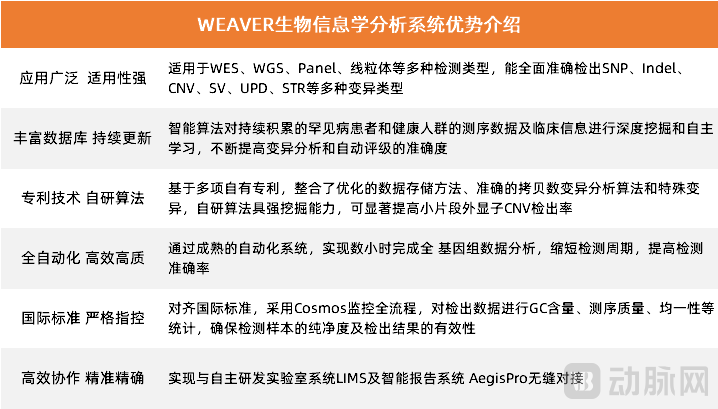
WEAVERTMIntroduction to the Advantages of Bioinformatics Analysis Systems
Leveraging rigorous laboratory management and a highly automated technological platform, Aegicare has established long-term strategic partnerships with over 300 Grade-A tertiary hospitals across China and maintains close collaborations with more than 2,000 clinicians. Its business operations cover Beijing, Guangdong, Zhejiang, Chongqing, Hunan, Hubei, and other regions. Aegicare has jointly established the Gene Intelligence Collaborative Innovation Laboratory with the Department of Biomedical Engineering at Peking University, Tongji Medical College of Huazhong University of Science and Technology, and MGI Tech. Furthermore, in partnership with the Chinese Association Against Epilepsy, it has launched the “China Epilepsy Gene 1.0 Project,” committed to delivering advanced technologies to a broader range of hospitals and patients.
Traditional experience-based medicine has reached a stage where updates to certain clinical practice guidelines are slowing down due to bottlenecks. Meanwhile, evidence-based medicine’s pursuit of precision diagnosis and treatment is gradually expanding from imaging to molecular diagnostics, including genetic testing. However, owing to insufficient in-depth research in disciplines such as genomics and the need for greater public awareness, current understanding of the association between genes and diseases remains very rudimentary.
For a company, it is no easy feat to commit to deepening its presence in a niche market where the customer base is not expected to experience breakthrough growth.Dr. Li Yang, Founder of AegicareWhen discussing the greatest challenge in applying genetic testing to the diagnosis and treatment of rare diseases, it is not the testing technology itself, but ratherDetermining the Pathogenicity of Mutations and Grading Their Impact, which requires analysis based on a large volume of clinical data. Furthermore, how to leverage AI for designing, implementing machine learning, and performing analytical computations on the biological information from clinical cases also presents technical challenges. Aegicare has achieved this through the accumulation of clinical cases and its AEGISTMThrough extensive refinement, the platform has now established significant advantages in data and technology.
General Manager Yan PanHe cited a particularly memorable case: “We once encountered a patient presenting with clinical manifestations of nystagmus, ataxia, and progressive motor dysfunction. Suspecting a genetic disorder, the patient sought medical attention across multiple regions and underwent various diagnostic tests, including gene panels and whole-exome sequencing (WES), none of which identified the underlying cause. Later, whole-genome sequencing (WGS) for genetic diseases performed by Aegicare revealed a pathogenic mutation in a non-coding region not covered by WES, enabling a definitive diagnosis and targeted treatment. Regrettably, prior to this diagnosis, the patient’s parents had already had a second child. Given the strong genetic basis of this condition, the younger sister also unfortunately inherited the disease. Had the etiology been clarified earlier, allowing the parents to receive appropriate reproductive counseling before conceiving their second child, the outcome might have been more favorable.”
Such patients and their families are, in fact, not uncommon across China; yet, only a few receive timely diagnosis and targeted treatment. Cases where the second child also falls ill due to delayed identification of the underlying cause occur frequently. Many patients and their family members spend years shuttling between major cities and hospitals, bearing heavy financial burdens and immense psychological stress. This situation is closely linked to the insufficient awareness of rare diseases within both the healthcare industry and society at large.
If more physicians could recognize disease phenotypes as potentially genetic in origin and thereby fully leverage advanced gene sequencing and analytical techniques for mutant gene localization and diagnostic-therapeutic assessment, it would be of profound significance for both patients and society.
Since its inception, Aegicare has been committed not only to refining its business and technology but also to long-term efforts in raising awareness among clinical practitioners and the broader public.
Aegicare previously co-launched the “Rainbow Baby” relief project for pediatric patients with hepatolenticular degeneration (Wilson’s disease) together with the 302nd Hospital of the Chinese People’s Liberation Army. The initiative aims to raise public awareness of rare diseases, promote standardized clinical diagnosis and treatment of rare diseases, and provide tangible assistance to affected families. Furthermore, Aegicare is actively seeking collaborations with more charitable organizations and patient advocacy groups to encourage more hospitals to incorporate precise diagnosis and treatment of rare diseases into clinical practice, enhance physicians’ sensitivity to rare disease manifestations, and maximize the utilization of genetic testing technologies. These efforts are designed to genuinely support rare disease patients and their families, offering this community a glimpse of a brighter future.
As the company accelerates its development, Aegicare remains committed to deepening its engagement in the field of rare diseases. By pursuing vertical growth, it aims to advance precision diagnosis and treatment for rare diseases further and more profoundly, thereby raising awareness among the medical community and society at large. This effort holds significant importance for the in-depth development of precision medicine and represents the social responsibility that the company undertakes.
When discussing the company’s future plans, Yan Pan continues to highlight “rare diseases” as a key focus, anticipating that this will bring about new changes in the social circumstances of the rare disease community in the near future.
References:
Serena Pezzilli, Manoush Tohidirad, Tommaso Biagini, Maria Giovanna Scarale, Federica Alberico, Luana Mercuri, Gaia Chiara Mannino, Monia Garofolo, Tiziana Filardi, Yaling Tang, Fernando Giuffrida, Christine Mendonca, Francesco Andreozzi, Marco Giorgio Baroni, Raffaella Buzzetti, Maria Gisella Cavallo, Efisio Cossu, Paola D'Angelo, Salvatore De Cosmo, Olga Lamacchia, Frida Leonetti, Susanna Morano, Lelio Morviducci, Giuseppe Penno, Paolo Pozzilli, Giuseppe Pugliese, Giorgio Sesti, Tommaso Mazza, Alessandro Doria, Vincenzo Trischitta, Sabrina Prudente, Contribution of rare variants in monogenic diabetes-genes to early-onset type 2 diabetes, Diabetes & Metabolism, Volume 48, Issue 5, 2022, 101353, ISSN 1262-3636, https://doi.org/10.1016/j.diabet.2022.101353
María Teresa García Castellanos, Javier López Pisón, Raquel Pérez Delgado, KCNQ2 gene mutations and neonatal epilepsy, Medicina Clínica (English Edition), Volume 157, Issue 12, 2021, Pages 589-590,
ISSN 2387-0206, https://doi.org/10.1016/j.medcle.2021.01.019