

From Research to Clinic: How Integrated Hair Loss Therapies and Micro-Needle Hair Transplantation Are Capturing the Billion-Dollar Market
"The 'top-of-head economy' is on the rise."
With top-tier venture capital firms entering the fray and a wave of companies going public, the entire hair care industry is advancing by leaps and bounds. Correspondingly, the industry and market maintain persistently high levels of attention to and demand for cutting-edge academic achievements.
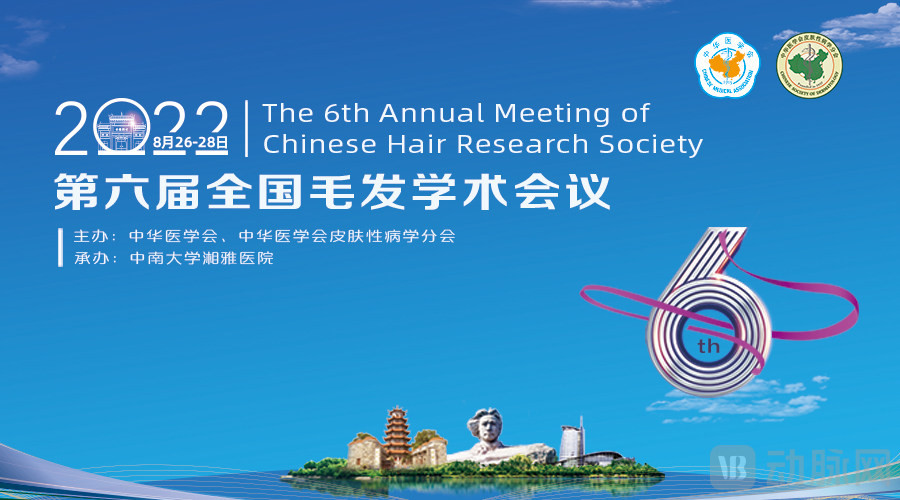
Therefore, to actively promote extensive exchanges among experts and scholars in the fields of clinical and basic hair research worldwide, and to achieve innovation-driven advancements in the diagnosis and treatment of hair disorders, from August 26 to 28, hosted by the Dermatology and Venereology Branch of the Chinese Medical Association and organized by Xiangya Hospital of Central South University,The 6th National Academic Conference on HairHeld successfully in Changsha, the conference invited renowned experts from China and abroad to share the latest advances in basic research on hair disorders, as well as the most recent diagnostic and assessment methods, treatment approaches, and clinical experience.
As a leading enterprise in the hair transplantation field, Damai Micro-needle Hair Transplantation (hereinafter referred to as “Damai”) gathered with top experts in the industry to jointly discuss the latest scientific research progress at this conference. VCBeat also participated in this event andLi Ji, Deputy Director of the Department of Dermatology at Xiangya Hospital of Central South University, and Zou Jianhong, Dean of the Damai Micro-needle Hair Transplantation Technology Research InstituteAn In-Depth Discussion on “Comprehensive Treatment Approaches for Hair Loss and Micro-Needle Hair Transplantation Technology”
The Hair Loss Market Awaits a Transformation
The era of “baldness” has arrived. It is reported that by the end of 2021, the number of people suffering from hair loss in China was approximately 267 million, accounting for about 18.9% of the total population.
However, in terms of the current clinical landscape, the actual number of patients seeking medical consultation falls far short. Taking androgenetic alopecia (hereinafter referred to as “AGA”) as an example, Professor Li Ji stated that there are approximately 150 million AGA patients in China, yet the vast majority have not received treatment. This is primarily due to two reasons: first, insufficient awareness, with many individuals believing that AGA does not affect physical health and therefore is not a disease; second, cognitive biases, such as the belief that AGA is untreatable or incurable.
In fact, regarding androgenetic alopecia, Professor Li Ji emphasized,Early treatment is the key.
From the perspective of pharmaceuticalsFor men, the most critical medication combination is "oral finasteride + topical minoxidil," whereas for women, the preferred regimen is "oral spironolactone + topical minoxidil." Additionally, hair loss can be improved through other therapeutic modalities such as platelet-rich plasma (PRP) injections and laser caps.
andFrom the perspective of hair transplantation, as an important method for improving hair loss, hair transplantation has gradually become the choice of more people suffering from hair loss due to its advantages of good safety and high follicle survival rate. Currently, in the market, national private chain hair transplant institutions represented by Damai and Yonghe Medical are the main forces, accounting for about 35% of the market share.
Regardless of the chosen approach, hair loss treatment should be initiated early and strictly follow medical advice. In terms of adherence, patient compliance remains suboptimal, largely due to insufficient attention paid to the condition; furthermore, the slow onset of therapeutic effects somewhat undermines patients’ confidence in treatment.
So, how can we identify breakthrough points for change to encourage more hair loss patients to undergo treatment?
First,Popular Science, to educate the public that androgenetic alopecia is a treatable condition and a chronic disease requiring long-term management; secondly, by adoptingMore Effective Treatment Options, namely, comprehensive treatment with multimodal therapeutic approaches; finally,Strengthening Doctor-Patient Communication, enhancing patients' confidence in treatment.
Certainly, as living standards and cultural awareness have improved, the “major concern atop one’s head” has gradually come into public view, enabling patients to more proactively seek out treatment options.
Driven by Innovation, Increase Investment in Basic Research
This June, Professor Li Ji published a paper titled "Hedgehog signaling reprograms hair follicle niche fibroblasts to a hyper-activated stateresearch paper. The study found that the molecular signal SCUBE3 can effectively induce the activation of hair follicle stem cells, promote hair follicles to enter the anagen phase, and may become a target for treating hair loss in the future.
In fact, achieving such results is no easy feat. It should be noted that basic research in the field of hair disorders remains relatively weak in China. This is primarily manifested by the lack of robust animal models for androgenetic alopecia, which severely limits the depth of mechanistic studies and, to a large extent, has resulted in a significant scarcity of clinically available drugs and therapeutic targets.
It is worth noting that the journey from basic research to market commercialization is an exceedingly long process. First, new drug development is a decade-long endeavor; every step, from initial mechanistic studies to clinical approval, requires extensive experimental support. Second, animal models have inherent limitations, and only a very small fraction of molecules prove suitable for clinical application, making further in-depth trials fraught with challenges.
To resolve this predicament, the only solution is to strengthen basic research in the field of hair and scalp disorders, with innovation serving as the driving force behind problem-solving approaches. In recent years, many hospitals and research institutions in China have initiated scientific research projects related to hair and scalp health. Furthermore, over the past two years, numerous outstanding young scholars specializing in trichology have returned from abroad to join domestic R&D efforts.
“Leveraging the clinical advantage of China’s large patient base with hair loss, Professor Li Ji believes that hair research in China will undergo a transformative change in the next five to ten years.”
Specializing in Micro-Needle Hair Transplant Technology: Daimai in Action
In the field of scientific research, Dami has been steadily advancing in silence.
It is understood that Daimai annuallyInvesting Millions in Funding to Advance Scientific Research Projects. The prospectus shows that in the past three fiscal years of 2019, 2020, and 2021, Damai's R&D expenses reached 6.458 million, 4.601 million, and 4.784 million yuan respectively.
In addition, Damai has alsoMultiple Collaborative Research Projects with Public Medical Institutions, such as the patented scientific achievement—the Hair Follicle Cell Activity Culture Solution (IS) technology—launched in 2021 in collaboration with the research team of Nanfang Hospital; and the joint clinic established with Professor Zhang Xingqi, a leading authority in the field of alopecia areata treatment. President Zou Jianhong stated that,Daimai’s R&D advantage lies in leveraging clinical experience to refine techniques in hair transplant surgery, and it currently holds usage rights for 13 patents.。
As a mid-to-high-end medical group specializing in hair diagnosis and treatment, Daimai offers comprehensive, full-cycle hair care services encompassing consultation and diagnosis, micro-needle hair transplantation, as well as hair stabilization and nourishment. Its distinctive feature lies in its “micro-needle hair transplantation” technology.
President Zou Jianhong introduced that the "Hair Transplantation Standards" issued by the Chinese Association of Plastics and Aesthetics mention that implantation pen devices can easily and efficiently implant grafts without the risk of repeated implantation trauma. The use of implantation pen technology can maximizeMinimize excessive manipulation of the graft, resulting in less trauma and faster recovery.
In 2006, Daimai introduced micro-needle hair transplantation technology to China. It is reported that Daimai is the first medical group in China to offer micro-needle hair transplantation. Over more than a decade of innovative development, Daimai Micro-Needle Hair Transplantation has utilized its proprietary 0.6–1 mm implantation pens to insert hair follicles, achieving clinical objectives of protecting hair follicles, minimizing incision size, and accelerating postoperative recovery.
Furthermore, to standardize market operations, Daimai has consistently served as a benchmark, establishing streamlined, standardized protocols. Dr. Zou Jianhong, the hospital director, explained that physicians perform surgical procedures in strict accordance with textbook guidelines. Through this approach, Daimai has built a high-quality industrial chain encompassing “diagnosis, treatment, hair transplantation, post-operative care, and stabilization,” leveraging upstream and downstream linkages to continuously optimize hair loss treatment services.
Finally, Damai has consistently adhered to returning to the essence of medical care, integrating “intrafollicular” and “extrafollicular” approaches to provide patients with comprehensive, full-cycle hair diagnosis and treatment services.