

New Terrain Biotech: Over a Decade of Technical Expertise Breaks Barriers in Neuroimmunological Disease Diagnostics
“Tian” refers to frontier scientific research, while “Hai” signifies the translation of innovations into practical applications. Tianhai Xinyu, located in the Airport Economic Area of the Tianjin Port Free Trade Zone, was established with the initial aim of clinically translating the technological expertise accumulated over more than a decade by Professor Shi Fudong and his team in the field of neuroimmunological diseases.
Shi Fudong is a Chief Physician at Tianjin Medical University General Hospital, Beijing Tiantan Hospital, and the Jing-Jin Neuroimmunology Center, dedicated to the diagnosis, treatment, research, and translational medicine of neuroimmune diseases. He completed his doctoral studies, postdoctoral training, and clinical education at the Karolinska Institute in Sweden, The Scripps Research Institute, and Barrow Neurological Institute in the United States. He has published 225 articles in prestigious journals such as Lancet Neurology, JAMA Neurology, Nature Neuroscience, Nature Immunology, Science Translational Medicine, Immunity, Cell, and PNAS. He currently serves as the Head of the Neuroimmunology Group under the Chinese Society of Neurology of the Chinese Medical Association, a core member of the Pan-Asian Committee for Treatment and Research in Multiple Sclerosis (PACTRIMS), and an Editorial Board Member of Science Translational Medicine.
For a long time, due to the relatively low incidence of neuroimmune diseases such as multiple sclerosis in Asia, many original drugs for the acute and remission phases were first launched in Europe and the United States. It took a considerable amount of time for these drugs to enter the Chinese market, leaving many patients without access to necessary medications. To address this critical issue, in 2010, Professor Shi Fudong and Professor Yang Li established specialized outpatient clinics and wards for the diagnosis, treatment, and long-term management of neuroimmune diseases at the Department of Neurology, Tianjin Medical University General Hospital.Pioneered disease-modifying therapy in China.
Targeting diverse patient populations, Professor Shi Fudong’s team has adopted individualized treatment strategies tailored to China’s national context and patients’ clinical conditions. These efforts include exploring the use of modified-dose rituximab in neuromyelitis optica, employing bortezomib for refractory neuromyelitis optica, and conducting the first multicenter, head-to-head comparative study of tocilizumab for neuromyelitis optica. Collectively, these initiatives have established the “Beijing-Tianjin Protocol,” which has been widely adopted across China and Asia.
In 2018, as Professor Shi Fudong’s team had accumulated substantial foundational expertise in the diagnosis and treatment of neuroimmune diseases, they leveraged Tianhai Xinyu to begin translating their research into clinical applications.
Tianhai Xinyu’s core team is primarily composed of clinicians with over a decade of extensive experience in the field of neuroimmunological diseases. The company focuses on liquid biopsy diagnostics for neuroimmunological diseases, with business activities encompassing diagnosis, monitoring of disease progression, prediction of therapeutic efficacy, prognostic assessment, and screening of novel liquid biomarkers for neuroimmunological diseases. In 2020, Tianhai Xinyu partnered with KingMed Diagnostics, gradually establishing an integrated model that provides comprehensive solutions for neurological disorders, combining nationwide laboratory diagnostics with clinical consultation services.
Neuroimmune diseases constitute a major category of significant disorders within the field of neurology, characterized by the complexity of immune-mediated conditions and the high mortality and disability rates associated with neurological diseases. These conditions include multiple sclerosis, neuromyelitis optica spectrum disorders, autoimmune encephalitis, MOG antibody-associated disease, myasthenia gravis, Guillain-Barré syndrome, and inflammatory peripheral neuropathies, among others.
Neuroimmune diseases often have unknown etiologies and present with complex and diverse clinical manifestations, posing significant challenges to diagnosis. Dr. Chen Jingshan, Chairman of Tianhai Xinyu, told VCBeat: “The initial symptoms of neuroimmune diseases can include limb weakness and blurred vision. Physicians must integrate medical history, imaging characteristics, and laboratory findings to perform necessary differential diagnoses for definitive characterization; indeed, it is often difficult to reach a conclusive diagnosis during the first episode. Therefore, diagnosing neuroimmune diseases is a prolonged process, with many patients visiting multiple hospitals before finally receiving a confirmed diagnosis.”
Historically, the diagnosis of neuroimmune diseases has relied heavily on imaging, with diagnostic conclusions drawn based on the frequency of clinical attacks, the number of lesions, and their anatomical locations, resulting in a prolonged diagnostic cycle.The emergence of body fluid biomarkers has significantly advanced the understanding of autoimmune diseases of the nervous system and effectively improved the clinical diagnosis and treatment of such conditions.The detection of antibodies in peripheral blood or cerebrospinal fluid suggests a neuroimmune disorder, thereby improving diagnostic efficiency and accuracy.
Therefore,Humoral diagnostics for neuroimmune diseases have emerged as a new industry direction over the past decade,It has already become the mainstream method for early diagnosis, monitoring disease progression, and evaluating drug efficacy.However, China’s neuro-immune humoral diagnostics market has long relied on foreign brands.
“Many body fluid biomarkers were discovered by foreign scientific teams. The development of body fluid diagnostics for neuroimmunological diseases in China is relatively lagging and remains in a follower stage. After decades of development, overseas companies have built rich product portfolios with broad disease coverage, excellent quality control, and strong performance in process stability, detection specificity, and sensitivity. It will take a long journey for domestic companies to reach the same level as their overseas counterparts,” said Dr. Chen Jingshan.
The primary pain points are the untimely supply of products from foreign brands and their insufficient attention to clinical feedback from the Chinese market. More importantly, many neuroimmune diseases are currently diagnosed based on reference values derived from European and American populations. However, there are significant differences in the incidence of neuroimmune diseases between Asian and Western populations, making these foreign diagnostic reference values unsuitable for the Chinese population.The diagnostic market for neuroimmune diseases needs to break its reliance on foreign products.
“With the support of Professor Shi Fudong and multiple clinical experts in neuroimmunological diseases, Tianhai Xinyu started from a very high level. ‘Neuroimmunological diseases require a thorough understanding of the disease; biomarker diagnosis is only one part of the process. Comprehensive judgment must also incorporate patients’ clinical manifestations and imaging results, which necessitates the support of specialized neurologists—this is Tianhai Xinyu’s strength.’”
Tianhai Xinyu is committed to breaking the dependence of domestic neuroimmunology laboratory diagnostics on foreign products, and is poised to become the first leader in China’s neuroimmunological disease diagnostic market.
Tianhai Xinyu is developing autoantibody and biomarker detection reagents, along with supporting automated testing equipment, for major neurological disorders—including neuroimmune diseases, neurodegenerative diseases, and immune-related brain aging—based on the team’s original research achievements over the past decade. The company aims to provide patients with diagnostic solutions that are rapid, simple, accurate, and highly sensitive. Its current R&D pipeline encompasses multiple advanced detection technology platforms. Meanwhile, the company is committed to identifying novel fluid biomarkers for the early diagnosis, progression monitoring, and prognostic assessment of neurodegenerative diseases, such as those characterized by cognitive and motor impairments.
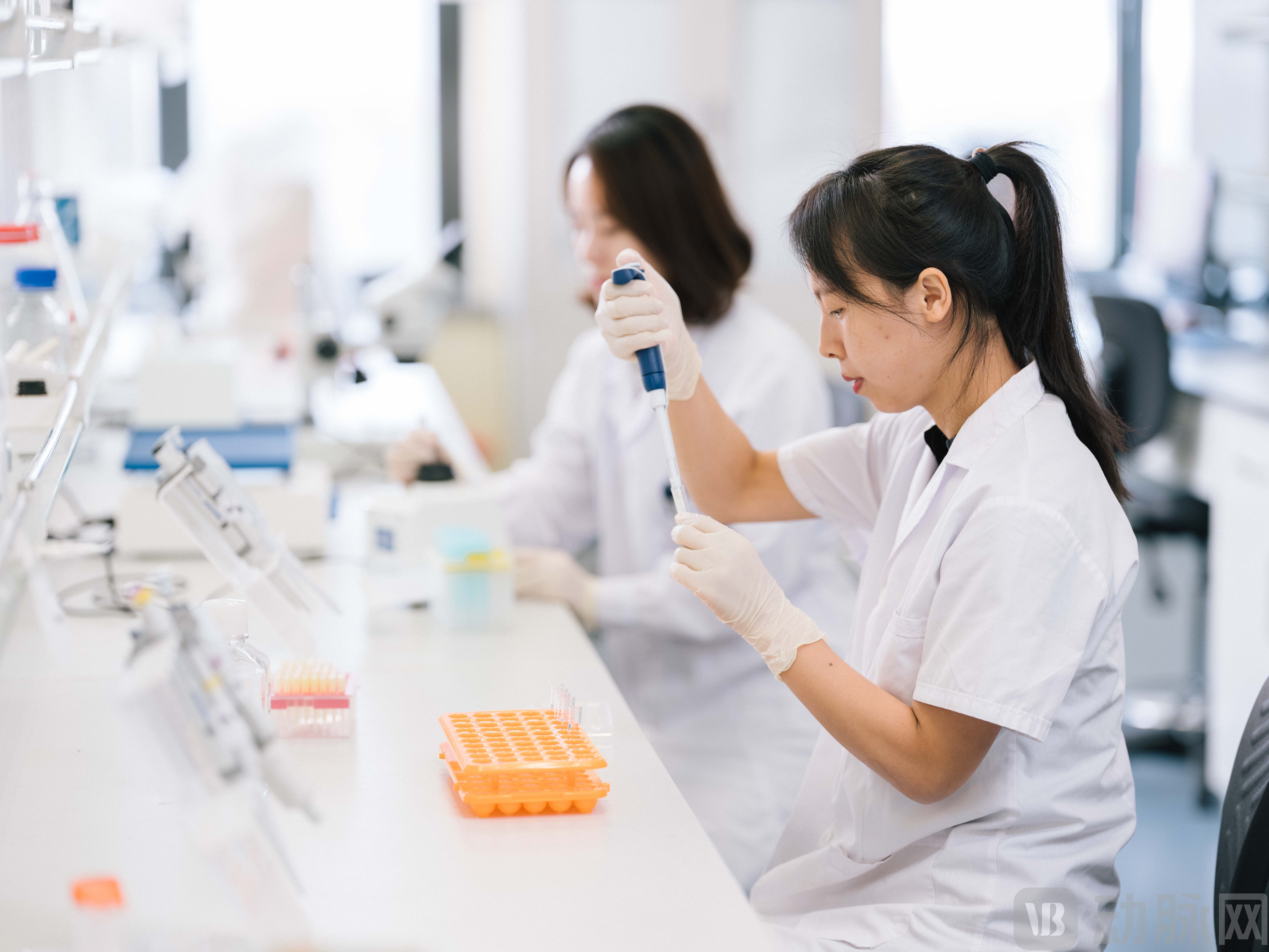
Company'sFlagship Product: Myasthenia Gravis Autoantibody IgG Detection KitUsing CBA and CBA-TSA methods, the detection of pathogenic antibodies for myasthenia gravis (AchR, MuSK, and LRP4) and common thymoma-associated antibodies (Titin and RyR) showed significantly higher sensitivity and specificity compared to traditional radioimmunoassay and ELISA methods.
Notably, new antibodies are discovered every year among humoral biomarkers for neuroimmune diseases. Tianhai Xinyu closely follows industry frontiers, promptly updates its products, and continuously meets clinical needs. Meanwhile, in view of the characteristic large sample volume in Chinese hospitals,The company uses 96-well plates as carriers, enabling the simultaneous processing of over 20 assays to meet the demand for high-throughput testing in China.
In 2020, Tianhai Xinyu and KingMed Diagnostics entered into a strategic partnership,Leveraging KingMed Diagnostics’ extensive industry experience and channel resources, Tianhai Xinyu is better positioned to introduce its advanced diagnostic technologies for neuroimmune diseases to the market. Currently, Tianhai Xinyu’s products are utilized by leading top-tier hospitals across China, including Beijing Tiantan Hospital, Beijing Xuanwu Hospital, and Xiangya Hospital of Central South University.
Furthermore, to address the differences in diagnostic reference values for neuroimmune diseases between Chinese and Euro-American populations, Tianhai Xinyu and KingMed Diagnostics have jointly established reference values for certain neuroimmune disease biomarkers specific to the Chinese population, which holds significant importance for disease diagnosis and clinical treatment.
Dr. Chen Jingshan stated, “Our understanding of the diagnosis of neuroimmune diseases is merely the tip of the iceberg; current focus remains largely on a limited number of disease areas, such as central demyelinating diseases, autoimmune encephalitis, and myasthenia gravis. The company is expanding into additional disease areas, including Alzheimer’s disease and Parkinson’s disease.”The company’s Alzheimer’s disease detection technology, developed using single-molecule immunoassay technology, boasts a sensitivity 1,000 times greater than that of conventional methods, making it a powerful tool for breaking through the bottlenecks in early screening and diagnosis of Alzheimer’s disease.”
“Meanwhile, as new antibodies associated with autoimmune neurological disorders continue to be discovered, the number of antibodies linked to myasthenia gravis, for instance, has expanded from an initial one or two to eight or even more. The company will continuously optimize its products in response to newly identified antibodies, keeping pace with market developments. Furthermore, the company is closely monitoring emerging technology platforms such as microfluidics and single-molecule immunoassay technologies, thereby advancing diagnostic capabilities for neuroimmunological diseases.”