

Capital and Technology to Drive the Future of Large-Scale Dental Chains: An Interview with Ding Ning, General Manager of Rongyu Group
A Two-Way Courtship Between A-Share Listed Companies and Dental Healthcare Service Providers: Beyond Signaling Sustained Heat in the Dental Sector, What Else Does It Imply?
In September 2021, Rongyu Group officially disclosed its acquisition plan for a 51% equity stake in Delun Medical, announcing its formal entry into the dental medical services sector and reclassifying its industry concept accordingly. This new business line is worlds apart from Rongyu Group’s former core business, which focused on the research and development, production, and sales of permanent magnet switches and complete sets of high- and low-voltage switchgear.
The other key player in the transaction, Delun Dental, is not only a well-known dental care service brand in the Guangzhou-Foshan region but also the earliest dental care service provider in South China to embark on digital transformation. It boasts a Digital Implant Center and a Digital Orthodontics Center, as well as the only in-house, independently operated one-stop Digital Center in Guangzhou, with a surgical guide utilization rate exceeding 90%.
On the surface, against the backdrop of the rapid development of the oral healthcare industry, the convergence between listed companies and chain brands of dental medical services seems unsurprising. Some reports have even bluntly stated that Rongyu Group aims to replicate the “Thermacare Medical” miracle.
In a sense, this is indeed a collaborative effort characterized by mutual commitment and win-win outcomes.
For Rongyu Group, this mutual engagement has identified a new growth driver for profitability. According to the company’s latest disclosure, Rongyu Group achieved revenue of RMB 212 million in the first half of 2022, representing a year-on-year increase of 331.50% compared with the same period in 2021. This surge was primarily attributable to the company’s completion of the acquisition of Delun at the end of last year, marking its formal entry into the dental medical services sector.
As for Delun Dental, according to Ding Ning, General Manager of Rongyu Group, Delun Dental opened four new flagship clinics in just six months after Rongyu Group completed its acquisition. “This year will be the fastest year for Delun’s scale expansion.”
However, it would be overly simplistic and reductive to define this acquisition merely as a straightforward convergence of capital and dental healthcare services. In its dialogue with Ding Ning, VCBeat discovered that the acquisition of Delun Dental was only the prelude to Rongyu Group’s entry into the dental sector; the underlying ambitions are far more complex than they appear.
The development was not sudden.
Prior to Rongyu Group’s formal disclosure of its acquisition plan for Delun Dental in September 2021, the company had already revealed a preliminary transaction proposal in May of the same year, capitalizing on which it recorded eight daily limit-ups throughout May, with its monthly stock price surge exceeding 180%.
Speculation from outside parties attributes Rongyu Group’s strategic pivot to “sluggish growth in its core business, necessitating the identification of new revenue drivers.” Accordingly, oral healthcare services have become the first target market for Rongyu Group’s business transformation.
It is not difficult to surmise the reason: the oral healthcare services market is a sufficiently large pie, ensuring its position among the top contenders.
According to Frost & Sullivan, the market size of China’s dental medical services was approximately USD 26.2 billion in 2020, with a projected CAGR of 11.1% from 2020 to 2030. Furthermore, according to relevant reports on the dental medical services industry by Guohai Securities, due to the consumer-oriented nature of dental care, the market is expected to experience high growth once income levels surpass a certain threshold.
Taking the U.S. dental care market as an example, from 1966 to 1987, the U.S. per capita GDP surged from $4,000 to $20,000, while per capita dental expenditure rose from $15.2 to $104.5, driving rapid growth in the dental care market. China’s per capita GDP exceeded $10,000 in 2019, aligning closely with the U.S. figures for 1978. This suggests that China’s dental care services market is currently in its golden period of development.
Furthermore,Oral healthcare services remain a “capital-friendly” market. This is largely attributable to the high proportion of out-of-pocket payments, minimal reliance on public medical insurance, and a high degree of privatization in the oral healthcare services market.
From a payment perspective, out-of-pocket expenses account for a relatively high proportion of dental care costs, while the share covered by medical insurance settlement is comparatively small. Furthermore, even though centralized procurement of dental implants has been placed on the agenda, dental healthcare service providers are less affected compared to upstream manufacturers, who bear the brunt of the impact.
From the perspective of competitive landscape, the field of dentistry is one of the key areas where private healthcare providers are concentrated.
On the one hand, the state has continuously introduced relevant policies to promote the development of oral hygiene, proposing to fully leverage the market’s role in resource allocation within the non-essential oral health sector, while encouraging, guiding, and supporting socially operated oral medical services.
On the other hand, due to the limited scope of medical insurance coverage for dental services, a high degree of marketization, and relatively low capital requirements for starting dental practices, a large number of private enterprises have entered the field, resulting in a competitive landscape dominated by private institutions.
Not only that, but as of today, the competitive landscape of China’s dental care services market remains relatively fragmented, with no absolute leading chain brand emerging. This relatively fragmented competitive structure has not only created room for capital and private enterprises to play a role but also sparked a boom in primary market investments.
However, the fervor in the dental care services market is not confined to the primary market.
According to Ding Ning,“The fervor in the primary market for dental medical services in recent years will inevitably lead the entire industry to anticipate corresponding platform opportunities in the secondary market. From the corporate perspective, an increasing number of dental medical service institutions are seeking to embrace capital platforms to ensure survival and growth amid fierce competition. From the primary market perspective, the earlier boom attracted a large influx of investment firms; after years of rapid development, some portfolio companies have reached the mid-to-late stages of financing, prompting their investors to seek exit strategies, thereby fueling expectations for the emergence of suitable capital platforms in the secondary market.”
Seizing this opportunity, Rongyu identified dental medical services as its strategic direction for transformation and won over Delun Dental with utmost sincerity.
Of course, this “good faith” encompasses capital, the brand endorsement of a listed company, and various forms of empowerment for Delun Dental. Yet among these, the most valuable aspect—and the one most compelling to Delun Dental—may well be an ambitious strategic roadmap.
“Let me make one thing clear: I am not telling a story.” Before beginning his talk, Ding Ning first gave VCBeat a preemptive warning.
This has piqued the interest of VCBeat—what kind of strategic plan will this industry professional, with a composite background in investment banking and dental medical services and having previously worked at CITIC Securities and Happy Dentistry, propose?
“For chain clinics, medical care is essential, but it may not be the core competitive advantage. The true core competency should lie in ‘capital + technology.’” Ding Ning believes that while a single dental clinic is a healthcare institution, a chain group with a thousand dental clinics is undoubtedly a technology company.
How to Accurately Understand the Term “Technology”? Ding Ning’s Subsequent Narrative Deviates Significantly from Traditional Medical Conventions.
In Ding Ning’s view, the connotation of “technology” encompasses two aspects: digitalization and standardization. However, his understanding of digitalization and standardization differs from the prevailing industry perceptions.
Currently, the industry’s understanding of digitalization primarily encompasses two aspects: first, clinical-side digitalization, which aims to “make clinical diagnosis and treatment more precise and of higher quality”; second, management-side digitalization, which aims to improve managerial efficiency, standardize management processes, and so on.
This is far from the digitalization Ding Ning had envisioned.“The ultimate goal of digitalization I envision is neither limited to clinical digitalization nor to back-end management digitalization, but rather to transform the production model of dental healthcare through digital technologies, thereby achieving the ‘industrialization’ of dentistry.”
Taking dental implantation as an example, implant robots have already been deployed in clinical practice. Leveraging digital tools such as surgical guides and implant robots, implant procedures can be performed with greater precision. However, at the current stage, the presence of an implant surgeon is still required during the operation of implant robots.
AndIn the industrialized “vision,” after thorough doctor-patient communication, doctors need only design implantation plans at headquarters. Upon receiving the implantation design plan, clinics or hospitals can have implantation robots independently complete the procedure with simple guidance from nurses or medical assistants—“The goal of industrialization is to simultaneously enhance both clinical quality precision and service efficiency,” said Ding Ning.
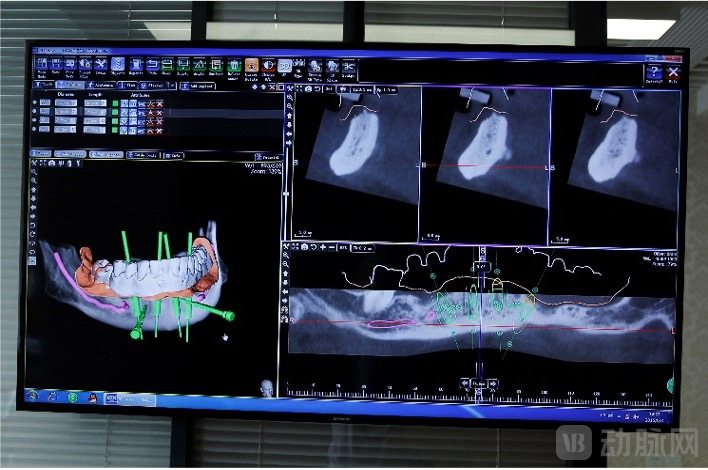
Dental Digitalization Center Work Scenarios
This same rationale also applies to multiple dental specialties, such as clear aligner orthodontics. The reason is that dentistry is a hard-tissue medical discipline involving externally exposed structures, which not only facilitates digital imaging but also demands high operational precision. This gives dentistry inherent advantages in digitization and industrialization.
To realize Ding Ning’s vision for digitalization, standardized collaboration must naturally keep pace.
This general manager also holds rather unique insights on standardization.
“For product-driven industries, the key to standardization lies in the supply chain; for service-oriented industries, current practical standardization relies primarily on training. The dental healthcare industry is precisely a combination of both, with its standardization hinging on both training and supply chain management. However, once the number of affiliated clinics reaches a certain scale, the effectiveness and efficiency of training become uncontrollable, following the law of ‘entropy increase.’ As for the supply chains in product-driven industries, who doesn’t have warehouses, trucks, or ERP systems?” Ding Ning posed this probing question regarding the current state of standardization in the dental healthcare services industry. Therefore, “in the era of digital dentistry, achieving large-scale standardization of offline services necessitates replacing human labor with technology.”
In other words,In an ideal dental care service model, the pre-consultation phase involves minimal human staff interacting with patients online. These staff members leverage AI-driven semantic analysis integrated with database systems to automate patient registration, triage, and appointment scheduling. Offline, basic dentists and nurses provide highly standardized services, including imaging acquisition and preliminary clinical examinations. Meanwhile, specialist dentists operate from digital centers, where they remotely conduct AI-assisted diagnoses based on comprehensive dental imaging data—such as CT scans and intraoral scans—and formulate corresponding treatment plans.
During the consultation phase, general practitioners and nurses at the clinic will perform chairside procedures using digital tools such as 3D printers, surgical guides, bracket/attachment positioners, and even robots, in accordance with the remote treatment plan. In the post-consultation phase, a small number of service staff will leverage AI assistance to communicate post-treatment instructions and conduct follow-ups.
However, Ding Ning also candidly acknowledged that “while this system can effectively address over 90% of common conditions encountered by private dental clinics, it is essential to promptly revert to in-person consultations and hands-on procedures by specialists for patients with more complex cases, so as to ensure the quality of diagnostic and treatment services.”
In this way,Not only are medical care and service quality guaranteed, but several major challenges currently facing the development of the dental healthcare services industry can also be addressed:
First, this system undoubtedly enhances efficiency for experts. By standardizing, digitizing, and moving online tasks such as communication and imaging examinations, it positions experts at the most core and irreplaceable role: formulating treatment plans.“In this way, an expert who could originally see only 10 patients per day can even handle 100 patients a day in the era of industrialized dentistry.”
andWhile significantly improving physicians’ consultation efficiency, the industrialized oral healthcare ecosystem also helps clinical practices reduce their reliance on specialists—a critical bottleneck, as the scarcity of high-quality dental professionals has long been a key constraint on the development of oral healthcare services.
Furthermore, alleviating the shortage of dental professionals translates to lower labor costs. This reduction in labor expenses, combined with highly standardized services, effectively addresses the two major challenges—capital constraints and standardization—that dental service providers face when expanding their clinic networks.
Moreover, according to Ding Ning, most medical institutions are currently tightly bound to experts and upstream manufacturers, leaving them with limited bargaining power in pricing products and services. This has led to the emergence and intensification of product (and service) homogenization, which in turn exacerbates another widely recognized industry pain point: an excessive emphasis on marketing, or, in layman’s terms, “aggressive advertising.”
ButWhy do companies continue to pay for various customer acquisition channels despite widespread complaints about high customer acquisition costs?
Ding Ning stated:“Customer acquisition difficulties are merely superficial; the root cause lies in the significant challenges dental service providers face in implementing reforms when confronting powerful upstream manufacturers and experts.”—Everyone is selling Invisalign, and small clinics offer it at even lower prices. As a result,“Patients either believe they are purchasing standardized products or seeking out specialists, with the specific clinic being of secondary importance. Consequently, clinics have no choice but to invest heavily in marketing to attract patients to their facilities.”
“Under such circumstances, do dental healthcare service providers have the confidence to forgo reliance on renowned experts and costly branded consumables at the front end, and instead leverage a centralized, precision digital diagnosis and treatment system to convince patients that they can deliver equivalent quality of care at lower prices guided by policy?” added Ding Ning. “In fact, only such institutions can break free from the cost burdens associated with experts and marketing under the backdrop of centralized volume-based procurement, thereby carving out their own space for survival and development.”
Overall, Ding Ning’s expectations for the future development of oral healthcare services can be summarized as providing “more standardized, more technologically advanced, more efficient, and more affordable (cost-effective)” oral healthcare services to meet the needs of the entire health system and the general public. Once the aforementioned visions for digitalization and standardization in dentistry are realized, this expectation will naturally come to fruition.
Furthermore,Regarding the timeline for implementation, Ding Ning also stated that “it’s just a matter of three to five years.” This is because, on one hand, the pace of digitalization across all medical fields in China, including dentistry, has been remarkably rapid. In fact, leading dental institutions nationwide are already actively putting these “visions” into practice from various perspectives and to varying degrees.
Taking dental implantation as an example, China issued medical device licenses for implant robots in April 2021. The approved dental surgical robots employ a non-contact optical navigation system, which establishes precise spatial relationships among the optical tracking locator, the robot, and the patient through visible light navigation, thereby enabling optical tracking, motion following, and automated implant placement during surgery.
Dental implant robots can assist clinicians in achieving high-precision outcomes, controlling angular deviations to within 1°–2° and positional errors to within 0.5 mm. To a certain extent, they also facilitate minimally invasive procedures, reduce surgical risks, shorten operative time, and enable standardized implant placement. In November 2021, Delun Dental introduced a dental implant robot and has since successfully performed robot-assisted dental implant surgeries.
On the other hand, although the current level of digitalization in China’s dental healthcare sector is limited, it has been developing at a very rapid pace in recent years, with a surge of third-party professional service providers emerging across the market. Therefore, the difficulty of turning the vision of industrialized dentistry into reality is not as high as one might imagine.
According to Ding Ning, the primary challenge currently lies in reducing reliance on experts at the chairside. However, this difficulty is gradually being resolved with continuous improvements in software capabilities, imaging equipment, and data acquisition and analysis. Building on this foundation, along with enhanced management practices such as standardized material coding and controllable costs, “I truly believe it can be achieved within three to five years.”
Dental Lun’s position as the counterparty in this transaction is attributable not only to factors such as store scale, medical quality, and expert resources, but also to its digital capabilities, which lead the industry and serve as a guarantee for Rongyu Group to realize its ambitions in oral healthcare services.
Compliance is the primary reason why Delun has gained the favor of Rongyu.
According to Ding Ning, domestic dental healthcare service providers have evolved from small-scale operations into chain institutions. However, many still face certain compliance issues, whereas listed companies are held to higher standards in this regard. This is one of the reasons why some dental chains find it difficult to go public through mergers and acquisitions. Delun Dental has placed significant emphasis on compliance reforms since several years ago. Therefore, both parties have a solid foundation for collaboration.
Furthermore, in terms of clinical care, Delun has not only established nine specialized departments—including Implantology, Orthodontics, Prosthodontics, Endodontics, Periodontics, Pediatric Dentistry, Oral and Maxillofacial Surgery, Comfort Anesthesiology, and Clinical Laboratory—as well as three major centers: the Digital Center, the Dental Prophylaxis Center, and the Oral Health Center. These facilities are dedicated to fully meeting public demands for oral disease diagnosis and treatment, as well as oral healthcare and restorative services. Additionally, Delun has implemented a three-tier medical service system and adopted a “1+N” chain operation model for dental care, thereby forming a business development framework characterized by “General Hospital + Flagship Hospitals + Boutique Hospitals.”
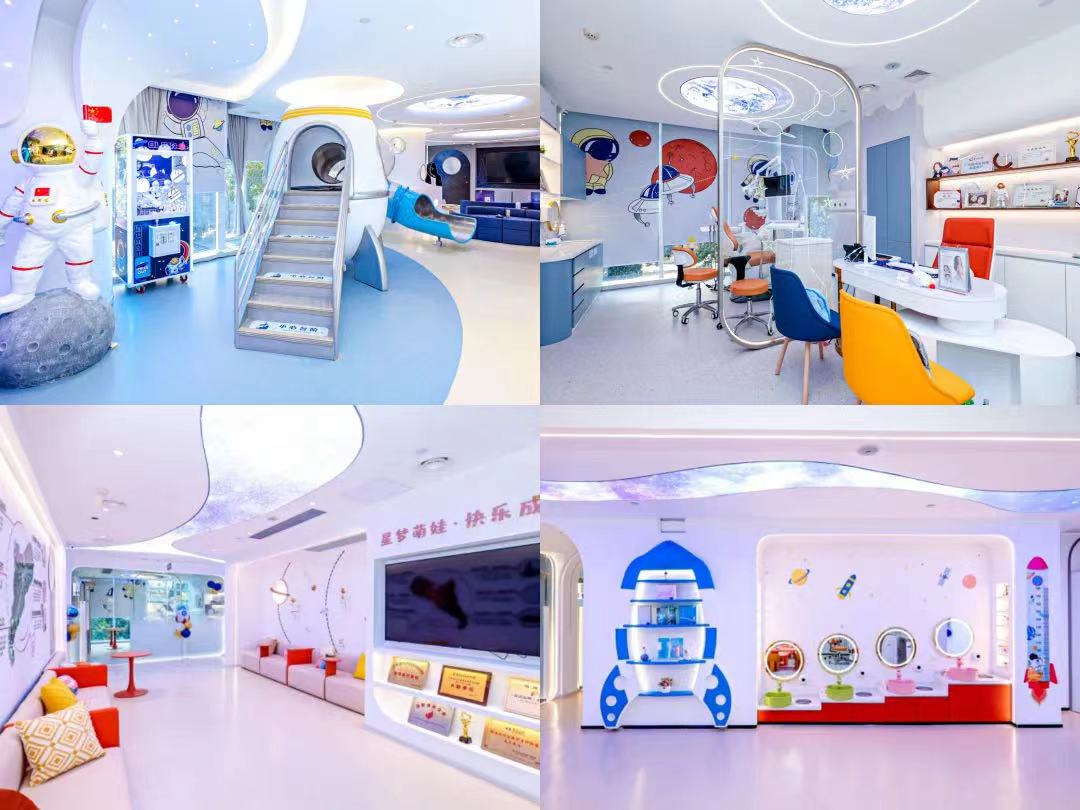
Delun Pediatric Dental Center
Among these, Dongfeng General Hospital primarily comprises a Digital Center, an R&D Center, and a Denture Processing Center. Staffed with chief physicians and general practitioners, it serves as a core Delun branch and is one of the largest private dental healthcare institutions in Guangzhou. Flagship branches are established across various districts of Guangzhou with comprehensive departmental setups; acting as brand hubs, they basically meet the needs for general dentistry, dental implants, and orthodontics. Boutique clinics are primarily set up based on urban communities, focusing on general dental outpatient services to drive patient referrals and maintain brand presence.
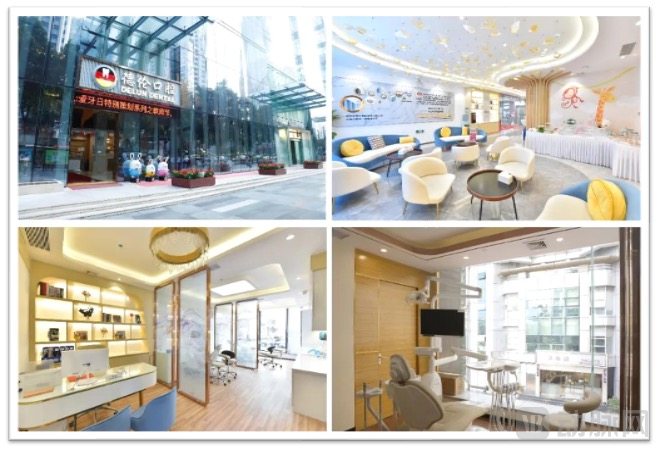
Dental Interior of Delun Stomatology
Notably, Delun has established 16 major quality control groups for service assurance, including the Medical Quality Control Group, the Hospital Infection Control Group, the Emergency Preparedness and Response Group, and the Sterile Supply Department. It has also built a professional medical team comprising nearly 100 full-time registered physicians and 200 nursing staff, and founded an International Dental Expert Division staffed by several international dental specialists.
It is precisely under the combined influence of multiple factors, including medical quality, diagnosis and treatment systems, and expert resources, that Delun has become one of the largest chain dental healthcare enterprises in South China and the largest dental healthcare chain in the Guangzhou-Foshan region, wielding strong regional brand influence.
However, as mentioned earlier,What truly led Rongyu to choose Delun may lie more in Delun’s level of digitalization.
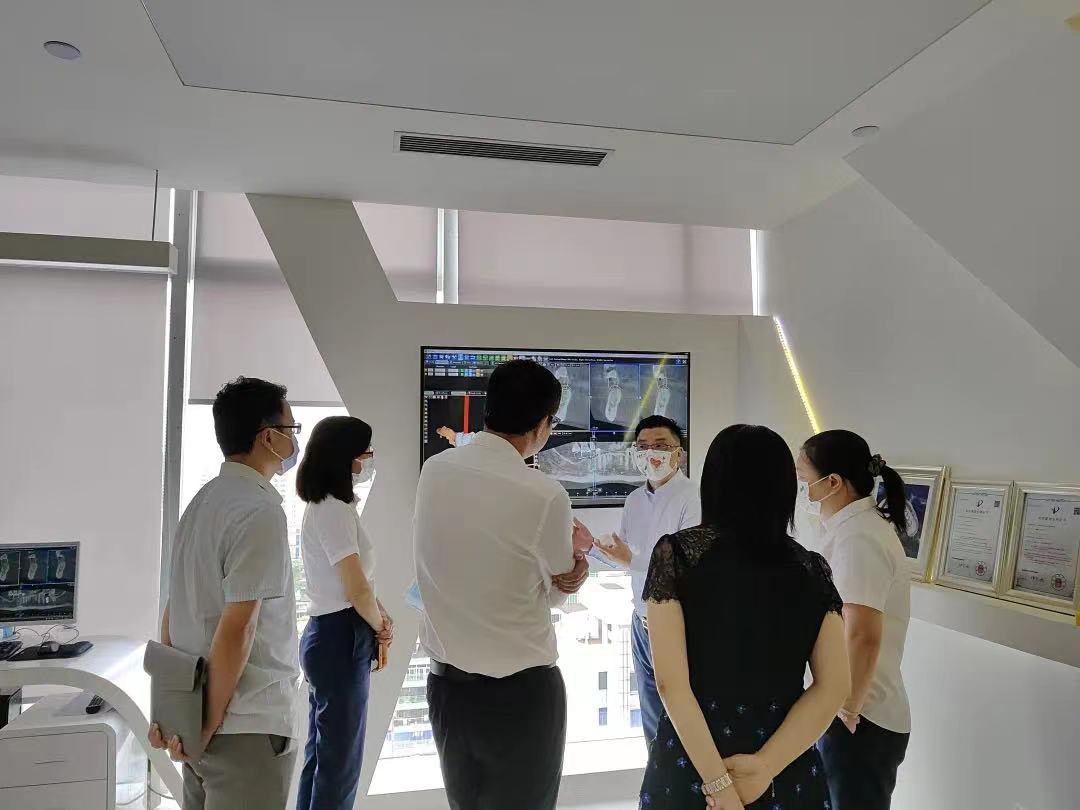
Mr. Huang Weitong, President of Delun, is introducing the Digitalization Center
Dental possesses Guangzhou’s only in-house, independently operated one-stop digital center. Integrating data analytics, model design, and product manufacturing, the center delivers comprehensive digital solutions for dental implants, orthodontics, and cosmetic restorative dentistry. Since its establishment, it has successfully completed over 30,000 design and surgical cases, ranking among the top in China.
Furthermore, in the field of dental implantology, Delun has achieved full-process digitalization across diagnosis and treatment. Specifically, Delun utilizes patient CT imaging data to perform preoperative diagnosis and simulate implant placement using specialized implant design software. The preoperatively formulated implant plan is then applied throughout the surgical and restorative phases via surgical guides, thereby realizing restoration-driven implant technology.
However, in Ding Ning’s view, although Delun’s level of digitalization and standardization is already relatively high compared to other dental chain institutions, there is still room for improvement. Therefore, digital information construction will be one of the key directions in which Rongyu will guide and empower Delun over the next five years.
In addition, Rongyu will leverage the advantages of its listed-company capital platform to help Delun expand its business scale and increase the number of stores.
As forRongyu’s footprint in the dental care services sector clearly begins with Delun, but it is by no means the endgame. Looking ahead, Rongyu will concentrate its efforts on two key areas: first, acquiring small and medium-sized dental clinics across the Greater Bay Area to bolster Delun’s market share and solidify its competitive position.
Second, it seeks to acquire leading national dental chains. In an interview, Ding Ning also disclosed to VCBeat the three basic criteria Rongyu uses for selecting targets: regulatory compliance, brand influence, and stable business growth.
In fact, it is evident that Rongyu’s expansion plan for Delun remains regional in the short term. Even if Rongyu aims to create a nationwide blueprint for a dental care chain, it shows a stronger preference for acquiring regional leaders in other areas.
At the end of the interview, Ding Ning responded to this question,He also shared his views on the cross-regional expansion of dental healthcare service providers—summarized in one sentence, it is “feasible but unnecessary” at the current stage.
The reason is that, first and foremost, from a logical standpoint, there is indeed the potential for nationwide chain operations in oral healthcare services.Because even though oral healthcare falls under local life services, the public’s demand for dental medical services is consistent: “no missing or damaged teeth, and straight, white smiles.” This demand does not vary by region, leading to a standardized supply of dental service products.
Secondly, in practice, China’s dental healthcare industry remains fragmented and dominated by small-scale providers, lagging significantly behind international leading chains with thousands of affiliated clinics. This disparity reflects the relatively low maturity of China’s dental healthcare sector, indicating substantial room for improvement in digitalization and standardization.
Once again, the difficulties in customer acquisition and the high costs associated with it remain significant challenges for dental medical service institutions."This also means that 'if you open 20 local outlets, you can spread out such costs; but if you expand to other regions or even nationwide, the marketing expenses and revenue might not balance out.'"
Finally, in fact, based solely on the current supply of oral healthcare services, there remains a significant amount of unmet demand within this region.Therefore, it is slightly premature to discuss nationwide expansion in China when the brand foundation has not yet been solidified and local demands have not been fully met.
“Logically speaking, dental care services can certainly be operated as a nationwide chain. However, given the current limited level of development, a regional chain strategy may be more reasonable and efficient. Therefore, whether it is our Delun or other dental chains, we should first gain a thorough understanding of our local markets,” summarized Ding Ning.