

Dongling Health Files IPO Prospectus: Pioneering Fitness Wellness for the 50+ Population in China
When it comes to exercise methods for middle-aged and older adults, what is the first thing that comes to mind? Is it walking, tai chi, or square dancing?
Admittedly, constrained by the decline in physical functions such as muscle strength and joint flexibility, the sports market for middle-aged and elderly individuals, particularly the elderly, has long remained marginalized. Even the surge in popularity of sports rehabilitation this year, driven by the Winter Olympics, failed to provide a boost.
However, in reality, the exercise needs of middle-aged and elderly populations are not as low as commonly perceived, nor are their preferred forms of physical activity so monolithic. Candidly speaking, even today, with an aging demographic trend coupled with a potentially vast demand for exercise, while this group may give rise to a promising blue-ocean market, the challenges facing its development remain substantial. Even Li Yanan, CEO of Shenzhen Dongling Health Technology Service Co., Ltd. (hereinafter referred to as “Dongling Health”), which is already active in this sector, admitted, “We initially underestimated the complexity.”
Founded in 2021, Dongling Health focuses on the middle-aged and elderly population aged 50 and above. By leveraging scientific exercise as a key intervention, the company is committed to enhancing the health-related physical fitness of this demographic and actively promoting healthy aging in China. To date, Dongling Health operates two self-run stores in Shenzhen and is advancing collaborations with multiple wellness communities and elderly care service providers.
In 1996, the U.S. Department of Health and Human Services defined physical fitness as “the set of attributes that people have or achieve that relates to the ability to perform physical activity,” comprising five components: body composition, cardiorespiratory function, muscular function, motor function, and metabolic function. Only individuals with good physical fitness can carry out daily tasks with vigor and without undue fatigue.
“At present, the sector of exercise and health for middle-aged and elderly people is still in its infancy in China, with all players remaining in an exploratory phase. Some have chosen to start with exercise equipment, while others have focused on product sales. In contrast, Dongling Health has chosen to enter the market by offering health-related fitness courses tailored to middle-aged and elderly individuals, aiming to meet their exercise and health needs and systematically address the pain points and challenges currently facing the industry,” said Li Yanan.
The domestic fitness industry has developed for many years. Why have there been no best practices in the sports and health market for middle-aged and elderly people?
The unique physical and psychological characteristics of middle-aged and elderly populations may be one of the reasons.
According to Li Yanan, as people age, their muscle mass and strength decline rapidly, and bone loss accelerates, leading to conditions such as osteoporosis. Furthermore, due to long-term poor posture and gait, sports injuries, and age-related degenerative diseases, human motor function is inevitably impaired. For instance, conditions like frozen shoulder and knee osteoarthritis not only cause physical pain but also directly affect a person’s mobility and exercise capacity.
Not only that, but middle-aged and elderly individuals are also the primary population affected by chronic diseases. “Especially for uncles and aunts over the age of 65, it is possible for one person to suffer from at least two types of chronic diseases. And for those with conditions such as hypertension, hyperglycemia, and cardiovascular and cerebrovascular diseases, there is indeed a certain risk associated with exercise. Therefore, in“Given that most gyms currently lack the capacity to assess and identify exercise-related risks in older adults, they have chosen to deny service to elderly individuals with fitness needs in order to prevent potential risks.”
Furthermore, in the field of sports and health, middle-aged and elderly populations have not yet developed a willingness to pay. The entire market still requires a prolonged period of user education.
Consequently, the traditional business logic of commercial gyms is not applicable to the sports and health sector for middle-aged and elderly individuals. Practitioners in the elderly care industry have a limited understanding of sports-related health and remain skeptical about the value of physical exercise. As for the medical industry, although doctors generally recognize and accept the concept of integrating sports with medicine, they may overemphasize the rehabilitative aspect of exercise—focusing on rehabilitation for patients with diseases rather than promoting exercise among healthy populations. Therefore, few professionals from the fitness, elderly care, or medical sectors have ventured into the field of sports and health for the middle-aged and elderly.
Yet, even aware of the long and arduous road ahead, Li Yanan still chose to focus his entrepreneurial efforts on this particular sector. From a rational perspective, this is a market fraught with both risks and opportunities, where no one has yet achieved proven success; it is also an endeavor aligned with the principle of “altruism.” From an emotional standpoint, Li’s decision was deeply inspired by the philosophy of Professor Li Jian’an, a renowned expert in China’s rehabilitation industry. “Professor Li strongly advocates the concept of ‘proactive health,’ promoting exercise as a means to maintain well-being, thereby preventing or delaying disability.”
Therefore, Li Yanan founded Dongling Health to advocate and practice the principle that “scientific exercise is the best way to maintain health.”
In fact,It is not entirely accurate to equate Dongling Health with a gym for middle-aged and elderly individuals.
From a business positioning perspective, Dongling Health’s offerings encompass “health and fitness curriculum development,” “scientific exercise training services,” and “comprehensive operation of exercise and wellness spaces” for individuals aged 50 and above.
Centered on these three business positions, Dongling Health has expanded into five major service modules: sports training, sports dance, sports massage, sports rehabilitation, and exercise therapy.
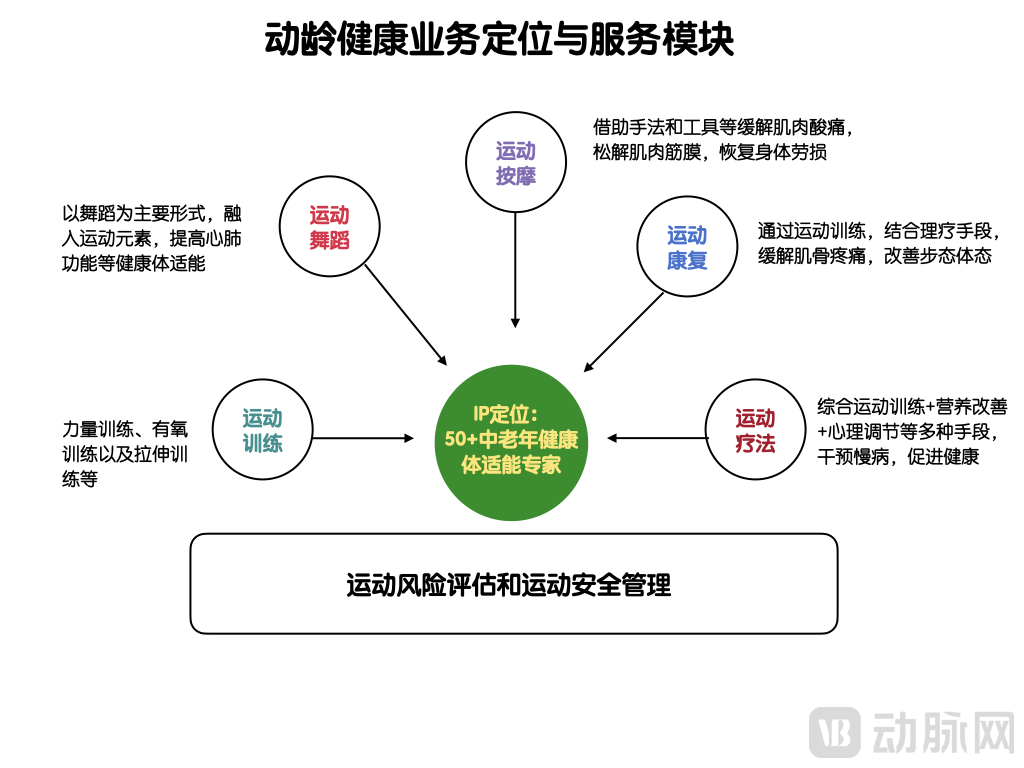
Among these, exercise training and dance sports are currently the most popular course types for promoting health through physical activity, and they also serve as the foundation for delivering services such as exercise rehabilitation and exercise therapy. Furthermore, courses targeting muscular fitness, cardiorespiratory fitness, motor fitness, and metabolic fitness are all centered around an innovatively developed health-related physical fitness training system.
VCBeat has learned that Dongling Health has established an online-to-offline physical fitness curriculum system, which can be personalized based on each user’s physical characteristics and exercise habits.
However, as previously mentioned, the middle-aged and elderly population possesses unique physical and psychological characteristics; therefore,In terms of curriculum development, Dongling Health will draw on the scientific standards of the American College of Sports Medicine for its design and development.
After the preliminary design of the course is completed, it must undergo a movement review by Dongling Health’s professional team. Furthermore, before the course is officially launched, Dongling Health will organize user trial sessions to adjust the movements and choreography, ensuring better adaptation to the spatial constraints and equipment conditions of the venue.
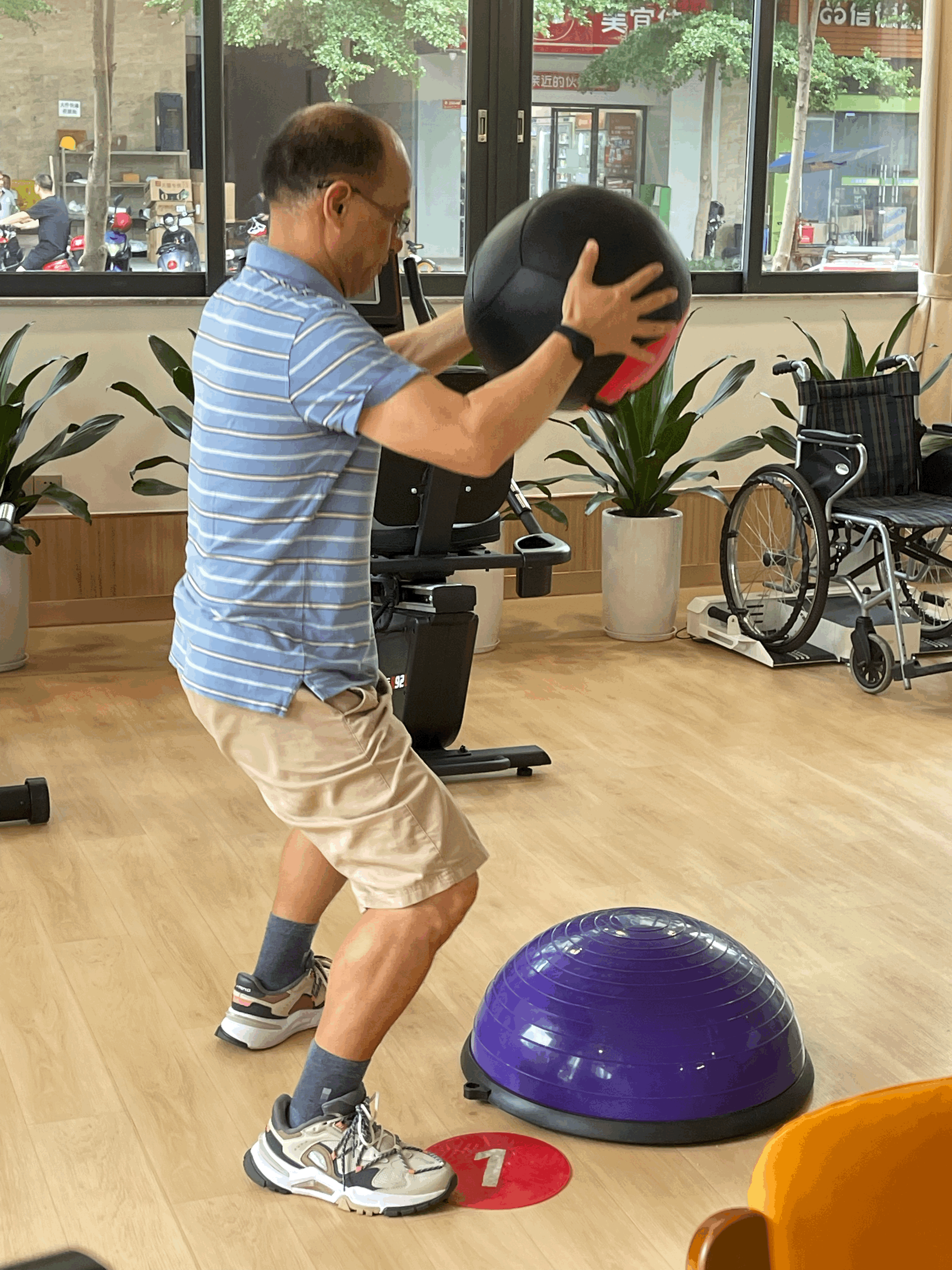
Among them, the professional team within Dongling Health will undoubtedly safeguard the professionalism, scientific rigor, and safety of course development.
For example, Shanjiao Luo, Chief Technology Officer of Dongling Health, is an ACSM-certified Group Exercise Instructor, a specialist in exercise physiology, an ACE-certified Medical Exercise Specialist, one of the first ACSM-CSSSM CPT-certified instructors, and a German MTT-certified Medical Exercise Therapist.
Wang Wei, Chief Product Officer at Dongling Health, graduated from Beijing Sport University with a specialization in health management for middle-aged and older adults within the Social Sports Guidance program. She holds the Senior Fitness Specialist certification from the National Academy of Sports Medicine (NASM) and the Group Exercise Instructor for Older Adults certification from the American Council on Exercise (ACE).
Not only that,To address the challenge of assessing exercise capacity and screening for exercise-related risks in middle-aged and elderly populations, Dongling Health has also proposed its own solution:
First, Dongling Health conducts a preliminary assessment of the user’s medical history, specific physiological signs, and regular exercise habits and intensity. Building on this foundation, it also measures the user’s resting heart rate, blood pressure, height, weight, and Body Mass Index (BMI). Subsequently, Dongling Health performs a multidimensional evaluation of the user’s health-related physical fitness. Based on the assessment results, Dongling Health develops personalized exercise plans for each user.
andDuring exercise, Dongling Health will also provide each user with a heart rate armband to monitor heart rate via the venue’s large screen; if any abnormal heart rate is detected, the system will trigger an alarm alert.
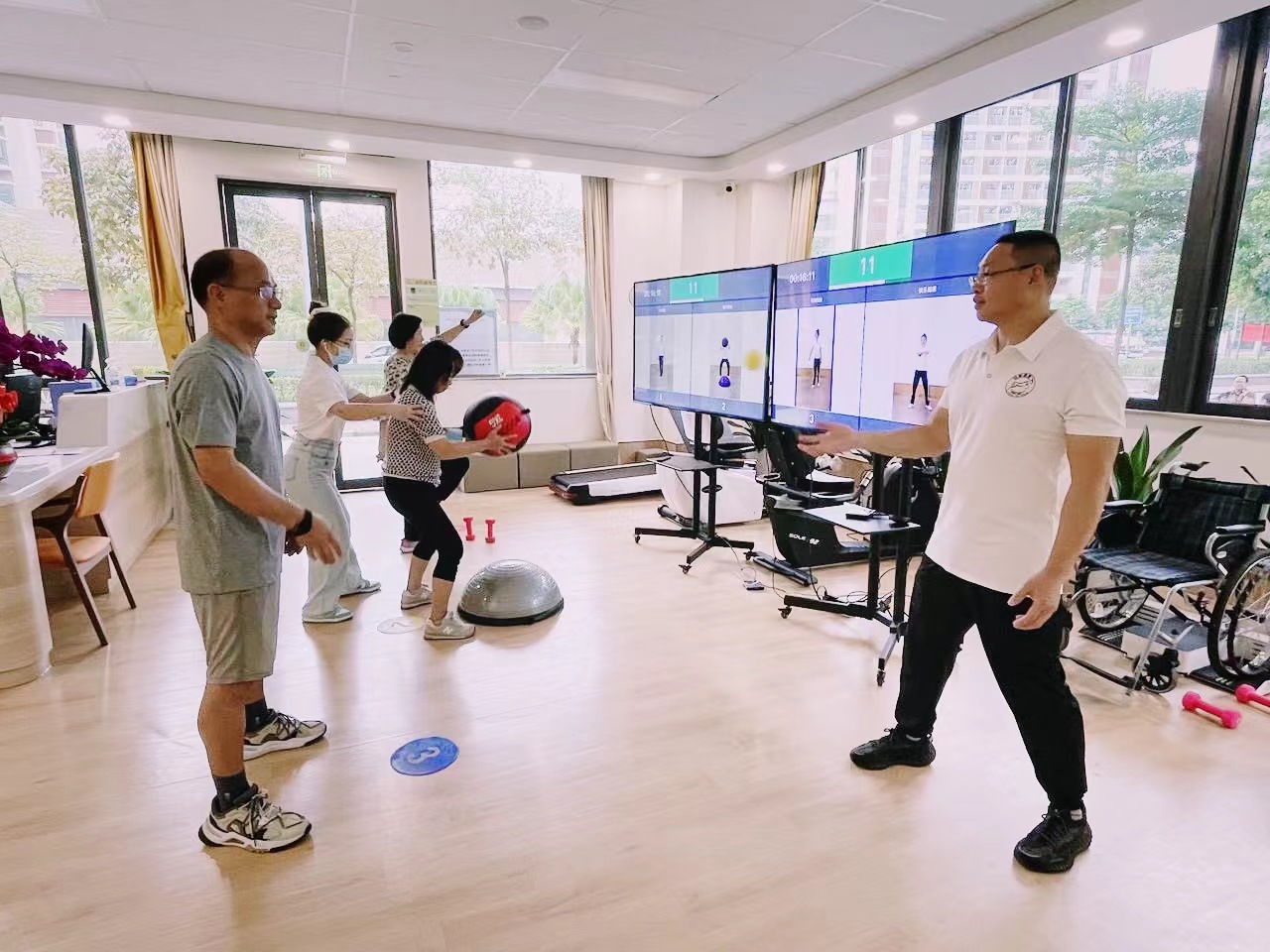
Furthermore, Dongling Health has given thorough consideration to safety in its site selection. According to Li Yanan, the company prioritizes ground-floor locations adjacent to community health service centers or comprehensive medical institutions, ideally within a five-minute walking distance for emergency access.
Moreover, Dongling Health requires all employees to complete cardiopulmonary resuscitation (CPR) training in emergency first aid and obtain CPR certification to prevent emergencies.
Furthermore, in addition to ensuring the professionalism and safety of its courses, Dongling Health also tailors its recruitment strategies to address the specific needs of the elderly population.
In the interview, Li Yanan candidly stated, “I“When recruiting coaches, in addition to assessing their professional competence, we place significant emphasis on their approachability and patience. This is because older adults may experience difficulties such as memory lapses in recalling movements, slowed reaction times, and hearing impairment, all of which require coaches to demonstrate ample patience and approachability.”
Leveraging a curriculum system precisely aligned with market needs, along with comprehensive risk assessment and response mechanisms, Dongling Health has established two self-operated stores in Shenzhen and forged partnerships with multiple health and wellness communities. The company provides services such as personnel training and curriculum delivery to these partners. Furthermore, it is currently applying for the Shenzhen Livelihood Micro-Projects initiative to deliver services through activities at government-provided venues.
Beyond its self-operated stores, why does Dongling Health also choose to collaborate with wellness communities and apply to join government-led livelihood projects?
The answer is, in fact, self-evident: broaden revenue streams and balance income and expenditures.
As previously mentioned, the middle-aged and elderly population exhibits insufficient awareness of paying for exercise and health services, along with a low willingness to pay. This has become a major obstacle for traditional gyms seeking to enter this market.
In response, Dongling Health’s strategy is to reduce costs and expand channels.
For any retail store, shop rent is a major component of operating costs. This is precisely where Dongling Health holds one of its advantages.
Since 2012, when I first entered the elderly care industry,Li Yanan has spent a decade navigating the senior housing real estate industry. He has not only developed a clear understanding of the pain points and needs associated with various senior care projects but also accumulated extensive industry connections. This enables him to quickly grasp partnership requirements for prospective projects and secure operational spaces at lower costs, along with more favorable operating conditions.
Meanwhile, as costs decrease, Dongling Health is also striving to enhance users’ willingness to pay and broaden its revenue streams.
According to Li Yanan, in order to rapidly establish brand image and build brand influence, Dongling Health currently attracts middle-aged and elderly individuals to repeatedly or continuously visit its facilities for experiences and participation, primarily through wellness-oriented exercise programs and community-based organizations.
Specifically, "wellness exercises" refer to traditional practices such as Baduanjin and Yijinjing, which store instructors guide and lead elderly customers in each morning. This initiative aims to cultivate users’ exercise habits and maintain their engagement with the store. Meanwhile, community organizations involve establishing the "Active Age Grandmas Group," which attracts new users through dance activities and leverages the influence of "opinion leaders" within the group to encourage participation from new members.
However, these two forms can only achieve user attraction and retention; as for user conversion, Dongling Health has devised other strategies.
For example, while organizing summer wellness activities and community groups, Li Yanan discovered that the customer base for Dongling Health also comprised the primary caregivers for children in their families. When grandparents were exercising, the children were left unsupervised, running around freely, which not only posed safety risks but also prevented the grandparents from focusing on their workouts. Therefore, Li Yanan thought, why not get the children involved in exercise as well?
This is how Dongling Health’s children’s physical fitness program came into being. Moreover, this move by Dongling Health proved to be an unexpected success—there is no shortage of customers willing to pay for their children’s exercise programs. Seizing the momentum, Dongling Health launched family packages, which not only boosted store revenue but also strengthened user stickiness with the brand.
Moreover, Dongling Health has made substantial efforts to enhance its products and services.
As previously mentioned, chronic diseases are the leading “killer” of health among middle-aged and elderly individuals. With the aging of the population, the number of people with chronic conditions is growing steadily, and it has become an industry consensus that scientific exercise plays a significant role in managing common chronic diseases such as hyperglycemia and hyperlipidemia.Therefore, collaborating with health management and health insurance companies to jointly carry out chronic disease intervention will become a key focus for Dongling Health in the future.
Moreover, as exercise training intensifies, and given the pre-existing musculoskeletal pain, limited mobility, and poor posture and gait prevalent among some middle-aged and older adults, the availability of sports massage and sports rehabilitation services becomes both reasonable and highly necessary. Therefore, compared with exercise training and dance-based fitness, sports rehabilitation and exercise therapy (for chronic disease intervention) will emerge as more advanced business modules within Dongling Health’s portfolio.
From the perspective of the company's overall development,Li Yanan’s strategic roadmap for the future development of Dongling Health is as follows: Within this year, the company aims to validate its business models across various units, including self-operated stores, jointly operated outlets, and partnerships with wellness communities, and to summarize “best practices” for each business line within six months. By mid-next year, Dongling Health will achieve break-even and establish the capability for geographic replication. Within three years, the company will complete its business layout integrating an online platform with a nationwide offline chain operation, striving to become the leading brand in China’s elderly sports and health sector.
“In fact,We position ourselves as a “community sports convenience store.”. We are not just a gym for middle-aged and elderly individuals, but alsoIt is a comprehensive sports service provider offering popular science on healthy exercise, exercise guidance, training programs, chronic disease intervention, rehabilitation therapy, and healthy lifestyle coaching. Our greatest advantages are convenience, affordability, approachability, and reliability.”Li Yanan concluded.