

From Tourism Veteran to Healthcare Innovator: YiCheng Health Targets Standardization of Primary Care Services
Long Hill Capital
Venture Capital Institution
When a senior executive from a well-established company with decades of experience in the tourism industry decides to launch a venture in the healthcare sector, what synergies might emerge between their tourism expertise and the healthcare industry?
Yang Tao and Shanghai Yicheng Health Technology Co., Ltd. (hereinafter referred to as “Yicheng Health”), which he founded, may offer an answer.
Yang Tao, who has spent 20 years striving in the tourism industry, has instead positioned his newly founded company to provide digital operational solutions for primary healthcare institutions and build a community health service platform, thereby “absorbing” the “spillover” medical service demands from community residents (i.e., those that community hospitals are unable to handle). Even during the Shanghai lockdown amid the pandemic, when the market was at its lowest ebb, Yicheng Health still attracted significant investor interest. It is reported that Yicheng Health has completed a tens-of-millions RMB angel financing round led by Long Hill Capital and will launch a new round of fundraising in the near future.
Why did Yang Tao, who had already achieved fame and success in the tourism industry, choose to embark on a second career in the healthcare sector? How has the founding team’s background in tourism contributed to the development of Yicheng Health? Why has the young company gained recognition from community hospitals, centers for disease control and prevention (CDCs), and investors? With these questions in mind, VCBeat spoke with Yang Tao to seek answers.
In 2000, Yang Tao joined Ctrip, a travel company that remains a household name in China to this day, marking the beginning of his 20-year career in the tourism industry.
During his tenure at Ctrip, Yang Tao rose to the positions of Executive Vice President of the Group and CEO of the Travel Business Group, while also overseeing ground transportation, financial services, group customer service, and group quality control. He not only steered the development of Ctrip’s content community and travel business onto a stable growth trajectory, but also facilitated the implementation of the Business Unit (BU) restructuring. Following the acquisition of Bestay Tours, he pioneered a new model for offline travel retail, rapidly expanding its store network to over 8,000 locations.
With two decades of experience in the tourism industry, Yang Tao has not only risen to a senior position but also accumulated extensive industry expertise. This experience remains highly applicable to the healthcare sector and has even become a key factor enabling Yicheng Health to conduct its core business operations and achieve sustainable long-term growth.
To some extent, primary healthcare does share similarities with the tourism industry. On one hand, while public expectations for tourism can be simply summarized as “eating well, having fun, and sleeping well,” demands for healthcare can be condensed into “effective treatment, affordability, and better service.” However, upon closer examination, both sectors encompass a wide variety of specific needs. For instance, in tourism, travelers may choose between chartered vehicles and self-driving, and prefer either tightly packed or more leisurely itineraries. Similarly, in healthcare, patients face decisions such as which medications to prescribe, which departmental appointments to book, and whether they have specific service requirements.
On the other hand, tourism products involve numerous processes—from resource integration and coordination to sales promotion and final implementation—requiring the coordination of multi-party resources across the industry chain. Similarly, in primary healthcare, seamless interconnectivity and coordinated collaboration throughout the entire patient journey—from appointment scheduling and consultation to post-visit management—are crucial. Moreover, to meet the increasingly diverse needs of residents and given the limited capacity of primary healthcare institutions, enterprises often need to link and coordinate resources from various stakeholders within the industry.
Moreover, tourism and primary healthcare share a common characteristic: both are service-oriented. Therefore, the ability to supply and control service quality is also crucial.
Therefore,Whether in the tourism industry or at the primary healthcare level, the ability to grasp demand, streamline and standardize processes, link and integrate resources, and supply and control service quality is extremely important. Over his 20 years of hands-on experience in the tourism sector, Yang Tao has naturally honed all these capabilities.
However, recognizing the limitations of individual effort, Yang Tao began to assemble a professional team for Yicheng Health:
Take co-founder Xie Yun as an example. He is not only a founding shareholder of the intelligent follow-up project for primary healthcare institutions, but also a member of the Chronic Disease Professional Committee of the Shanghai Preventive Medicine Association. With many years of experience in providing digital operational solutions for healthcare institutions, he has profound understanding and extensive expertise in the application of voice big data, service modeling, and other technologies in the professional fields of healthcare and public health.
Team successfully established,Yicheng Health was officially established, and the collaboration truly sparked synergy.
In terms of business outcomes, Yicheng Health’s Intelligent Follow-up Center has helped community hospitals where the system has been deployed increase family doctor awareness rates from 40% to 65%, while the abnormality detection rate in chronic disease follow-ups rose from 7% to 20%. Meanwhile, its Chronic Disease Health Management Support Center has enabled community hospitals to raise hypertension detection rates from 10% to 29.4% and diabetes detection rates from 23.9% to 43.1%.
More importantly,During Shanghai’s pandemic lockdown this year, Yicheng Health still secured angel-round financing from Long Hill Capital.
The pandemic has introduced a degree of uncertainty into China’s entrepreneurial landscape, leading to more cautious investment attitudes among capital providers and intensified competition among enterprises, thereby making it difficult for some startups to secure financing.
But according to Yang Tao,The Shanghai epidemic has not significantly impacted Yicheng Health; its operations have not only proceeded in an orderly manner, but the outbreak has also spurred a large number of community medical institutions to express interest in collaboration. This has bolstered investor confidence.
Jiang Xiaodong, Managing Partner at Long Hill Capital, stated, “China’s aging trend will drive an explosive growth in healthcare demand among the general population. Against the backdrop of limited medical resources and surging demand, China’s healthcare sector, as it moves toward common prosperity, must enhance the accessibility of high-quality medical services, strengthen primary care capabilities, and achieve efficient resource allocation and implementation. We believe that grassroots communities represent the ideal setting for realizing this vision. The outstanding service capabilities demonstrated by Yicheng Health during the Shanghai epidemic further underscore their unique value. Mr. Yang’s proven success in integrating fragmented and complex services within the tourism industry gives us confidence that he will lead his team to pioneer a new, standardized path for primary healthcare services.”
Why Did Yicheng Health Choose to Define Itself as a Digital Operation Service Platform for Community Health? This Is Inseparable from Yang Tao’s Insights into the Industry.
““Living longer, living healthier, and bearing a lighter burden of medical expenses” are, in Yang Tao’s view, the most fundamental needs of the public and the nation in the realm of healthcare.
Driven by this fundamental demand, the healthcare sector has witnessed robust growth in both supply and demand.
On the one hand, with the steady advancement of technological capabilities and the national economy, public demand for high-quality clinical treatments and diversified preventive healthcare services is increasing significantly. On the other hand, in a concerted effort to meet these needs and facilitate effective access to medical resources, both state and societal economic investments and “policy support” in the healthcare sector are continuously growing.
Yet beneath the surface of “robust supply and demand,” unmet needs persist among the public for diversified health services and high-quality diagnostic and treatment care, alongside issues such as uneven distribution of medical resources. In a nutshell, while the public has been connected with medical resources, there is still considerable room for improvement in this linkage at present.
Unequal distribution of medical resources is clearly one of the main causes of inefficient linkages. According to Guosheng Securities’ report, “The Epidemic Highlights Pain Points in Medical IT: Trends in Internet Healthcare and Tiered Diagnosis and Treatment,” China not only faces imbalances in resource allocation between public and private hospitals, as well as the “super-hospital” phenomenon characterized by a decline in the number of public hospitals alongside an increase in bed capacity, but also contends with imbalanced resource distribution between large tertiary hospitals and primary healthcare institutions.
Furthermore, in the context of uneven distribution of medical resources, the problem of disordered healthcare-seeking behavior caused by information asymmetry further exacerbates the patient intake burden on large hospitals, leading to a waste of medical resources.
In response, in 2015, the Chinese government formally established tiered diagnosis and treatment as an institutional framework to accelerate the development of a scientific and orderly healthcare-seeking pattern and to further safeguard and improve people’s livelihoods.
To date, the tiered diagnosis and treatment system, aimed at achieving “initial consultation at primary care institutions, two-way referral, separate management of acute and chronic conditions, and coordination between upper- and lower-level hospitals,” has evolved into five major models: one centered on building medical consortia, one based on family doctor contract services, one leveraging chronic disease management as a breakthrough point, one focusing on specific diagnoses and treatments as key entry points, and one guided by health insurance policies.
Among them,The model based on family doctor contract services has become the focal point of Yicheng Health’s business and, in Yang Tao’s view, represents the optimal approach to efficiently connecting residents with medical resources.
“To achieve efficient linkage of medical resources, it is essential to deliver patient-centered, proactive healthcare services grounded in trust and care.” Yang Tao expressed this view during the interview.
Community hospitals at the primary care level, in theory, possess the conditions necessary to provide the aforementioned medical and health services.
First, with the rise in national economic standards and the gradual awakening of health awareness, public demand for medical care has shifted from merely “being able to treat diseases” to “effectively curing them.” Here, “effectively” refers not only to disease resolution but also to shortening recovery time and alleviating suffering through cutting-edge technologies, therapies, and medications. Furthermore, building on the goal of effective cure, there is a growing range of needs extending into preventive healthcare, rehabilitation nursing, and health management.
However, it is evident that large tertiary Grade-A hospitals currently remain primarily focused on their core mission of treating diseases and saving lives. Constrained by factors such as an oversaturated patient volume and heavy research burdens, they are unable to provide more diversified medical and health services, particularly in areas such as chronic disease management, rehabilitation nursing, and preventive healthcare.
However, the workload of large Grade 3A hospitals is already saturated with “passive” patient consultations, let alone proactive service delivery. Consequently, private hospitals and primary care institutions remain the only providers capable of offering “people-centered,” proactive healthcare services.
Secondly, although private hospitals have experienced a wave of development in recent years, they still face a “trust deficit” and remain in the stage of “market education.” In contrast, primary care hospitals are an integral part of the national healthcare system, equivalent to having state endorsement. Moreover, the implementation of the family doctor contract service system is compelling primary care hospitals to take a more proactive role in providing health management services to residents.
Finally, upon closer examination, due to the relative scarcity of medical resources such as specialized physicians and medical equipment in rural hospitals, urban community health centers have become the theoretically optimal choice for delivering “proactive healthcare services based on residents’ actual needs and built on trust-based relationships.”
However,Ideal Ambitions, Harsh Realities: Community Healthcare Centered on Family Doctor Contract Services Faces Numerous Challenges
At the heart of the issue lies a contradiction between limited human resources and service capacity, on one hand, and a large population of service recipients with diverse healthcare needs, on the other.
This March, the Department of Primary Healthcare openly acknowledged the numerous problems and difficulties currently facing contract-based health services, one of which is the insufficient number of family doctors, particularly general practitioners.
Given the limited availability of physicians, according to the “Guiding Opinions on Standardizing the Management of Family Doctor Contracted Services” jointly issued by the National Health Commission and the National Administration of Traditional Chinese Medicine in 2018, each family doctor is required to provide services to no more than 2,000 residents, meaning that the maximum number of residents under contract with each family doctor is capped at 2,000.
The large number of service recipients is not the sole reason for family doctors’ workload approaching saturation; the diversification of service content is also a major contributing factor.
“Guiding Opinions on Promoting the High-Quality Development of Family Doctor Contracted Services” requires enhancing family doctors’ capabilities in the diagnosis and treatment of common and frequently occurring diseases, as well as in chronic disease management. In accordance with national strategic requirements such as actively responding to population aging, targeted services—including home-based treatment, follow-up management, rehabilitation, nursing care, palliative care, and home hospital beds—should be provided based on actual conditions to key populations with genuine needs, such as elderly individuals with mobility impairments or disabilities, those with physical or cognitive disabilities, and persons with disabilities. For the general population, health consultation and health guidance services should be proactively offered, taking into account the basic health status of contracted residents.
Furthermore, as members of primary healthcare institutions, family doctors must also participate in the delivery of basic medical care and public health services. Public health services include health screening and health education, among others. Although these duties partially overlap with contracted family doctor services, they further increase the workload of family doctors, leaving them—and even community hospitals—stretched thin.
Yicheng Health has targeted this pain point by leveraging an information technology approach to serve as a virtual assistant for family doctors.
Before detailing the specific business operations, it is important to clarify that Yicheng Health does not engage in assisted disease diagnosis. Instead, it operates in areas beyond disease treatment, helping community hospitals improve service efficiency. In other words, Yicheng Health enhances service efficiency, not medical standards.
In the interview, Yang Tao also provided an explanation to VCBeat: “Medical treatment is actually a weak point for community hospitals. Based on their positioning, their primary responsibilities should be preventive healthcare and the diagnosis and treatment of common diseases. On this basis, ensuring proper referral of patients with acute and critical conditions is sufficient. Therefore, it is unreasonable to expect community hospitals to achieve the same level of diagnostic and therapeutic expertise as large tertiary Grade A hospitals.”
Based on such industry assessments,In alignment with the operational scenarios of grassroots public health services, Yicheng Health has developed targeted digital operation solutions, resulting in a suite of complementary products including an Intelligent Follow-up Center, a Chronic Disease Health Management Support Center, a WeChat Service Operations Center, an Intelligent Customer Service Center, and an Offline Community Operations Center.
Among them, the Intelligent Follow-up Center leverages intelligent voice technology to cover a variety of primary care service scenarios, including family doctor awareness, establishment and updating of health records, chronic disease follow-up, notifications for elderly health examinations, vaccination, and disease screening.
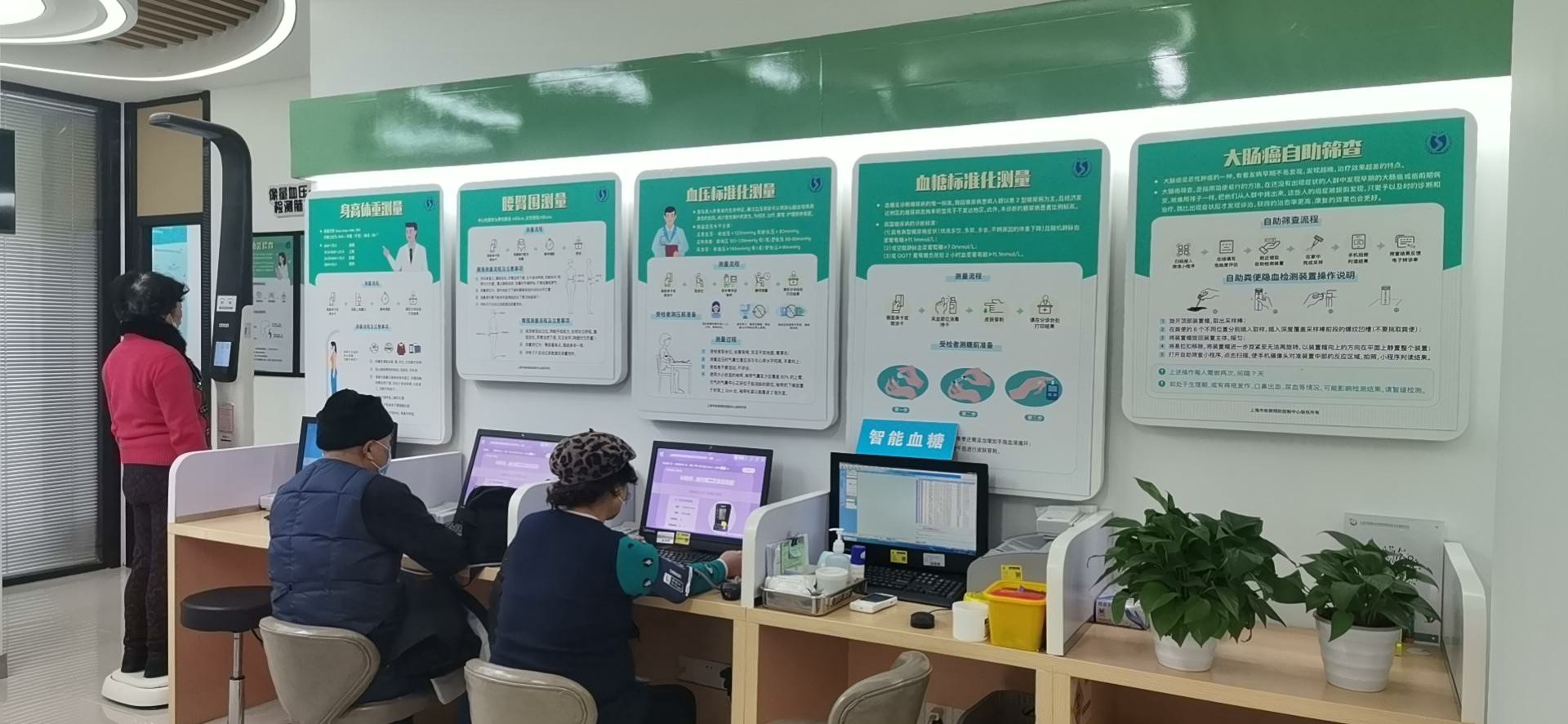
The Chronic Disease Health Management Support Center, established under the collaborative guidance of the Shanghai Municipal Center for Disease Control and Prevention, has developed standardized application protocols and service workflows for multiple technologies, including precise blood pressure monitoring, precise blood glucose testing, chronic obstructive pulmonary disease (COPD) management, and colorectal cancer screening.
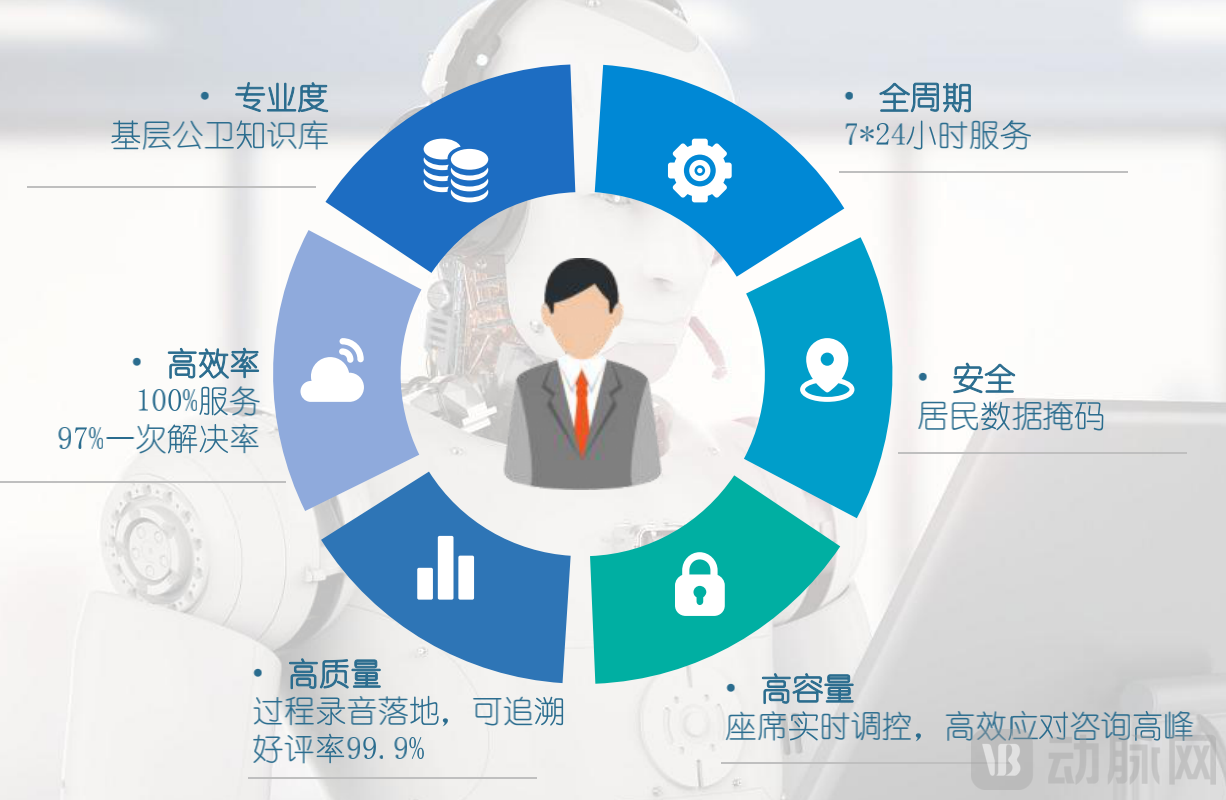
The Intelligent Customer Service Center handles manual call connections and responses for vaccination, COVID-19 testing, and routine inquiries through interactive voice response (IVR) systems and human customer service agents, thereby reducing the workload of family doctors.
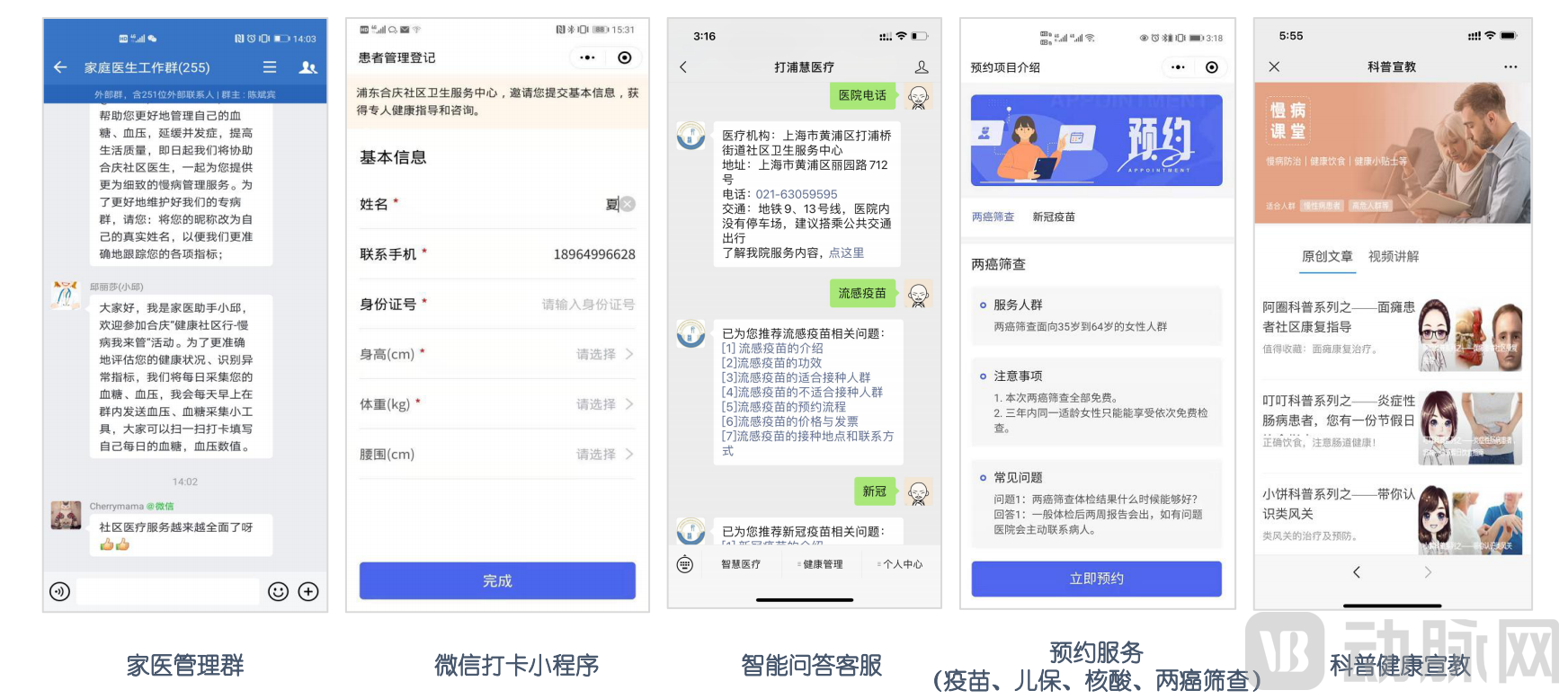
The WeChat Service Operations Center encompasses the development and operation of WeChat Official Accounts and the management of WeChat group services. The former includes appointment scheduling, AI-powered intelligent Q&A, and health education; the latter primarily covers notifications from family physicians regarding routine outpatient visits, hospital event announcements, and targeted health education pushes for different population groups.
The offline community operations center leverages community health service centers as platforms to provide basic medical and public health services to residents within their jurisdiction, including government agencies, enterprises, industrial parks, and schools. It also guides community residents with such needs to establish contracted service relationships with family doctor teams at these centers, thereby expanding the population covered by such contracts.
Overall, Yicheng Health leverages intelligent voice technology and streamlines service processes and content to focus on ten key service scenarios: family doctor contract signing, creation and updating of health records, health assessment and screening, chronic disease management, physical examinations for the elderly, health education, consultation and appointment scheduling, home hospital beds, and accompanied visits and referral services, as well as performance indicator management, thereby enhancing the service efficiency of community hospitals and family doctors.
However, the founding team’s clear understanding of primary care and public health has ensured that Yicheng Health’s business extends beyond merely empowering community medical institutions.
In the process of providing standardized operational services to community hospitals, Yicheng Health has identified that a significant number of users still have certain “special” medical service needs. These needs, however, fall outside the scope of services offered by community hospitals.
For example, a mother wished to take her child for dental care, but the local community hospital did not offer dental services. Upon learning of this need through its family doctor community group, Yicheng Health responded within the stipulated timeframe and recommended appropriate dental clinics or hospitals for her visit.
Therefore,To better meet the healthcare needs of community residents and strengthen their engagement with family doctors, Yicheng Health has also built a community health service platform. Building on the operation of family doctor communities, the platform provides services including referral coordination to tertiary hospitals, guidance for visits to specialized hospitals, traditional Chinese medicine clinics, and rehabilitation and nursing clinics, as well as pharmaceutical delivery from pharmacies.
It is worth noting that upon learning of residents’ needs within the family doctor community groups, Yicheng Health staff will respond promptly within the specified timeframe, striving to meet those needs in the shortest possible time and deliver the best service experience.
“When we strive to meet residents’ comprehensive healthcare service needs, we also inadvertently strengthen their engagement with family doctors and community hospitals, thereby enhancing trust. This undoubtedly promotes the performance evaluation and business development of community hospitals. As a result, they are willing to engage in deeper cooperation with Yicheng,” said Yang Tao.
At the end of the interview,Yang Tao revealed to VCBeat the future development plans of Yicheng Health:
In serving community residents, Yicheng Health will operate its own internet hospital in the future; while in serving primary care hospitals, Yicheng Health has three main development goals: establishing a business network, refining its service model, and strengthening infrastructure.
Whether it is the current initiatives or future endeavors, they all rely on Yicheng Health’s profound understanding of grassroots healthcare operations. Building on this understanding, the company integrates application scenarios and reshapes service processes. In Yang Tao’s view, this is more important than technology itself and constitutes the core competitiveness of Yicheng Health.
“This industry does not actually require highly sophisticated or cutting-edge technologies; more important than the technology itself is the ability to integrate it with application scenarios. Digitalization is one such application of technology, but”“Any application of technology should transform the original business model; if the original model remains unchanged, then digitalization is meaningless,” said Yang Tao.
For primary care hospitals, Yicheng Health’s business system enhances service efficiency and expands resident reach without requiring additional investment. For residents, it improves the visibility of community hospitals and family doctors (e.g., by increasing notification frequency through intelligent voice technology) and boosts service satisfaction. For the entire industry chain, Yicheng’s business system empowers pharmaceutical companies and medical device manufacturers to quickly identify target users, thereby improving the efficiency of resource allocation.
“In the long term, Yicheng’s vision is to leverage information technology, artificial intelligence, and other technologies to build a multi-party, win-win service network, becoming China’s most successful digital operational service platform for community health,” summarized Yang Tao.