Baixinghua AI Files IPO Prospectus for Bx-SaaS Platform, a 'Beauty Filter' for Real-World Medical Data
In real-world medical research and clinical studies, data missingness and distortion (interference and inaccuracy) have long perplexed numerous academic researchers, hospitals, and pharmaceutical companies. Much like the “beauty filters” in the short-video industry, AI algorithms possess the “magic” to remove noise from images, thereby enhancing the clarity of blurred or incomplete photos.
On the research front, VCBeat has spotted an emerging force in medical AI: Baixinghua.
Bai Xing Hua Bx-SaaS applies semi-supervised and unsupervised learning techniques from AI to the processing of real-world and clinical data, effectively imputing missing data to make big data more representative of real-world scenarios while eliminating human and uncontrollable biases introduced during data sampling. Furthermore, this data imputation and prediction are grounded in rigorous AI algorithms, which have successfully helped numerous pharmaceutical companies achieve better outcomes in clinical research. The resulting data analyses have also empowered clinicians and researchers to publish articles with higher Impact Factors in the field of clinical drug research.
Baixinghua is an AI-driven pharmaceutical Bx-SaaS platform. By leveraging innovative AI technologies—including machine learning, deep learning, and multimodal knowledge graphs—and integrating clinical medical data, imaging data, and real-world big data, the company generates pharmaceutical literature knowledge graphs. This approach breaks down medical data silos, facilitates AI-driven imputation of medical big data, and advances research in clinical medicine, drug mechanisms, and basic medical sciences. Currently, the company’s AI-based real-world data imputation has helped pharmaceutical companies and physician clients successfully publish nearly 100 high-impact SCI papers.
Wang Suhong, Co-Founder and CEO of BaiXingHua AI, has secured multiple first-place finishes in international algorithm competitions and previously worked on visual AI at the Second Academy of China Aerospace Science and Industry Corporation. Xiao Zhifeng, Co-Founder and CTO, is an Associate Professor of Computer Science in Pennsylvania, USA, and has published several high-impact SCI papers in the pharmaceutical field over the past two years. Both founders possess extensive experience in AI algorithms.
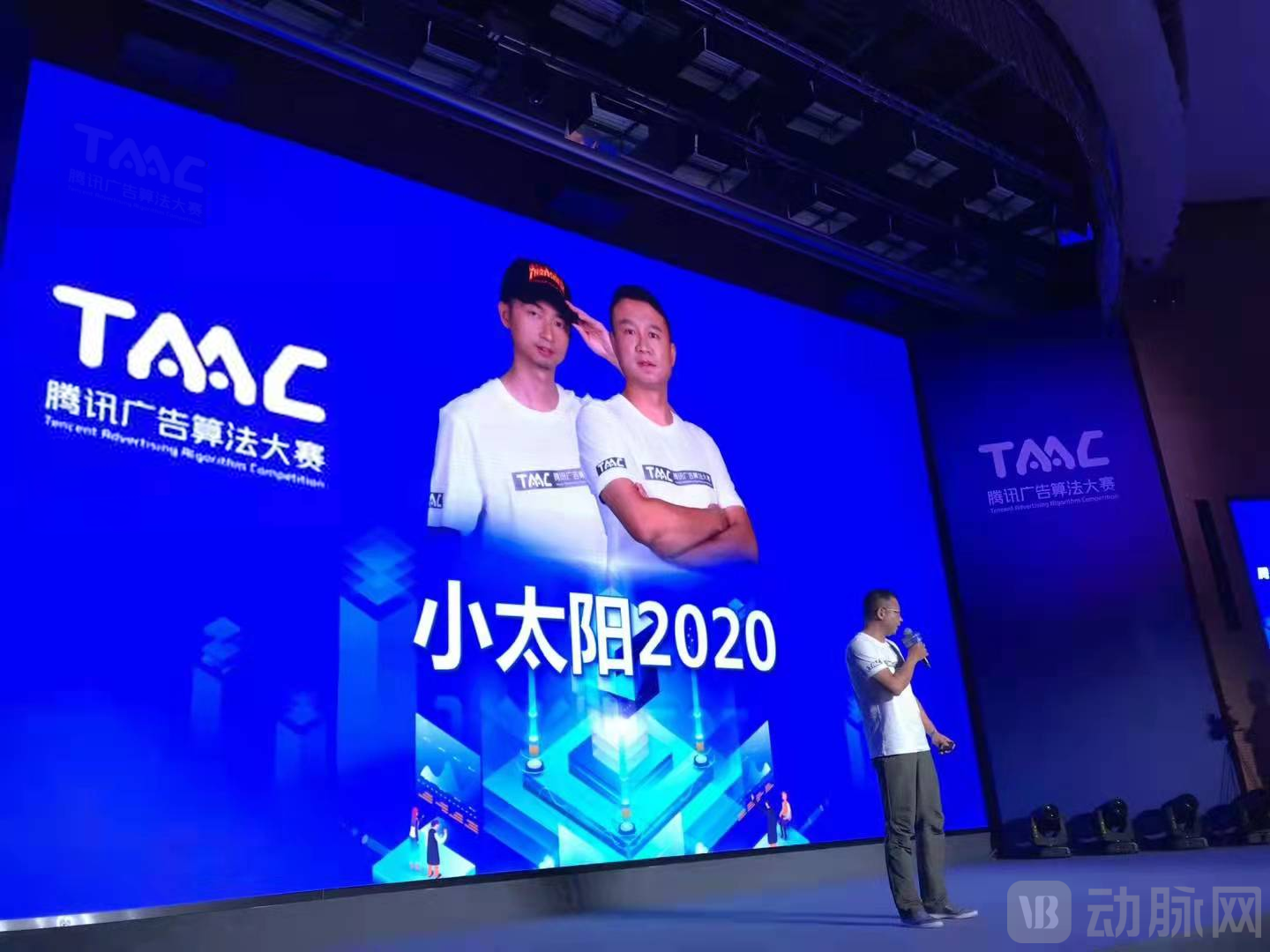
Wang Suhong’s journey in the healthcare sector began in 2014. At that time, he co-founded an AI medical training company to provide medical students with training in artificial intelligence, including AI-based image recognition and AI-assisted diagnosis. “Surprisingly, medical students showed considerable interest in AI technologies and had substantial demand for knowledge graphs and data fusion. Eventually, our client base expanded beyond medical students to include pharmaceutical companies, CROs, and others.”
This made Wang Suhong realize the vast potential market for AI technology in the healthcare sector. Pharmaceutical companies, hospitals, and other institutions possess abundant medical knowledge but urgently need AI technologies for medical image interpretation and data processing. For instance, with the integration of AI technology, hundreds of thousands of real-world data points can be processed accurately and rapidly, significantly enhancing drug development and disease research.
“Over those years, our extensive interactions with a large number of physicians have firmly convinced us thatAI Technology Will Shift from a “Better Choice” to a “Must-Have Choice” for Doctors and Pharmaceutical Companies, the application of AI technology in the healthcare sector can be likened to the invention of the steam engine during the Industrial Revolution. From empirical medicine to evidence-based medicine, and then to AI-driven medicine,AI is the outlet for traditional medicine to achieve disruptive breakthroughs.”
Amid the AI healthcare wave, Wang Suhong decided to conduct continuous in-depth research on AI technologies in the medical field to deliver better outcomes, and thus founded Baixinghua in 2020.
Professor Xiao Zhifeng has long been at the forefront of academic research at U.S. universities, boasting extensive academic connections and a strong scholarly background in the United States. “My original motivation for joining Baixinghua was their robust R&D engineering capabilities, which enable rapid validation of ideas integrating AI with medicine. Meanwhile, our engineering team brings rich practical experience. Moreover, I am highly optimistic about the advantages AI will hold in processing larger volumes and multiple modalities of medical data following the anticipated explosion of medical data in the future.” Driven by fortuitous research collaborations and a positive outlook on the prospects of medical AI both in China and abroad, Professor Xiao Zhifeng became a founding partner and Chief Scientist at Baixinghua.
Notably,Baixinghua has chosen to focus on AI-powered “enhancement” tools for the medical industry, specializing in filling and repairing gaps in real-world medical data and clinical big data, while dedicating itself to providing a Bx-SaaS platform and one-stop medical research services.
“With the development of AI,New technologies such as natural language processing (NLP), speech recognition, and graph convolutional networks are flourishing across multiple fronts. Much like the application of beauty filters in short-form videos, the power of AI has been effectively harnessed for the processing of medical data.“Wang Suhong stated.”
Clinical research applications require the support of high-quality data, with stringent demands for authenticity, accuracy, and granularity. For a long time, issues such as non-standardized medical data and significant missing values and frequent errors in real-world data sampling have plagued meta-analyses of medical big data. Data silos within hospitals have not been effectively broken down; data formats and standards vary across different hospitals, and even within the same hospital, data across departments and disease types remain isolated. As medical data exhibits an exponential growth trend, the continuous accumulation of massive datasets makes manual analysis infeasible. Artificial intelligence (AI) technologies are needed to enable more intelligent algorithmic analysis of data, thereby yielding more accurate results.
Although AI in medicine has received less attention than medical imaging in terms of integrating real-world data with multimodal medical data, interest is rising rapidly, and it is poised to become the second long-term growth driver in the AI healthcare sector.
Baixinghua has successfully launched the Bx-SaaS platform, an AI-powered SaaS solution focused on clinical data and real-world evidence integrated with pharmaceutical technology literature. It effectively and scientifically addresses and corrects erroneous or missing data in real-world studies and clinical research.
Meanwhile, Wang Suhong stated that the primary barrier facing AI in scientific research and experimental sectors is data silos, coupled with insufficient data standardization, which are the main factors hindering the smooth strategic deployment of AI enterprises. Although the promotion of SaaS has encountered bottlenecks in China, the large-scale collection of medical data, recognition at the national regulatory level, substantial demand from pharmaceutical companies, and the industry’s high growth potential have madeAI-driven integration of massive real-world data with multimodal medical data is increasingly becoming a critical necessity for numerous pharmaceutical companies.By entering the enterprise services market with standardized SaaS offerings and providing customized, one-stop premium services, Baixinghua has already validated its business model.
In terms of data,Baixinghua focuses on the application of multimodal data, emphasizing the inherent logic and interpretability of data. It has established the BxKG database, which includes over 1 million real-world/clinical data records, more than 14 million SCI-indexed medical literature articles, and 12 petabytes (PB) of imaging data, enabling synergistic data utilization and breaking down data silos.
Technically,Leveraging its proprietary BxA technology for multimodal fusion, Baixinghua has developed AI technologies including ML, NLP, and KG, to provide deeper, more comprehensive, and more accurate AI analysis for medical science and technology, thereby supporting pharmaceutical companies, physicians, and researchers in their studies of basic medicine and drug mechanisms.
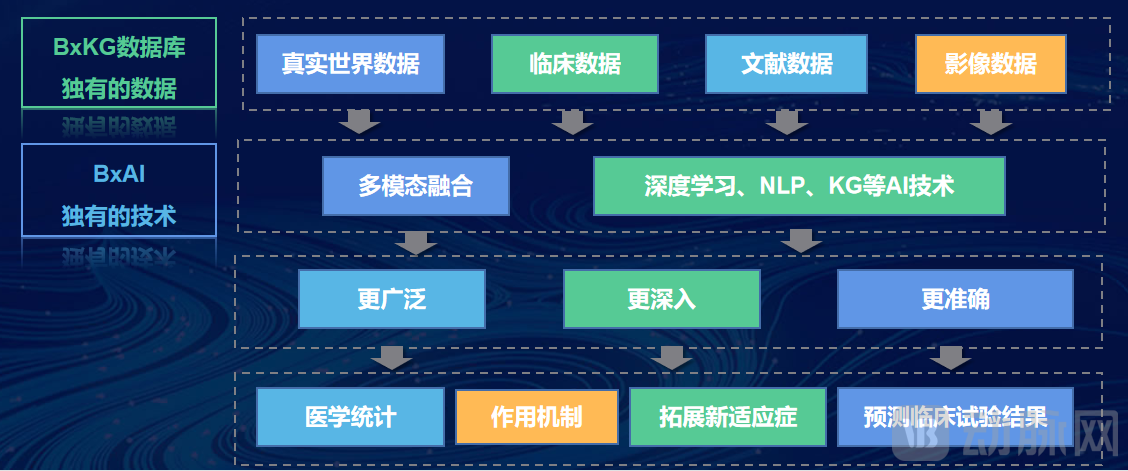
Baixinghua AI Pharmaceutical SaaS Platform
For pharmaceutical companies, the long development timelines, high costs, and low success rates of drug development have become endemic challenges in the field. BaiXingHua can help these companies elucidate mechanisms of action, expand new indications, predict clinical trial outcomes, and thereby enhance R&D efficiency. For hospitals and academic researchers, BaiXingHua facilitates scientific research by providing services such as patient prognosis prediction, patient information management, and data query.
Currently,Baixinghua has obtained one granted invention patent in the field of artificial intelligence within just four months, with two additional invention patent applications pending. The company has served multiple leading pharmaceutical enterprises and numerous physician clients, and its solutions have helped healthcare professionals successfully publish more than 50 SCI-indexed papers.
Wang Suhong stated that in the post-pandemic era, the development of AI in healthcare has accelerated further, gradually gaining recognition from regulatory laws and regulations. AI is playing a significant role in multiple areas, including drug indication expansion, research on new targets and mechanisms, and evidence-based studies. The application of AI in medical imaging is also entering a more advanced and complex phase, with promising prospects in emerging scenarios such as research on new medical mechanisms, expansion of drug indications, health management, and chronic disease management.
“We are currently in a phase of in-depth exploration of AI applications in healthcare. In the future, with continuous improvements in computing power, successive breakthroughs in algorithms, and supportive policy incentives, medical AI will usher in a new wave of development within the next 2–3 years. Going forward, data and results generated by AI will gain greater recognition from regulatory authorities, facilitating the approval of new drugs and enhancing disease diagnosis and treatment.”
During this period of opportunity for AI in healthcare, Bai Xinghua will continue to enhance its Bx-SaaS platform for the pharmaceutical industry. By leveraging AI technologies such as NLP, knowledge graphs (KG), deep learning (DL), and machine learning (ML), the platform will effectively integrate clinical medical data, imaging data, real-world big data, and literature-based knowledge graphs. This integration aims to contribute to research by pharmaceutical companies, physicians, and researchers in areas such as basic medicine and drug mechanisms. Meanwhile, efforts will be made to secure greater regulatory recognition for AI-generated data, thereby collaboratively advancing pharmaceutical R&D.
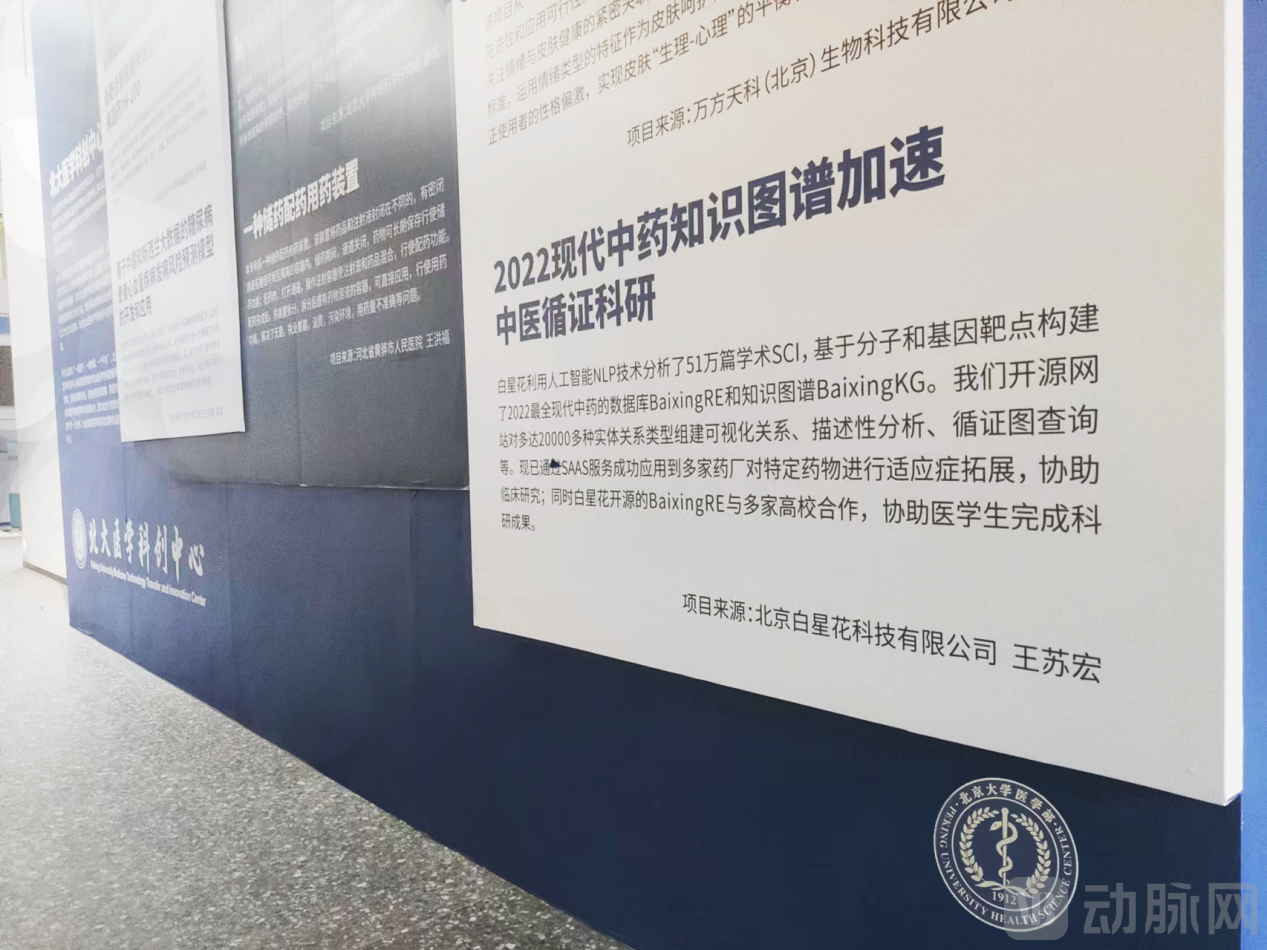
Meanwhile, Baixinghua has also established a presence at the Innovation Center for Science and Technology of Peking University Health Science Center, becoming a high-quality project within the center. The company was also selected for the Acceleration Program of the Fenhu International Innovation Center in the Yangtze River Delta Integration Demonstration Zone, leveraging the region’s concentrated pharmaceutical manufacturing support infrastructure to expand into broader markets.