

"Remain True to Our Original Aspiration, Walking Together": The 11th China Rare Diseases Summit Grandly Held in Shanghai
On September 2, the 11th China Rare Disease Summit, hosted by the Center for Rare Diseases (CORD) and supported by the China Chamber of Commerce for Import and Export of Medicines and Health Products and the China Pharmaceutical Innovation Promotion Association, officially opened in Shanghai. The event was attended by nearly 200 experts from various fields, including government agencies, research institutions, clinical medicine, pharmaceutical companies, and foundations, as well as representatives of patient organizations, patients and their families, charitable individuals, and media representatives, bringing the total attendance to over 800 participants.
# China Rare Disease SummitSince its inception in 2012, the China Rare Disease Summit has been committed to advancing the cause of rare diseases and has become the largest comprehensive forum in this field within China. Each iteration of the conference serves as a key platform for multi-stakeholder dialogue, jointly driving progress in rare disease initiatives by fostering collaboration among the government, society, industry, and patient communities.
Themed “Unwavering Original Aspiration, Journeying Together,” this conference comprehensively discusses the top-level design and planning of rare disease development strategies under the Healthy China initiative, explores the current status and future trends of China’s rare disease endeavors, and promotes the integrated advancement of screening, diagnosis and treatment, medical insurance, and pharmaceutical collaboration.
Gathering of Distinguished Guests, Spectacular Opening Themes
On the opening day, three thematic seminars were held, focusing on “Unlocking the Potential of China’s Rare Disease Industry Market,” “Patient Organization Public Welfare Forum: Multi-Stakeholder Collaboration to Advance Patient Rights,” and “Rare Disease Genetic Counseling Training Course: How to Access/Provide High-Quality Genetic Counseling Services.”
At the opening ceremony, Mr. Huang Rufang, Founder & Director of the Cord Rare Disease Center and Co-Founder & Secretary-General of the Ruiou Public Welfare Foundation, delivered a speech on behalf of the organizer.
Wu Jinglei, Director of the Shanghai Municipal Health Commission, and Li Linkang, Deputy Director of the National Office for Rare Disease Diagnosis and Treatment Collaboration Network and Executive Chairman of the China Rare Disease Alliance, delivered remarks as specially invited guests. They extended a warm welcome to the attendees and expressed their hope that more individuals would pay attention to and participate in efforts to advance rare disease initiatives.
Director Wu Jinglei stated, “The convening of the China Rare Disease Summit in Shanghai itself demonstrates support for rare diseases from all sectors and reflects trust in Shanghai. With national socio-economic development, rare diseases have received comprehensive support from the state, which is improving a holistic medical security system centered on health and focusing on care from birth. All sectors in Shanghai have provided strong support to the field of rare diseases, and this forum has facilitated discussions and built consensus across multiple aspects of rare disease management. Rare diseases require not only diagnosis and treatment but also support and advancement from all areas of society. The cause of rare diseases is a remarkable endeavor. In the future, patients with rare diseases will become a group backed by social support and enjoying continuously improving quality of life. Society will not forget this group, and these are the directions toward which our efforts are directed.”
Subsequently, keynote addresses were delivered by Mr. Cai Lei, an ALS advocate, senior executive at a leading internet company, and founder of the “Jianyu Huzhu Zhijia” (ALS Mutual Aid Home); Mr. Song Ruilin, Executive President of the China Pharmaceutical Innovation Promotion Association and a specially appointed expert in the National Committee of the Chinese People’s Political Consultative Conference’s talent pool for political participation and deliberation; Academician Zhang Xue, Member of the Chinese Academy of Engineering and President of Harbin Medical University; and Mr. Huang Rufang, Founder and Director of the Cord Blood Rare Disease Center, as well as Co-founder and Secretary-General of the Rui’ou Public Welfare Foundation.
Cai Lei shared insights on amyotrophic lateral sclerosis (ALS), covering its definition, types, and the journey of fighting the disease. He and his team are dedicated to conquering this rare disease. Through relentless efforts, they have established an ALS big data platform that connects the world’s largest community of ALS patients; set up various investment and public welfare funds; promoted body donation programs (with over 1,000 individuals already registered as voluntary donors); and co-founded the world’s largest drug screening platform for ALS.
President Song Ruilin delivered an insightful presentation titled “Reflections on China’s Rare Disease Drug Policy.” He shared his perspectives from three aspects: achievements made under the premise of significant improvement, challenges facing the rare disease industry, and policy recommendations to promote high-quality development of pharmaceutical innovation in China. He proposed several strategies to foster high-quality development of pharmaceutical innovation in China, including aligning reasonable pricing with high-risk markets, establishing a separate medical insurance reimbursement system for rare disease drugs, and garnering attention and support from all sectors of society.
Director Li Linkang stated that China’s efforts in the prevention and control of rare diseases started relatively late and remain in an initial stage of development. However, under the high-level attention of the state, progress has accelerated in recent years, transforming diagnosis, treatment, and prevention into a systematic engineering endeavor. The Chinese Alliance for Rare Diseases adopts a patient-centered approach, particularly through collaboration with patient organizations, to convey governmental care, standardize organizational management, and engage more stakeholders in the prevention and control of rare diseases. The Cord Blood Center for Rare Diseases has made sustained efforts over many years to promote and advance rare disease prevention and control, which requires multi-faceted cooperation. As reflected in the conference theme, “Remaining True to Our Original Aspiration, Journeying Together,” we must uphold our initial mission across the past, present, and future, standing side by side with reverence for life, fulfilling our commitment to health, and caring for every extraordinary life.
Director Huang Rufang began his presentation by addressing the widespread anxiety prevalent in 2022 among the nation, industries, and individuals, particularly within the rare disease community, which faced severe challenges regarding insurance coverage and payment for treatments. After prompting deep reflection, he shared his insights using the case of a rare disease drug’s experience in China as an example. He also highlighted how the introduction of multiple policies has significantly alleviated the financial burden on patients and instilled confidence across the industry, such as the initial proposal of seven-year market exclusivity in the draft revision of the Drug Administration Law and the accelerated market approval for drugs urgently needed in clinical practice. He called on all stakeholders to maintain firm confidence and continue moving forward, asserting that better days will eventually arrive.
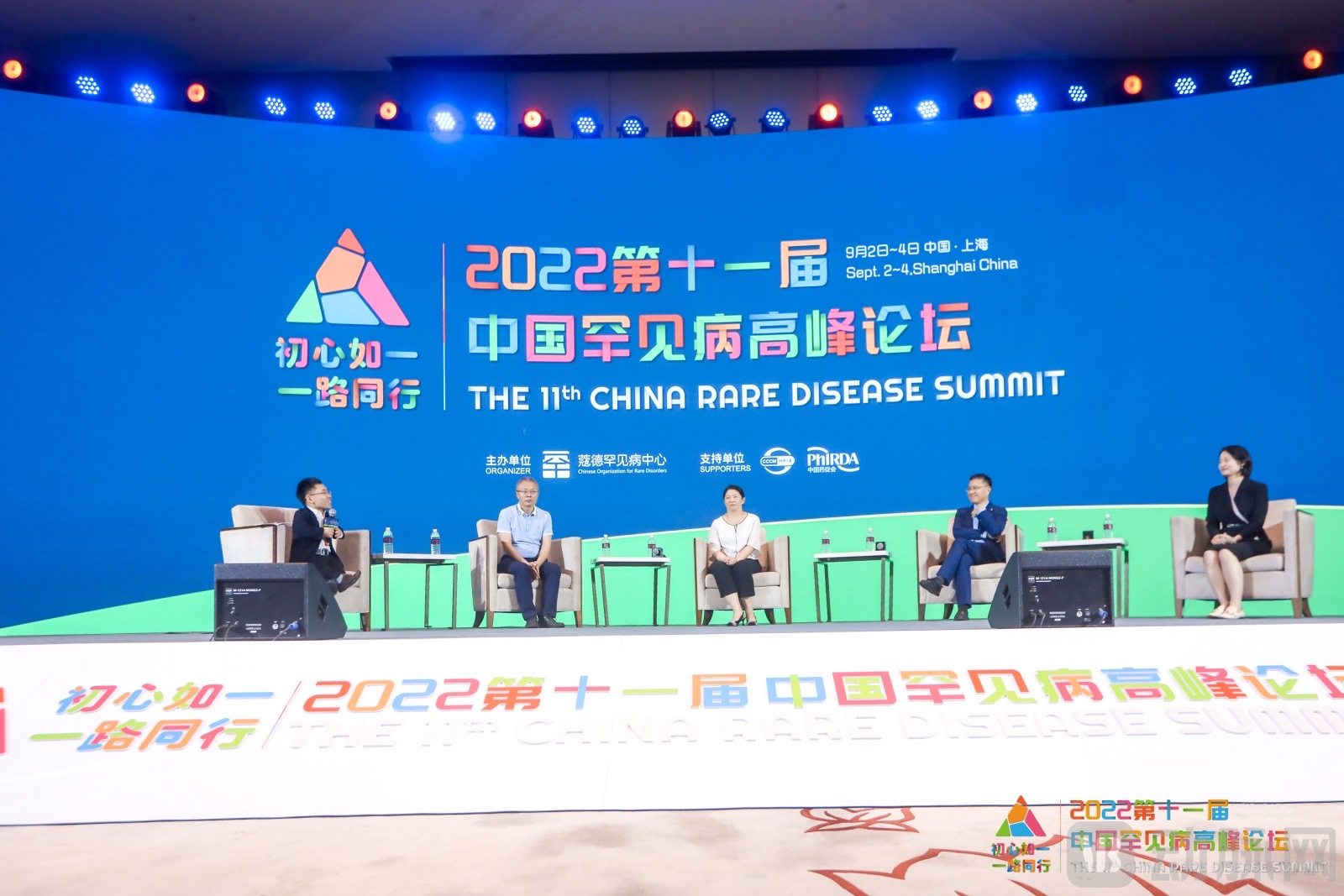
Following the keynote speeches, a panel discussion themed “2022: Where Do We Go from Here?” was held, featuring Huang Rufang, Founder and Director of the Cord Rare Disease Center and Co-founder and Secretary-General of the Ruiou Foundation; Zhu Kun, Deputy Director of the Social Development Research Center at the Chinese Academy of Fiscal Sciences; Peng Jing, Director of the Department of Pediatrics at Xiangya Hospital of Central South University; Shen Yiping, Founder of Heyin Education and Yishan Genetics and Assistant Professor at Harvard Medical School; and Li Yangyang, Chief Commercial Officer of Langyu Group. The engaging discussion and vigorous exchange of ideas brought the opening session of the conference to a new climax.
A Rich Agenda: Discussing the Grand Strategy for Rare Diseases Through Focused Topics
At the conference, leading experts from various fields gathered to create a comprehensive platform for dialogue, enabling all stakeholders to engage in multifaceted discussions.
Conference topics ranged from the application of AI and emerging technologies in rare diseases to unlocking the potential of China’s rare disease industry; from discussions on rare disease policies with delegates to the National People’s Congress and the Chinese People’s Political Consultative Conference to explorations of China’s regulatory policies for rare diseases; from the impact and assessment of the National Rare Disease List to exploring solutions for “unmet clinical needs”; from the “heartfelt price negotiations” in the National Reimbursement Drug List talks to the structure of a multi-tiered medical insurance system; from the plight of rare disease patients during the COVID-19 pandemic to strategies for conducting rare disease diagnosis and treatment under normalized epidemic prevention and control, as discussed in the Hospital Presidents’ Forum. The event also featured special sessions on exploring the Shanghai Rare Disease Diagnosis and Treatment Center model, as well as an international session with expert teams from Massachusetts General Hospital.
The three-day conference featured a rich and diverse agenda, fostering multi-party collaboration to shape a new future for rare diseases. In addition to the three main venues, the event included satellite meetings, thematic sessions, patient gatherings, and closed-door meetings, providing ample opportunities for participation and discussion. These platforms facilitated face-to-face interactions between experts and patients, as well as between companies and patients, bringing together all stakeholders to focus on cutting-edge industry trends and expand exchanges and cooperation. The conference not only delivered high-quality content on rare diseases within China but also promoted global awareness of rare disease issues through international dialogue, thereby strengthening global communication.
In recent years, with the sustained attention from government agencies and all sectors of society toward rare diseases as a social issue, there has been a clear demonstration of determination and action—from the central to local governments—in addressing the challenges associated with rare diseases.
This conference has provided attendees with an intellectual feast in the field of rare diseases. We gather here with the shared purpose of advancing China’s comprehensive efforts in rare disease care, including medical diagnosis and treatment, drug accessibility, drug research and development, and policy support. Through the platform of this high-level forum, all stakeholders have been able to fully engage, collaborate, and work together to promote the development of rare disease initiatives in China.