

CeramTec's Dominance in Ceramic Joint Implants: How a German Supplier Controls the Global Hip Replacement Supply Chain Amid China's Volume-Based Procurement
As the national volume-based procurement program deepens, China’s orthopedics industry is undergoing a major reshuffle.
Among volume-based procurement (VBP) initiatives in orthopedics, artificial joint VBP currently has the broadest impact. In the global orthopedic implant market, the joint segment is the largest, accounting for more than 37% of the market—hence the saying, “Whoever dominates joints dominates orthopedics.” The global market size for joint replacement reached USD 17.1 billion in 2020. According to Biaodian Info, the market size for joint implants in China was RMB 8.6 billion in 2019.
Volume-based procurement has not only reshaped the landscape of China’s domestic artificial joint market but also reconfigured the supply chain for artificial joints.
Following the nationwide implementation of centralized procurement for artificial joints, there were instances of delayed and unstable supply, which significantly impacted patients' health and well-being.
Among the multiple reasons for the delayed supply of artificial joints, one factor is related to market recovery following the pandemic; another significant contributing factor is that the core components of ceramic artificial joints—namely, ceramic heads and liners—which have seen surging demand after the implementation of volume-based procurement, are nearly monopolized by a single German company.
CeramTec GmbH, a Germany-based supplier of advanced ceramic materials, is the exclusive ceramic material supplier to major domestic and international joint implant manufacturers, including Johnson & Johnson, Smith & Nephew, Stryker, Zimmer Biomet, AK Medical, Chunli Medical, and Weigao Orthopaedics.
It can be said that CeramTec holds the lifeline of global ceramic artificial hip joints, exerting a stranglehold on the world’s leading artificial joint manufacturers. CeramTec is also hailed as the biggest winner behind China’s centralized procurement of artificial joints!
How does the supply of ceramic artificial joints affect the supply of artificial joints in China? Why is CeramTec able to control the lifeline of the global ceramic joint industry?
Why Are Artificial Joints Facing Supply Delays?
First, from the demand perspective, the volume-based procurement policy has significantly driven the increase in artificial joint surgeries. According to IQVIA data, the number of artificial joint implantation procedures increased by 20% following the implementation of centralized procurement for artificial joints.
An orthopedic industry insider stated, “The estimated 20% growth is relatively conservative. An intuitive observation is that provincial distributors typically maintain an inventory of 50–60 surgical instrument sets; following the implementation of volume-based procurement, these holdings have become insufficient to meet demand. Surgical volumes are rising rapidly.”
The primary driver behind the growth in surgical volume is the decline in prices of artificial joints. High costs had previously restricted domestic patients with clinical needs from undergoing artificial joint replacement surgery. In the past, out-of-pocket expenses for a single artificial joint procedure could reach as high as RMB 40,000–50,000. With volume-based procurement reducing the cost of artificial joints to the thousand-yuan range, more patients at the primary care level can now afford these procedures.
The growth in surgical volume also demonstrates that the potential of China’s artificial joint market has yet to be fully tapped, with the overall market remaining underdeveloped.
In the global orthopedic market segmentation, the joint market accounts for 37%, spinal implants for 18%, and trauma implants for 14%. However, unlike the global landscape where joint implants hold the largest share of the orthopedic implant device market, the largest segment in China’s orthopedic implant medical device market is trauma devices. This is primarily because China’s orthopedic implant medical device market started relatively late and remains immature overall.
Despite the impact of the pandemic, the annual volume of artificial joint surgeries has exceeded one million in the past two years, with the overall market growing at a rate of over 20%. The surgical volume is projected to surpass two million in the next five years, indicating that the total addressable market continues to expand.
In addition to price reductions driving up demand, another major cause of the unstable supply of artificial joints is that volume-based procurement has altered the market structure. Volume-based procurement has increased the market share of ceramic hip joints in artificial joint replacement, with the utilization of ceramic artificial hip joints rising by at least 20%.
Artificial joints are categorized into knee and hip joints, with knee replacement surgeries accounting for approximately 43% of the volume-based procurement procedures, while hip replacement surgeries constitute around 57%. Artificial hip joints are further classified into three types based on the materials used for the femoral head and acetabular cup: ceramic-on-ceramic, ceramic-on-polyethylene, and metal-on-polyethylene. The primary distinctions among these three product categories lie in their mechanical and biological properties.
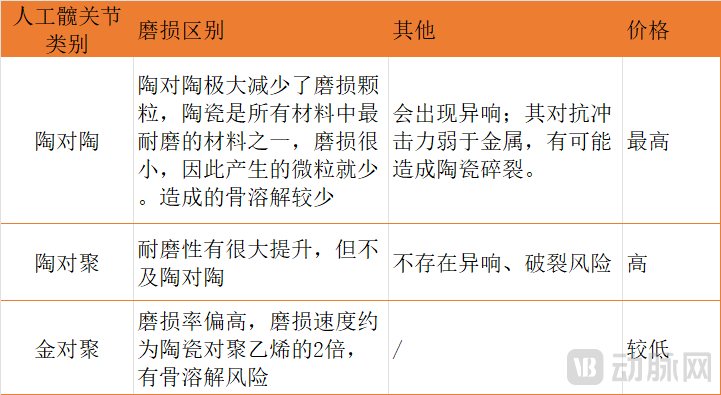
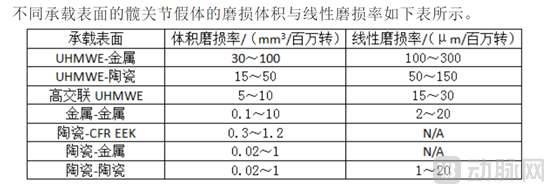
For artificial hip joints, the hip joint must withstand significant mechanical loads during movement. Friction, wear, and lubrication are key factors affecting the longevity of joint replacements. The significance of wear extends beyond the structural integrity of prosthetic components; it also involves wear debris that can trigger adverse biological reactions. Comparative data indicate that ceramic-on-ceramic bearing surfaces exhibit the lowest wear rates.
Among these three types of artificial hip joints, the usage of metal artificial hip joints is relatively low in economically developed regions; however, on a national scale, the market shares of the three types are comparable. Although metal artificial hip joints are inferior to ceramic artificial hip joints in terms of mechanical and biological properties, they still retain a certain market share due to their lower cost. Volume-based procurement has further eroded the market share of metal artificial hip joints by constraining both reported volumes and quoted prices.
Based on the reported volume data, according to the final official figures released for the joint procurement program, ceramic artificial hip joints accounted for nearly 90% of the total.The total declared demand volume for 2022 by all manufacturers amounted to 575,000 sets. Hip joints accounted for a total of 324,000 sets, including 152,000 ceramic-on-polyethylene and 135,000 ceramic-on-ceramic implants. Ceramic hip joints represented 89% of the total hip joint market. Ceramic artificial hip joints have captured a portion of the market share previously held by metal artificial hip joints.
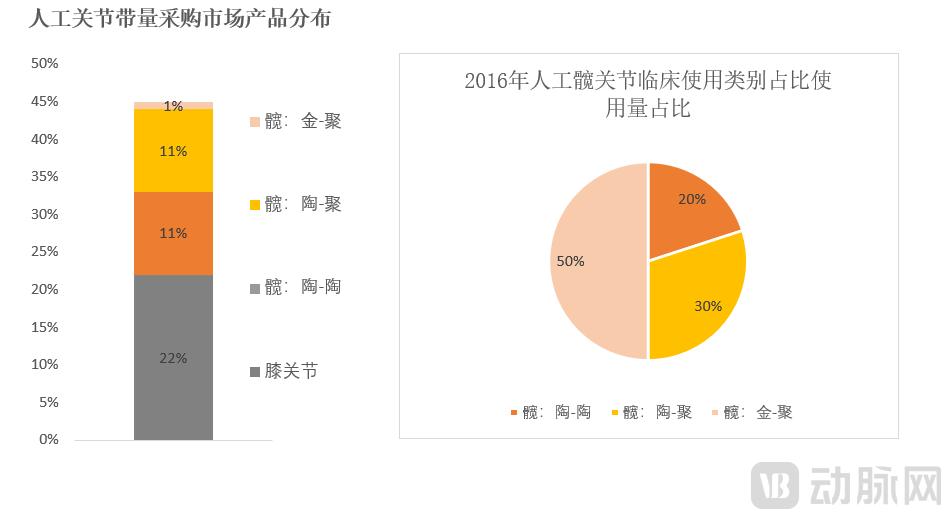
Data sources: “National Centralized Volume-Based Procurement Documents for Artificial Joints,” CeramTec estimated figures
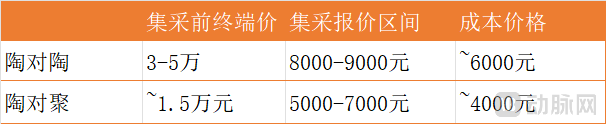
From a pricing perspective, ceramic artificial hip joints—particularly ceramic-on-polyethylene products—offer higher gross profit margins, prompting manufacturers to prioritize the promotion of ceramic-on-polyethylene products in markets outside centralized procurement.The quoted price range for ceramic-on-ceramic products in the centralized procurement was RMB 8,000–9,000, while manufacturer quotes for ceramic-on-polyethylene products were mostly around RMB 7,000, with the highest winning bid reaching RMB 8,000. Taking Johnson & Johnson as an example, its winning bids were RMB 8,106 for ceramic-on-ceramic and RMB 8,006 for ceramic-on-polyethylene.
However, from a cost perspective, the procurement cost of a ceramic-on-ceramic liner is approximately RMB 1,700, whereas that of a polyethylene liner is around RMB 300.
This means that although ceramic-on-ceramic artificial hip joint products have high costs after centralized procurement, their terminal prices are not high. From the perspective of gross profit margin, ceramic-on-polyethylene products offer a higher gross profit margin space. In markets outside the volume reported for centralized procurement, manufacturers of artificial joints will also prioritize promoting ceramic-on-polyethylene artificial hip joints.
Whether driven by the increased volume reporting for ceramic artificial hip joints under centralized procurement, or by the rising gross profit margins of ceramic-on-polyethylene artificial hip joints in the non-volume-based procurement market, the utilization of ceramic artificial joints will increase. Therefore, the biggest beneficiary is CeramTec, the supplier of ceramic femoral heads and ceramic liners.
Ceramic femoral heads and liners are core components of ceramic total hip arthroplasty systems. As CeramTec is the sole supplier to mainstream manufacturers, its production and supply status directly impacts the availability of ceramic total hip arthroplasty systems in China.
Domestic demand for artificial hip joints has surged significantly, while CeramTec’s production has been affected by changes in the international environment. The combination of these factors has led to instability in the domestic supply of artificial hip joints, thereby exerting a major impact on the security of China’s artificial joint industry.
How Did CeramTec Gain Control Over the Lifeline of Global Ceramic Artificial Joints?
Looking back at the development history of CeramTec, a century-old enterprise in the ceramic materials industry that started with industrial ceramics and began exploring the application of ceramic materials in the biological field in the 19th century.
Over nearly half a century, CeramTec has launched four generations of ceramic artificial joints. The materials used in the first three generations were essentially pure alumina, which failed to resolve the issue of brittleness. In 2004, CeramTec introduced an alumina-matrix composite ceramic incorporating 17% zirconia. This product propelled CeramTec to prominence in the field of artificial joints, establishing it as a leading global supplier of ceramic orthopedic implants.
CeramTec’s modern ceramic material preparation and processing technologies present significant barriers to entry. Ceramic materials are characterized by high brittleness and low fracture toughness, making machining technically challenging and the processes complex. The manufacturing of ceramic femoral heads and liners for artificial joints demands exceptionally high standards in hardness, toughness, surface finish, and dimensional precision.
Global artificial joint manufacturers exhibit a strong dependence on CeramTec. In Weigao Orthopaedics’ prospectus, CeramTec is identified as the largest supplier, with ceramic femoral heads and liners purchased in 2020 amounting to RMB 88.8146 million, accounting for 26.04% of its raw material procurement expenditure. According to Chunli Medical’s prospectus, the company spent RMB 74.08 million on ceramic blanks in 2020, representing 43.78% of its total raw material procurement costs.
Reliance on a single overseas supplier for core materials poses significant risks to China’s artificial joint industry.Due to international political dynamics and other force majeure factors, the supply of imported raw materials may face delays, restrictions, or price increases. If domestic artificial joint manufacturers fail to secure adequate raw material supplies in a timely manner, both production and supply of artificial joints in China will be adversely affected. Disruptions in component supply and technological blockades would deliver a fatal blow to China’s artificial joint industry.
Secondly, as the orthopedics sector enters the era of volume-based procurement, stronger cost control capabilities and innovation are key to corporate success.Ceramic femoral heads and acetabular liners, as core cost components of artificial joints, account for more than 50% of the total cost of a hip arthroplasty system. Volume-based procurement has compressed product profit margins, thereby compelling domestic enterprises to secure autonomy over their supply chains and explore the localization of ceramic joint supply chains in China.
The upstream monopoly in ceramic joints is the key breakthrough that the entire artificial joint industry seeks to achieve.
In Japan, Kyocera, founded by Kazuo Inamori, also possesses ceramic artificial joint technology. Historically, Kyocera’s ceramic artificial joints were sold exclusively in Japan. In 2019, Kyocera acquired the U.S.-based artificial joint startup Renovis Surgical Technologies for JPY 10 billion, obtaining the majority of its business operations. This move underscores Kyocera’s emphasis on its artificial joint business and its determination to expand into markets beyond Japan.
Global leaders in the artificial joint industry are also seeking breakthroughs. Smith & Nephew has launched a zirconium-niobium alloy (Oxinium) artificial hip joint, which utilizes a coating technology to create a more wear-resistant layer on the surface of the metal femoral head. However, the wear resistance of metal heads still cannot surpass that of ceramic ones, and they also exhibit certain disadvantages in terms of biocompatibility.
In China, research and development of core raw materials for ceramic artificial joints is also being continuously advanced, with ceramic materials and their preparation technologies remaining a key focus of national major projects and cutting-edge technologies.
As early as the 1980s, riding the wave of ceramic research and development in the United States, numerous research institutions in China began to investigate high-performance structural ceramics and related fields, with the State Key Laboratory at Tsinghua University being a prominent representative.
However, at that time, China’s orthopedic implantable medical device industry was in its early stages of development. The overall technological content of products was low, and the market for artificial joints had not yet been opened in China. Furthermore, the general machining precision of the industrial sector failed to meet the requirements for artificial joints. The lack of a complete supply chain prevented domestic ceramic material technologies from achieving industrialization in the field of artificial hip joints.
In recent years, with the rapid development of China's artificial joint industry, which achieved a compound annual growth rate (CAGR) of 20.65% from 2015 to 2019, increasing attention has been directed toward the research and development of ceramic materials for artificial joints. Domestic enterprises have also made continuous breakthroughs in the production of ceramic liners and femoral heads for artificial joints.
Volume-based procurement has squeezed out the industry's excesses, enabling a clearer recognition of the weaknesses in China's orthopedic sector and exposing the shortcomings in China's advanced ceramics field.
In the medical field, ceramics are used not only as implant materials for artificial joints but also for dental restoration. Among these applications, ceramic dental implants represent a high-potential market that has drawn significant attention from global ceramic material manufacturers.
According to the "2020 China Oral Healthcare Industry Report," as of 2021, the total number of missing teeth in China reached 2.642 billion, with a potential volume of 18.88 million dental implants and a potential market size exceeding RMB 200 billion. From 2011 to 2018, the number of dental implants performed in China grew from 130,000 to approximately 2.4 million, representing a compound annual growth rate (CAGR) of 51.7%.
As the centralized procurement of dental implants advances, the resulting decline in overall treatment costs is expected to boost patients’ willingness to undergo treatment, thereby increasing the penetration rate of dental implants.
Multiple companies worldwide are expanding their footprint in the ceramic dental implant market through acquisitions and investments.
In 2021, CeramTec announced the acquisition of Dentalpoint AG, a Swiss manufacturer specializing in ceramic dental prosthetics, to further expand its high-performance ceramics business and continue its transformation into a medical technology company. Japan’s Kyocera launched its own dental implant products as early as 2000 and remains the brand with the highest market share for dental implants in Japan.
In China, in 2021, Aidite, a subsidiary of Sinocera responsible for dental materials, introduced strategic investors Hillhouse Capital and Shuimu Songbai Investment.
What Are the Advantages of Ceramic Dental Implants?
Currently, most dental implant fixtures are made of commercially pure titanium or titanium alloys. Compared with other dental implant materials, ceramic materials offer primary advantages in terms of aesthetic performance and biocompatibility.
In terms of aesthetic performance, dentistry is classified under the realm of aesthetics in foreign countries. The appearance of ceramic materials more closely resembles that of natural teeth. With existing titanium-based implants, gingival recession over time can sometimes create a distinct demarcation at the implant-gingiva margin. This aesthetic impact is particularly pronounced in patients with thin gingival biotypes.
In terms of biocompatibility, metal implants are not suitable for everyone; approximately 10% of the population is allergic to titanium. Overall, metal implants exhibit inferior antibacterial properties compared to ceramic implants.
Currently, the application of ceramic implants in China is still in its early stages. Global leaders in the implant industry are also focusing on this R&D direction. Straumann, the brand with the highest global market share in dental implants, offers ceramic implants, but they have not yet been launched in the Chinese market.
As China’s medical device industry stands at a critical juncture of transformation and rapid growth, its historical mission is to drive innovation, upgrade industrial capabilities, accelerate import substitution, and control healthcare insurance expenditures. Volume-based procurement is neither synonymous with localization nor a price war; rather, it serves to channel resources toward enterprises with stronger innovation capabilities.
These development trends are driving breakthroughs in advanced ceramic materials. Currently, some Chinese enterprises have already achieved such breakthroughs, contributing China’s strength to overcoming this critical technological bottleneck.
For a long time, China’s orthopedic industry has lacked a brand with global influence. As domestic brands rise, we believe that in addition to the emergence of superior artificial joint brands, the supply chain will also give birth to more “hidden champions” like Celanese.
References:
The Storm of National Centralized Procurement for Joints Hits: Rules and Gameplay Undergo Major Changes — IQVIA
Current Research Status and Future Prospects of Zirconia Implants—Implants Without Borders
Woyan Industry Research | Advanced Ceramics Are the Most Promising Track in the New Materials Sector—Huaan Securities
Ceramic-on-Ceramic Total Hip Arthroplasty from the Perspective of Friction and Wear——Chunli Zhengda