

BIAI Inc. Files IPO Prospectus: Pioneering Digital Therapeutics with Cognitive Assessment Systems and Smart Glasses

Dr. Li Xiaotao, CEO and Co-founder of BIAI Inc., has successively served as a member of the International Society for Autism Research, a member of the Society for Neuroscience (USA), a member of the MIT Technology Transfer Center, a specially appointed researcher at the China Academy of Management Science, a visiting researcher at the Shenzhen Institutes of Advanced Technology, Chinese Academy of Sciences, a member of the Guangdong Biomedical Engineering Society, an expert committee member of the Shenzhen Artificial Intelligence Industry Association, and a recipient of the Shenzhen High-Level Overseas Talent “Peacock Plan.” In 2021, he was included in the Who’s Who published by Zhongguan Think Tank in tribute to the 100th anniversary of the founding of the Communist Party of China.
Dr. Li earned his Ph.D. in Neuroanatomy from the Li Ka Shing Faculty of Medicine at The University of Hong Kong in 2014, and subsequently conducted postdoctoral research at the Chinese Academy of Sciences and the Massachusetts Institute of Technology (MIT), studying under several esteemed luminaries in the field.
In 2018, while conducting brain science research at MIT, Dr. Li increasingly recognized the practical demand for translational applications in neuroscience. He subsequently founded BIAI (BiAi Intelligence) and, through years of relentless effort, successfully carved out a path for innovation and entrepreneurship suited to his vision.
On the scenic north bank of the Charles River, the world’s brightest minds from the Massachusetts Institute of Technology (MIT) and Harvard University converge. Along its tranquil waters, countless groundbreaking inventions and innovations that have changed the world were born.
Gazing at the river’s shimmering surface under the sunlight, Li Xiaotao has repeatedly fallen into deep contemplation: while modern technological civilization has brought convenience and a fast-paced lifestyle, it also carries with it anxiety, loneliness, and stress, quietly eroding human health.
Depression has been one of the key research topics that Li Xiaotao has diligently studied for many years. Catalyzed by the vibrant innovation and entrepreneurship ecosystem at MIT, and drawing on his years of theoretical accumulation, scientific training, and in-depth reflection, he gradually developed a blueprint for creating digital therapeutics. These therapeutics leverage the integration of Biological Intelligence (BI) and Artificial Intelligence (AI) to address safety and health concerns related to brain and eye usage, including anxiety, depression, visual safety, and cognitive rehabilitation.
Li Xiaotao has cast a wide net in academia: from industrial microbiology and biomedical materials to visual neural engineering and brain-inspired cognitive intelligence. Like a sponge, he absorbs knowledge from diverse disciplines, carefully collecting the sparks of inspiration generated by their intersection to complete the scientific puzzle in his mind.
Before embarking on his entrepreneurial journey, he was already a distinguished expert and scholar with numerous scientific achievements: he has published 21 academic papers, including nine SCI-indexed papers as the first or corresponding author. His original research contributions span fields such as fermentation microbiology, cell and tissue engineering, biomedical materials, and visual neuroscience. Unlike many researchers, he thrives on interdisciplinary work, constantly challenging himself to explore new domains. He later ventured into research on brain neural circuits related to emotional cognition and focused on developing novel non-invasive brain-computer interaction technologies. To date, he has filed more than 40 intellectual property rights applications, including three international invention patents and seven Chinese invention patents.
It was precisely his spirit of embracing challenges and adventure that ultimately led Li Xiaotao to embark on an entrepreneurial journey in brain science. Li believes that brain science should not remain confined to metaphysical theorizing but must pursue a practical path validated by real-world application. In his view, entrepreneurship represents the optimal approach to applying knowledge, directly confronting problems, and devising solutions. After furthering his studies and accumulating expertise at the Shenzhen Institutes of Advanced Technology (SIAT) of the Chinese Academy of Sciences and the Massachusetts Institute of Technology (MIT), he decided to focus on digital solutions for cardiovascular and cerebrovascular diseases, venturing into the then-emerging blue ocean of the digital health market. In 2018, he established companies in both the United States and China.
At the outset of his entrepreneurial journey, he proposed a novel perspective in academic publications, advocating for the integration of machine vision with eye-brain unified engineering. Believing that the widespread adoption of this technology could help resolve many challenges in the translational applications of current brain science, he chose to put this belief into practice through personal involvement.
Li Xiaotao believes that digital therapeutics, driven by electronic information technology, can deliver diagnosis and treatment by modifying individuals’ cognition, behavior, and habits. This approach represents a truly human-centric, cutting-edge method capable of achieving personalized precision medicine. Particularly in the field of psychiatry, digital therapeutics should not merely constitute simple “digitization” or rely solely on customer engagement through the internet and mobile apps; instead, they must achieve genuine breakthroughs at the level of underlying concepts and technological logic. Authentic digital therapeutics should aim to realize the personalization inherent in precision medicine while integrating the advanced preventive medicine principle of “treating disease before it arises.” Li Xiaotao is confident that this will be the future trajectory of human medicine and inevitably constitutes the core value consistently upheld by BIAI.
Sustaining Mental Health with Digital Therapeutics—This Is a Conceptual Update, but What Form of Technological Innovation Can Truly Realize It? Li Xiaotao’s Answer Is “An Integrated Eye-Brain Engineering Approach Combined with Computer Vision Intelligence.”
The so-called "eye-brain integration" refers to the fact that more than 80% of the brain's information input enters the central visual system through the eyes. The emotional and cognitive state information output by the brain is also characterized by eye movements, gaze, pupil responses, and other indicators. In existing brain-computer interface technologies, major EEG applications (including P300, SSVEP, ERP, and MI) are closely related to visual functions. In the future, human reliance on vision will become increasingly profound; even in the era of the metaverse, the eye and brain will remain highly interconnected.
Our eyes and brains are highly developed, yet our eyes cannot see themselves, and the brain is typically unaware of how its own thoughts arise. Humans have created today’s highly advanced machine vision technologies through vision-dominated intelligence. Further integration of machine vision intelligence into eye-brain unified engineering will help us better perceive the world and understand ourselves.
For example, specific applications include at least:
Quantification of Brain Cognition. As the saying goes, “The eyes are the window to the soul.” By collecting multi-dimensional big data—including eye movements, brainwaves, and electrocardiograms—and integrating machine vision with artificial neural network algorithms, intelligent detection, early warning, and prevention and treatment can be achieved for neuropsychiatric disorders such as depression, stroke, and Alzheimer’s disease.
Non-invasive Brain-Computer Interaction. Leveraging deep learning techniques, such as Generative Adversarial Networks (GANs), highly quantifiable AI-synthesized images can be generated to enable precise imagery intervention for human emotional and cognitive states. For instance, in the treatment of acrophobia (a type of visual phobia), combining AI-generated images with clinical exposure therapy can achieve more precise and effective Cognitive Behavioral Therapy (CBT).
At the end of 2018, Li Xiaotao had just returned to China, where public awareness of digital therapeutics remained generally low at the time. Nevertheless, he pioneered the effort by actively assembling a cross-disciplinary, multidisciplinary team comprising experts in neuroscience, computer technology, clinical medicine, psychology, machine vision, product design, and other fields. His team has been continuously developing core technologies for an integrated eye-brain engineering system that combines machine vision with multimodal information from multisensory neural pathways. This work aims to achieve innovative breakthroughs in non-invasive, deep brain-computer interaction, laying the foundation for a series of electronic medicines and digital therapeutics targeting various neurological dysfunctions.
Li Xiaotao believes that current brain-computer interface (BCI) technologies in the public eye place excessive emphasis on the direct connection between the human brain and devices, while overlooking the specificity and sensitivity of information at the nerve endings within the peripheral sensory nervous system. Overly simplified definitions of this field will constrain its broader application potential. Based on a deep understanding and cognition of the nervous system, Li Xiaotao has led his team to explore novel brain-computer interaction technologies distinct from existing BCI approaches. After several years of research and development, his team has decided to launch two flagship products: the BIAI Integrated Device for Quantitative Emotional Cognition and the BIAI Cognitive-Enhancing Smart Glasses.
BIAI Quantitative Integrated Device for Emotional and Cognitive Assessment (hereinafter referred to as the “Quantitative Integrated Device”) is designed to address the comprehensive clinical manifestations of patients with brain dysfunction, including gait, facial expressions, voice, eye movements, electroencephalogram (EEG), heart rate, and blood oxygen saturation. It provides intelligent and rapid quantitative assessments of emotion, cognition, and psychology, thereby assisting neuropsychiatrists and psychological counselors in making professional judgments and improving patient compliance. For instance, the BIAI team has leveraged the algorithm system of this integrated device to develop real-time monitoring technology for cardiovascular and cerebrovascular parameters, enabling intelligent early warning and prevention of stroke recurrence. This device can also be deployed in community or home settings, facilitating early identification and self-management of cardiovascular and cerebrovascular diseases.
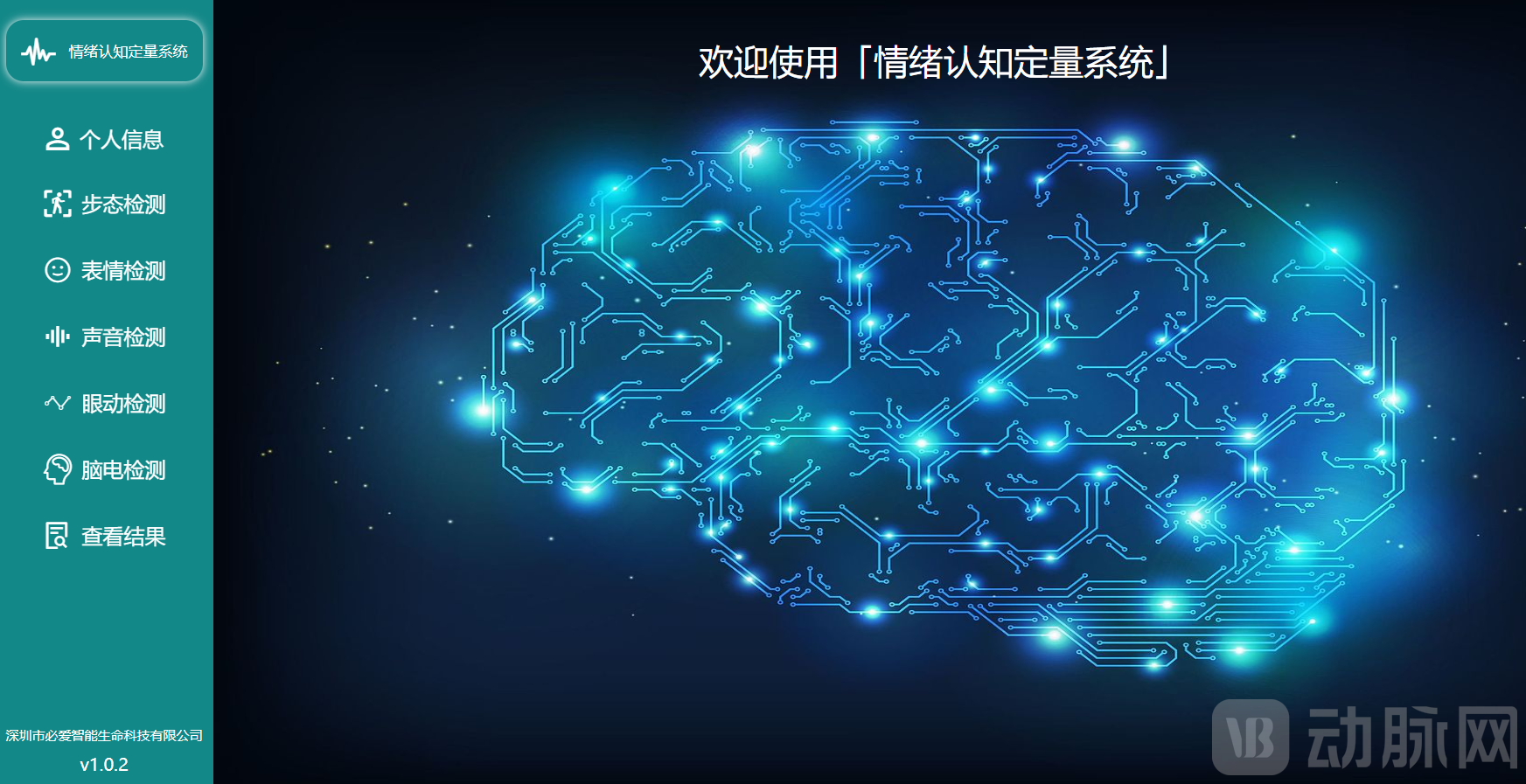
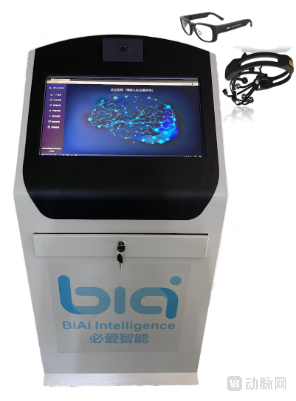
BIAI Quantitative Integrated Device for Emotional Cognition
Another is the BIAI Digital Smart Glasses, which leverage artificial intelligence to enhance brain function. Integrating eye-brain unified engineering technology and applying multidimensional big data (including eye movement, electroencephalogram, blood oxygen, and pulse wave), the BIAI Digital Smart Glasses can quantitatively assess the wearer’s cardiac, cerebral, and ocular status in real time. They also deliver non-invasive physical stimulation interventions via sound, light, electricity, and magnetism, offering preventive benefits against fatigue, dementia, anxiety, depression, and stroke.
BIAI Digital Smart Glasses have been precisely positioned with tailored features for different user groups: for children, the focus is on eye safety and vision protection; for young and middle-aged adults, the emphasis is on cognitive enhancement and stress management; and for the elderly, the primary feature is cardiovascular and cerebrovascular monitoring.
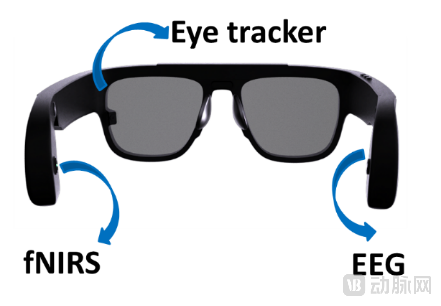
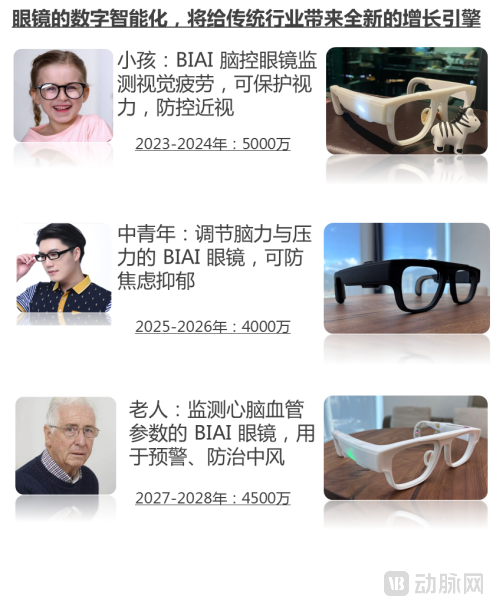
BIAI Digital Smart Glasses
Li Xiaotao believes that BIAI’s future goal is to enter the clinical sector; therefore, current products must be designed from the R&D stage in accordance with the high standards required for medical devices. Currently, collaborative efforts are underway with more than ten hospitals and universities to conduct product development, testing, and optimization. While maintaining product professionalism, BIAI can also flexibly implement a “dimensionality reduction” strategy by starting with consumer health products—a new insight Li Xiaotao gained after conducting in-depth market research.
Decoding the Brain: A Journey of Endless Allure and Twisting Turns, Yet Humanity Never Lacks the Courage to Explore. By analyzing gait, facial expressions, voice, and other cues, it is possible to identify and modulate emotional and cognitive states in the human brain. These scenarios, once confined to science fiction films, are gradually becoming reality thanks to the efforts of Li Xiaotao and his team.
With affective AI algorithms as the core engine, Li Xiaotao has outlined the blueprint for BIAI: a systematic service comprising data algorithm endpoints, platform service endpoints, and intelligent wearable terminals. Looking to the future, Li Xiaotao has various visions. He believes that future clinical medical products should be promoted through an integrated “online + offline” and “in-hospital + out-of-hospital” model; it is necessary to establish technology product experience centers to disseminate the latest practical knowledge in brain science; these centers would enable people to promptly engage with interesting psychological games and new digital therapy products, undergo lifelong rehabilitation training and cognitive training, and alleviate daily psychological and mental stress at any time.
As public understanding of brain science products deepens, the integration of BIAI products should not be confined to medical settings. Much like the numerous fitness and bodybuilding centers today, BIAI products may one day converge with various industries, potentially giving rise to a multitude of brain- and mind-wellness centers. As stated in BIAI’s vision, only by enabling everyone to have a healthier and smarter brain can we ultimately realize the full potential of the human brain.