

WeDoctor Files IPO Prospectus: Tackling Healthcare Inequity with a Network of 34 Internet Hospitals
The deep integration of digital technology and healthcare services has become a significant trend in global medical development. Recently, Forbes released its “Top 50 Innovative Companies in China 2022” list, highlighting innovative forces in China’s broader health industry from dimensions such as business models, R&D investment, and growth potential. Five companies in the health sector were selected, including WeDoctor Group, WuXi Biologics, and Jiangsu Hengrui Medicine. Among them, WeDoctor was the only digital health company to make the list.
According to reports, WeDoctor’s inclusion was attributed to its leadership in the digital healthcare industry, where it introduced three innovative initiatives—Internet hospitals, pharmaceutical and medical device trading platforms, and Digital Health Communities—to address reform challenges in the fields of healthcare services, pharmaceuticals, and health insurance.
In particular, WeDoctor pioneered China’s first internet hospital—the Wuzhen Internet Hospital—pioneering a new “Internet + Healthcare” model and driving digital healthcare’s leap from “Information Technology + Healthcare” to “Internet + Healthcare.” Today, leveraging a thriving ecosystem of internet hospitals, WeDoctor collaborates with the industry to continuously deepen digital healthcare technologies and service models, advancing the digitalization and intelligent transformation of the healthcare sector.
Internet healthcare is the product of the integration of the traditional medical industry with the internet. Its development in China has been driven by multiple factors, including the public’s practical needs, national policies, and industry practices.
On the one hand, as people’s living conditions improve and health awareness continues to strengthen, individuals are eager for a more convenient healthcare experience to address the challenges of “difficulty, complexity, and slowness” in accessing medical care caused by the uneven distribution of high-quality medical resources.
On the other hand, against the backdrop of the increasingly deep integration between the internet and the healthcare sector, China has intensively issued relevant policy documents. In 2015, documents issued by the General Office of the State Council, including the Outline Plan for the National Medical and Health Service System (2015–2020), the Guiding Opinions on Actively Promoting the “Internet Plus” Action, and the Guiding Opinions on Advancing the Establishment of a Tiered Diagnosis and Treatment System, all proposed the development of internet-based medical services.
Of course, although the regulatory policies, technologies, and concepts of Internet-based healthcare are becoming increasingly mature, it is crucial to implement the “Internet + Healthcare” business model from the industry perspective.
Following preliminary experimental exploration, WeDoctor established China’s first internet hospital—the Wuzhen Internet Hospital—at the end of 2015, pioneering online prescriptions, online follow-up consultations, and remote consultations, thereby completing the “final critical step.”
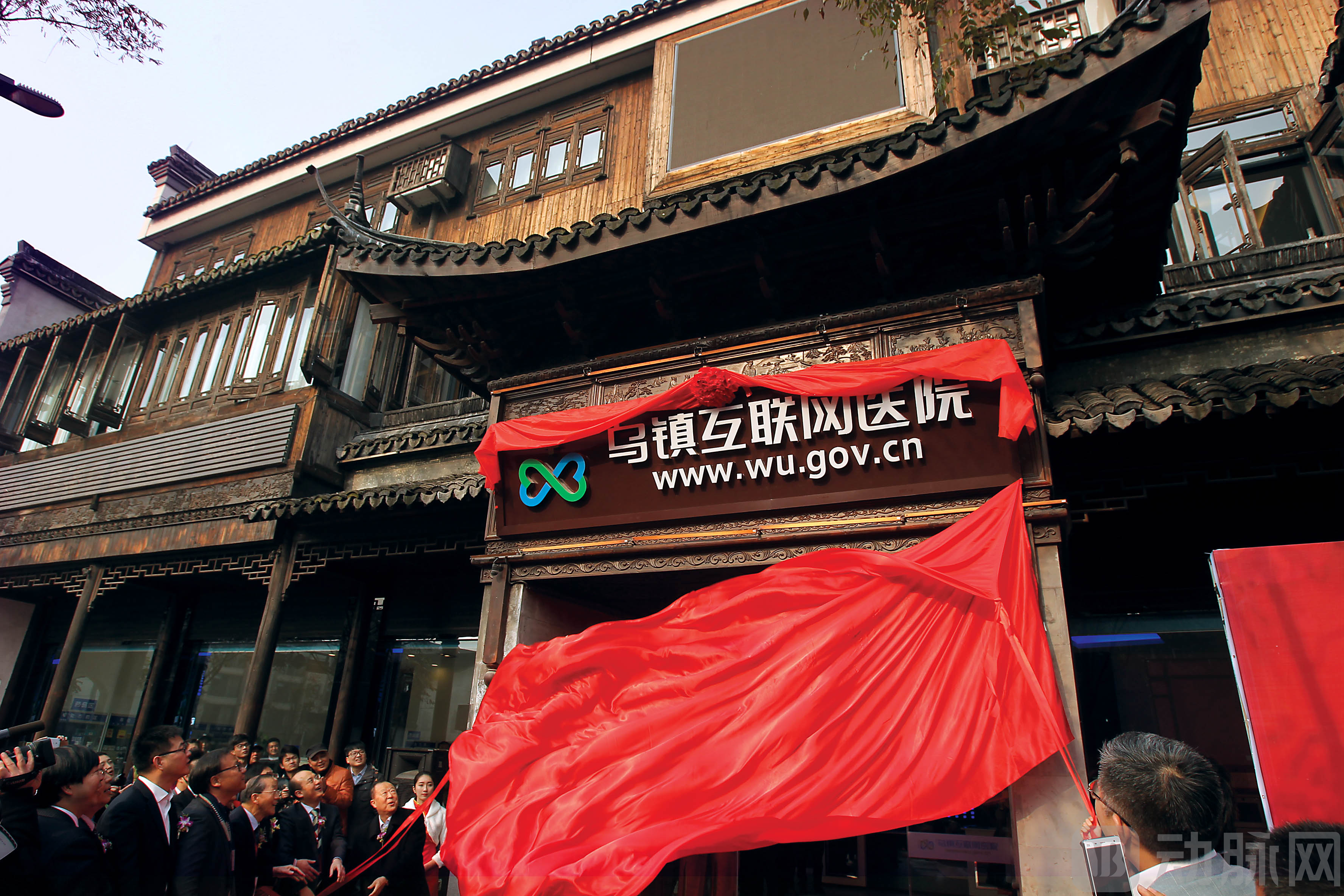 China's First Internet Hospital—Wuzhen Internet Hospital Unveiled in 2015
The emergence of internet hospitals has broken down the walls between traditional medical institutions. By connecting doctors and patients across China via the internet, they have improved the accessibility of healthcare services and enhanced the efficiency of physician collaboration, serving as a digital “prescription” to address the difficulty patients face in accessing medical care due to the uneven distribution of healthcare resources.
Since then, internet hospitals have developed rapidly, particularly catalyzed by the COVID-19 pandemic after 2020, completing a transition from an “optional” to an “essential” service. According to incomplete statistics, more than 1,700 internet hospitals have been approved and established across China, with the number of online medical users reaching approximately 300 million.
As a pioneer in the development of internet healthcare, WeDoctor continues to expand the scope and depth of its online hospital services. Currently, WeDoctor has connected with over 8,000 hospitals across China, including more than 95% of Grade A tertiary hospitals; operates 34 internet hospitals, 20 of which have integrated online medical insurance payment; and links over 300,000 registered physicians and 270 million registered users.
Centered on user health, WeDoctor fully leverages the online-offline synergy of its digital healthcare platform. By adopting a “membership-based” service model, it has built a comprehensive, collaborative care system comprising “specialists from Grade 3A hospitals, general practitioners, and health service stewards.” Serving individuals, families, enterprises, telecom operators, and other scenarios, WeDoctor provides one-stop medical and health management services throughout the entire lifecycle.
It is worth noting that, by leveraging internet hospitals with integrated medical insurance payment capabilities, WeDoctor has consolidated regional healthcare service providers to establish a tightly-knit Internet Medical Consortium and Health Stewardship Organization—the Digital Health Community. This model has achieved rapid development in provinces and municipalities such as Shandong, Tianjin, Fujian, and Shanghai.
Digital healthcare is evolving at a rapid pace. Currently, the sector is transitioning from the “Informatization + Healthcare” and “Internet + Healthcare” eras into a new phase of Digital-Intelligence 3.0, characterized by “Artificial Intelligence + Healthcare.”
It is widely recognized in the industry that artificial intelligence (AI) represents the commanding height of global technological competition. Advancing the application of AI technologies in the healthcare sector is of significant importance for enhancing China’s healthcare service standards. As early as 2017, the State Council issued the New Generation Artificial Intelligence Development Plan, which explicitly called for the promotion and application of new AI-driven models and methods in diagnosis and treatment, and for establishing a rapid and precise intelligent healthcare system.
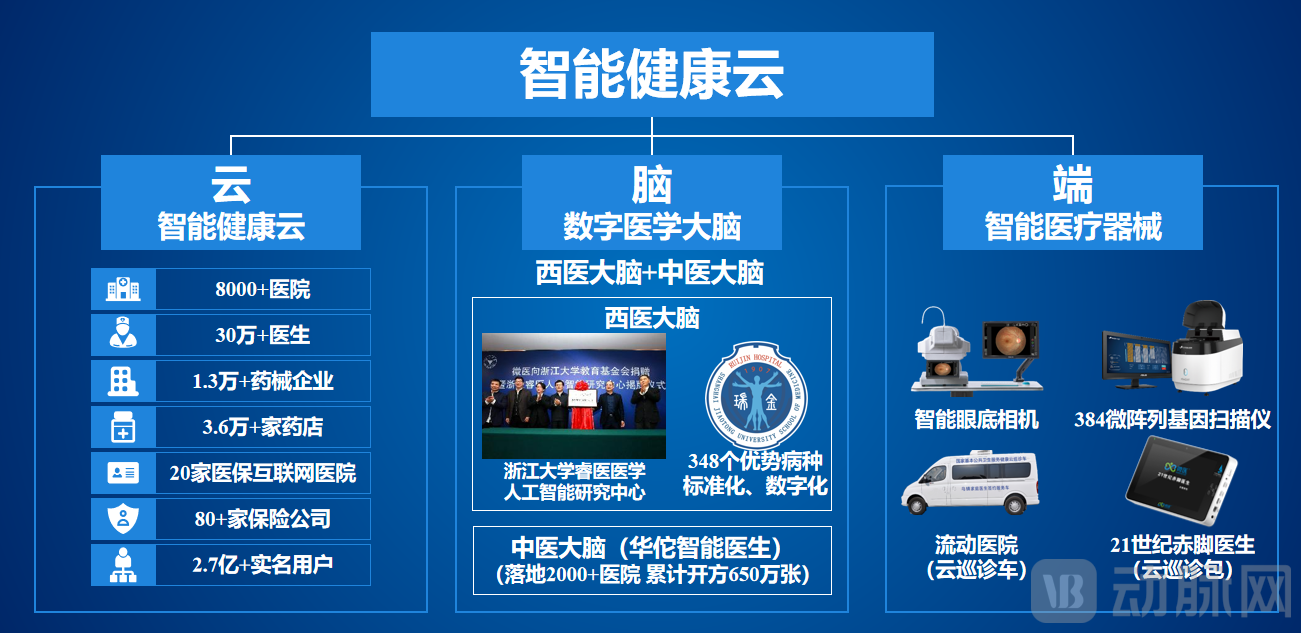
WeDoctor’s “Cloud + Brain + Terminal” Service System
Leveraging its extensive accumulation of medical resources and digital R&D capabilities, WeDoctor has developed an intelligent healthcare service ecosystem comprising the Intelligent Health Cloud, the Digital Medical Brain, and smart medical devices, forming a “Cloud + Brain + Device” digitally integrated framework.
Through intelligent terminals such as smart fundus cameras, gene scanners, and mobile hospitals, we can reach scenarios in rural areas, communities, households, and schools. This enables residents to access medical resources from approximately 8,000 hospitals and 300,000 doctors across China connected via the WeDoctor Smart Health Cloud anytime and anywhere, as well as smart services powered by emerging technologies such as the Internet, Internet of Things (IoT), and artificial intelligence (AI). These efforts facilitate the decentralization of high-quality medical resources to grassroots levels and communities, extending care into households.
WeDoctor Intelligent Health Cloud, as an open platform, uploads medical data accumulated from intelligent terminals to the cloud for processing, supported by the interconnected framework of devices, cloud, and intelligence. This further forms a powerful “Digital Medical Brain,” enabling high-level, diversified development and application of “AI + Healthcare.”
In the field of Traditional Chinese Medicine (TCM), WeDoctor has developed the TCM Brain “Huatuo Cloud” to assist primary care TCM practitioners in prescribing. It is currently deployed in over 2,000 hospitals and has cumulatively assisted physicians in issuing 6.5 million prescriptions. In the field of Western medicine, WeDoctor jointly established the Ruiyi Medical Artificial Intelligence Research Center with Zhejiang University. Leveraging digital technologies such as artificial intelligence, big data, and cloud computing, they have developed an AI-driven diagnostic and therapeutic application for Western medicine—the Ruiyi Intelligent Doctor. Relying on its robust R&D and application capabilities in “AI + Healthcare,” WeDoctor has achieved breakthrough progress in multiple areas, including intelligent fundus screening, AI-assisted diagnosis of pulmonary nodules, intelligent ECG-assisted diagnosis, AI-assisted colposcopic diagnosis of cervical lesions, and clinical decision support for liver cancer. Additionally, intelligent devices developed by WeDoctor, such as gene chips, all-in-one smart kiosks, and the WeDoctor Health Connect platform, have been widely adopted, significantly enhancing the quality and efficiency of primary healthcare services.
Taking intelligent fundus screening as an example, the “Computer-Aided Diagnosis Software for Fundus Imaging” supports auxiliary screening and diagnosis for nine types of fundus diseases, including diabetic retinopathy and macular degeneration, achieving an accuracy rate of 94.5%. By deploying this intelligent fundus screening system in primary healthcare institutions, fundus complications associated with chronic conditions such as diabetes and hypertension can be detected early, enabling timely diagnosis and treatment. The system received Class III medical device certification from the National Medical Products Administration in April 2022.
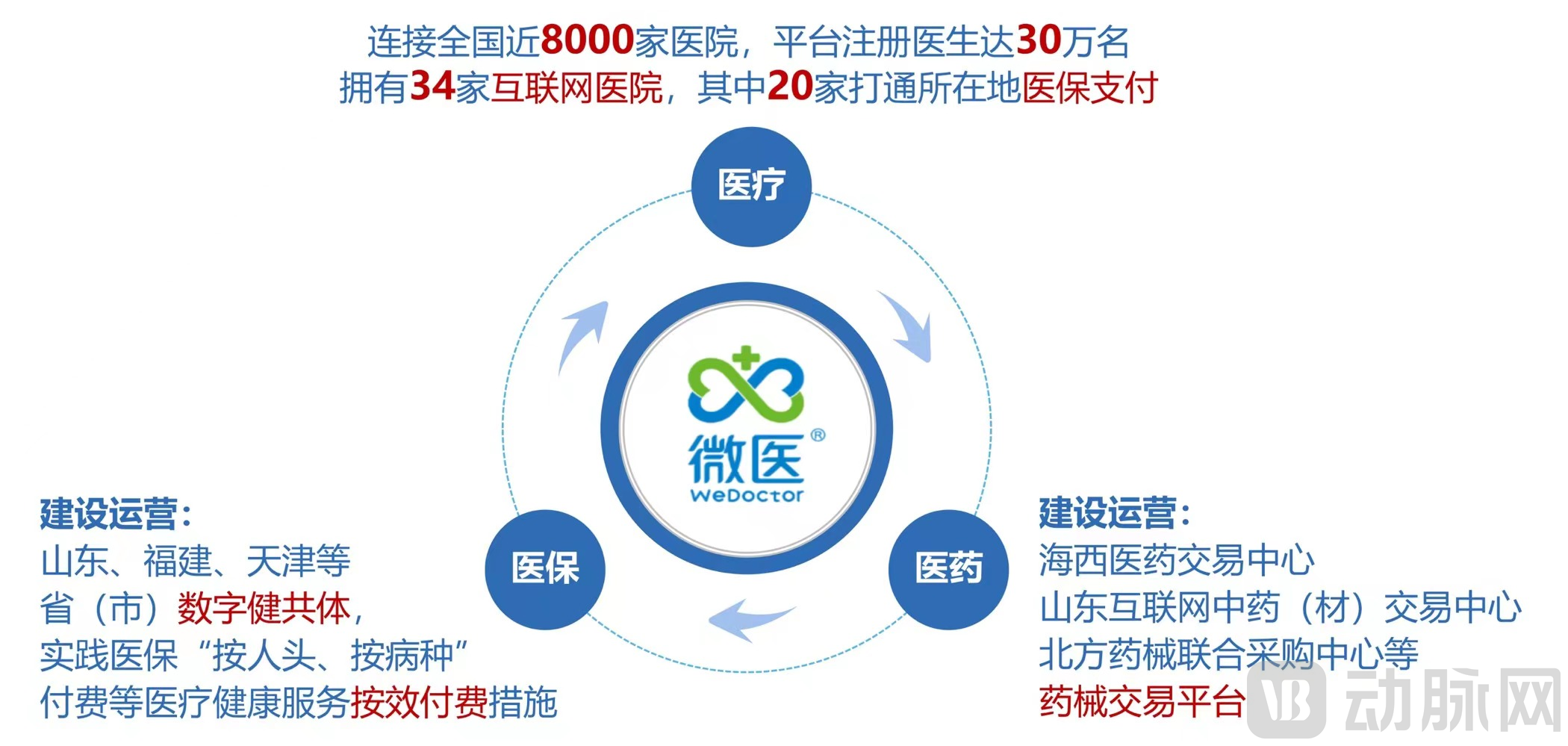 WeDoctor’s Progress in Medical Services, Pharmaceuticals, and Health Insurance-Related Businesses (Compiled from Public Sources)
It can be said that WeDoctor’s innovative internet hospital and its digital-intelligent medical services, as vital components of its closed-loop “medical care, pharmaceuticals, and health insurance” ecosystem, not only integrate and synergize with the Digital Health Community (insurance) and the Pharmaceutical and Medical Device Trading Platform (pharmaceuticals) to form a digital healthcare development pathway aligned with China’s comprehensive reform of the “Three-Medical Linkage” (medical care, pharmaceuticals, and health insurance), but also drive the digital and intelligent transformation of China’s healthcare industry.