

WeDoctor Launches Comprehensive Medical and Pharmaceutical Trading Platform Featuring TCM Consortium Procurement and Files IPO Prospectus
Recently, Forbes China released the “Top 50 Innovative Companies in China 2022” list, featuring five enterprises from the big health sector. WeDoctor emerged as the sole digital healthcare company on the list. This marks WeDoctor’s third appearance on the list, following its inclusions in 2018 and 2019.
As a unicorn in the internet healthcare industry, WeDoctor’s innovative business model has consistently drawn significant attention from the sector. Over the past decade, in response to three major pain points in China’s healthcare system—namely, the “uneven” distribution of medical resources leading to difficulties in accessing care, “asymmetric” information in the pharmaceutical market resulting in high healthcare costs, and “ineffective” health insurance payment mechanisms contributing to over-treatment—WeDoctor has introduced three groundbreaking innovations—its Internet Hospital, pharmaceutical and medical device trading platform, and Digital Health Community—to provide targeted digital solutions. Among these, the pharmaceutical and medical device trading platform serves as a precise entry point for linking the “three medical sectors” (healthcare, health insurance, and pharmaceuticals) to deeply address industry pain points, acting as an “accelerator” for WeDoctor’s digital-driven industry upgrade.
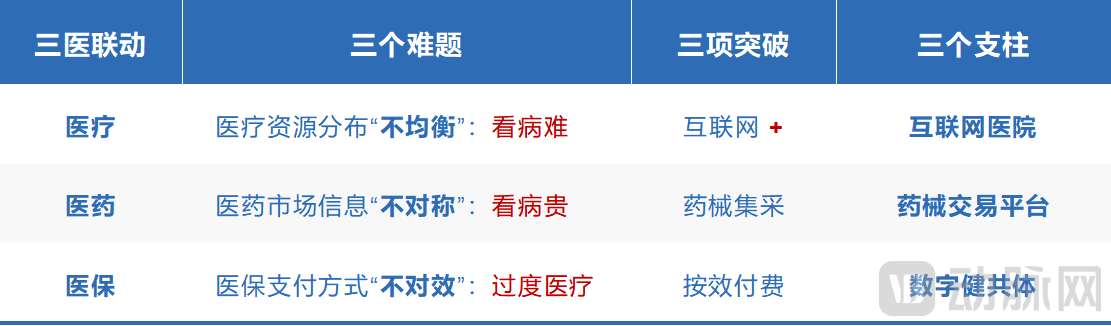
WeDoctor’s Three Innovations Driving the Digital Transformation of the Healthcare Industry
As is well known, WeDoctor established China’s first internet hospital in 2015, pioneering online prescriptions, online follow-up consultations, and remote consultations. It has led the industry in breaking down the traditional barriers of hospitals and alleviating the difficulty of accessing medical care caused by uneven resource distribution through internet-based solutions.
Subsequently, WeDoctor began to extend its services from internet-based medical care to pharmaceuticals and insurance, upgrading its internet hospital model. In 2019, it explored and implemented the Digital Health Community, aiming to break the “impossible triangle of healthcare” and achieve the goals of improving the quality of medical services, increasing accessibility to medical services, and reducing the cost of medical services.
From the current perspective, WeDoctor’s exploration of the Digital Health Community has been arduous yet fruitful. Through this “Digital Health Community,” WeDoctor has truly integrated the capabilities of healthcare services, pharmaceuticals, and health insurance—often referred to as the “Three Meds.” This integration has alleviated pressure on large hospitals, enhanced the capabilities of primary care institutions, and improved the efficiency of payments by both basic medical insurance and commercial health insurers. Consequently, it has driven an increase in regional health indices, creating a prototype of a Chinese-style health stewardship organization that covers the entire life cycle and the full continuum of health management.
For example, in early 2020, WeDoctor partnered with the Tianjin Municipal Government to launch the construction of a Digital Health Community. Led by Tianjin WeDoctor Internet Hospital, this initiative coordinated 266 primary healthcare institutions across Tianjin to deploy an integrated “Four Clouds” platform—comprising Cloud Management, Cloud Services, Cloud Pharmacy, and Cloud Diagnostics. This effort aimed to establish a digital, intensive, and standardized model for healthcare service delivery, using chronic disease management as the entry point. Furthermore, it deeply explored reforms in health insurance payment methods, such as “bundled global payments” and “capitated bundled payments,” thereby shifting the focus of health insurance reimbursement toward health outcomes.
The pharmaceutical and medical device trading platform is one of the most valuable outcomes achieved by WeDoctor in its exploration of the Digital Health Community. It has become an “accelerator” driving industry upgrades and expediting the progress of healthcare reform. Currently, through multiple trading platforms such as the Haixi Pharmaceutical Trading Center, the Shandong Internet Traditional Chinese Medicine (Materials) Trading Center, and the Northern Joint Procurement Center for Pharmaceuticals and Medical Devices, WeDoctor is innovating the “Internet + Healthcare” model. By leveraging the scale advantages of health insurance procurement, it aims to eliminate inflated prices and improve the efficiency of health insurance fund utilization on one hand, while on the other hand, helping enhance quality control standards for traditional Chinese medicine (materials) and promoting the digital transformation of the TCM industry.
Industry experts have commented that WeDoctor’s “Three Innovations” have had a sustained and profound impact on the development of China’s digital healthcare industry, serving to some extent as the three foundational pillars supporting the digital transformation of the country’s healthcare sector.
For a long time, prominent challenges in China’s healthcare sector have included artificially inflated drug prices and over-treatment, stemming from information asymmetry in the pharmaceutical market. In recent years, China has actively implemented centralized volume-based procurement (VBP) for drugs and medical devices. By reducing costs associated with distribution, marketing, and hospital access, this initiative has lowered artificially high prices for medicines and consumables. Coupled with the coordinated reform of healthcare, health insurance, and pharmaceutical sectors (“Three-Medical Linkage”), it has facilitated the “vacating the cage to change the bird” strategy—phasing out the practice of subsidizing healthcare services with drug revenues—and has alleviated patients’ medication burden to some extent. However, data from the China Health Statistics Yearbook indicate that although the proportion of drug expenditures in total medical costs (“drug ratio”) has continued to decline in recent years, it remains at approximately 30%–40%, significantly higher than the 10%–15% observed in OECD countries. Thus, the task of structural adjustment through “vacating the cage to change the bird” remains arduous.
The Haixi Pharmaceutical Trading Center, a subsidiary of WeDoctor, is the earliest centralized procurement platform to implement the “Three-Medical Linkage” model. In 2017, the center undertook the development of the National Healthcare Security Administration’s national platform for drug and medical consumable tendering and procurement. It has been exclusively commissioned by the Sanming Procurement Alliance to conduct cross-regional joint procurement of drugs and consumables. To date, it has facilitated pharmaceutical and consumable transactions exceeding RMB 300 billion, becoming one of China’s largest pharmaceutical trading platforms. Indeed, as early as the initial phase of Sanming’s healthcare reform, the Haixi Pharmaceutical Trading Center assisted Sanming in establishing a transparent, online joint price-capped procurement platform for drugs and medical devices. Centered on three core objectives—“lowering drug prices,” “improving efficiency,” and “enhancing regulation”—the platform achieved integration of joint procurement, price negotiation, transaction, settlement, and regulatory oversight for drugs and consumables. Between 2012 and 2020, Sanming achieved relative savings of RMB 12.403 billion in drug and consumable expenditures, reversing the trend of deficit in its healthcare insurance fund.
As the value of centralized procurement for pharmaceuticals and medical devices continues to be demonstrated, calls for the centralized procurement of traditional Chinese medicine (TCM) are growing louder, making it urgent to address the bottlenecks in this process. TCM centralized procurement faces unique challenges, particularly the difficulty in unifying quality standards. The quality of TCM is influenced by every stage from cultivation at the source to market circulation, meaning that a comprehensive traceability system spanning the entire industry chain must be established to ensure a robust quality assurance framework. Furthermore, enhancing the quality of TCM is a key component of China’s strategy to promote the high-quality development of traditional Chinese medicine; blindly pursuing low prices runs counter to national policies supporting the advancement of TCM.
Leveraging the advantages of its digital platform for traditional Chinese medicine (TCM), WeDoctor has collaborated with the Sanming Procurement Alliance to create an online TCM (herbal materials) trading platform aimed at “ensuring quality, upgrading standards, and stabilizing supply.” By establishing five core systems, including quality control and traceability, the platform builds a “high-quality, fair-price” mechanism that guides the industry away from price-cutting as the primary objective and promotes healthy development. Built upon the infrastructure of the Shandong Online TCM (Herbal Materials) Trading Center and located in the Jinan Free Trade Zone in Shandong Province, this platform has grown into both the service and technical support hub for the Sanming Procurement Alliance’s Inter-Provincial TCM (Herbal Materials) Procurement Alliance and a nationwide market-oriented trading platform for TCM (herbal materials). In January 2022, commissioned by the Sanming Procurement Alliance, the Shandong Online TCM (Herbal Materials) Trading Center launched China’s first centralized joint procurement of TCM products, attracting participation from 9,547 medical institutions across 86 cities in 19 provinces, with reported procurement volumes exceeding RMB 10 billion.
In addition, WeDoctor has established the Northern Pharmaceutical and Medical Device Joint Procurement Center in Tianjin, supporting the Tianjin Digital Health Community in exploring disease-specific joint drug procurement. This initiative facilitates performance-based payment models for healthcare services, such as capitation and diagnosis-related group (DRG) payments. In the future, the Northern Pharmaceutical and Medical Device Joint Procurement Center will form a close-knit procurement alliance with nine northern provinces, promoting the normalization and institutionalization of procurement activities.
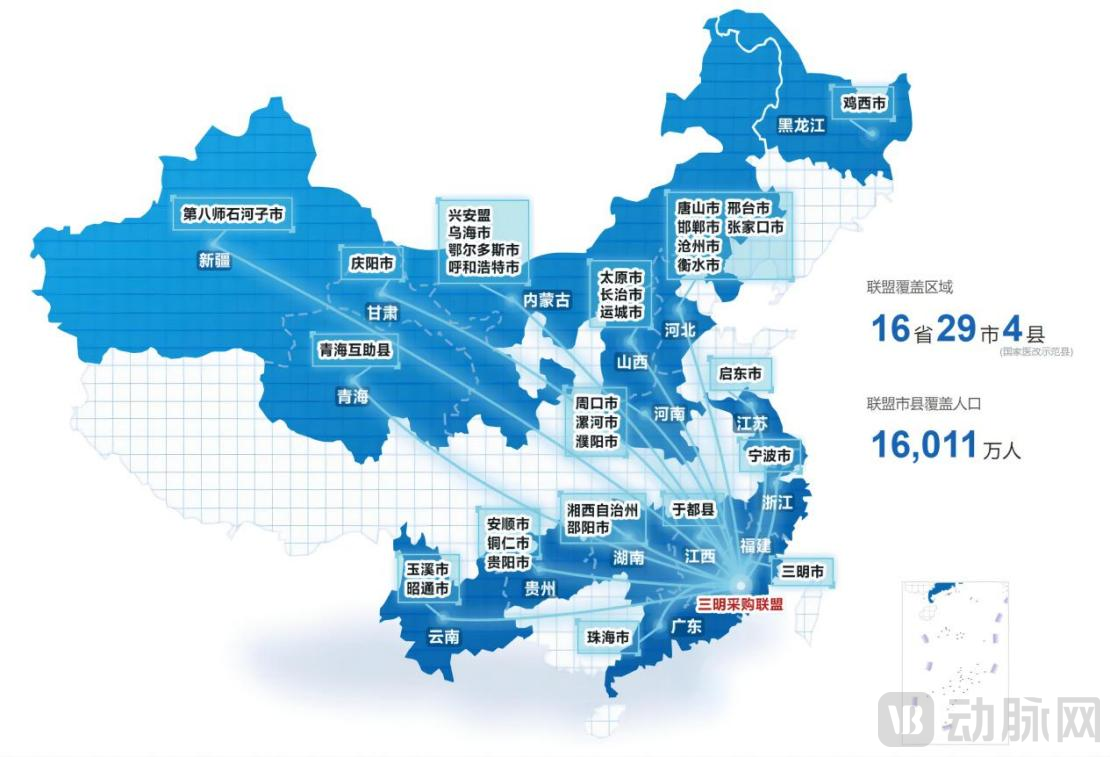
Weiyi Pharmaceutical and Medical Device Trading Platform Conducts Cross-Regional Joint Procurement of Drugs and Consumables on Behalf of the Sanming Procurement Alliance
Currently, China has clearly identified the “three-medical-linkage” model as the key pathway to successful healthcare reform, with health insurance reform advancing in depth. As large-scale centralized drug procurement—led by health insurance funds as the primary purchaser—expands, and market-driven transactions increasingly emphasize volume-for-price and volume-for-quality exchanges, WeDoctor’s long-established “Three Centers” framework, comprising the Haixi Pharmaceutical Trading Center, the Shandong Internet Traditional Chinese Medicine (Materials) Trading Center, and the Northern Pharmaceutical and Medical Device Joint Procurement Center, will not only generate substantial market value for the company but also further advance China’s healthcare reform and support the high-quality development of its healthcare system.