

The Ultimate Cure for the Trillion-Dollar Sleep Health Market? Can Brain Science and Digital Therapeutics Revolutionize Sleep?

SDODT
Developer of Digital Therapeutics for Neurological Diseases

SLANHEALTH
Digital Therapeutics CDMO and Full-process Service Developer
Sleep problems are not exclusive to modern people; ancient individuals also suffered from sleep disturbances, as documented in classical texts that have been passed down through the ages. For instance, Du Fu, who long struggled with sleep issues, left behind the famous lines: “Since the turmoil and chaos, I have slept little; how can I endure the long, damp night?” It has been reported by enthusiasts that Du Fu wrote approximately 110 poems related to sleep disorders, covering various phenomena such as difficulty falling asleep, frequent awakenings, early morning awakening, difficulty returning to sleep after dreaming, total sleeplessness throughout the night, and chronic insomnia.
Significant efforts have been devoted to addressing these sleep issues. Nevertheless, sleep problems remain unresolved and are becoming increasingly severe. The good news is that with the “decoding” of the root causes of sleep disorders, neuroscience and digital therapeutics may emerge as new weapons in the fight against sleep disturbances.
In recent years, factors such as delayed sleep-wake cycles, an accelerated pace of life and work, and increased stress have made sleep problems an increasingly significant issue affecting mental health. According to the 2022 White Paper on Healthy Sleep among Chinese Residents, nearly three-quarters of respondents reported experiencing sleep difficulties one to two days per week, while 12% reported sleep disturbances at least three days per week. Among these issues, "difficulty falling asleep" was the most common problem, affecting 30% of respondents, followed by "easy awakening" and "insomnia."
The ongoing COVID-19 pandemic has further exacerbated the already increasingly severe sleep problems. According to statistics, hundreds of millions of people have developed insomnia disorders, with some of them eventually becoming part of the more than 70 million new cases of depression and 90 million new cases of anxiety disorders.
The increasingly severe sleep problems have had a growing impact on people's study and daily life, leading to heightened attention in China toward sleep quality and sleep health. As the first step, sleep monitoring has drawn widespread interest, particularly for the IoT-based sleep monitoring sector represented by companies such as Yunrui Intelligence, Zhenluo Technology, Rouling Technology, and DARMA.
Treatment and symptom relief are the next steps. For instance, "snoring," medically known as sleep apnea syndrome, had long been overlooked in China. However, in recent years, a growing number of patients and their families have begun to recognize this hidden condition, driving rapid growth in the home ventilator market.
This has placed China’s sleep economy on a trajectory of rapid growth. Data from iiMedia Research shows that,Between 2016 and 2020, the market size of China's sleep economy grew from RMB 261.63 billion to RMB 377.86 billion, representing a 44.42% increase. The market size is projected to exceed RMB 1 trillion by 2030.。
Sleep-related companies have also recently experienced a minor surge: in June, De Rucci Health Sleep Co., Ltd. listed on the Shenzhen Stock Exchange; in August, Chengdu Qushui Technology Co., Ltd. also listed on the Shenzhen Stock Exchange. More notably, both companies saw their stock prices skyrocket on their listing days—the former surged 44% within one hour, hitting the daily limit up; the latter soared as much as 217% during intraday trading, triggering two temporary trading halts, and closed the day with a 171% gain.
Relatively speaking, China lags behind advanced countries and regions in sleep disorder research. Sleep research in China began in the 1950s and saw little progress for a long time. With economic development and rising health awareness, investment in sleep health in China has grown rapidly in recent years.
Taking sleep-related clinical trials as an example,VCBeat on the official website of the Chinese Clinical Trial RegistryA search using the keywords “sleep” and “insomnia” identified a total of 843 clinical trials. Notably, 519 of these trials were conducted after 2020, accounting for more than 60% of the total and even surpassing the combined number of trials from 2006 to 2019.
The level of attention paid to sleep health is self-evident.
Little known is that,Sleep Disorders Are Actually a Chronic DiseaseIn 1975, sleep disorders were included in the International Classification of Diseases, Ninth Revision (ICD-9) for the first time, officially becoming recognized as a disease. In 1990, the American Sleep Disorders Association, the European Sleep Research Society, the Japanese Society of Sleep Research, and the Latin American Sleep Society collaborated to develop the International Classification of Sleep Disorders (ICSD). The classification has now been updated to its third edition, which categorizes sleep disorders into seven types. These research findings have also been incorporated into the ICD-11.
Certainly, short-term sleep issues are not classified as diseases. Lin Junchao, co-founder of Sumian, stated that taking insomnia as an example, only insomnia lasting more than three months and occurring more than three times per week is defined as chronic insomnia; acute insomnia lasting less than three months is often caused by stress-related events. If patients can make timely adjustments, the symptoms will often resolve spontaneously.
“However, acute insomnia also warrants close attention. If it proves difficult to manage, one should seek medical attention or consult a professional institution as soon as possible to prevent acute insomnia from progressing into chronic insomnia,” he added.
Lin Junchao further explained, “With the development of the national economy, people in China have gradually become aware of the importance of sleep and are willing to invest more money and effort in purchasing high-quality bedding or adjusting their bedroom environments to improve their sleep. However, they have also come to realize that some sleep disorders cannot be resolved by simply changing bedding or improving the environment. Yet, when it comes to treating sleep disorders, most people are only aware of pharmacological interventions. Due to fear of psychotropic medications and the associated stigma, many individuals hesitate to seek medical help, allowing their conditions to develop into chronic sleep disorders. This is a deeply regrettable phenomenon.”
Statistics indicate that more than one-third of adults have experienced short-term or long-term insomnia. In approximately 40% of cases, insomnia progresses to a more chronic and persistent condition, posing long-term hazards to patients’ lives and health.
Li Wenyu, CEO of SDODT, stated that sleep architecture disturbances or sleep disorders are associated with irritability and mood swings: “Surveys of individuals who sleep less than five hours per night have shown a progressive increase in mood disorders, an amplification of negative emotions, and a significantly higher likelihood of aggressive and suicidal behaviors. This will lead to a marked increase in the incidence of depression, autism spectrum disorder, and various other mental health conditions.”
Sleep disorders can also impair patients' attention and alertness. “When brain rhythm activity during slow-wave sleep is artificially suppressed, memory significantly declines, the ability to form new memories is markedly weakened, and existing memories are compromised. This will significantly increase the risk of developing Alzheimer’s disease,” he added.
“Sleep disorders, represented by chronic insomnia, are essentially a type of chronic disease! It is no exaggeration to say that they are also the root cause of a series of other chronic diseases,” he summarized.
A rather helpless reality is that sleep problems have never been completely cured from ancient times to the present, and perhaps it will be difficult in the future. This is because there are many factors affecting sleep, and the hypotheses about the causes of sleep disorders have not yet reached a consensus.
With the advancement of brain science, new research has made progress, confirming that the brain is extremely active and complex during sleep. Furthermore, the entire process involves the participation of numerous neurotransmitters and neuromodulators.
Sleep cycles have also been elucidated with the support of electrophysiological techniques—based on differences in electroencephalographic (EEG) activity and physical behavior during sleep, the entire sleep period can be divided into Rapid Eye Movement (REM) sleep and Non-Rapid Eye Movement (NREM) sleep. The latter is further subdivided into three or four distinct stages (N1, N2, and N3), which are closely related to sleep depth.
Renowned sleep scholar Professor Arthur J. Spielman proposed the 3P model of insomnia development after extensive research, which has become the theoretical foundation for many sleep disorder therapies.
The model proposes that the primary factors influencing insomnia are categorized into predisposing factors (individual traits that make one susceptible to insomnia), precipitating factors (stimuli that trigger the acute onset of insomnia), and perpetuating factors (factors that sustain insomnia). These three factors collectively influence sleep; once their combined effect exceeds a certain threshold, insomnia results.
To address sleep disorders, people have employed various methods. The first approach involves improving the sleep environment; this category primarily includes basic sleep products such as mattresses, pillows, eye masks, and earplugs. However, these measures offer limited benefit to patients whose condition has progressed to chronic sleep disorder.
Liu Yu, CEO of Hangzhou Quan Technology Co., Ltd., stated that over 70% of sleep disorders are actually related to psychological factors. The onset of anxiety and arousal can disrupt or desynchronize the physiological and psychological rhythms of sleep.
“One of the reasons for this phenomenon is that the accelerated pace of life in today’s information-driven society leaves us feeling overwhelmed. Before the advent of internet-based social tools, the speed of information dissemination was limited, and the amount of content we received daily was finite. Although these tools have now become highly developed and widespread, bringing convenience to our lives and work, they have also significantly increased the volume of information we receive each day and the mental energy required to process it, often necessitating our attention even at night. This leads to greater uncertainty,” he added.
Over the past few decades, various pharmacological agents for the treatment of sleep disorders have been introduced to the market. While these medications demonstrate certain therapeutic efficacy in managing sleep disorders, they are also associated with significant adverse effects, including excessive daytime sleepiness, poor drug tolerance, cognitive impairment, dependence, and difficulty in withdrawal. Furthermore, as these drugs are often utilized in the management of psychiatric conditions, they tend to be stigmatized and rejected by the general population.
Melatonin-based medications are relatively safe, owing to their high safety profile and favorable clinical outcomes; they have gained significant popularity in recent years, yet the risk of long-term dependence remains unavoidable.
A preliminary statistical analysis by VCBeat, based on data from the Chinese Clinical Trial Registry, reveals that non-pharmacological therapies for sleep disorders—including digital therapeutics—are garnering increasing attention.
For example,Among clinical trials for sleep disorders conducted after 2020, 46 adopted non-pharmacological interventions, including acoustic and photic stimulation, cognitive behavioral therapy, and exercise. Notably, there were 17 clinical trials involving light-based therapies from January to August 2022 alone, surpassing the total number of trials conducted throughout the entire years of 2021 (14) and 2020 (15).。
Clinical Trials of Non-Pharmacological Treatments for Sleep Disorders (January 2020–August 2022) (Data sourced from the Chinese Clinical Trial Registry; graphic by VCBeat)
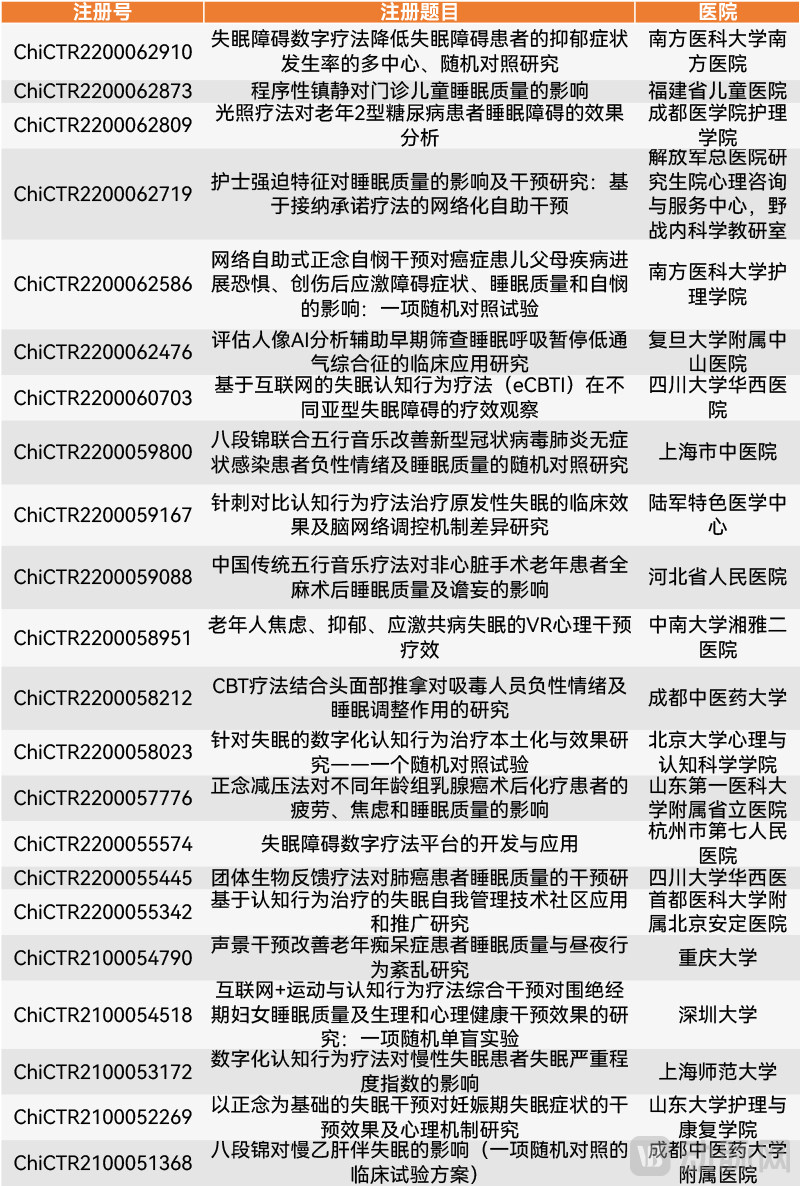
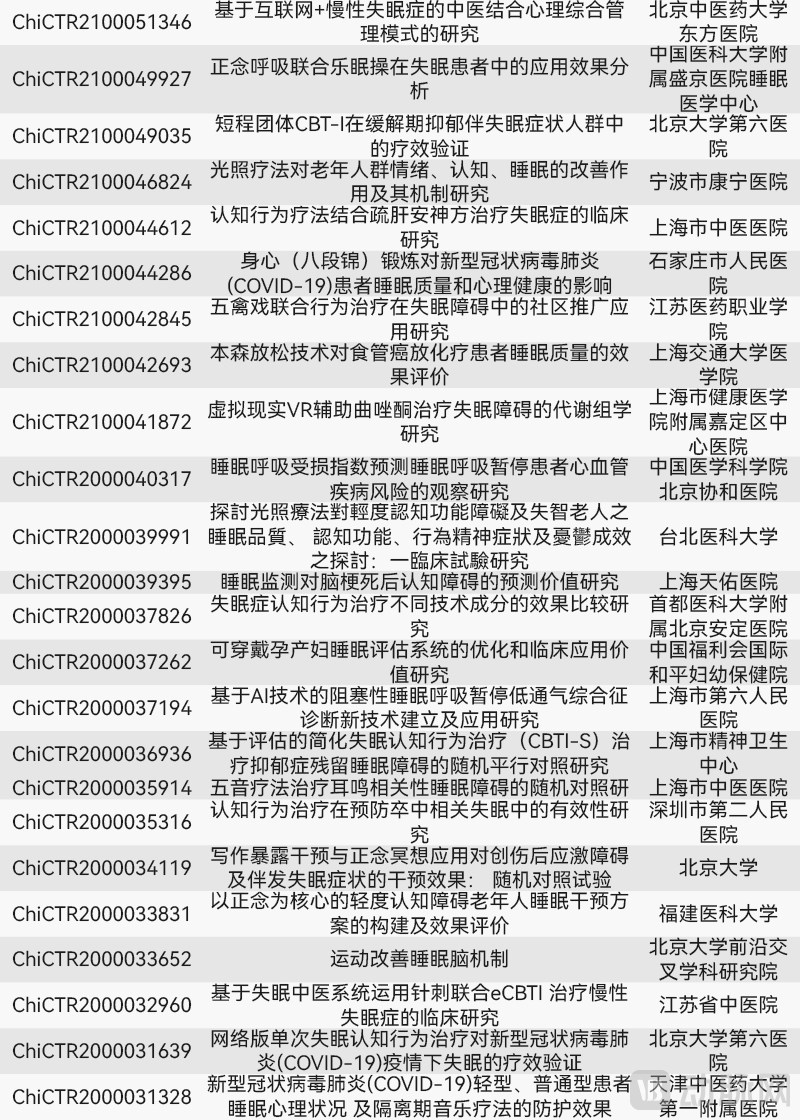
Non-pharmacological therapies for sleep disorders, arising from the integration of digital therapeutics and brain science, can be broadly categorized into cognitive behavioral therapy for insomnia (CBT-I), slow-wave sleep modulation, and audio-visual stimulation. Currently, a large number of digital therapeutics companies have entered this field and are applying these interventions in clinical practice.
CBT-I, as a cognitive behavioral therapy for sleep disorders, improves insomnia by modifying various factors such as maladaptive lifestyle behaviors and sleep habits.Compared with pharmacotherapy, CBT-I is a safer, healthier, and more universally applicable treatment for insomnia, representing one of the most effective non-pharmacological interventions. Evidence from research conducted in Europe and the United States over the past two to three decades indicates that, with active patient adherence, its efficacy rate can reach approximately 80%, establishing it as a highly mature non-pharmacological therapy.
However, due to the late start of sleep therapy in China, there is a severe mismatch between the extreme shortage of professional therapists and the huge demand, making it unrealistic to promote traditional offline CBT-I in China. The emergence of digital therapeutics has provided an opportunity for the promotion of CBT-I. Currently, many digital therapeutic companies are exploring CBT-I-based digital sleep therapeutics.
Key Differences Between Traditional CBT-I and Online Digital CBT-I

SLANHEALTH’s Good Sleep 365 is a professional CBT-I digital therapeutic developed specifically for the vast population of individuals with insomnia in China. Building on the principles of CBT-I, it incorporates cognitive restructuring training. The program features training courses crafted by top domestic experts drawing on extensive clinical experience, thereby localizing the digital therapeutic to better suit Chinese patients with sleep disorders.
Through this therapy, physicians can provide patients with scientifically rigorous and professional services, including sleep monitoring, sleep improvement training, online consultations, and pharmacological guidance for patients with severe insomnia. This enables patients to significantly alleviate sleep disorders under the comprehensive guidance of board-certified psychiatrists using Cognitive Behavioral Therapy for Insomnia (CBT-I).
According to research findings published by SLANHEALTH, over 80% of individuals with insomnia experience significant improvements in sleep quality after 4–8 weeks of guided rehabilitation training. Furthermore, the patient dropout rate for Good Sleep 365 is only 8%, markedly lower than the approximately 43% dropout rate associated with traditional CBT-I.
Leveraging the core strengths of Good Sleep 365, SLANHEALTH has also incubated a lightweight, intelligent, and precise CBT-I therapy—the “Xiao Hai Mian” mini-program—through CDMO business collaborations. By partnering with Huawei’s Health Ecosystem team and integrating the “Xiao Hai Mian” mini-program with the Huawei WATCH FIT 2 smartwatch, they have created a digital sleep aid solution. This marks the first cross-industry collaboration between CBT-I and a mainstream wearable device ecosystem in China.
CBT-I-BasedXiao Hai Mian Mini Program (Image provided by SLANHEALTH)
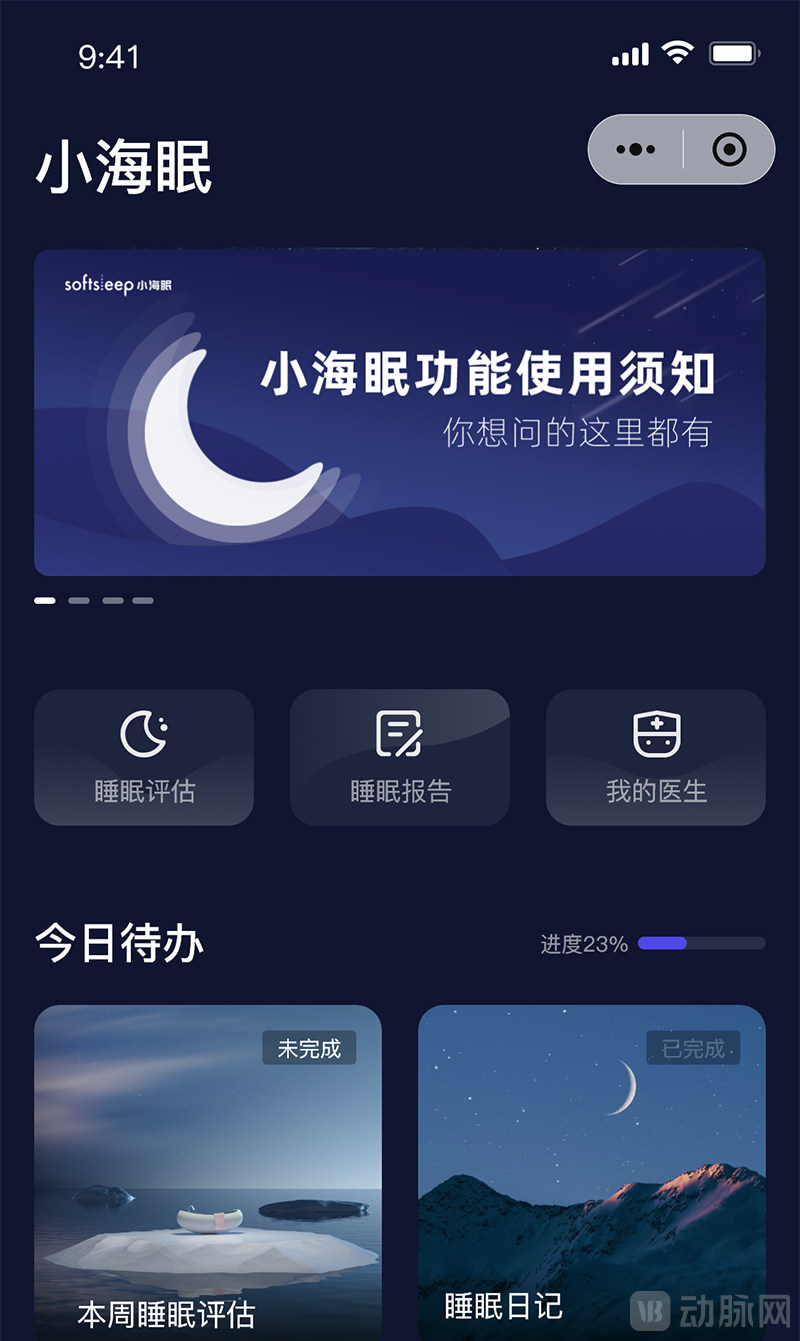
In this protocol, the smartwatch can collect, record, and analyze users’ comprehensive sleep data, transmitting it in real time to the “Xiao Hai Mian” mini-program. Upon user confirmation, this data serves as a key basis for Cognitive Behavioral Therapy for Insomnia (CBT-I), ultimately providing users with personalized, digital, and scientifically effective sleep intervention plans. By integrating hardware-based intelligent monitoring with software-driven scientific training, this approach offers a new option for individuals with sleep disorders.
In addition to SLANHEALTH, digital therapeutics companies such as Sumian, Zheng’an Technology, and Wangli Technology have also been continuously exploring CBT-I and have achieved notable results. For instance, Sumian has conducted real-world studies with major tertiary hospitals, including West China Hospital of Sichuan University and Peking University Sixth Hospital, and provided CBT-I services for the mental health platform of the Winter Olympics. Meanwhile, Wangli Technology undertook the research and development component on non-pharmacological interventions for insomnia disorder within the “Research on Prevention and Treatment of Common and Frequently Occurring Diseases,” a key national R&D program during the 14th Five-Year Plan period led by Southern Medical University.
Sumian is a renowned solutions provider in China’s digital sleep health sector, having delivered professional sleep management services to prominent enterprises and institutions such as Huawei, China Merchants Bank, and Ping An Group.
In 2020, Sumian and the Shenzhen Institutes of Advanced Technology, Chinese Academy of Sciences, jointly established the “Joint Laboratory for Digital Sleep and Brain Science,” dedicated to developing non-pharmacological solutions for sleep disorders. The Pulsed Magnetic Therapy System, used as an adjunctive treatment for chronic mild-to-moderate insomnia, is the first device targeting insomnia disorder that integrates real-time monitoring with dynamic intervention, and it has obtained registration certification as a Class II medical device.
This dynamic magnetic field therapy device consists of a pulsed magnetic field generator, a mobile app, and a monitor, all interconnected via Bluetooth. It operates by generating, amplifying, and modulating electrical signals through the pulsed magnetic field generator, which are then converted by an energy conversion unit to output pulsed magnetic fields in specific patterns.
Sumian Pulsed Magnetic Therapy System (Image provided by Sumian)
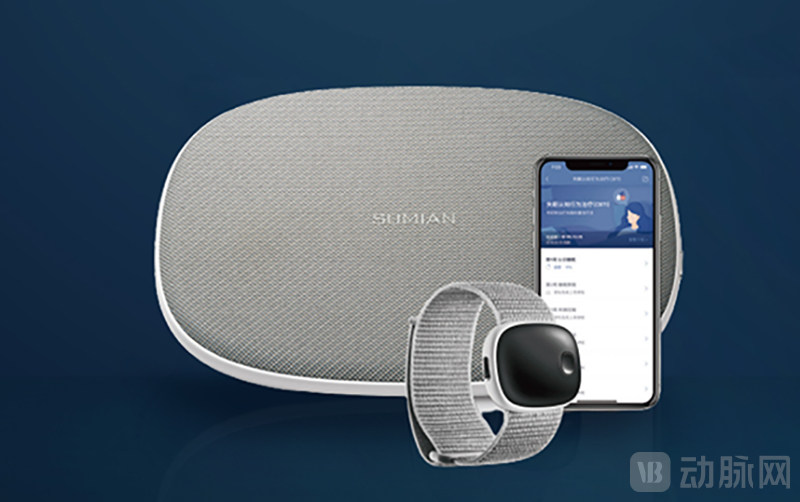
This specific pattern of magnetic fields can enhance the release of gamma-aminobutyric acid (GABA), the primary inhibitory neurotransmitter in the brain with sedative and calming effects, as well as sleep-related substances. It reduces cortical excitability, facilitates sleep onset, improves the balance between sleep and wakefulness in the brain, and thereby reduces dependence on medication.
In principle, magnetic pulse technology as a treatment for slow-wave sleep has a long history and has long been proven to be effective, painless, and non-invasive, demonstrating significant clinical value. Building on this foundation, Sumian further integrates it with digital therapeutics to manage sleep disorders as a chronic condition.
These management features include sleep data from monitors, assessment results from scales and questionnaires, and sleep diaries, which are used to generate sleep reports, provide expert recommendations, and offer personalized treatment plans. Additionally, the Sleep Encyclopedia helps patients scientifically understand sleep and master methods to improve sleep quality. Furthermore, the app provides 24/7 human customer service to answer patient inquiries online.
This solution features a systematic, intelligent, and personalized design. It not only selects the optimal operating mode based on different conditions but also automatically activates and deactivates according to factors such as sleep status and whether the head is positioned on the pillow.
In a multicenter, randomized, double-blind, placebo-controlled clinical trial conducted by Sumian in collaboration with the First Affiliated Hospital of Jinan University, the Third Affiliated Hospital of Guangzhou Medical University, and Shenzhen Kangning Hospital, this therapy demonstrated significant efficacy in treating sleep disorders: the treatment group showed an average reduction of 20 minutes in sleep latency, a 10-minute decrease in wake time after sleep onset, and an increase of 50 minutes in total sleep time, corresponding to an 8.6% improvement in sleep efficiency.
Many people have had the experience of being unable to fall asleep for a while, but by putting on headphones and listening to music or white noise, they can quickly calm down and fall asleep. This is not without scientific basis. Clinical studies have shown that sound therapy based on specific music and white noise has a significant intervention effect on patients with sleep disorders, which can significantly reduce anxiety, release stress, relax the body, and improve the quality of sleep for patients.
SDODT’s Shumian digital therapy is a representative example of sound therapy. The Shumian product integrates digital therapeutics with music-based sleep intervention, leveraging artificial intelligence algorithms to identify characteristic EEG rhythms and waveforms. It accurately recognizes different stages of sleep and automatically plays sleep-inducing music, which helps soothe the autonomic nervous system, thereby enabling patients to relax physically and mentally and fall asleep more quickly.
Shumian Digital Therapeutics primarily comprises three components: hardware, core algorithms, and software.The hardware primarily serves to detect electroencephalogram (EEG) signals in real time during sleep stages; the core algorithm adaptively calculates sleep staging based on real-time EEG activity characteristic of sleep and automatically selects appropriate sleep-inducing music or white noise; the software interface synchronously displays the detected sleep EEG data, evaluates sleep therapy efficacy, and analyzes sleep disorders.
Among these, the hardware component can monitor brainwaves in real time, dividing sleep into three phases—sleep aid mode, sleep care, and intelligent awakening—based on brainwave monitoring, and matching corresponding sleep-assistance methods to the needs of each phase.
In Sleep Aid Mode, the core algorithm analyzes brainwaves based on detection data and intelligently selects multiple audio tracks by combining user attributes with extensive sleep datasets. As sleep deepens, the therapy enters the Sleep Care Phase, where volume is adjusted in real time and pink noise is played; its stable and monotonous frequency helps slow down and regulate brainwave activity. Smart Wake-up utilizes EEG monitoring to awaken the user during light sleep, thereby facilitating a state closer to natural awakening.
The development of Shumian is progressing smoothly, with significant advances achieved in both the hardware and intelligent algorithm phases. According to SDODT, clinical trials for the entire therapy are being conducted concurrently. Both hardware monitoring and data confirm its therapeutic efficacy in sleep intervention, making the clinical outcomes highly promising.
Quan Technology’s ZhuMian Q1 Smart Sleep Device innovatively incorporates VR technology to improve sleep through combined auditory, visual, and psychological stimulation. Its hardware features an ultra-light VR headset weighing only 100 grams; the ergonomically designed eye mask evenly distributes the headset’s weight across the face and supports use while lying on either side at angles up to 120° in bed.
Quan Technology’s Zhumian Q1 Smart Sleep Device (Image provided by Quan Technology)
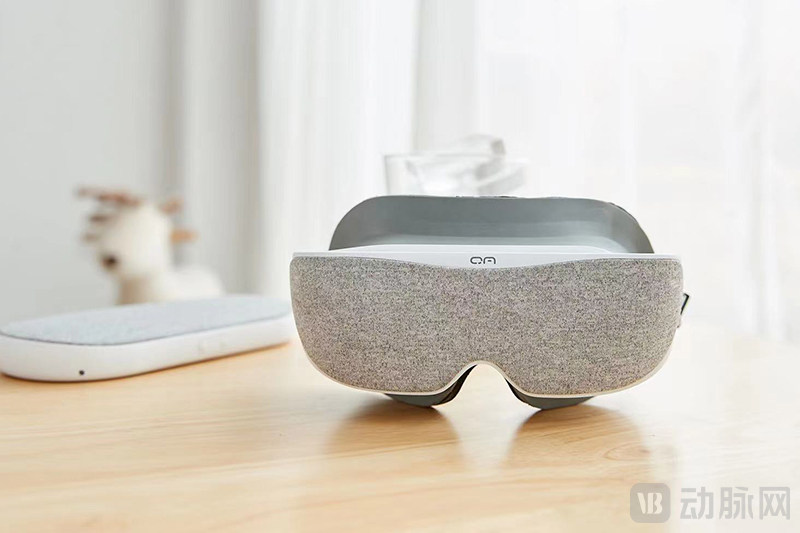
Meanwhile, the solution incorporates a brain-computer interface (BCI) and integrates artificial intelligence technologies such as AI algorithm-based recognition and biological data acquisition. It enables millisecond-precision collection of user data, facilitating vital sign learning, device service adjustments, and service plan optimization based on single-session or periodic usage data.
Based on the principles of VR, the solution can provide direct stimulation through both visual and auditory channels. Visually, red-orange light in the 590–790 nm range is used to simulate natural light, thereby promoting melatonin secretion. Meanwhile, the therapy guides eye movements through on-screen visuals, leveraging changes in imagery, color, and brightness to enhance concentration and gradually induce visual fatigue. Auditory stimulation, akin to sound therapy, employs soothing music or white noise to facilitate sleep onset.
Building on this foundation, Quan Technology has also achieved breakthroughs in the underlying logic of its products.Integrating psychological interventions into visual and auditory stimuli to deliver guided services based on professional psychotherapeutic protocols, which can significantly enhance the effects of relaxation, stress relief, and falling asleep. According to statistics, the average time for Zhumian users to fall asleep is only 10 minutes and 40 seconds.
Currently, this solution has been implemented in specialized departments at Tangdu Hospital and the 944th Hospital, among others. Clinical trials are being conducted jointly with Air Force Medical University and Tangdu Hospital, with the expectation of obtaining Class II medical device registration certification in 2023. Notably, Hangzhou Quan Technology Co., Ltd. is also exploring integration with traditional sleep-related home furnishings and has reached cooperation intentions with several established home furnishing brands.
Interestingly, our interactions with general users have revealed that defining the nature of sleep health products remains a significant challenge. While these products exhibit distinct B2C consumer characteristics and are subject to diverse marketing campaigns, exaggerated claims in promotional materials often erode user trust, leading many to remain skeptical about their efficacy. In previous communications by VCBeat, some investors have opined that digital therapeutics for sleep primarily help alleviate tension and anxiety, with limited therapeutic effects.
To address corresponding concerns, conducting comprehensive clinical trials to obtain a medical device registration certificate with serious medical attributes is clearly a necessary step. However, this would mean that the related products must comply with regulations and cannot be marketed.
As early as 2018, the renowned noise-canceling headphone brand BOSE launched a pair of masking earbuds called Sleepbuds. These earbuds create a quiet environment to facilitate sleep by playing soothing white noise via a companion app to mask specific ambient sounds, complemented by a comfortable design suitable for extended wear.
Although the functional explanation and original intent are not entirely consistent, its working principle is essentially no different from that of acoustic sleep therapy. It is no exaggeration to say that, should BOSE wish to do so, it would not be particularly difficult to obtain medical device registration for this product with only minor modifications. However, this has not occurred—even though BOSE established a dedicated healthcare division, BOSE Health, prior to launching this product.
On one hand, the product was indeed not originally intended for medical use. On the other hand, Bose clearly did not want strict regulatory oversight to constrain its core strength in marketing. A year later, the product failed to achieve the expected market response and was subsequently discontinued.
So, how is this issue perceived within the digital therapeutics industry?
Lin Junchao, Co-founder of Sumian, believes that the explosive emergence of sleep health products will intensify competition. Coupled with increasingly rational consumer attitudes, medical attributes will gradually become essential for these products. This shift will rapidly build patient trust, differentiate them from non-medical products, and thereby reduce the burden on patients when making purchasing decisions.
“From the perspectives of R&D, product design and manufacturing, as well as efficacy testing, medical-grade standards represent the highest benchmark. To uphold the essence of serious medicine, we often invest significantly more time and capital than our peers and the numerous consumer-grade health products on the market. However, it is precisely this approach, which offers the lowest cost-effectiveness in the short term, that allows digital therapeutics truly belonging to the realm of serious medicine to stand out,” he added.
Li Wenyu, CEO of SDODT, expressed a similar viewpoint. He stated that sleep aid products available on the market can be categorized into medical and non-medical types based on their usage environments and attributes. Due to the vastness of the sleep market and the challenges in achieving comprehensive regulatory oversight, the safety and efficacy of non-medical sleep aid products are often inconsistent. This has led to difficulties for consumers in correctly selecting products that genuinely help improve their conditions.
In contrast, medical products must undergo rigorous testing for efficacy and safety and comply with regulatory standards to obtain registration certification. This will enable users to accurately identify the underlying causes of their sleep disorders, thereby facilitating targeted treatment.
“Sleep disorders are inherently involved in the etiology of many diseases and are undoubtedly a chronic condition. Therefore, from detection and analysis to the resolution of insomnia itself, the process must be scientific and rigorous. Products for treating sleep disorders should also ensure their medical attributes to facilitate user selection. Meanwhile, we should resist false and exaggerated products to help promote the healthy development of the industry,” introduced Li Wenyu.
Liu Yu, CEO of Hangzhou Quan Technology Co., Ltd., also believes that medical attributes are crucial: “Medical attributes add value to sleep health products, which is why we conduct clinical trials and apply for medical device approval. Sleep is part of a complex systemic engineering process in the human body, requiring more specialized and professional research as well as market-ready, applicable services. Grounded in evidence-based medicine and delivering services through technologically advanced products will be the key variables and drivers shaping future market development and structural evolution.”
Obviously,The digital therapeutics industry for sleep health shows a stronger preference for medical attributes. Substantial progress is being made in both clinical trials and medical device approvals., this is undoubtedly good news.
It is evident that both public awareness and professional medical practice are placing increasing emphasis on sleep. Meanwhile, with the introduction of brain science combined with digital therapeutics, sleep health is transitioning from an era of empirical experience to one characterized by comprehensive digitization, precision, and personalization.
More precise identification of sleep disorders, matched with appropriate interventions and personalized adjustments, may become the future trend in sleep disorder treatment. Once clinical trials demonstrate remarkable efficacy, these next-generation digital therapeutics for sleep could disrupt the trillion-dollar sleep health market.
“Perhaps, have a good dream, and the future will no longer be a dream.”
References:
Shi Le, Lu Lin. Chinese Journal of Psychiatry. February 2017; Vol. 50, No. 1: “Current Status and Prospects of Sleep Medicine in China”
Meng Lingwei, Liu Hui, China Galaxy Securities Research Institute: “Growing Demand for Sleep Aid and Broad Market for the Sleep Economy”
Chinese Sleep Research Society, De Rucci Bedding, "2022 White Paper on Healthy Sleep of Chinese Citizens"