

M20 Genomics Files IPO Prospectus Highlighting Its Breakthrough Sample-Agnostic Single-Cell Full-Length RNA Sequencing Technology
For a long time, researchers have used transcriptome sequencing (RNA-seq) to detect RNA in tissue or cell population samples. When analyzing gene expression and other conditions of the samples, differences between individual cells may be masked by the average values of the population. To address this issue,Single-Cell Sequencing Technologyemerged as the times required, and nowhas demonstrated significant potential in biomedical fields such as oncology, immunology, and neuroscience。
Despite breakthroughs in high-throughput and multi-omics technologies, the field of single-cell sequencing still faces numerous challenges.Low sensitivity, limitations on sample viability, and high costs have become major obstacles to the development of single-cell-related fields.
Currently, most single-cell sequencing technologies rely on poly(A) selection for RNA capture. Due to read length limitations, these methods only yield information from the 3' end of cellular RNAs and fail to provide full-length transcript data. Furthermore, poly(A)-based capture strategies are not applicable to the detection of microorganisms such as viruses and bacteria.
On the other hand, most high-throughput single-cell sequencing platforms currently on the market have stringent requirements for sample cell viability. To obtain meaningful data, cell viability typically needs to reach 70–80% or higher. However, in clinical practice, the majority of samples are cryopreserved tissues or formalin-fixed, paraffin-embedded (FFPE) tissues, which exhibit extremely low cell viability, making it difficult to perform effective detection using current single-cell sequencing technologies.
August 16, 2022, M20 Genomics(hereinafter referred to as: M20)FormalIt has released “M20 Seq,” the world’s first high-throughput single-cell full-length sequencing technology based on random primers for whole-sample analysis, along with its VITA series of whole-sample high-throughput single-cell sequencing products.
“The advent of the “M20 Seq” technology marks a new era for single-cell sequencing, ushering in the 2.0 age of its transition from scientific research to clinical application.
VITA Platform Based on the M20 Seq MethodCan be achievedAll Sample Types、All Species、Full-Length Single-Cell Transcriptome Study, which will greatly expand the application scope of single-cell technologies. This product series mainly includes: VITAPilote series kits, VITACruiser single-cell preparation system, and VITASeer software and data platform.
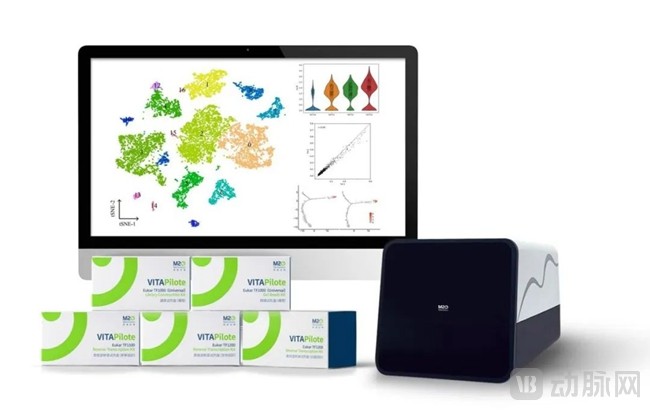
Panoramic View of the VITA Product Series (Image Source: M20 Genomics)
VITA achieves a breakthrough in full-length single-cell transcriptome sequencing, with uniform gene coverage from the 5’ to 3’ ends.
Currently, most enterprises, whether using microwell plates or droplet-encapsulated single-cell labeling platforms, obtain RNA sequences by capturing polyA tails. This capture method introduces 3' end bias, meaning that full-length RNA sequences cannot be obtained. However,M20's independently developed and designed random primers can bind to various regions of mRNA., after the combination is completed, add the special label for M20 at the tail end, i.e.CanComplete full-length sequence capture。
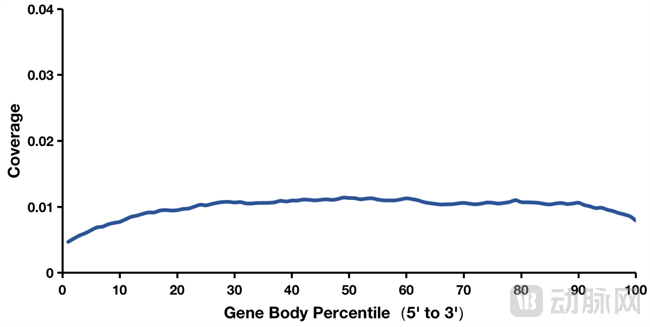
VITA Platform Achieves Full-Length Coverage from 5’ to 3’ Ends (Image source: M20 Genomics)
Based on random primer technology,M20 Expands Single-Cell Applications to More Species, such as in the field of microbiology. Furthermore, the more comprehensive sequence information provided by full-length transcripts enhances the potential for clinical adoption of this technology. More importantly, this single-cell sequencing technique, which does not rely on poly(A) capture, addresses a critical challenge in clinical sample collection, thereby minimizing the impact of RNA fragmentation or breakage on detection accuracy.Breaking Free from the Constraints of Sample Freshness。
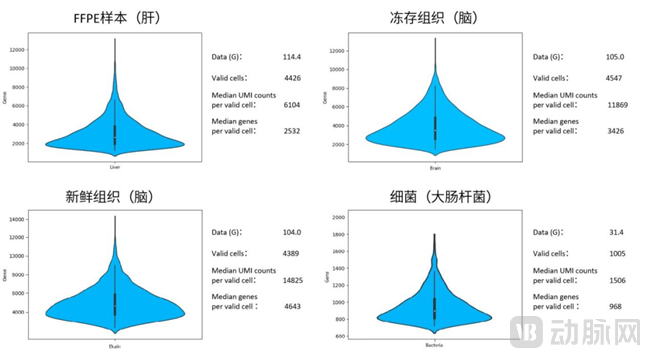
Number of Genes Detected in Different Sample Types (Image Source: M20 Genomics)
In terms of detection precision and accuracy,VITA’s twin rate is kept below 2%.. Furthermore, based on the underlying logic of random primers, the number of detected genes increases correspondingly with the increase in sequencing depth.At a sequencing depth of 500K reads/cell, no obvious plateau phase was observed.. According to M20, the VITA platform can achieve up toAverage Number of Genes Detected per Cell Exceeding 10,000, which providesDetection of Rare GenesBrings possibilities.
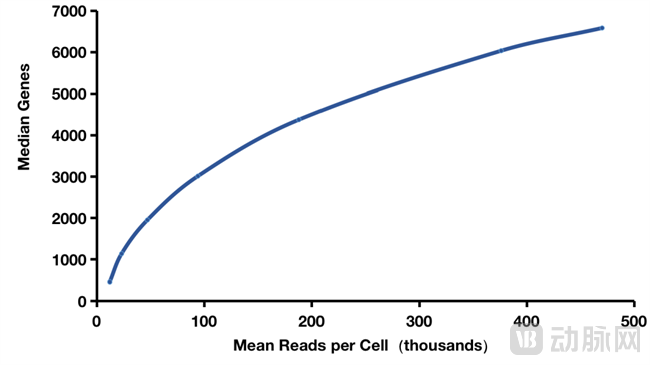
Growth Curve of Gene Detection in FFPE Samples (Image Source: M20 Genomics)
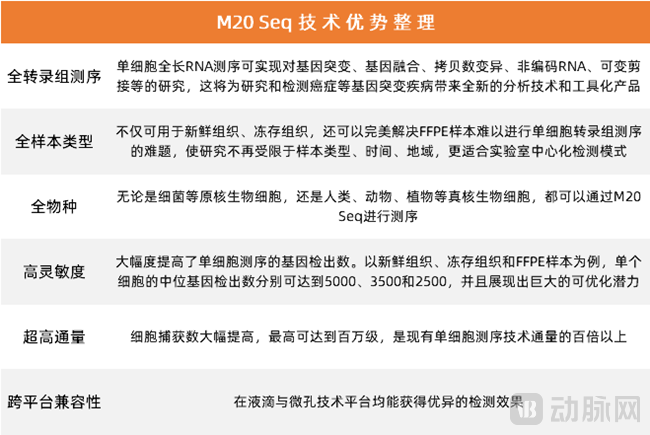
The M20-seq technology achieves comprehensive coverage of the whole transcriptome, all sample types, and all species, while delivering high sensitivity and ultra-high throughput detection capabilities.It not only reduces the cost of using single-cell sequencing technology, but also enables researchers and clinicians to perform sequencing on frozen and FFPE samples in medical biobanks.Promoting the Application of Single-Cell Technologies in Oncology, Reproduction, Aging, and Immunology。
M20’s remarkable achievements are primarily attributable to its scientific and technical team, as well as its operations and management team.
The M20 technical team possesses academic backgrounds and extensive experience in fields such as biochemistry, medicine, and biological computing.The team of scientists primarily steers the company’s technological development from a holistic single-cell technology perspective. Adopting a scientific viewpoint, they ensure that the company’s growth is not confined to immediate, trivial profits, but instead rises to the challenge of developing technologies that hold genuine significance for the scientific community.
After technical implementation,The scaled mass production, stable quality control, and cost reduction of the product are primarily achieved through collaboration between instrument engineers and IVD engineers.
For innovative enterprises, technical talent serves as the engine, while the industrialization team is responsible for constructing the overall framework and coordinating the integration of all components. The commercialization of cutting-edge technologies relies on product translation, internal and external operational management, marketing and sales, and support from external capital. Only by integrating technology with industrial capabilities can rapid commercial development of both the project and the company be ensured.
However, many companies founded by scientists face challenges such as a lack of suitable corporate management talent and the absence of business management teams with expertise in their specific fields.Over the past year, M20 has built a highly cohesive and dynamic team that effectively integrates business, capital, and science and technology through continuous collaboration and practical application.
Based on similar underlying technical principles, the primary competitive focus in the current single-cell sequencing market is to reduce product costs; therefore,Price Wars and Supporting Services Become the Focus of Many Companies’ Brainstorming Sessions。Dr. Ling Dong, Chief Operating Officer of M20In the interview, he stated that this development trend may turn technology-driven innovative enterprises into service-oriented companies.To remain an innovative enterprise amid fierce market competition, mastering the capability for technological innovation is fundamental.。
Drawing on the enterprise’s in-depth understanding of technology, markets, and customers,M20 starts from market demand, with technological innovation as the driving force and technical barriers as the guarantee., design research products and clinical products for different application scenarios,High initiative in market development。
For M20, single-cell sequencing is merely the first step, serving as a gateway to its journey in biopharmaceuticals.Over the next three years, in line with technological advancements, M20 will expandCompanion Diagnostics、Clinical Treatment、Drug Developmentand other application scenarios.
“In fact, leveraging our unique technological advantages, we are already developing companion diagnostic products related to oncology for clinical treatment and drug development. Progress is going well, and we are confident that these products will reach our users in the near future. We are committed to breaking down technical barriers and finding the momentum to move forward, exploring the mysteries of life and the origins of disease with next-generation single-cell technology, thereby ushering in a new technological era in the field of disease diagnosis and treatment.”Dr. Dong LingSo it is said.