

China's R&D Expenditure Reached CNY 2.8 Trillion in 2021 with Basic Research Funding Up 24%
Recently, the National Bureau of Statistics, the Ministry of Science and Technology, and the Ministry of Finance jointly released the Statistical Bulletin on National Input of Scientific and Technological Funds in 2021 (hereinafter referred to as the “Bulletin”).
The “Communiqué” shows that China’s expenditure on research and experimental development (R&D) reached RMB 2,795.63 billion in 2021, a year-on-year increase of 14.6%. China’s spending on basic research wasRMB 181.7 billion, a year-on-year increase of 23.9%, its share of research and experimental development (R&D) expenditure (6.5%) reached a record high.
In recent days, there has been a widespread consensus within the industry that the global economy is on the verge of entering a severe downturn. Consequently, in the face of this broader macroeconomic cycle, countries and industries worldwide are reducing market capital investments. However, China’s total societal R&D expenditure continues to maintain robust growth. What is the underlying logic behind this trend? And what are its practical implications for scientific research and innovation in China? To address these questions, VCBeat Orange Bureau conducted an in-depth analysis of the Communiqué and summarized three key highlights.
Highlight 1: R&D and Basic Research Funding Hit Record Highs, Signaling a Shift Toward Quality-Driven Innovation
First, look atResearch and Experimental Development (R&D) Expenditure, the Communiqué shows that China's total expenditure on research and experimental development (R&D) reached RMB 2,795.63 billion, firmly ranking second in the world.
From 2016 to 2021, China's research and experimental development (R&D) expenditure grew at an average annual rate of 12.3%,Achieved double-digit growth for six consecutive yearsOver these six years, the growth rate of China’s research and experimental development (R&D) expenditure was also significantly higher than that of developed countries such as the United States, South Korea, Germany, and Japan.
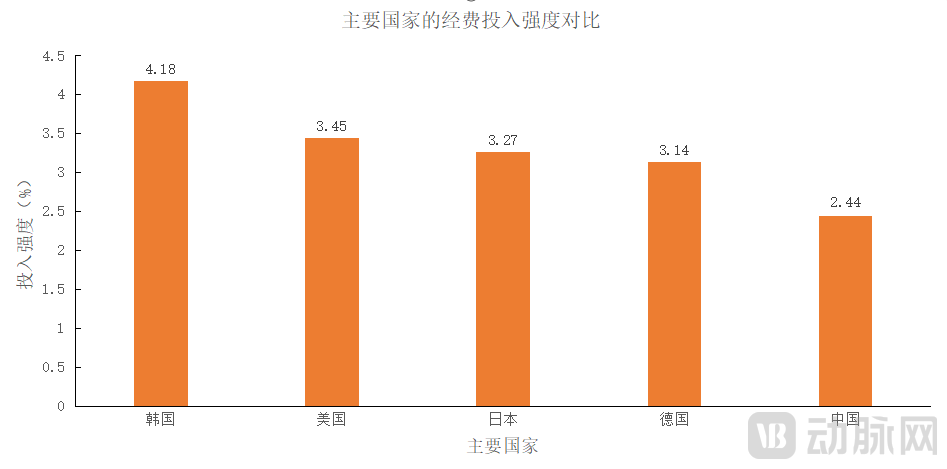
It can thus be seen that China’s research and experimental development (R&D) expenditures have generally shown aLarge VolumeandHigh GrowthTwo Prominent Features.
See AgainBasic Research Funding, the Bulletin shows that China's basic research funding was 181.7 billion yuan, accounting for 6.5% of the total research and experimental development (R&D) expenditure, a significant increase of 0.49 percentage points from the previous year,Hit a Record High。
What Are the Underlying Reasons Behind the Substantial Increase in R&D Investment?
First, let’s discuss research and experimental development (R&D) expenditure, with the most critical aspect beingFocus on Original Innovative Technologies。
Currently, China has moved beyond the entrepreneurial era dominated by “domestic substitution” under traditional business models, with most of the low-hanging fruit already harvested. Future opportunities will increasingly favor innovative enterprises that possess genuine original technologies and effectively meet clinical needs. Therefore, R&D investment must demonstrate greater sincerity than in the past.
Next, let us discuss funding for basic research, which is primarily focused onUniversities。
According to the Bulletin, in 2021, basic research funding at universities and colleges across China totaled RMB 90.45 billion, a year-on-year increase of 24.8%, contributing as much as 51.3% to the growth in total basic research expenditure nationwide. So, how are universities and colleges integrating with basic research?
It is reported that universities in China lead the establishment of over 60% of the national key laboratories in discipline-based fields and 30% of the national engineering research centers.
And inR&D Fundingaspects, universities have multiple channels such as government appropriations, project funds, corporate investments, and revenue from technology transfer; inR&D EquipmentIn this regard, professors can leverage key laboratories at universities, utilize advanced experimental equipment from partner enterprises, or obtain valuable data from these companies. Over the past decade, universities have won 10 of the 11 First Prizes for National Technological Invention and accounted for 72% of all Technological Invention Awards.
So, why universities? There are two main reasons.
First, fromSourceFrom this perspective, university professors enjoy greater autonomy than physicians and research scientists, as they are not constrained by routine clinical or operational duties. Furthermore, due to differences in training systems, university professors possess stronger interdisciplinary competencies, enabling them to better address and resolve the various challenges encountered in scientific research.
Second, fromMarket ResourcesFrom this perspective, compared with clinical-centric medical centers and research-led scientific institutions, universities possess greater core competencies oriented toward the market, primarily reflected in their more market-driven technology transfer systems and rich, diversified market resources.
Highlight 2: Policy Upgrades to Consolidate the Primary Role of Enterprises in R&D Investment
The Bulletin shows that enterprises’ research and experimental development (R&D) expenditure accounted for 76.9% of the national total, an increase of 0.3 percentage points from the previous year. The R&D expenditures of the three major performing sectors—government-affiliated research institutions, higher education institutions, and enterprises—were RMB 371.79 billion, RMB 218.05 billion, and RMB 2,150.41 billion, respectively.
This demonstrates that enterprises have further consolidated their position as the primary investors in R&D funding. So, how have they achieved this?
Certainly, there are numerous reasons, such as corporate transformation and upgrading, and the influx of innovative tech talent, but the primary reason remains the introduction of relevant national policies, namelyAdditional Deduction for R&D Expensesnew policy.
As is well known, a company’s R&D capabilities directly determine its competitiveness and future prospects. However, since the outbreak of the COVID-19 pandemic, corporate operational performance has been less than optimistic due to factors such as reduced downstream demand and logistical disruptions. Moreover, with increasing R&D investment, production and operational costs have continued to rise,Most enterprises have faced capital shortages in recent years.。
To address the difficulties faced by enterprises, the 2021 Government Work Report pointed out thatIncrease the super-deduction ratio for manufacturing enterprises from 75% to 100%.。
In short, under the new policy, for every RMB 1 million invested in R&D expenses, enterprises can deduct RMB 2 million from their taxable income. Compared with the previous 75% deduction ratio, the 100% deduction ratio allows enterprises to make an additional pre-tax deduction of RMB 250,000.
This not only encourages corporate innovation but also minimizes the associated costs. It is reported that in 2021, 58.4% of manufacturing enterprises above designated size benefited from the additional deduction policy. In fact, the introduction of this new policy,Empowering enterprises to increase their investment in scientific research and innovation with greater confidence., guiding the flow of corporate production factors toward innovative fields.
Taking the pharmaceutical manufacturing industry as an example, the Bulletin shows that its research and experimental development (R&D) expenditure and R&D intensity were RMB 94.24 billion and 3.19%, ranking sixth and third, respectively, among all manufacturing sectors.
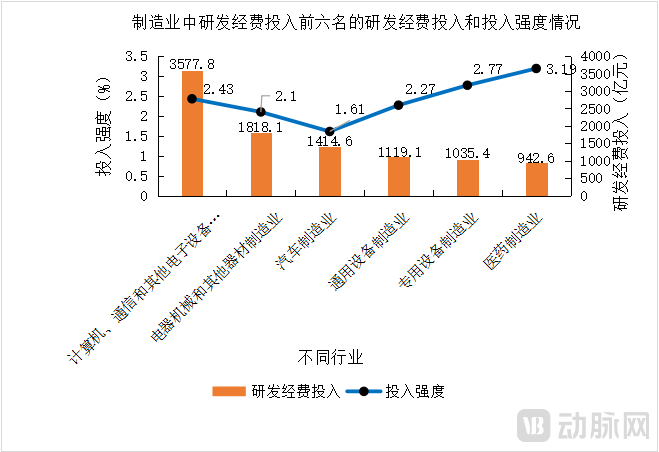
Notably, compared with 2020, the pharmaceutical manufacturing industry’s research and experimental development (R&D) expenditure and R&D intensity increased by RMB 15.78 billion and 0.06 percentage points, respectively, with growth rates far exceeding those of other manufacturing sectors.
So, why has the pharmaceutical manufacturing industry emerged as a sudden powerhouse?
The first reason:The COVID-19 Pandemic Has Spurred Innovation in Pharmaceutical R&D and Medical Devices。
InDrug DevelopmentIn this regard, influenced by the COVID-19 pandemic, sectors such as vaccine and therapeutic drug development have remained highly active. To enhance their competitiveness, companies have rushed to invest substantial funds in the research and development of new products and innovative drugs.
It is reported that as of April 26, 2021, 2,519 companies listed on China’s A-share market had disclosed their R&D investment status. In terms of R&D expenditure intensity, the top six were all pharmaceutical manufacturing companies.
InMedical Device InnovationIn the early stages of the COVID-19 outbreak, demand for epidemic prevention supplies surged both domestically and internationally, leading to prolonged shortages. Subsequently, as public awareness of health protection increased, higher standards were imposed on the protective efficacy of personal protective equipment (PPE) such as face masks, as well as on the efficiency and convenience of rapid SARS-CoV-2 detection technologies. Consequently, major enterprises have significantly increased their investments in medical device innovation.
Furthermore, exports of China’s high-quality anti-epidemic supplies and pharmaceuticals to overseas markets have continued to rise, thereby fostering R&D innovation within the country’s pharmaceutical manufacturing sector.
The second reason:The Inevitable Outcome of Pharmaceutical Innovation。
R&D capabilities directly determine the survival and development of pharmaceutical companies.
Due to the late start of China's pharmaceutical industry, pharmaceutical enterprises'Weak R&D capabilities and an immature business model, in international competitionLack of Profit Margin. It is reported that the R&D intensity of most pharmaceutical companies in China is below 10%, meaning that less than 1 yuan out of every 10 yuan in profits is allocated to research and development.
To change this situation, Chinese pharmaceutical companies have begun to increase their R&D investment, no longer focusing on low-value-added generic drugs that require less investment and shorter development times, but instead starting to tackle otherHigh-Value Innovative Drugs, with significant results.
Highlight 3: Eastern Region Becomes the “Lead Goose,” with Central and Western Regions Following Suit to Join the Ranks of “Provinces with Trillion-Yuan GDP”
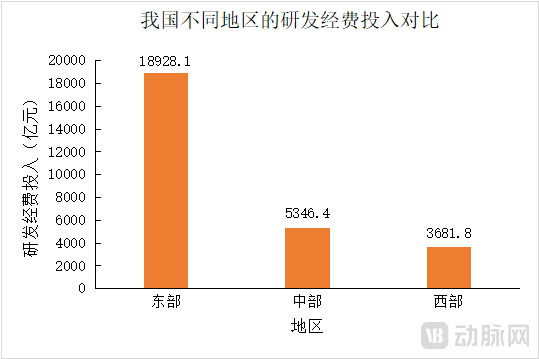
“The Bulletin” shows that China’s eastern, central, and western regions invested 1.89281 trillion yuan, 534.64 billion yuan, and 368.18 billion yuan, respectively, in research and experimental development (R&D) expenditures,The Head Effect in the Eastern Region Is Becoming Increasingly Prominent。
Why Is the R&D Investment Gap So Large Among China’s Eastern, Central, and Western Regions?
This still has to start fromUnbalanced Development Across Regions in Chinathe background of.
The long-standing imbalance in development among China’s eastern, central, and western regions, driven by the combined advantages of innovative infrastructure, capital, talent, and natural resources in the eastern coastal areas, has directly resulted in China’s economic development exhibiting a “East Rich, West Poor” characteristics, the fiscal revenues of various regions are similar. Differences in fiscal revenue inevitably lead to disparities in fiscal expenditure on science and technology, that is, gaps in R&D investment.
So, why exactly has the eastern region developed so well?
Taking Shanghai as an example, first,Tech Startups Drive Early-Stage InvestmentAcademicians, professors, and other scientific researchers have increasingly launched startups to facilitate the commercialization of their findings. It is reported that 13% of Shanghai’s “hard-tech” companies were founded by researchers or students from universities and research institutes, with entrepreneurs from the Chinese Academy of Sciences, Fudan University, Shanghai Jiao Tong University, and ShanghaiTech University emerging as the primary drivers in securing early-stage venture capital for technology transfer.
Secondly,Fully Integrate "Technology + Finance". Shanghai demonstrates significant advantages in leveraging capital to facilitate the commercialization of scientific and technological achievements. It is reported that in 2021, 274 companies secured financing 290 times, ranking first nationwide in both the number of companies and the frequency of financing rounds.
Finally,Optimize the Policy Support Environment. Shanghai has taken the lead in launching pilot initiatives, including incorporating university patent application rights and proprietary technologies into the scope of individual income tax reductions for achievement transformation, and utilizing surplus funds from horizontal research projects to support the commercialization of scientific and technological achievements through equity investment.
In addition, the Bulletin shows that there are currently 11 provinces in China with research and experimental development (R&D) funding exceeding 100 billion yuan.There are 5 in the central and western regions.。
This indicates that although the substantial disparities among the eastern, central, and western regions are difficult to alter,Central and Western regions are also continuously catching up and making progress。
Having just joined the ranks of “provinces with a trillion-yuan GDP” this year,AnhuiAs an example, it is reported that Anhui has become the leading province among the six central provinces in terms of the strength of its listed companies, with a total of 175 listed companies and a combined market capitalization of nearly RMB 2.5 trillion.
So, how did Anhui stage a remarkable turnaround to become a “top performer” in technological innovation?
First,Government Strongly Supports Tech Companies. For example, in 2008, despite its limited annual fiscal capacity, Hefei City made a significant investment to support and attract BOE to build display panel production lines, thereby pioneeringGovernment-led investment with participation from social capitala new model of investment and financing.
Since then, Anhui Province has continued to make astute investments in key projects such as NIO and ChangXin Memory Technologies (CXMT). It is reported that BOE has driven hundreds of billions of yuan in output value across Anhui’s upstream and downstream supply chains, while NIO’s stock price surged 60-fold from its 2019 low to its peak in 2021.
Next isStrengthen Independent InnovationSince 2008, Anhui Province has been building the “Comprehensive Pilot Reform Zone for Independent Innovation,” an “Innovative Province,” and a “National Innovation Center” to promote economic transformation and upgrading. By 2018, Anhui had 5,403 high-tech enterprises, filed 58,671 patent applications, and granted 33,830 patents, with its innovation capacity ranking among the top tier nationwide for seven consecutive years.
FinallyBuilding the Hefei Metropolitan AreaSince 2016, Hefei has been integrating into the Yangtze River Delta Urban Agglomeration. Many innovative enterprises have taken root in Hefei, leveraging the resource advantages of Jiangsu, Zhejiang, and Shanghai to achieve rapid, prioritized development. Subsequently, Hefei has extended its innovation capabilities to surrounding cities such as Huainan, Lu’an, Chuzhou, and Wuhu, thereby driving technological innovation across Anhui Province.
Final Thoughts
Through the “Communiqué,” we can see that, with the sustained growth in R&D investment across society, China is shedding its role as a follower in scientific and technological innovation and steadily advancing toward becoming an independent innovation-driven nation.
However, it is also important to recognize that, compared with developed countries such as the United States and Japan, ourR&D Investment Remains Insufficient。
Based on the data released in the "Communiqué,"Investment ScaleIn terms of R&D expenditure, although China has consistently ranked second in the world for many years, its total investment is only half that of the United States.
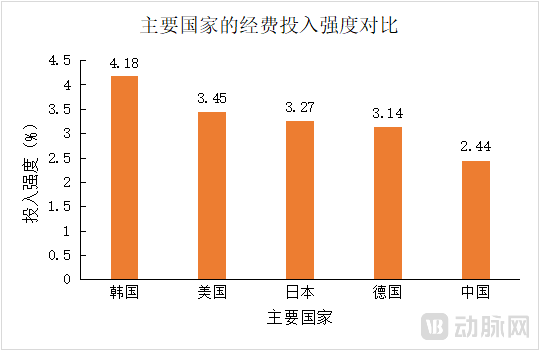
AtInput IntensityIn this regard, although China has surpassed innovative countries such as France and the Netherlands, it still lags behind developed nations including the United States, Germany, Japan, and South Korea.
InBasic Research FundingIn terms of basic research funding, although China’s share (6.5%) has increased significantly, it remains lower than that of countries such as the United States, Japan, and Germany, where the proportion ranges from 12% to 23%.
“Recognizing one’s deficiencies is the prerequisite for progress.” In light of China’s current insufficiency in R&D investment, is it sufficient to simply increase such investment? Does greater input necessarily guarantee substantial returns?
Clearly, the answer is no. Because we must also considerR&D OutcomesandAllocation of R&D Investment。
The ultimate destination of R&D is the market; scientific and technological innovation is, in essence, a driver of economic growth., so if a technology does not meet market demand or has low commercialization value, it will fail to fulfill the purpose of R&D investment.
So, how can we identify the value of technological achievements?
This requires us to establish a set ofEvaluation Mechanism for R&D Investment, which includes bothYesEvaluation of Scientific Research Achievements, also includingYesAssessment of Its Market Value, thereby enabling us to rapidly identify valuable scientific research achievements and strategically increase R&D investment.
For technological achievements with insufficient value or lengthy R&D cycles, we can consider reducing R&D investment and aligning it with the specific R&D phase.