

Small Clinics, Big Impact: WeDoctor's Digital Health Consortium Unlocks Reform Dividends
“I used to rely on my own memory, but now I receive reminders whenever it’s time for a health check-up.” After receiving an online alert from a health manager of the Tianjin Primary Care Digital Health Community, Liu Songchen, a 68-year-old diabetic patient residing in Tianmu Town, Beichen District, Tianjin, visited the Chronic Disease Management Center at his community hospital as scheduled. There, he underwent regular health examinations and received medication guidance from his contracted family doctor.
After scanning his medical insurance card, Mr. Liu Songchen’s health records—including past visit histories and daily health monitoring data—were displayed on the physician’s workstation. Based on these health records and the results of the current physical examination, the physician adjusted his medication regimen and provided medical instructions. The prescribed medications and medication guidance were synchronously transmitted online to the health managers within the Healthcare Community. Subsequently, the health managers will provide ongoing daily health guidance to the elderly patient, covering medication safety, dietary management, and health monitoring, in accordance with the physician’s instructions.
“It’s extremely convenient and excellent!” exclaimed elderly patient Liu Songchen after his medical consultation.
Currently, 16,000 patients with chronic diseases have been registered and managed at the Chronic Disease Management Center of the Tianmu Town Community Health Service Center, similar to Mr. Liu Songchen. Among them, 6,300 have diabetes and 8,600 have hypertension. Meanwhile, all 266 primary healthcare institutions in Tianjin have joined the Tianjin Primary Digital Health Consortium, mirroring the model of the Tianmu Town Community Health Service Center. More than 80 of these institutions have established chronic disease management centers, providing registered care for over one million patients with chronic diseases.
As a typical representative of the digital health community model, the Tianjin Primary Care Digital Health Community is led by Tianjin WeDoctor Internet Hospital and jointly established in collaboration with 266 primary healthcare institutions across Tianjin.
“The Digital Health Community primarily targets a long-standing, unresolved challenge: the difficulty grassroots populations face in accessing medical care due to the uneven distribution of healthcare resources. If primary care institutions are capable of preventing diseases before they occur, diagnosing illnesses, treating minor conditions, referring severe cases, and managing chronic diseases, patients will no longer need to frequently visit large tertiary hospitals.”
Yan Jinhong, General Manager of Medical Operations at WeDoctor, stated that over the past decade of China’s new healthcare reform, digital health companies represented by WeDoctor have pioneered and promoted innovative models such as internet hospitals, pharmaceutical and medical device trading platforms, and digital health communities. These efforts have established a digital health development pathway aligned with China’s comprehensive “Three-Medical Linkage” reform, which integrates healthcare services, pharmaceuticals, and health insurance.
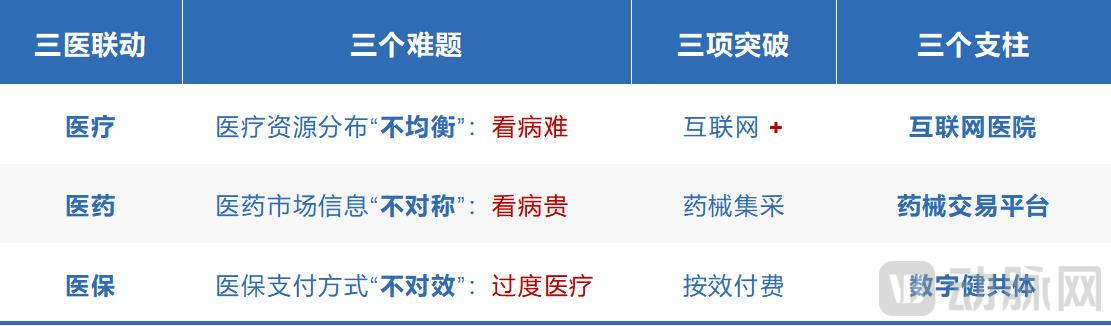 Digital Healthcare Development Pathways to Advance the “Three-Medical Linkage” Reform
“Online consultations and telemedicine, facilitated by internet hospitals, have alleviated the challenge of uneven distribution of medical resources. Centralized procurement of pharmaceuticals and medical devices, supported by trading platforms, has eliminated artificially inflated prices. Meanwhile, Digital Health Communities (DHCs) have responded to and advanced reforms in health insurance payment methods, shifting healthcare services toward a ‘pay-for-performance’ model. The Tianjin Primary Care Digital Health Community represents a comprehensive solution developed by WeDoctor that integrates three innovations—internet hospitals, pharmaceutical and medical device trading platforms, and Digital Health Communities—to simultaneously address persistent systemic issues such as difficulty accessing care, high healthcare costs, and overtreatment.”
Yan Jinhong introduced that the Tianjin Primary Care Digital Health Consortium, led by an internet hospital, has established a three-tier system in primary healthcare institutions featuring unified management, standardized services, and shared responsibilities. This initiative provides community residents with accessible, integrated online and offline medical and health services encompassing prevention, diagnosis, treatment, management, and wellness.
The first layer involves deploying a unified “Four Clouds” platform at primary healthcare institutions to build a digitalized and intensive service system, thereby improving the efficiency of medical resource utilization. The second layer entails co-establishing offline standardized chronic disease management centers with primary healthcare institutions to create a standardized and integrated service system, thus enhancing the service capacity of primary care. Finally, by implementing diagnosis-related group (DRG) payment, capitation, and health accountability systems, a health-centered primary healthcare service system is constructed to incentivize primary care physicians.
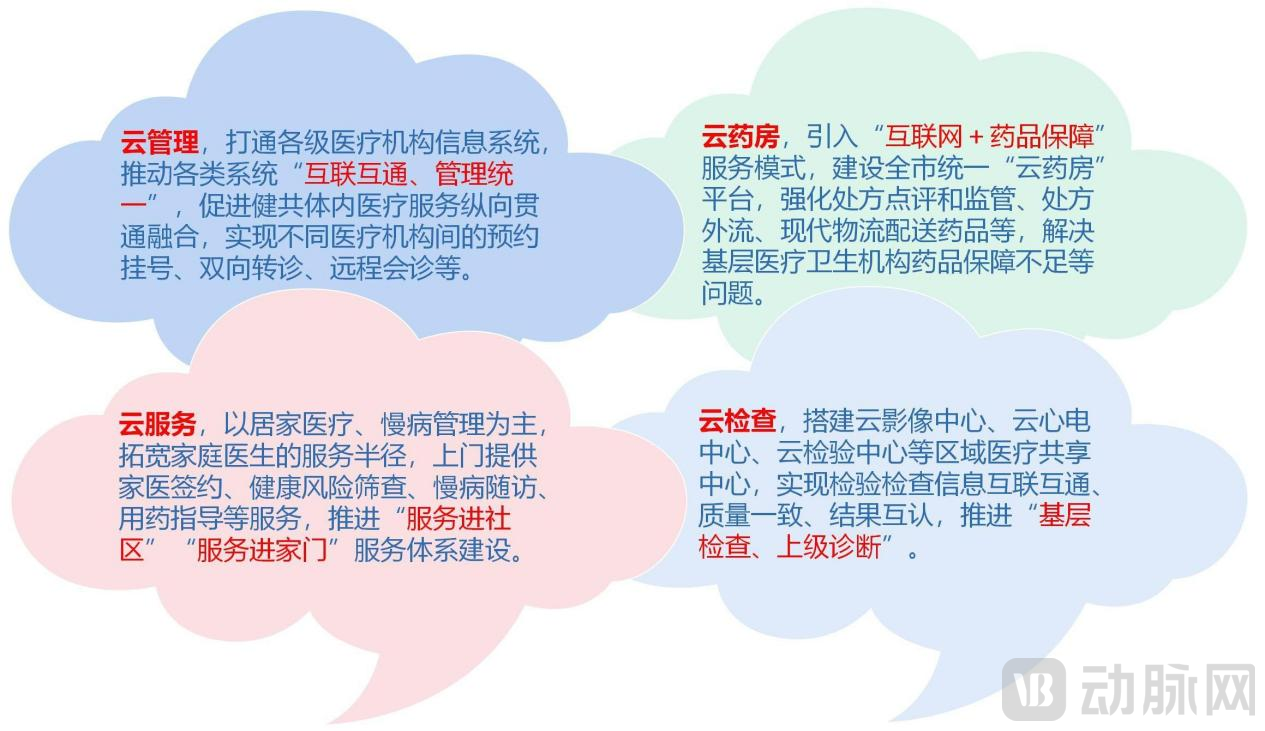 Tianjin Grassroots Digital Health Community "Four Clouds" Platform
Meanwhile, the Tianjin Primary Care Digital Health Community has established a dual-platform service model comprising the “Digital Health Community Platform” and the “Pharmaceuticals and Medical Devices Trading Platform.” It conducts disease-specific joint procurement of pharmaceuticals through the WeDoctor Northern Pharmaceuticals and Medical Devices Joint Procurement Platform, and implements performance-based payment measures for healthcare services, such as capitation and diagnosis-related group (DRG) payments.
It is reported that during the initial practice phase, by adopting a dual-platform service model, 14 member units of the Tianjin Nankai District Health Community implemented a pilot program for the joint procurement of the first batch of medications, covering 12 commonly used chronic disease products. The maximum price reduction for awarded varieties reached 69.92%, with an average reduction of 19.5%.
At the Fifth Health Conference held this July, the Tianjin Primary Care Digital Health Consortium and WeDoctor’s Northern Pharmaceutical and Medical Device Joint Procurement Platform officially launched the “Diabetes Medication Joint Procurement Initiative.” This initiative will further expand the categories of chronic disease medications included in joint procurement, extend the joint procurement model for chronic disease medications to all member units of the health consortium, and encourage greater participation from additional regions, medical institutions, and pharmaceutical companies.
“Once the capabilities of primary healthcare institutions are enhanced and their services improved, we can clearly observe a trend of patients returning to primary care facilities,” introduced Yan Jinhong. Focusing on the goal of “strengthening primary care,” some primary healthcare institutions in Tianjin that have implemented the reforms for integrated healthcare consortia have seen a 100% increase in outpatient visits, with the highest year-on-year increase reaching 280%.
As the grassroots digital health consortium is comprehensively promoted across Tianjin, residents have been delighted to discover that the “small clinics” in their neighborhoods are demonstrating “significant capabilities.” Through these primary healthcare institutions, residents can access high-quality medical and health services—such as chronic disease management, home-based medical care, and health maintenance—close to home. Consequently, an increasing number of patients are returning to primary care facilities for treatment.
To date, in the realm of chronic disease management, Tianjin’s Primary Care Digital Health Consortium has co-established chronic disease management centers with 81 primary healthcare institutions and three secondary hospitals. It has created health records for 1.3002 million patients under management, including 370,900 patients with diabetes and 929,300 patients with hypertension. By implementing standardized, diagnosis-specific health screening, health management, and interventions, primary healthcare institutions have achieved a standardized management rate of 76.93% for diabetes among patients under care, while increasing the blood glucose control rate by 9.78 percentage points and the blood pressure control rate by 15.84 percentage points.
Meanwhile, primary healthcare institutions in Tianjin, leveraging the “Cloud Services” platform of the Medical Consortium, have provided 58 types of home-based medical services—such as venous blood collection, acupuncture, and urinary catheter replacement—directly to patients’ homes. This initiative has significantly enhanced the healthcare experience for patients with limited mobility due to illness or advanced age. As of July this year, the Medical Consortium’s “Cloud Services” platform had delivered over 26,000 home visits to more than 8,000 patients.
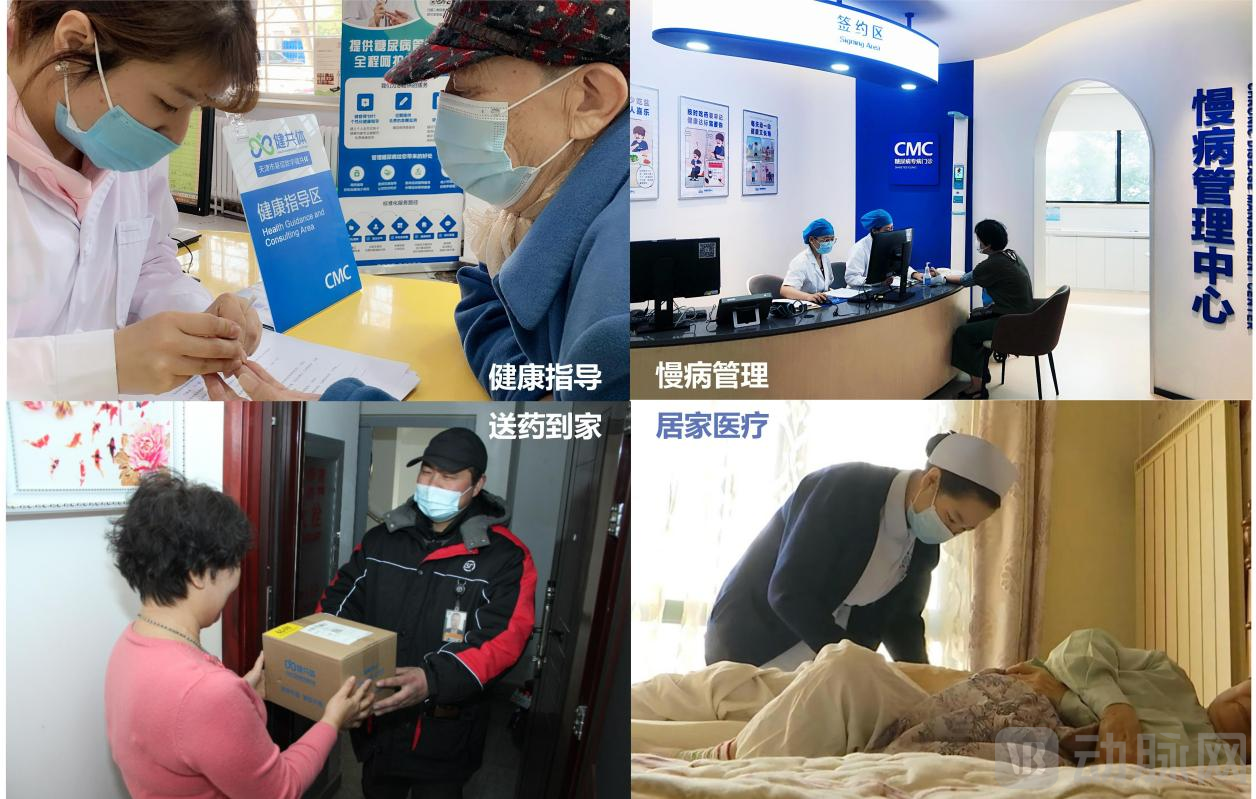 Digital Health Communities Enable “Small Hospitals” to Play a “Big Role”
“How can ‘small hospitals’ play a ‘major role’? How can we foster greater public trust in primary care institutions? In the process of building a digital health community, in addition to establishing a robust systemic framework, we must also design more patient-centered processes.”
Yan Jinhong explained that, for instance, within the Digital Health Community system, a “One-Click Referral” function has been specifically implemented to integrate appointment platforms between primary care hospitals and higher-level hospitals. Appointment slots are reserved for primary care family physicians. If a family physician detects abnormal health indicators in a patient’s data, they can promptly facilitate the patient’s referral to a higher-level hospital. “This enables the vertical flow of medical resources, providing patients with more equitable, accessible, systematic, and continuous tiered diagnosis and treatment services: patients are referred to higher-level hospitals when their condition is severe, and transferred back to primary care facilities once their condition improves.”
The establishment of health managers within the Medical Consortium represents a service optimization tailored to the actual conditions of primary healthcare. According to Liu Xiaoshen, Director of the Tianmu Town Community Health Service Center, the integration of “digitalization + primary care clinical experience” has enabled the center’s Chronic Disease Management Center to deliver digitalized and standardized services for both patient visits and physicians’ diagnostic and treatment processes. Furthermore, health managers from the Medical Consortium collaborate with physicians to provide medication guidance and health education, thereby strengthening the bond between patients and the hospital and improving patient adherence.
Now, as Tianjin’s grassroots digital health consortium continues to deepen its development, more and smaller primary healthcare institutions will be integrated into the consortium’s “cloud platform.” In Beichen District of Tianjin, in addition to community health service centers, all community health service stations and 50 village clinics have joined the health consortium’s “cloud platform,” thereby bridging the last mile for the consortium’s cloud pharmacy and cloud services.
“Tianjin is continuously advancing the development of grassroots digital health communities, aiming to achieve full coverage of more than 2,000 community health service stations and village clinics by the end of this year,” said Yan Jinhong. “In addition to our deep-rooted presence in Tianjin, WeDoctor’s digital health communities have already been implemented in multiple provinces and cities, including Shandong and Fujian. Meanwhile, we will continue to summarize practical experience from these initiatives, standardize them into replicable service capabilities, and promote their adoption in more regions tailored to local conditions.”