Johnson & Johnson Unveils CartoSound Sonata at HRS 2026: AI-Powered Module Enables One-Click 3D Cardiac Modeling from ICE Imaging

Johnson & Johnson
Medical Device R&D and Manufacturer

White Paper + Awards + Forum | The 2nd Global Cardiovascular Conference
Heart Future
April 21, 2026Johnson & Johnson (NYSE: JNJ)AnnouncementTo be officially released at the 2026 Heart Rhythm Society (HRS) Annual MeetingCartoSound Sonata Module——A Study Based onNew AI Function for Cardiac Mapping,Automatically convert intracardiac ultrasound images into 3D anatomical models.
This is a key iteration in the direction of image-mapping fusion for the Carto 3D electrophysiological mapping system, which has been in operation for 30 years. One direct question is:When AI can automatically complete the cardiac chamber modeling and structural annotation that previously required manual operation by the surgeon,Electrophysiology SurgeryHow will the workflow change?
# AI Automatic Modeling + Structural Annotation: What Did CartoSound Sonata Do
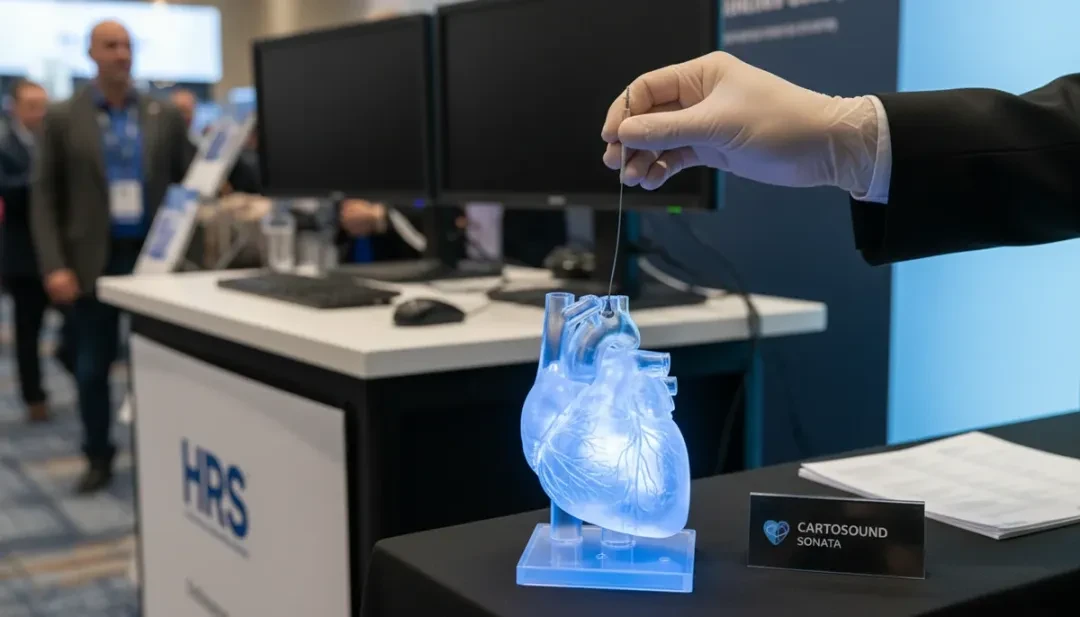
CartoSound is not a new concept - Johnson & JohnsonBiosense WebsterPreviously, there was already a CartoSound module,Used for spatial registration of ICE images with the Carto mapping systemThe core upgrade of Sonata lies in the introduction of AI-driven automation capabilities.
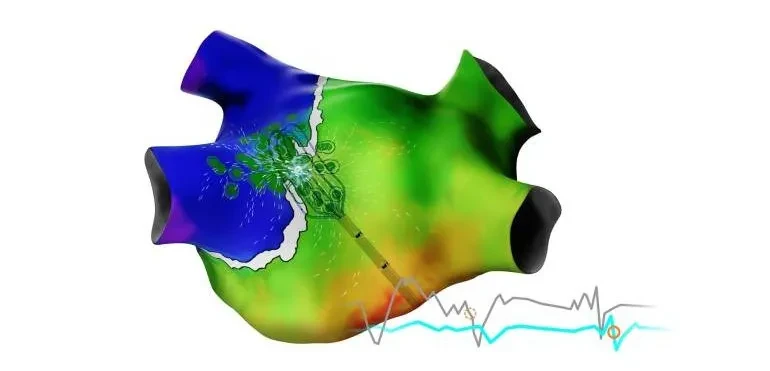
According to the information disclosed by Johnson & Johnson, CartoSound Sonata has two key functions: first,Automatically convert ICE images into detailed 3D cardiac chamber maps., supporting simultaneous modeling of multiple heart chambers; second,Automatically identify and label cardiac anatomical structures, reducing the manual operation burden on the surgeon during the modeling process.
In terms of hardware compatibility, Sonata supports both the SoundStar Crystal (2D ICE) and NuVision Nav (4D ICE) ultrasound catheters, covering the full spectrum of ICE imaging input from basic 2D to volumetric 4D. This means that regardless of which ICE catheter is used, AI-assisted real-time anatomical modeling can be achieved within the Carto platform.
In terms of indications coverage, Johnson & Johnson clearly stated SonataApplicable for the planning and execution of atrial fibrillation, ventricular tachycardia, and complex combined surgeries.
Luigi Di Biase, MD, Director of the Electrophysiology Section at Montefiore Health System, commented that the module has demonstrated significant value in multi-chamber modeling and complex combined procedures.
# Platform Strategy: Carto System's "Connectivity" Ambition Over 30 Years
The release of CartoSound Sonata is not an isolated event, but the latest step in Johnson & Johnson's electrophysiology business "platformization" strategy.
Michael Bodner, Chairman of Johnson & Johnson’s Electrophysiology and Neurovascular Business Group, emphasized in a statement the positioning of the Carto system as a "connective platform" — integrating imaging, mapping, and therapy within the same ecosystem. This statement is explicit:Johnson & Johnson is upgrading Carto from a mapping tool to an operating system for electrophysiology procedures.
Another supporting point of this strategy is Pulsed Field Ablation (PFA). Johnson & Johnson's Varipulse PFA platform has been deeply integrated with the Carto system, receiving CE Mark approval in February 2024 and FDA approval in November 2024. At the upcoming HRS 2026, Johnson & Johnson plans to release 17 academic abstracts, including new real-world data on the use of Varipulse for atrial fibrillation treatment.
Notably, just a week ago at EHRA 2026, Johnson & Johnson released the 12-month interim results of the VARIPURE study—the largest prospective post-market follow-up study on Varipulse to date: out of 1,023 patients, 442 completed the 12-month follow-up.Freedom from atrial arrhythmia recurrence rate was 84.2%(Paroxysmal atrial fibrillation 90.5%, persistent atrial fibrillation 75.3%), with a major adverse event rate of only 0.8%, and no reports of stroke or coronary artery spasm. Meanwhile, Johnson & Johnson received an updated CE Mark, allowing the Varipulse catheter to be used in Europe for ablation targets beyond the pulmonary veins, expanding its application scope for the treatment of persistent atrial fibrillation.
Carto Mapping + ICE AI Modeling + PFA Ablation——Johnson & Johnson is building a full-chain closed loop from preoperative planning to intraoperative treatment.
# Competitive Landscape: EP Mapping Enters the "AI + Imaging" Arms Race
The global electrophysiology 3D mapping market has long been dominated by three companies:Johnson & Johnson (Biosense Webster, Carto system), Abbott (EnSite system), and Boston Scientific (formerly RHYTHMIA, now integrated into OPAL HDx system). Medtronic has also entered the market through the acquisition of Affera.
In the direction of AI and imaging integration, each company has a different progress path:
BocoAcquired in 2025Cortex, whose core competence is based onAI's Arrhythmia Source Localization Algorithm, which is currently being evaluated in the OPTIMIZE trial for the integration effect of Cortex and OPAL systems. This pathway focuses on "AI-assisted arrhythmia mechanism diagnosis," differentiating from Sonata’s emphasis on "AI-assisted anatomical modeling."
Abbott's EnSite X SystemContinuous IterationHigh-Density Mapping CapabilityIn June 2025, its Volt PFA system received the CE Mark, with an impressive 99.1% immediate pulmonary vein isolation rate. Abbott's strategy in image fusion leans more towards the preoperative import of CT/MRI images, distinguishing itself from the technical path of real-time modeling with ICE.
Medtronic's Affera System(Including Sphere-9 Catheter) goes through"Mapping + Ablation Integration"The Integrated Approach - Using the Same Catheter for Mapping and PFA/Radiofrequency Dual-Energy Ablation, Reporting an 88% Arrhythmia-Free Survival Rate for Paroxysmal Atrial Fibrillation in April 2025.

The release of CartoSound Sonata essentially represents Johnson & Johnson's leap forward in the competitive dimension of "who can enable operators to understand cardiac anatomy more quickly and accurately."In the PFA era, ablation itself is becoming standardized, while the precision and efficiency of mapping and imaging are becoming the core differentiators in platform competition.
# China's Coordinate: The Catch-Up of Domestically Produced Mapping Systems and the Divergence in the PFA Arena
China's electrophysiology market is at a critical juncture where two major variables intersect: the implementation of PFA technology and the advancement of centralized procurement policies.
In the field of 3D mapping, Chinese manufacturers such as Jinjiang Electronics, MicroElectroPhysiology, and HT Medical have made breakthroughs, but there is still a significant gap compared to Johnson & Johnson's Carto system in AI-assisted image fusion. The core shortcoming lies in the absence of an ICE catheter hardware ecosystem.
The PFA track has seen the approval of multiple domestically produced products in China.But it is worth noting that the clinical performance of PFA catheters highly depends on the integration with mapping systems. The deep binding of Johnson & Johnson's Varipulse with Carto, and Boston Scientific's FARAWAVE NAV with OPAL, are both validating the same trend:The future competition of PFA will not be about catheters, but about the "catheter + mapping + imaging" platform.
The implication for China-produced electrophysiology companies is this: A breakthrough in a single category (whether in mapping or PFA catheters) may not be sufficient to build long-term competitiveness. Constructing a complete ecosystem around the mapping platform that includes image fusion, AI assistance, and ablation therapy is the competitive threshold for the next phase.
# Heart Future·Observation
The technological highlights of CartoSound Sonata are not particularly radical—AI-assisted imaging modeling has already seen mature applications in other interventional fields (such as CT reconstruction in structural heart disease). What truly deserves attention is the strategic signal:Johnson & Johnson is redefining Carto from a "mapping system" to a "surgical operating platform," and AI is the key lever to achieve this leap.
The basis for this judgment lies in the logic of functional叠加——Carto has already integrated mapping, ablation (Varipulse PFA), and now ICE image AI modeling. If in the future it further incorporates preoperative CT/MRI fusion, real-time tissue characterization analysis, or even automated ablation path planning, Carto could evolve into a "digital surgery platform" in the electrophysiology field. In this direction, Boston Scientific's acquisition of Cortex's AI algorithm also points to a similar endgame.
As PFA standardizes the ablation process, the focus of competition in electrophysiology procedures is irreversibly shifting towards preoperative planning and intraoperative imaging.In the competition of "who can help surgeons understand the heart faster," AI is no longer a bonus but an entry ticket.
Cardiovascular Device Full Disease Solution
Structural Heart Disease → ▌Medtronic
Vascular Disease → ▌Huamao Tech
Vascular Puncture and Closure → ▌KEGANG Medical
Research and Development and Clinical Trial Support → ▌Hopeful Medical