

Four Decades of Innovation: Thymosin Beta-4 (Tβ4) Continues to Unlock Therapeutic Potential Across Over 10 Indications

RegeneRx
Biological New Drug Developer
RegeneRx Biopharmaceuticals Inc.(hereinafter referred to as "RegeneRx")Founded in Maryland, USA, in 1982, isA publicly listed, clinical-stage biopharmaceutical company。
The company specializes in the protection, repair, and regeneration of biological tissues, focusing on the research and development of novel peptide drugs to protect and repair tissue and organ damage caused by diseases, trauma, or other pathological factors.
Dr. Allan Goldstein, Chairman of the Board and Former Chief Scientific Advisor of RegeneRxA newly developedTherapeutic Peptide Thymosin β4(Tβ4) is the company's core technology. Centered on the protection, repair, and regeneration of tissues and organs, Tβ4 has been developed into three main pipelines.
In 1982, J. J. Finkelstein founded RegeneRx and served as its President and Chief Executive Officer.Mr. Finlelstein holds a business degree in finance from the University of Texas and has been responsible for regulatory approvals and marketing of various medical devices in the United States and other countries. He also brings decades of experience as an executive and consultant in the life sciences industry.
andDr. Goldstein has served as Chairman of the Board and Chief Scientific Advisor since the company’s founding in 1982.. He is also a professor of biochemistry and served as Chair of the Department of Biochemistry and Molecular Biology at the George Washington University School of Medicine and Health Sciences for 31 years, from 1978 onward.
Dr. Goldstein holds over 25 issued and/or pending patents in the fields of biochemistry, immunology, cardiology, oncology, and wound healing, and has published more than 430 peer-reviewed journal articles. He is the inventor of several important compounds, including Thymosin alpha-1 (Tα1), which is marketed globally, and Thymosin beta-4 (Tβ4), which serves as the foundation for RegeneRx’s clinical programs.
In the 1990s, Mr. Finlelstein briefly left the company to lead another biopharmaceutical firm, during which time Dr. Goldstein temporarily assumed his responsibilities. In 2002, Mr. Finlelstein returned to RegeneRx with a decade of valuable experience and resumed his former position.
In October of the year following Mr. Finlelstein's return,RegeneRx Announces Listing on OTCQB(otcqb:RGRX),Subsequently, eight rounds of financing were conducted, raising a total of $11.75 million.。
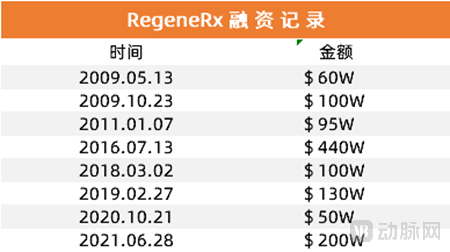
RegeneRx Funding History (Source: Crunchbase)
RegeneRx is currently focused on advancing three unique Tβ4-based drug candidates into clinical development: RGN-137, RGN-259, and RGN-352.
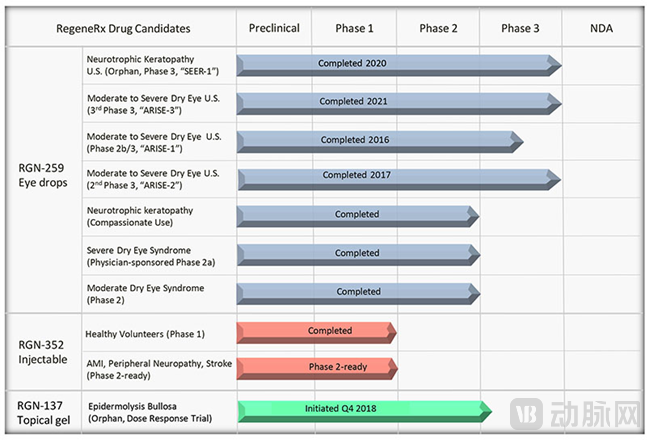
RegeneRx's Three Major Pipeline Progress Schedule
1RGN-259
RGN-259As the company's primary development project, it is aTβ4-Based Sterile, Preservative-Free Eye Drops, can treatDry Eye Disease (DED)andNeurotrophic Keratitis (NK)。
Tβ4 promotes cell migration, enhances cell–cell and cell–matrix contacts by increasing laminin-5 production, and reduces apoptosis and inflammation in the cornea.Currently, there are no drugs on the market that have demonstrated corneal repair and anti-inflammatory properties.RGN-259 Offers a New Approach to Corneal Healing。
Relevant clinical trials for the treatment of dry eye disease have shown that, compared with placebo, 0.1% RGN-259 demonstrated statistically significant improvements in many signs and symptoms of DEDSignificant Improvement, while also demonstrating excellent safety, comfort, and tolerability. Regarding clinical signs, RGN-259 also improved corneal fluorescein staining damage in dry eye disease patients and demonstrated the ability to halt disease progression.
RGN-259 is also being used to treat ulcerative neurotrophic keratitis (NK), a persistent corneal defect caused by diabetes and the varicella-zoster virus. In December 2013, RegeneRx received orphan drug designation from the U.S. FDA for RGN-259 in the treatment of NK. In clinical trials, patients with NK treated with RGN-259 were able toRecovery in approximately four weeks。
2RGN-352
RegeneRx is in developmentRGN-352, this is aInjectable Tβ4 Formulation, forTreatment of systemic tissue and organ damage, including cardiac, neurological, pulmonary, and renal lesions. Numerous animal models of cardiac injury have demonstrated the efficacy of RGN-352 in reducing scar volume, improving cardiac function, and enhancing survival.
Existing preclinical studies have demonstrated that,Tβ4 possesses the ability to stimulate stem cell differentiation, reduce apoptosis and inflammation, protect cells from cytotoxicity, promote angiogenesis, and decrease scar formation in animal models.. Based on work in animal models, recently published scientific papers indicate that Tβ4 can prevent or reduce lung and kidney damage in patients with systemic inflammatory response syndrome (SIRS) and sepsis, as well as in COVID-19 patients.
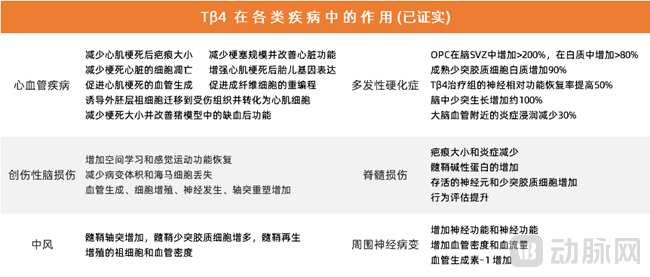
RGN-352 was proven to be safe and well-tolerated at all four dose levels. RegeneRx utilized a $3 million grant from the NIH’s National Heart, Lung, and Blood Institute to conduct numerous additional animal toxicology and pharmacokinetic studies to support human clinical trials. RGN-352 is now ready for Phase II clinical trials.
3RGN-137
RegeneRx has been developingRGN-137, a topical gel formulation of the peptide Tβ4, as a novel therapeutic approach to accelerate dermal wound healing. According to research by the U.S. National Institutes of Health, RGN-137 is the first Tβ4 formulation to enter human clinical trials.
Unlike growth factors,RGN-137 has been shown in preclinical studies to attenuate multiple healing pathways, such as apoptosis, angiogenesis, collagen deposition, and tissue inflammation.. Preclinical studies have shown that the Tβ4 gene is among the earliest upregulated genes following injury, indicating that the Tβ4 peptide contributes to the healing process.
Two Phase 2, blinded, placebo-controlled, dose-response clinical trials for the treatment of advanced pressure ulcers and venous stasis ulcers were completed in 2009. A Phase 2, blinded, placebo-controlled trial for the treatment of epidermolysis bullosa (EB) was completed in mid-2011. In all three trials, the medium-dose group demonstrated the greatest activity in accelerating healing; no serious adverse events were observed at any dose level or in any patient population.
The Phase 3 clinical trial was approved by the FDA in 2018 to be conducted in patients with EB., EB is a genetic disorder that causes severe blistering of the skin and internal organs.
To date, more than 1,700 patients have been tested with RegeneRx’s Tβ4-based product formulations, which were administered topically to the skin and eyes, as well as via intravenous injection. These formulations have not caused any serious adverse events and have been deemed safe and well-tolerated in every clinical study conducted thus far.
RegeneRx has been established for 40 years and currently maintains active partnerships in four major regions worldwide:United StatesandCanada,China (Pan-Asia)andEuropean Union. Among them, the company's Chinese partnerA Phase 2/3 clinical trial of the RGN-259 pipeline for the treatment of dry eye disease is currently being prepared for launch in China.。
In 2012, RegeneRx andLi's Pharmaceutical Company(Lee's Pharm) entered into a licensing agreement,Development and Sales of Tβ4-Related Products in China. Lee's will be responsible for product development in the licensed territory, and all parties will share clinical and other data related to these product candidates. Recently, Lee's established a new ophthalmic manufacturing facility in China, accelerating the development of RGN-259.
In 2014, RegeneRx and a South Korean biotechnology companyHLBT(formerly GtreeBNT) entered into a strategic cooperation agreement to develop and market RGN-259 in 28 Asian countries, including South Korea, Japan, and Australia. HLBT will also develop RGN-137 in the United States for dermal wound healing. In August 2017, RegeneRx further amended the RGN-137 license agreement with HLBT, expanding the territory to include Europe, Canada, South Korea, Australia, and Japan.
Decades of basic scientific research have demonstrated the development potential of Tβ4 across numerous indications. Moving forward, RegeneRx will focus on advancing late-stage clinical trials and commercialization of its existing pipeline, while also initiating the development of new clinical programs for additional indications.
RegeneRx consistently seeks strategic collaborations with companies interested in the clinical development and commercialization of therapies within its target treatment areas, while also actively pursuing long-term partners with the necessary infrastructure and expertise in its key disease fields. RegeneRx will continue to adhere to its development strategy by licensing the development and commercialization rights for select product candidates to partners possessing the specialized expertise and financial resources required to advance these candidates.