

Will Orthopedics See the Next 'Da Vinci'? NuTao Surgical Robot by GeRui Medical Sets Sights on Full-Procedure Minimally Invasive Revolution

Great Robotics
Surgical Robot Developer
The evolution of surgical procedures—from traditional open surgery to minimally invasive surgery, and further to robotic-assisted minimally invasive surgery—represents a gradual process of cognitive advancement and development.。In Clinical Development“Human-machine” integration is gradually upgrading, and business models are continuously evolving.
Medicine has always had its limitations, but the determination to pursue progress has never wavered, a fact vividly reflected in the evolution of abdominal surgical techniques.
Traditional SurgeryIt requires a large incision for exposure, allowing direct visualization with the naked eye. This approach is natural, intuitive, and provides authentic three-dimensional vision, facilitating convenient manipulation. However, such procedures rely heavily on surgical experience. The limitations of this technique primarily stem from the constraints of human visual observation and manual dexterity. It necessitates coordination among multiple assistants throughout the procedure, and since the surgeon must stand during the operation, fatigue and hand tremors are common. For patients, traditional surgery involves greater trauma, slower recovery, a higher risk of complications, and a higher overall cost.
Laparoscopic SurgeryThis approach breaks away from the traditional open surgery with large incisions, adopting a minimally invasive laparoscopic technique. Such procedures are challenging to learn and feature a steep learning curve. Surgeons operate by observing two-dimensional images from the laparoscope, and due to the generally long length of surgical instruments, the "chopstick effect" significantly reduces hand-eye coordination. The surgery is performed while standing, requiring one assistant to hold the laparoscope during the procedure. The advantages include minimal trauma, reduced patient pain, and faster recovery.
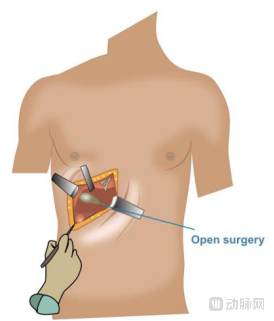
Traditional Open Surgery(Image source:https://www.thesurgeonscollective.com.au)
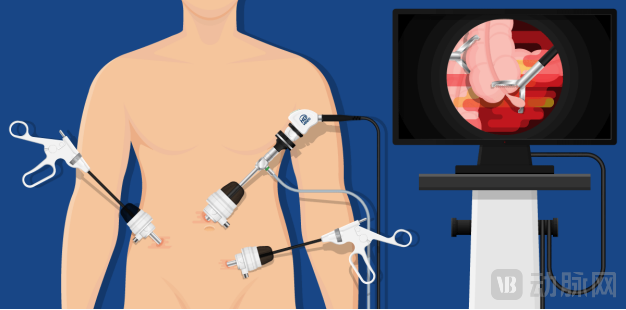
Laparoscopic Surgery(Image source:https://ntmconline.net)
da Vinci Surgical RobotThe ultra-clear glasses-free 3D imaging system features built-in intelligent image processing capabilities, delivering a three-dimensional high-definition surgical field of view magnified tenfold. Meanwhile, the imaging system allows free multi-angle switching, facilitating hand-eye coordination for surgeons and overcoming the limitations of traditional surgery in performing precise maneuvers within confined, deep anatomical spaces.
Operational Aspects: The four robotic arms of the da Vinci Surgical System operate with high flexibility, while its tremor filtration technology eliminates physiological hand tremors, thereby avoiding the "chopstick effect" and enabling precise dissection and accurate suturing.
Other aspects: Robotic operation eliminates tedious steps such as hand washing, disinfection, and donning surgical gowns for the surgeon. The ergonomically designed joysticks allow the surgeon to perform procedures while seated. The robotic arms execute commands with precision and strict adherence to instructions, minimizing errors commonly associated with human assistants.
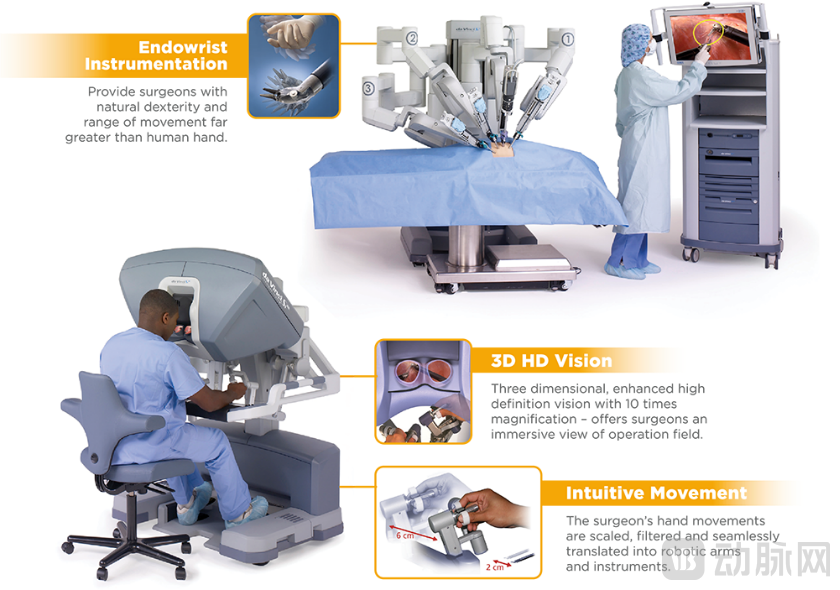
da Vinci Laparoscopic Surgical Robot
(Image source: https://whatsnewindonesia.com))
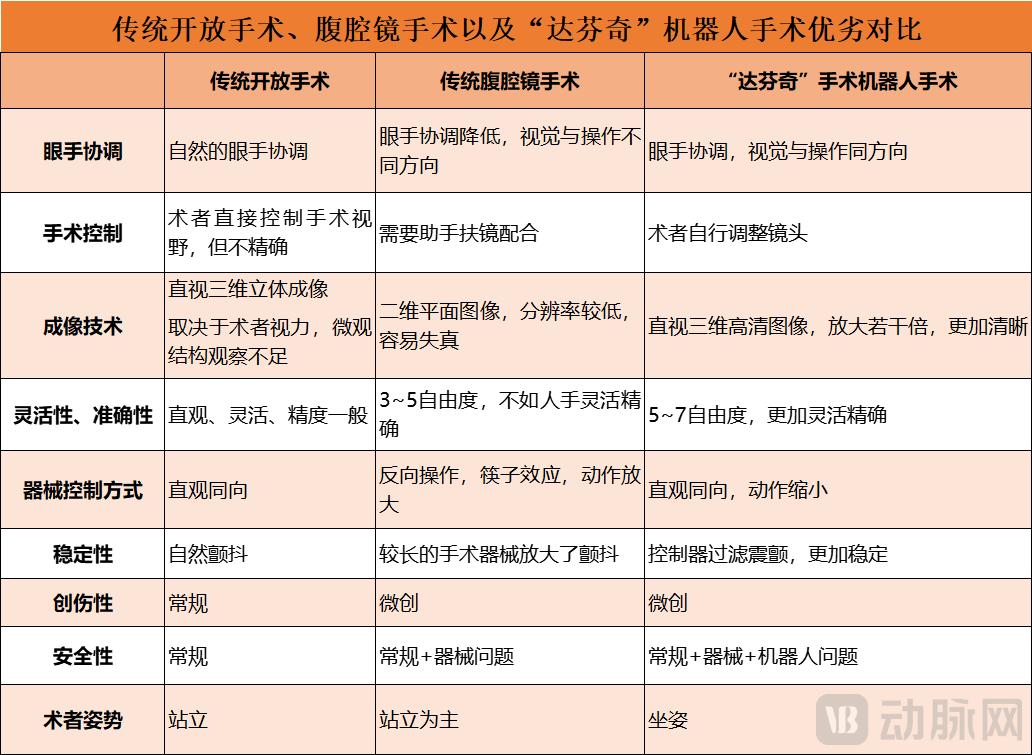
Comparison of the Advantages and Disadvantages of Traditional Open Surgery, Laparoscopic Surgery, and “Da Vinci” Robotic Surgery
Proprietary Consumables Secure Long-Tail Consumption, Ensuring Sustainable Long-Term Corporate Profitability
Clinical breakthroughs alone are insufficient to explain the success of “Da Vinci”; it is its closed-loop business model that has garnered the most acclaim within the industry.
Over the past two decades, the da Vinci Surgical System has undergone four generations of evolution, securing more than 4,000 patents and establishing formidable technological barriers. Intuitive Surgical’s revenue grew from $27 million in 2000 to $5.71 billion in 2021, while its stock price surged by as much as 184-fold. This success is attributed to its “razor-and-blades” business model, which combines equipment sales with recurring revenue from consumables and services.
In the early stages, Intuitive Surgical’s revenue was primarily derived from the “razor”—its surgical systems, which were priced between $500,000 and $2.5 million per unit in the U.S. market. As the installed base grew and the rate of new installations began to slow, the “blade” revenue model came to the fore. According to Intuitive Surgical’s annual reports, each procedure generates $600 to $3,500 in revenue from accessories and consumables. This means that as long as a da Vinci system is in operation, the company enjoys a steady stream of recurring revenue from consumables. Since 2013, Intuitive Surgical’s revenue structure has undergone a significant shift, with consumables becoming the primary source of income and their share continuing to rise.
In addition, the annual service fee of $80,000 to $190,000 per device is also a stable source of revenue for Intuitive Surgical.
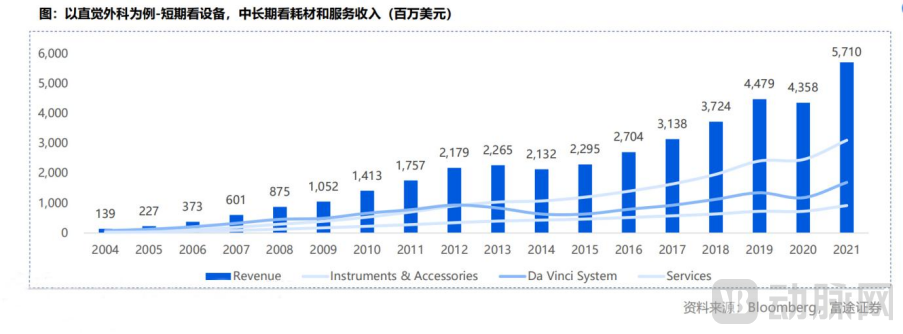 Image source: Futu Securities research report
According to Intuitive Surgical’s 2021 annual report, consumables and services accounted for more than 70% of its revenue. Calculated over a 10-year cycle, the total revenue generated by a single da Vinci surgical robot is approximately four times its selling price, demonstrating remarkable profitability and a sustainable long-term business model.

Data Source:
https://isrg.gcs-web.com/static-files/c8392ccf-baf0-4cfd-bf7f-990cba259c53;
https://businessquant.com/intuitive-surgical-revenue-by-segment
Comprehensive Insurance Support Accelerates the Rollout of Surgical Robots in the U.S. Market
Clearly, the clinical value and business model of surgical robots have been validated by the “da Vinci” system. However, as a high-value medical device, widespread adoption requires a robust market ecosystem. Key considerations include who will bear the high costs of surgery and whether local policies provide support.
Intuitive Surgical’s financial report shows that by the end of 2021, the global installed base of the da Vinci surgical robot system had reached 6,730 units across 67 countries, with an annual procedure volume of 1.24 million cases. In the United States alone, over 5,000 systems were installed, accounting for more than 75% of the global total, achieving widespread adoption even at the county hospital level. For example, a study published in JAMA Network Open reported that in Michigan, the proportion of general surgery procedures involving robotic assistance rose from 1.8% in 2012 to 15.1% in 2018, indicating rapid adoption.
This is closely related to the well-established insurance system in the region. In the United States, both private commercial insurance and social insurance programs generally cover various types of da Vinci laparoscopic surgeries. For instance, Medicare provided reimbursement for da Vinci laparoscopic procedures ranging from $2,000 to $35,000 in 2021, thereby alleviating the financial burden on patients.
Similar to the abdominal cavity field, orthopedics has also undergone a long developmental trajectory from open surgery to minimally invasive techniques, such as endoscopic spine surgery and arthroscopy.
There is a huge demand for minimally invasive orthopedic surgery, and clinical methods are in urgent need of advancement
Driven by population aging and unhealthy lifestyles, the incidence of orthopedic diseases in China has remained high in recent years. Taking spinal disorders as an example, World Health Organization data indicate that over 90% of middle-aged and elderly individuals in China are affected by such conditions, with a trend toward younger onset, leading to a corresponding increase in demand for related surgical procedures.
The spine is referred to as the “second lifeline” of the human body. It houses the spinal cord and nerves, featuring a delicate and complex structure. Even minor inadvertence during surgery can damage surrounding tissues and lead to complications. Clinical data indicate that the rate of nerve injury due to operational errors in the thoracolumbar segment reaches 6.25%. Therefore, spinal surgery is also known as “a dance on the tip of a blade.”
Traditional Open Spinal SurgeryExtensive dissection and retraction of the lumbar and back muscles are required, with heavy reliance on surgeon experience and intraoperative imaging. This approach is associated with low surgical precision, significant trauma, and slow recovery. Furthermore, it typically takes up to 10 years of training and practice to become a proficient spine surgeon, resulting in substantial costs.
In contrast,Minimally Invasive Endoscopic Spinal SurgeryWith smaller incisions, it reduces damage to the paraspinal muscles and bony structures, maximally preserves spinal integrity, and offers advantages such as minimal blood loss, rapid recovery, and fewer complications. It has become the mainstream minimally invasive surgical technique in the field of spinal surgery.
However, its drawbacks are also evident. The relatively limited endoscopic field of view, coupled with the complex anatomy of the spine, requires physicians to possess comprehensive anatomical knowledge and sound judgment, particularly the ability to operate within the confined spaces near the spinal cord and nerve roots. This has, to some extent, hindered the development and widespread adoption of minimally invasive techniques. Additionally, to avoid harm from intraoperative radiation exposure, physicians often need to wear lead aprons or use protective shields, imposing a significant physical burden.
To address the aforementioned clinical pain points,GeRui Tech’s “Newton” Master-Slave Minimally Invasive Endoscopic Robotic System for Orthopedic SurgeryIt emerged as the times required. This product provides precise image guidance during surgery, combining internal and external fields of view for a high-definition, expansive perspective. It also reduces the surgeon’s range of motion and effectively filters out hand tremors. For patients, “Newton” minimizes surgical trauma, reduces blood loss and complication rates, and shortens the recovery period. Additionally, it significantly lowers intraoperative radiation exposure, safeguarding the health of both medical staff and patients. Furthermore, “Newton” can gradually expand from spinal decompression surgeries to endoscopic fusion procedures, and even extend into the field of minimally invasive neurosurgery, demonstrating broad clinical prospects.
From the perspective of clinical diagnosis and treatment costs, "Newton" demonstrates high cost-effectiveness by providing comprehensive solutions and reducing surgical costs through optimized multi-functional surgical consumables (such as dilators, forceps, burrs, etc.). The estimated total surgical cost is significantly lower than that of open surgery and comparable to existing minimally invasive endoscopic procedures. Coupled with the advantage of lower overall treatment and recovery costs associated with robotic minimally invasive surgery, the "Newton" minimally invasive surgical robot has strong potential for widespread adoption.
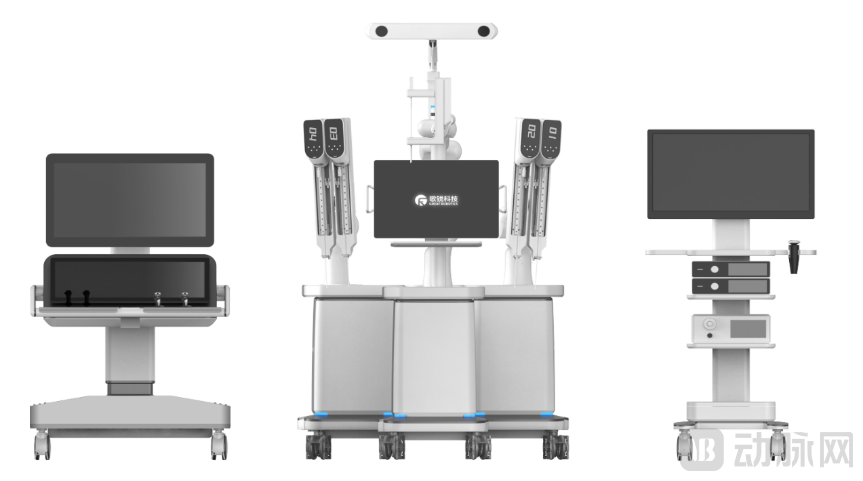 Gore “Newton” Endoscopic Minimally Invasive Robotic System for Orthopedic Surgery
From the perspective of healthcare institution development, the value of Ge Rui Technology’s “Newton” robot cannot be underestimated. This product can surpass many human limitations, assist hospitals in performing various minimally invasive surgeries and driving clinical technological innovation, enhance patient reputation and academic influence, thereby promoting high-quality hospital development. Meanwhile, amid the current scarcity of high-quality medical resources, robot-assisted minimally invasive surgery can also streamline staffing requirements, improve surgical efficiency and ward turnover rates, significantly enhancing hospital operational performance.
From the perspective of individual physician development, mastering traditional surgical techniques typically requires training through hundreds of procedures to enhance proficiency. In contrast, utilizing surgical robots allows physicians to achieve competency after basic training involving only dozens of cases, significantly shortening the learning curve. For senior surgeons, robotic systems can compensate for age-related declines in physical stamina and visual acuity, thereby extending their professional careers.
Dedicated Consumables + Policy Support: GeRay Technology’s Profit Model Shows Strong Certainty
Similar to the closed-loop business model of the da Vinci Surgical System, Geek+ Technology’s proprietary consumables for its “Newton” robot can also generate recurring revenue for the company. In the early promotion stage, equipment revenue will dominate due to the increase in installed base. In the long run, as the installed base approaches saturation and utilization rates gradually rise, consumables revenue will steadily increase. This business model helps mitigate fluctuations in sales performance of high-value medical devices; the larger the installed base, the stronger the growth in consumables revenue.
In addition to a sustainable and profitable commercialization strategy, policy support will also safeguard the future development of Geerui Technology.
In recent years, the Chinese government has vigorously supported the development of innovative medical devices, with high-performance diagnostic and therapeutic equipment, such as medical robots, designated as a key area of support. In February 2021, the Ministry of Industry and Information Technology (MIIT) released the draft for comments on the “Development Plan for the Medical Equipment Industry (2021–2025),” proposing to tackle key technologies in intelligent surgical robots, enhance intelligent control functions such as real-time visual navigation during treatment and force-sensing compliance, and promote the standardized application of surgical robots in the treatment of major diseases. Since October 23, 2021, robot-assisted orthopedic surgeries have been included in Beijing’s Class A medical insurance reimbursement list (eligible for 100% reimbursement), while disposable robotic-specific instruments have been covered under Beijing’s Class B medical insurance (eligible for partial reimbursement).
However, the benefits of the aforementioned policies have not yet fully materialized, as a draft new regulation has cooled down the industry. In early March 2022, the National Healthcare Security Administration issued the "Guidelines on Improving Pricing and Related Policies for Auxiliary Procedures Such as Orthopedic 'Surgical Robots' and '3D Printing' (Draft for Comments)" (based on publicly available information), which stipulated charging standards for robotic surgeries: If a surgical robot only possesses and performs surgical planning functions, the value of the auxiliary procedure is reflected in the surgical price without separate itemized charges; if a surgical robot only possesses and performs navigation and positioning functions, the additional charge per case shall not exceed 40% of the base price, with a cap of RMB 2,000 per procedure for core surgical techniques priced above RMB 5,000 per case; if a surgical robot completes or participates in completing part of the surgical procedures under the control of medical personnel, the additional charge shall not exceed 80%.
Previously, most orthopedic surgical robots could only serve a navigational and positioning role or participate in certain steps of the procedure. Under the aforementioned reimbursement standards, the additional charge per surgery was limited to a few thousand yuan at most. As a result, corporate profitability declined, while hospitals struggled to recoup the multi-million-yuan costs of acquiring these robots, posing significant challenges to the commercialization of such products.
On a positive note, the draft for public comment also states, “For surgical robots that perform or participate in all surgical procedures under the control of medical personnel, as well as for remote surgical operations, the surcharge rate may be appropriately relaxed.”. This regulation will undoubtedly benefit manufacturers of full-process surgical robots, such as Gorye Technology. Unlike the development path taken by most companies, Gorye Technology offers “Precision Intraoperative Imaging + Intelligent Software + Master-Slave Force-Controlled Multi-Arm Surgical Robot + Proprietary Consumables + Remote Surgery 'Metaverse'”5-in-1 platform-based solution that can assist physicians in performing all surgical procedures, truly disrupting existing surgical methods and establishing a circular ecosystem and competitive barriers. Even as the new regulations from the National Healthcare Security Administration are gradually implemented, the commercialization potential of such products remains immeasurable.
However, the "Response of the National Healthcare Security Administration to Suggestion No. 4955 at the Fifth Session of the 13th National People's Congress," released on September 3 on the website of the National Healthcare Security Administration (NHSA), pointed out that volume-based procurement is not implemented for innovative medical devices, which will undoubtedly greatly facilitate the rapid overall development of the surgical robot industry.
It is important to recognize that the value of surgical robots lies not only in optimizing traditional surgical procedures to benefit both physicians and patients, but also in their broader mission: to support healthcare reform and contribute to the realization of the overall goals of the Healthy China initiative.
For example, the recurrent waves of the COVID-19 pandemic in recent years have placed significant strain on healthcare systems. The Lancet has published articles pointing out that global healthcare systems may remain overloaded for an extended period. During pandemic response efforts, it is essential to ensure the safety of healthcare workers. This requires providing adequate personal protective equipment (PPE) and implementing other practical measures. The application of surgical robots can help maintain a safe distance between medical staff and patients, while also reducing the recovery time for healthcare systems on the brink of collapse, thereby contributing to global pandemic control.
As for China,The greater value of surgical robots may lie in promoting the redistribution of medical resources.
To this day, the uneven distribution of high-quality medical resources remains a significant factor constraining the in-depth advancement of China’s new healthcare reforms, making it difficult to truly achieve medical equity. This situation has endowed surgical robots with a more critical mission. On one hand, as surgical robots are deployed to tertiary hospitals and even those at lower tiers, junior physicians in primary care settings can independently perform routine complex surgeries after standardized training, thereby alleviating the shortage of grassroots medical talent to some extent. On the other hand, leveraging new technologies such as 5G, AI, and mixed reality, physicians can remotely monitor and guide the entire surgical procedure, helping to narrow the gap in medical standards across different regions and facilitating the implementation of tiered diagnosis and treatment.
In fact, the value of surgical robots extends far beyond this. However, due to factors such as insufficient promotion, high prices, and established usage habits, the market penetration rate of surgical robots in China remains low. In 2021, the market size was approximately RMB 4.2 billion, accounting for only 4.9% of the global market, indicating that widespread adoption still has a long way to go.
Perhaps, for a considerable period in the future, debates surrounding the price and value of surgical robots will persist. Nevertheless, the development of new technologies always follows a tortuous yet forward-moving path, and we remain highly optimistic about their progress. Overall, surgical robots—particularly innovative endoscopic minimally invasive orthopedic surgical robots—align with the broader trends toward precision, data-driven approaches, and intelligence in healthcare. Although the sector is still in its early stages, industry growth has accelerated significantly under the support of national policies. We believe that a true market boom is not far off.