

Exclusive Interview with Li Yuanmin, CEO of Yaohua Medical: Pioneering China's First Automated Cervical Cancer Detection Device Using Multispectral Analysis
Cervical cancer is the second most common malignancy among women worldwide, with the highest mortality rate globally.
According to the 2019 data from the WHO ICO, there were nearly 570,000 new cases of cervical cancer globally, with approximately 310,000 deaths.In China, there are over 100,000 new cases of cervical cancer and more than 50,000 deaths annually, accounting for approximately 18% of all female cancer-related mortality.。
Although cervical cancer is a major “killer” of women’s health, its etiology is well-defined, making it a cancer that can be detected and prevented at an early stage.
According to statistical data,In China, nearly 380 million age-eligible women require cervical cancer-related testing annually. Based on the national recommendation of screening every 3–5 years, the market size for cervical cancer screening in China can reach tens of billions of yuan.However, the actual market size in 2021 was only RMB 2.1 billion, with a penetration rate of less than 30%, indicating substantial growth potential for the cervical cancer screening market in the future.
Founded in 2011, Yaohua Medical recognized this trend and, with its deep expertise in the medical device industry, turned its focus to the field of early screening for cervical cancer.
Specifically,Based on biospectral theory, Shandong Yaohua Medical Instrument Co., Ltd. has launched a cervical cancer detection device. By illuminating the cervix with fluorescence in specific wavelength bands, the device enables screening for early-stage cervical carcinogenesis without the need for sampling. Notably, it can detect carcinogenic changes up to 4 millimeters beneath the epithelial surface, and test results are available within just 3–5 minutes.。
What is the technical principle behind this automated detection instrument? What are the actual test results? How should it be marketed in the future? In response to these questions,VBInsight Orange BureauandLi Yuanmin, CEO of Yaohua MedicalConducted an in-depth dialogue.
The Accuracy and Coverage of Cervical Cancer Screening Still Need Improvement
Currently, the primary cervical cancer screening methods in China are based on cytology testing and viral testing, mainly adoptingTCT (Liquid-Based Cytology) + HPV (Human Papillomavirus Testing)Combination approach.
Simply put, TCT involves a professional physician collecting a sample from the female cervix to prepare a slide, which is then examined by a pathologist to determine whether carcinogenic changes are present based on cellular morphology; HPV testing detects the virus in exfoliated cervical cells to confirm the presence of high-risk HPV strains.
Although the TCT+HPV approach can detect early risks of cervical cancer under certain conditions, it has many limitations.
On the one hand, sensitivity and specificity remain to be improved.In the traditional cervical cancer screening process, specialized physicians are required to perform targeted sampling. If the physician lacks sufficient experience, the sampling may be imprecise, failing to collect tissue from the cancerous lesion. Additionally, if the neoplastic changes occur beneath the cervical epithelial cells and have not yet reached the surface layer, an adequate sample cannot be obtained. These factors all increase the risk of missed diagnoses and misdiagnoses.
On the other hand, there is an inability to meet the substantial testing demands at the primary care level.Current detection methods require specialized testing environments and expert pathologists, and each test is time-consuming, typically taking 1–2 weeks to yield results. Apart from provincial capitals and economically developed regions, there is significant pressure and difficulty in popularizing cervical cancer screening for women in second- and third-tier cities as well as rural areas.
Therefore, whether to improve the accuracy of cervical cancer screening or to alleviate the strain on medical resources, a better approach to cervical cancer screening is needed.
Combined Analysis of Fluorescence and Reflectance Spectra for Assessing the Degree of Cellular Carcinogenesis
Li Yuanmin told VCBeat’s Orange Bureau that, compared with normal cells, cancerous cells differ in both cellular structure and intracellular contents. For instance, in the pre-cancerous stage, cells exhibit enlarged nuclei and contain specific substances distinct from those in normal cells, such as tryptophan, flavins, elastin, and/or collagen.
It is precisely due to the unique physical structures and chemical compositions of pathological cells that their light absorption and reflection spectra differ from those of normal cells, thereby generating distinct reflectance and fluorescence spectra.
Therefore, Shandong Yaohua Medical Instrument Co., Ltd.'s cervical cancer detection deviceBy leveraging unique spectroscopic technology, a combination of fluorescence spectroscopy and reflectance spectroscopy is employed to determine the chemical and physical changes in cellular tissue. This approach achieves comprehensive cervical coverage by scanning the entire cervix in a single pass, penetrating up to 4 millimeters below the epithelial cells.。
Subsequently, intelligent algorithms are employed to analyze the degree of cellular carcinogenesis and automatically provide objective test results.
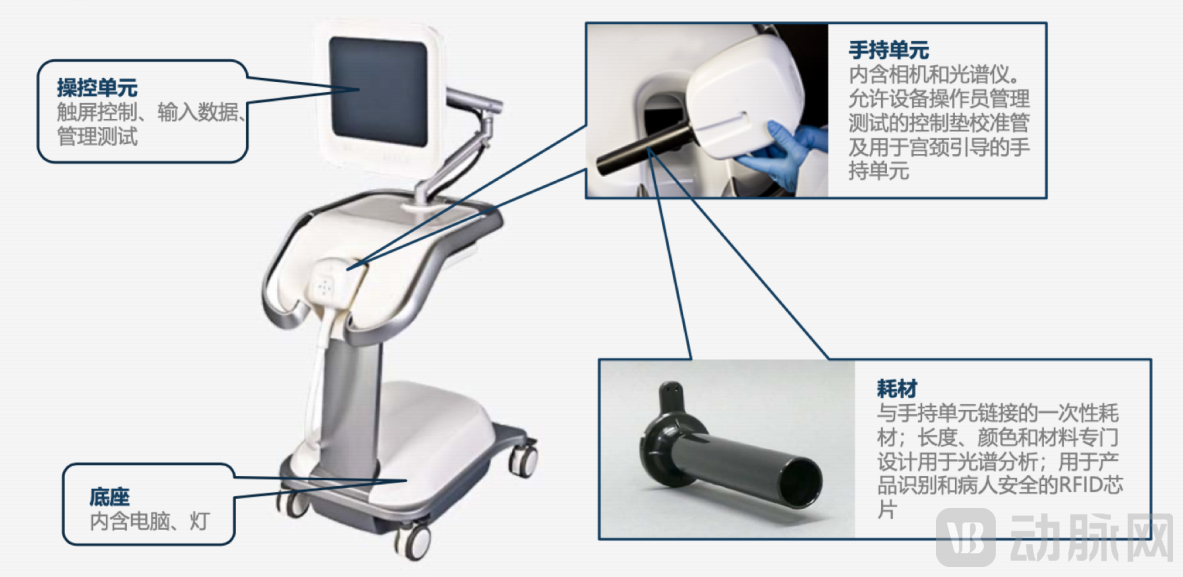
Cervical Cancer Screening Device
Cervical Cancer Detection Device Mainly Includes Three Sets of Core Components:Operation Unit, Handheld Unit, and Basic Unit。
The operation unit is used for inputting data (such as patient information) and outputting displayed results and images; the handheld unit contains a camera and a spectrometer for acquiring multispectral data, with its connected disposable consumables equipped with RFID chips for spectral analysis; the base unit houses a computer for data processing and a light source generator.
Li Xue, Head of Marketing at Yaohua Medical, told VCBeat’s Chengguo Bureau that the cervical cancer detection device offers several advantages: it requires no sample collection, eliminates the need for professional pathologists to review slides, delivers results within 3–5 minutes, and boasts higher specificity and sensitivity than traditional testing methods.
Favorable Overseas Clinical Results; Domestic Clinical Trials Nearing Completion
Currently, the cervical cancer detection device has taken the lead in completing clinical trials in multiple overseas countries (including the United States, the United Kingdom, Australia, and Turkey), with favorable clinical outcomes:Sensitivity can reach 94%; specificity can reach 85%.
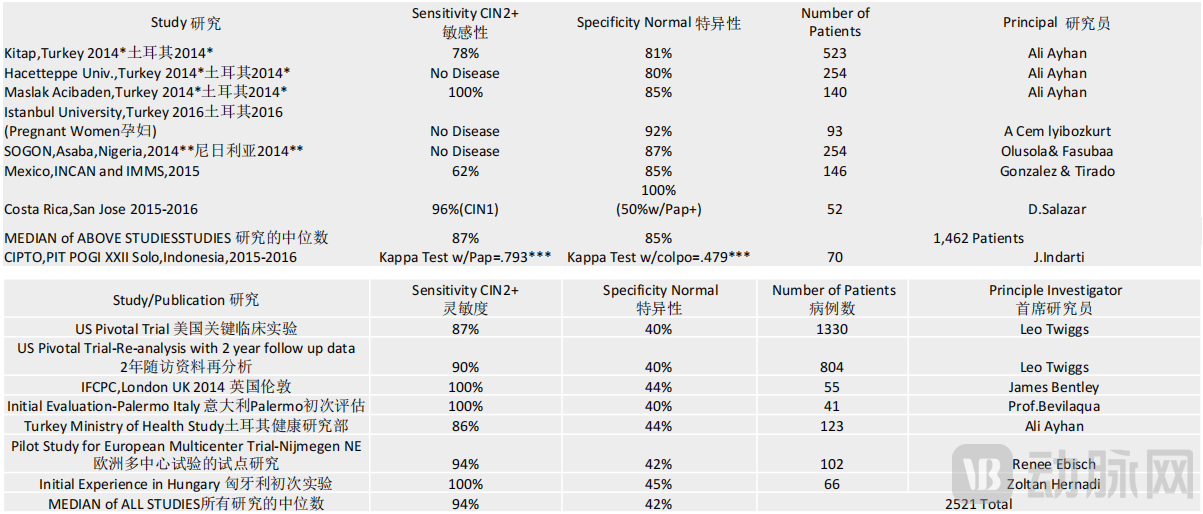
Overseas Clinical Trial Data
Taking the initial clinical trial in the United States as an example, the study enrolled 1,330 women of diverse ages, races, and ethnicities. In cervical cancer screening, ThinPrep Cytologic Test (TCT) identified 28 positive cases, whereas the cervical cancer detection device identified 40 positive cases, detecting 12 additional positive cases compared to TCT. During the subsequent two-year follow-up, these 12 patients were ultimately diagnosed with cervical cancer.
Li Yuanmin revealed to VCBeat:Domestic clinical trials are nearing completion, with results expected to be announced around November this year, at which time the application for medical device registration will be submitted.。
It is reported that the domestic development and clinical trials of the cervical cancer detection device were led by Professor Sui Long, Director of the Cervical Disease Diagnosis and Treatment Center at the Obstetrics and Gynecology Hospital of Fudan University; Professor Kong Beihua, Deputy Minister of the Cheeloo College of Medicine at Shandong University; and Professor Wei Lihui, Chief Physician of the Department of Gynecology at Peking University People’s Hospital. The work was conducted across three sites: the Obstetrics and Gynecology Hospital of Fudan University in Shanghai, Peking University People’s Hospital, and Qilu Hospital of Shandong University.
Signed Agency Agreements with 17 Provinces to Drive the Development of the Cervical Cancer Early Screening Market
Data released by the National Cancer Center in 2018 show that 90% of cervical cancer patients are already at the invasive stage at diagnosis, resulting in significantly reduced survival rates and a poorer prognosis. Promoting early screening for cervical cancer is a crucial approach to effectively preventing and reversing the disease.
Li Yuanmin stated, “There is a clear and pressing demand for early cervical cancer screening in China. We developed the cervical cancer detection device with the aim of raising awareness among eligible women about the importance of early screening, thereby driving the growth of the early cervical cancer screening market.”
Compared with existing cervical cancer screening methods, Yaohua Medical’s cervical lesion detector is easy to operate and delivers high accuracy, making it particularly suitable for large-scale population screening.
Li Xue stated in an interview with VBInsight that the cervical cancer screening device is planned to enter the market through provincial distributors, municipal distributors, direct company sales, third-party health examination institutions, and participation in government-wide screening programs.
“Although the device has not yet been launched on the market, we"Provincial agency agreements have been signed with 17 provinces, and municipal agency agreements have been signed with all cities in Shandong Province."Li Xue said, “We look forward to welcoming more cooperative distributors in the future.”
It is worth mentioning that the cervical cancer detection device is based on a brand-new technical methodology, which uses pure optical principles to detect cancer.
“We hope to apply this technology to multiple suitable carriers, with gastric cancer and colorectal cancer being the next key areas of focus,” Li Yuanmin shared Yaohua Medical’s R&D goals with VCBeat Chengguo Bureau.
It is reported that Yaohua Medical is currently in contact with multiple investment firms,A future financing plan of RMB 50 million is in place, primarily allocated to three key areas: research and development of automated cancer screening technologies, production line expansion, and market operations.。