

Charting the Vast Frontier of Brain Science: Four National Key Laboratories and 115 Researchers Leading the Charge
Following the publication of the first article reviewing “National Key Laboratories in Healthcare,” VCBeat received extensive feedback from early-stage investment firms and corporate business development (BD) departments across China. This strong industry interest has reinforced VCBeat’s conviction that a systematic, in-depth series on these National Key Laboratories is warranted. A single, superficial overview fails to adequately capture the capabilities and research priorities of these premier institutions.
Therefore, in the coming days, Orange Bureau will continue to conduct further analysis of “National Key Laboratories Related to Healthcare” on an industry-by-industry basis. The first article in the “Industries and National Key Laboratories” series begins with brain science.
The human brain is the most complex system in nature. Composed of 100 billion neurons, 500 trillion synapses, and various complex factors such as neurotransmitters made up of amino acids, peptides, and proteins, this organ of higher cognition endows humans with intelligence, learning capacity, and plasticity.
Meanwhile, brain-related diseases are also complex. Most major brain disorders stem from certain pathologies in the functional networks of the brain. Due to a lack of understanding of their pathogenesis and neurocognitive mechanisms, most brain diseases lack effective diagnostic and therapeutic approaches. To date, neuroscience has garnered the most Nobel Prizes among fields related to human life research, yet the brain—an organ composed of hundreds of billions of neurons—has still not been fully understood in terms of its relationship with the human body.
Against this backdrop, brain disorders have become a major medical, health, and social issue. According to statistics, patients with brain disorders account for approximately 11% of all disease cases globally, while the societal burden approaches 30% of the total burden of human diseases. In China, the number of individuals affected by various brain disorders is nearly 130 million, including 9.83 million with Alzheimer’s disease, over 2 million children under the age of 12 with autism spectrum disorder (with 200,000 new cases annually), and more than 50 million with depression. This has become a significant public health, social, and livelihood issue.
Consequently, brain science has become a key research priority for nations worldwide. Since 2013, the United States, the European Union, and Japan have successively launched major brain science initiatives: the EU took the lead by initiating the €1 billion Human Brain Project, followed by the United States with its $4.5 billion BRAIN Initiative. Brain science is also regarded as one of the two most critical frontiers for humanity in the coming century.
Brain science is also a key research area among the 43 national key laboratories related to healthcare. Among these 43 national key laboratories, four are dedicated to brain science.
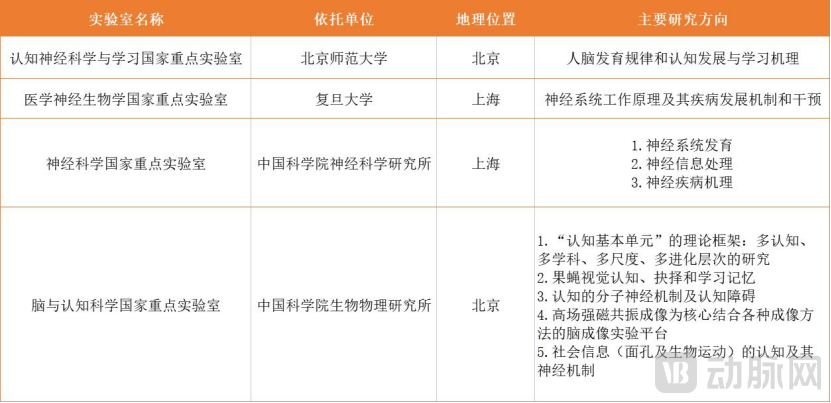
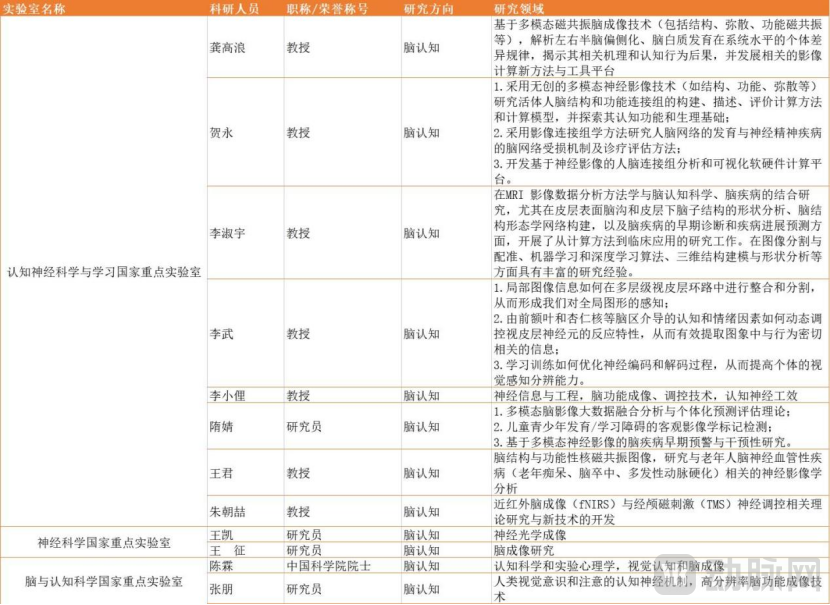
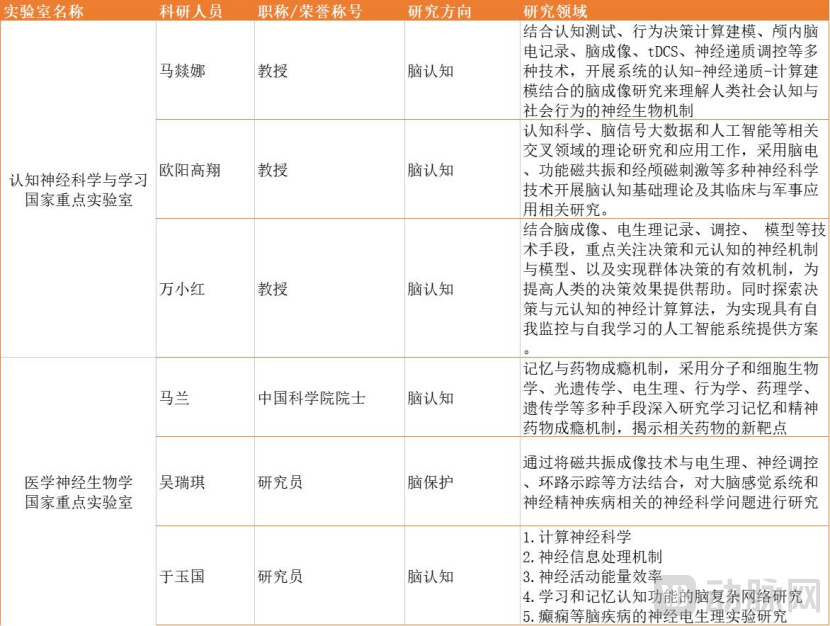
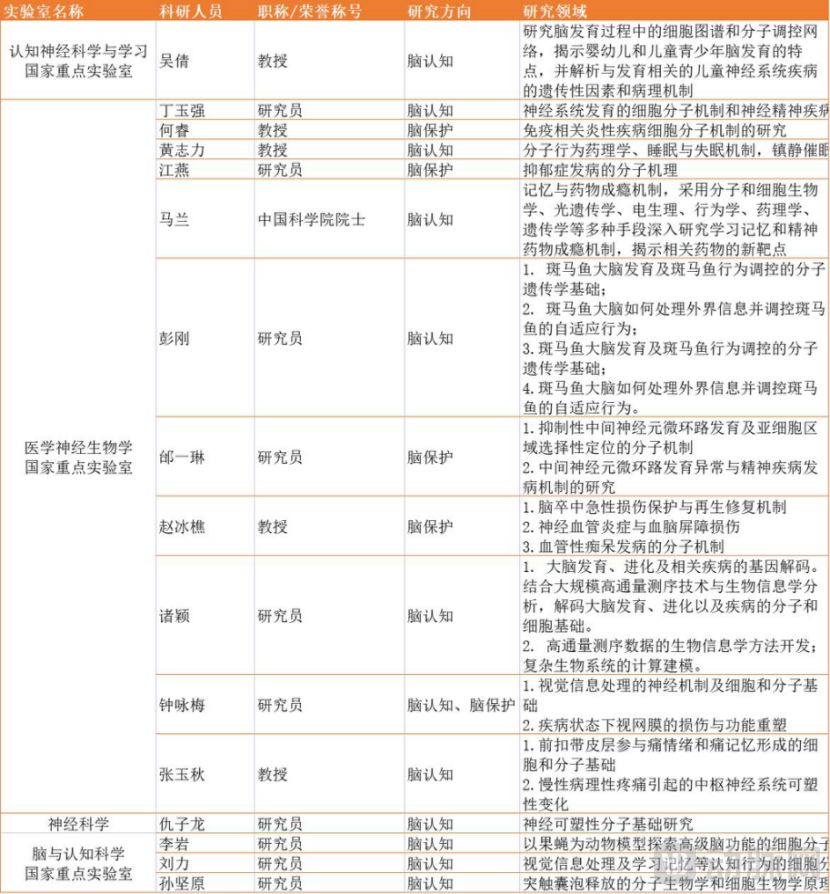
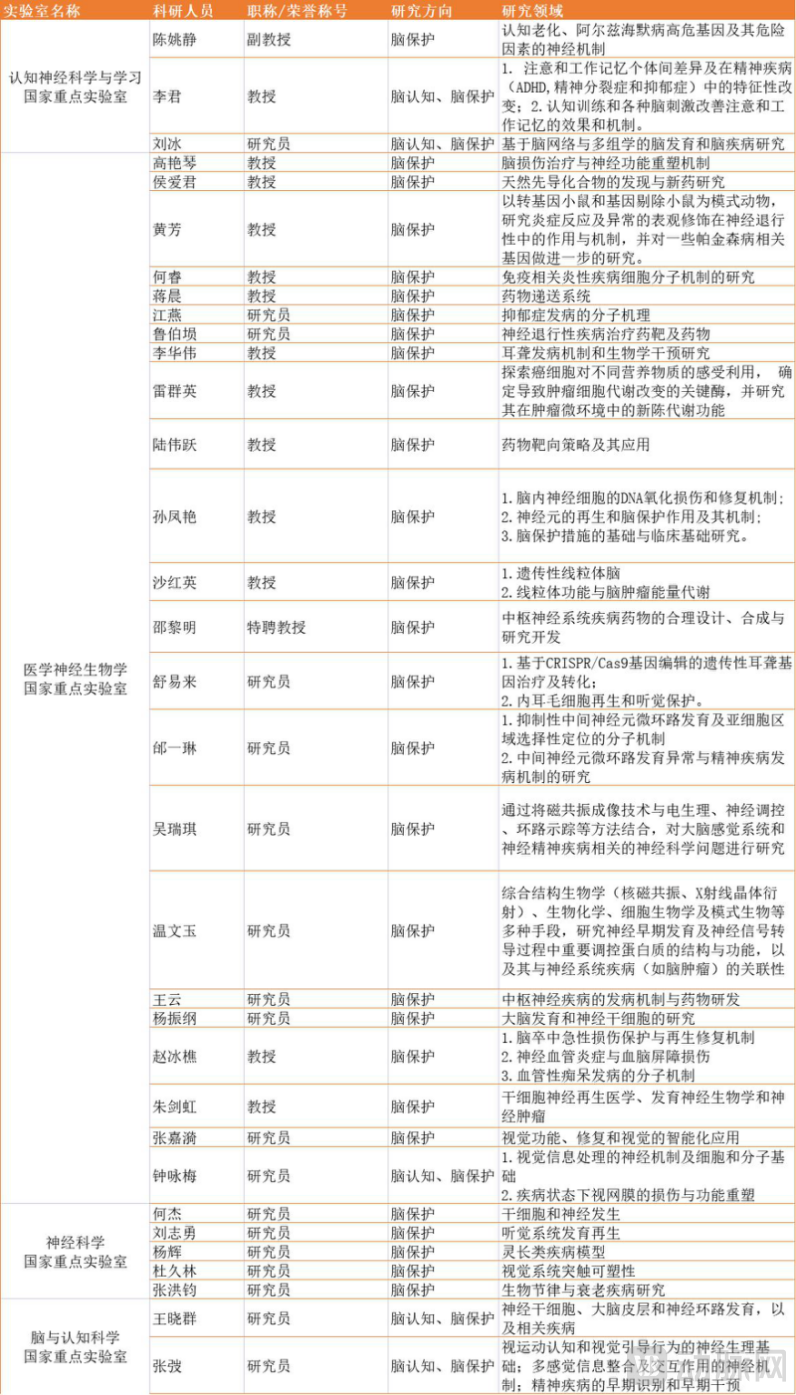
The four laboratories have a combined total of more than 230 permanent staff members, with research directions spanning from brain cognition to brain-inspired technologies. We screened and compiled data on the primary research focuses of 115 researchers, yielding the following conclusions:
Based on the research objectives and definitions of brain science, we broadly categorize brain science-related research into three levels: brain cognition, brain protection, and brain creation.
Brain Cognition: Exploring the Functions, Structures, and Principles of the Brain, Including Its Physical Composition, Biological Mechanisms, and Functional Operations.
Brain Protection: Exploration of Pathogenesis, Diagnosis, and Treatment Research for Brain Diseases
Brain creation refers to the development of brain functions or the adoption of brain-inspired technologies, such as neuromorphic research and brain-computer interfaces.
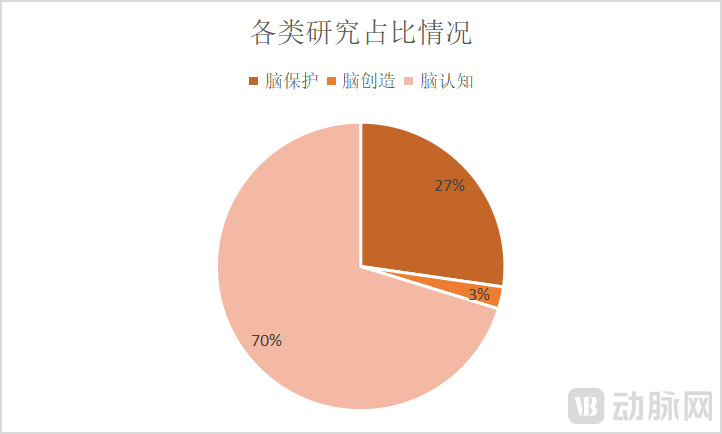
Among the primary research areas of these researchers, studies related to brain cognition are overwhelmingly dominant, with 70 scientists engaged in this field. Research on brain protection ranks second, accounting for 27% of the total, while studies on brain creativity comprise only 3%.
The underlying reasons are, in fact, well-trodden ground: our understanding of the brain remains limited. Not only are the pathogenesis and etiology of many neurological disorders unclear, but significant mysteries also persist regarding the origin and aging of neurons, as well as the formation of synapses and neural circuits.
As national science and technology innovation bases for science and engineering research, one of the primary missions of National Key Laboratories is to achieve innovations in fundamental principles, breakthroughs or integration of key technologies, or to accumulate basic scientific data to support scientific research in related fields. Brain cognition represents the initial step in brain science research, making it a natural focal point for the four National Key Laboratories dedicated to brain science.
From the perspective of research value, studies on brain cognition constitute the foundational infrastructure of brain science. Only with a comprehensive understanding of the brain can there be a clear path for the treatment and prevention of neurological disorders. Similarly, brain-inspired technologies such as neuromorphic computing and brain-computer interfaces can only emerge and be applied when there is a thorough understanding of neurons and the mechanisms of synaptic transmission.
Therefore, it is evident that research institutions and industry enterprises have a clear division of labor in the field of brain science. Research institutions focus on fundamental research into brain cognition and applied research into brain protection, while enterprises exhibit diversification in the realm of brain enhancement.

Primary Business Directions of Brain Science-Related Enterprises in the Industry
The human brain is an intricate super-CPU with a delicate and complex structure. Experimental research on the human brain is challenging to conduct because information related to neural transmission and cognition cannot be obtained from donated samples. Such experimental data can be acquired through invasive and non-invasive detection methods.
Among non-invasive approaches, brain imaging techniques are widely used. These technologies enable researchers to “see inside the living brain” from the outside. Such imaging methods play a crucial role in cognitive neuroscience by helping scientists elucidate the relationships between specific brain regions and their functions, localize brain areas affected by neurological disorders, and develop novel therapies for brain diseases.
Electrophysiological techniques are among the more common invasive methods used in brain imaging research. The advantages of electrophysiology lie in its ability to directly assess neural activity, as opposed to relying on indirect metabolic signals; it enables recordings across multiple spatial scales, ranging from single cells to the entire brain; and it can even establish causal effects through neural stimulation. As the first technology historically developed to measure brain activity, electrophysiology offers unique insights into how functional communication is biologically implemented within brain networks, thereby facilitating complex behavioral analyses across a broad temporal range.
Through interdisciplinary scientific technologies and methods, electrophysiological techniques provide a unique approach to studying the neural dynamics of brain systems.
Multi-omics analysis technologies enable a more multidimensional elucidation of the pathogenesis of brain diseases through animal models and experimental samples. Certain neurodegenerative diseases are associated with abnormal protein folding, cellular differentiation, and aging in the brain, involving complex pathogenic mechanisms.
Integrated multi-omics data analysis enables researchers to gain a profound understanding of the processes and molecular mechanisms underlying disease pathogenesis, thereby progressively refining research across various levels. Throughout the life sciences, integrated multi-omics data analysis is not merely about data integration; it represents an in-depth exploration of biological interpretation, offering new perspectives for both basic biology and disease research.
Of course, researchers are not only users of the aforementioned technologies but also their inventors. On one hand, they leverage mature imaging techniques to study the brain; on the other, they drive technological innovation to benefit the industry, thereby producing higher-quality analytical technologies.
Brain diseases can be categorized into four major groups: first, neurodegenerative diseases, such as Alzheimer's disease, Parkinson's syndrome, paralysis agitans, motor neuron diseases, and hearing loss, which significantly impair patients' physical mobility; second, psychiatric disorders, including depression, mood disorders, and schizophrenia, which compromise cognitive and emotional functioning; third, pediatric neurodevelopmental disorders, such as attention-deficit/hyperactivity disorder (ADHD) and autism spectrum disorder; and fourth, metabolic abnormalities, including brain tumors.
Among these categories of diseases, neurodegenerative disorders have garnered the most attention from researchers, followed by cognitive and psychiatric conditions such as depression and schizophrenia.
Research on neurodegenerative diseases primarily focuses on pathogenesis and drug development, with these conditions representing key frontiers for pharmaceutical innovation in the industry. Due to an incomplete understanding of their etiologies and pathological mechanisms, most neurodegenerative disorders still lack effective diagnostic and therapeutic strategies. Indeed, drug development for Alzheimer’s disease is still regarded as a highly competitive and challenging arena within the pharmaceutical sector.
As research institutions heavily invested in basic science, it is only natural that National Key Laboratories prioritize research into disease understanding. Their findings not only deepen public and scientific comprehension of diseases but also provide conceptual frameworks and empirical evidence for the subsequent development of therapeutic agents (drug targets) and diagnostic products (biomarkers) within the industry.
Psychological and emotional disorders were once categorized under the social sciences in earlier years, with a prevailing view that their onset had little correlation with neurocognition and genetics. Consequently, clinical diagnosis and treatment lacked gold-standard diagnostic tests. However, as our understanding of brain cognition has deepened, connections have emerged between social behaviors, emotional issues, psychiatric disorders, and neurocognitive functions. Both the clinical and research communities now place greater emphasis on the biological underpinnings of these conditions. Furthermore, elucidating these associations provides support and evidence for treating such disorders, particularly through digital therapeutics for mental health conditions.
Adolescent brain and cognitive development is also a key focus of the State Key Laboratory. According to the World Health Organization’s Global Burden of Disease Study, 1 in every 49.5 children under the age of five suffers from brain-related disorders, such as autism, attention-deficit/hyperactivity disorder (ADHD), and developmental disabilities. In China, the abnormality rate in screening for preterm infants is as high as 18%. Brain and cognitive development in children and adolescents is one of the first five research directions under the major national project “Brain Science and Brain-Inspired Intelligence” of the Science and Technology Innovation 2030 initiative.
As a downstream segment of brain science research, the number of researchers engaged in brain creativity-related studies within these national key laboratories is relatively small.

Among the 115 researchers currently accounted for, only Professor Lin Wei and Professor Song Zhijian from the State Key Laboratory of Medical Neurobiology, and Researcher Huang Longwen from the State Key Laboratory of Brain and Cognitive Science, are engaged in research in this area. The research conducted by these scientists primarily focuses on brain-inspired artificial intelligence, the application of virtual reality technology in medicine, computer-aided diagnosis and treatment, as well as behavioral regulation and neural networks. It is evident that these studies on “brain creation” are also feeding back into and advancing research on “brain protection.”
Compared to the diversity of industrial research in the field of brain creation, the research orientation of national key laboratories remains focused on brain protection.
Certainly, the National Key Laboratories only reflect a portion of China's brain science research. Since "Brain Science and Brain-Inspired Research" was designated as one of the major scientific and technological innovation projects and initiatives in China's 13th Five-Year Plan Outline, brain science research has also become a national strategy.
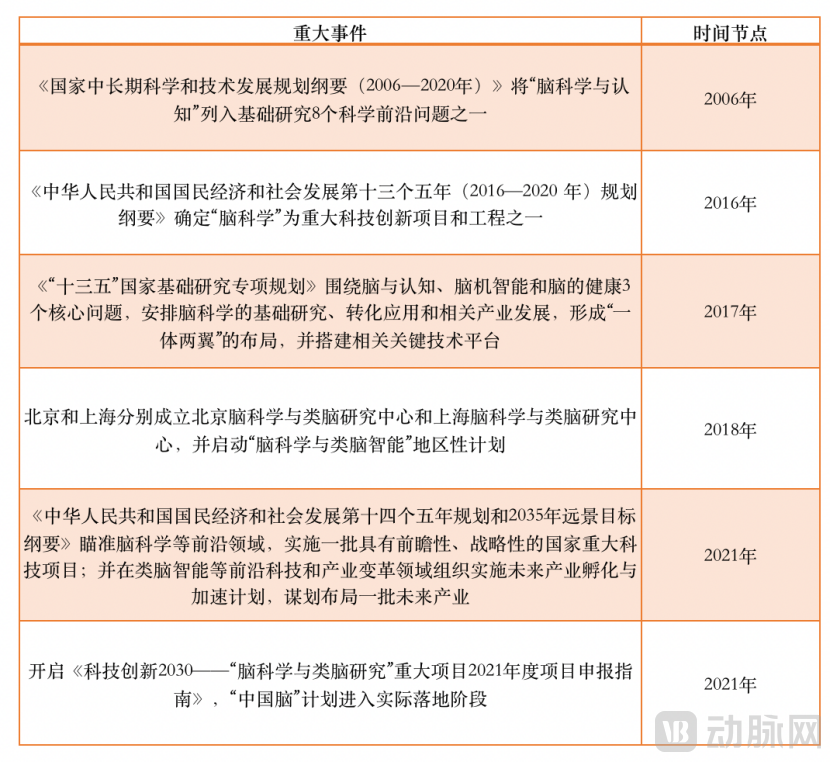
In 2021, China released its 14th Five-Year Plan, further underscoring the growing emphasis on brain science.
The 14th Five-Year Plan mentions targeting frontier fields such as brain science and implementing a batch of forward-looking and strategic national major scientific and technological projects; it also organizes and implements future industry incubation and acceleration plans in frontier technology and industrial transformation areas such as brain-inspired intelligence, with the aim of planning and laying out a batch of future industries.
In 2021, the long-awaited “China Brain” Project entered its implementation phase. The Ministry of Science and Technology officially released the “Guidelines for Application to the 2021 Major Projects under ‘Science and Technology Innovation 2030—Brain Science and Brain-Inspired Research,’” with project applications opening on October 9. The guidelines established a five-year cycle for the major projects on brain science and brain-inspired research. In 2021, funding will focus on 59 research directions across five areas: elucidation of principles underlying brain cognition; pathogenesis and intervention technologies for major brain disorders associated with cognitive impairment; brain-inspired computing and brain-machine intelligence technologies and applications; brain and intellectual development in children and adolescents; and technical platform construction. The national government has allocated an estimated budget of RMB 3.148 billion for these initiatives.
In terms of policy, support for China’s Brain Project continues to intensify, and the coverage of this research field by scientific research institutions is steadily expanding.
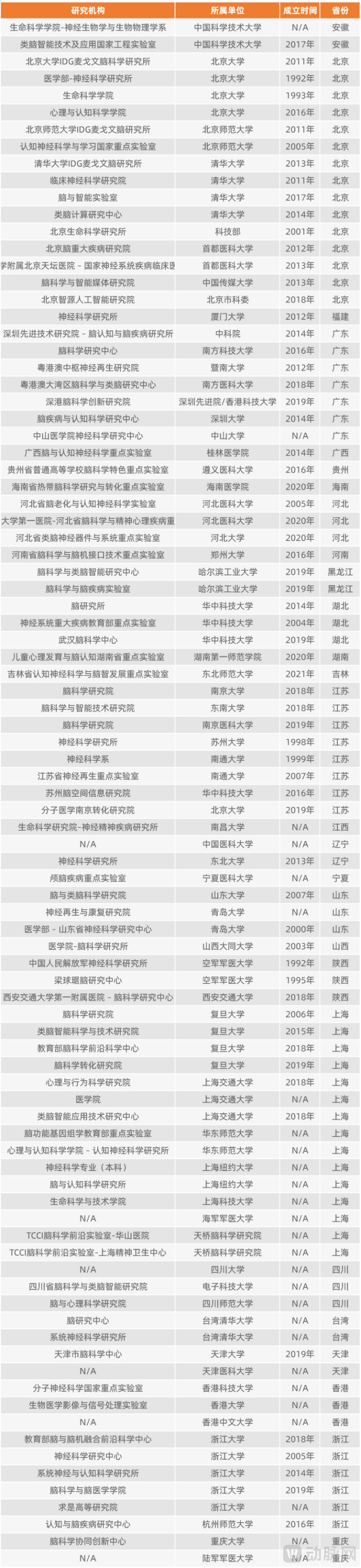
Beijing and Shanghai have respectively established the Beijing Academy of Brain Science and Brain-Inspired Intelligence and the Shanghai Academy of Brain Science and Brain-Inspired Intelligence, and launched regional “Brain Science and Brain-Inspired Intelligence” initiatives to begin funding related research projects. Universities have also set up brain-inspired intelligence research centers in succession. As a result, Beijing and Shanghai have gradually become the regions with the highest concentration of brain science research in China today.
The Beijing Center for Brain Science and Brain-Inspired Intelligence encompasses research institutions including the Chinese Academy of Sciences, the Academy of Military Medical Sciences, Peking University, Tsinghua University, Beijing Normal University, the Chinese Academy of Medical Sciences, and the China Academy of Chinese Medical Sciences. The Shanghai Center for Brain Science and Brain-Inspired Intelligence covers institutions such as the Chinese Academy of Sciences, Fudan University, Shanghai Jiao Tong University, Tongji University, East China Normal University, and ShanghaiTech University.
Furthermore, the Chinese Academy of Sciences (CAS) system is also actively advancing its strategic layout in brain science. In addition to the existing State Key Laboratory of Neuroscience and the State Key Laboratory of Brain and Cognitive Science, it has established the Center for Excellence in Brain Science and Intelligence Technology, the Key Laboratory of Animal Models and Human Disease Mechanisms, and the Key Laboratory of Brain Function and Brain Diseases.
In 2018, the Ministry of Education launched the Mount Everest Plan for Basic Research in Higher Education Institutions (hereinafter referred to as the “Mount Everest Plan”), initiating the establishment of Frontier Science Centers at universities and colleges. As a frontier scientific discipline, brain science was naturally included in the “Mount Everest Plan.” The Ministry of Education successively approved the establishment of the Fudan University Frontier Science Center for Brain Science and the Zhejiang University Frontier Science Center for Brain and Brain-Computer Integration.
At the local level, research coordination institutions related to brain science are also accelerating their strategic deployment. In Guangdong Province, led by the Guangdong Provincial Department of Science and Technology and relying on Southern Medical University, 16 entities—including the Hong Kong University of Science and Technology, the University of Hong Kong, the Chinese University of Hong Kong, the City University of Hong Kong, the University of Macau, as well as universities and research institutes in Guangzhou and Shenzhen—jointly established the Greater Bay Area Center for Brain Science and Brain-Inspired Intelligence. Meanwhile, Chongqing Municipality, Tianjin Municipality, Henan Province, Heilongjiang Province, Sichuan Province, and other regions have also established their own brain science research centers.
In addition to government-led brain science research institutions, private research organizations have also emerged in recent years. Among them, the most prominent is the IDG McGovern Institute for Brain Research, which has jointly established four brain science research institutes with Peking University, Beijing Normal University, Tsinghua University, the Shenzhen Institutes of Advanced Technology of the Chinese Academy of Sciences, and the MIT McGovern Institute for Brain Research.
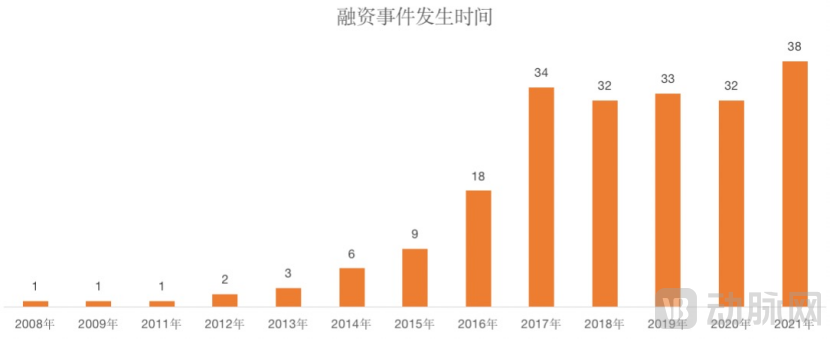 Number of Brain Science Enterprise Financing Events, 2008–2021
In terms of industry, the development of brain science enterprises reached its first turning point in 2016. This has given rise to domains such as medical-grade brain-computer interfaces (BCIs) and chips, consumer-grade BCIs, robotics and surgical equipment, cutting-edge scientific research instruments, EEG sensors and related solutions, clinical EEG big data, intelligent analysis of brain radiological imaging, and digital therapeutics. Although no super unicorns akin to Neuralink have yet emerged, China’s brain science industry has entered a phase of rapid growth.
A clear division of labor has emerged between the academic and corporate sectors in research distribution: the academic sector focuses on foundational infrastructure and applications, while industry players are more heavily invested in downstream activities. This has organically established a complete value chain in China’s brain science field, spanning from basic research to practical applications. Driven by the synergy among policy support, local governments, academic institutions, and industry stakeholders, the prospects for brain science are unquestionably promising. It represents not only the ultimate frontier of life sciences research but also a vast and promising horizon for both industrial development and scientific exploration.
Appendix:Research Directions of 115 Scientific Researchers
