

Sinuo Gene Files IPO Prospectus: Pioneering Molecular Diagnostics in Tuberculosis and Thoracic Oncology
Today, the molecular diagnostics industry has evolved from its nascent stage to a period of rapid growth.
Data released by Guoyuan Securities shows that the size of China's molecular diagnostics market has grown from RMB 2.54 billion in 2013 to RMB 13.21 billion in 2019, and is projected to reach RMB 33 billion by 2024.
Among them, Beijing SinoMDgene Technology Co., Ltd. (hereinafter referred to as “SinoMDgene”), established in 2008, is a pioneer in the field of molecular diagnostics in China. During the period of rapid development in the molecular diagnostics industry, SinoMDgene seized the opportunity and achieved rapid growth.

According to reports, during the early development stage of China's molecular diagnostics industry, SinoMDgene primarily focused on technological accumulation and product R&D; during the industry's rapid growth phase, SinoMDgene independently developedEGFRGene Mutation Detection Kit、K-rasGene Mutation Detection Kit、B-raf GeneV600EMutation detection kits and other products have been successively approved and rapidly launched into the market, ushering in a period of rapid growth;2017In the years following, with an increasing number of industry participants and intensifying competition, Beijing SinoMDgene Technology Co., Ltd. embarked on a Blue Ocean Strategy, focusing on efficient transformation of scientific achievements and the development of innovative products, with plans to expand its market share through innovative business initiatives.
To date, SinoMDgene has established its presence in the fields of tuberculosis and thoracic oncology.Molecular Pathological Diagnosis of Tuberculosis, Pan-Cancer Solid Tumor MSI Testing, and Lung Cancer Methylation Testingamong other innovative products, with one already approved for market launch as “the first domestic product of its kind.”
It has been observed that most companies in the industry focus solely on the oncology market, whereas Beijing SinoMDgene Technology Co., Ltd. (SinoMDgene) has carved out a unique path by simultaneously deploying precision diagnostics for tuberculosis and thoracic tumors. This strategic move stems from SinoMDgene’s identification of tuberculosis as a blue-ocean market during its prior engagements with hospital pathology departments.
Data indicate that tuberculosis is a chronic infectious disease caused by infection with Mycobacterium tuberculosis. It is one of the leading causes of death worldwide, ranking above HIV/AIDS. Mycobacterium tuberculosis primarily affects the lungs, resulting in pulmonary tuberculosis; it can also involve various other organs—including bones, lymph nodes, intestines, liver, kidneys, brain, and testes—excluding hair and nails, a condition known as extrapulmonary tuberculosis.
According to the World Health Organization’s Global Tuberculosis Report 2021, nearly 2 billion people worldwide have latent tuberculosis infection, with approximately 9.9 million new cases. China is one of the high-burden countries for tuberculosis globally; in 2020, there were about 842,000 new TB cases in China, ranking second worldwide and accounting for 9% of the global total.
Tuberculosis not only affects a large number of patients but also constitutes a global public health challenge, being the infectious disease responsible for the highest number of deaths worldwide. Clinically, most patients exhibit no obvious symptoms after initial infection with Mycobacterium tuberculosis; however, as the disease progresses, it can develop into active tuberculosis, presenting with symptoms such as cough, sputum production, low-grade fever, night sweats, and weakness. In severe cases, complications may include hemoptysis, massive hemoptysis, and extensive lung destruction.
Clinical experts stated, “Early detection and early treatment are crucial measures for the prevention and control of tuberculosis. Currently, with standardized treatment, the cure rate for tuberculosis can reach 90%.”
However, tuberculosis patients in China primarily seek medical attention only after symptoms appear, resulting in a low initial diagnostic confirmation rate and a prolonged average time to diagnosis, which poses significant challenges for clinical treatment. This is because current clinical diagnosis mainly relies on bacteriological tests (such as sputum smear microscopy and sputum culture), immunological assays (such as tuberculin skin tests and interferon-gamma release assays), molecular biological techniques (such as sputum PCR), and pathological examinations (such as acid-fast staining and hematoxylin and eosin [H&E] staining). All these diagnostic methods have notable limitations.
For example, *Mycobacterium tuberculosis* is exclusively intracellular during the early stages of infection. The low sensitivity of sputum smear microscopy and sputum culture methods can easily lead to missed or misdiagnoses of early-stage infections. Furthermore, the quality of sputum specimens varies considerably; therefore, a negative result for *Mycobacterium tuberculosis* does not rule out pulmonary tuberculosis, as the bacilli are present in expectorated sputum only when the disease is in an active phase.
Furthermore, although sputum smear microscopy is intuitive and rapid, it suffers from a high false-positive rate, low sensitivity, and susceptibility to treatment effects. Sputum culture, the traditional gold standard for diagnosis, has relatively low sensitivity (approximately 45%) and requires a prolonged turnaround time of 3–4 weeks, which significantly hinders diagnostic and therapeutic efficiency.
As for sputum PCR testing, the results are influenced by the quality of sputum specimens, leading to a low diagnostic rate in the early stages of infection. It is worth noting that sputum-based tests primarily detect pulmonary infections, whereas extrapulmonary tuberculosis requires diagnosis through imaging and pathological biopsy.
Addressing the diagnostic challenges of pulmonary tuberculosis, particularly smear-negative pulmonary tuberculosis and extrapulmonary tuberculosis, SinoMDgene has innovatively developedChina's First Molecular Pathology Diagnostic Product for Tuberculosis—JiehekangTB®, the product was approved by the National Medical Products Administration (NMPA) at the end of 2021 and received EU CE certification in 2022.
According to the introduction, Jiehekang TB® performs molecular pathological diagnosis based on tissue specimens. With its high sensitivity and specificity, it can directly detect suspected lesion sites, filling a gap in the market for testing pulmonary and extrapulmonary tuberculosis tissue specimens.
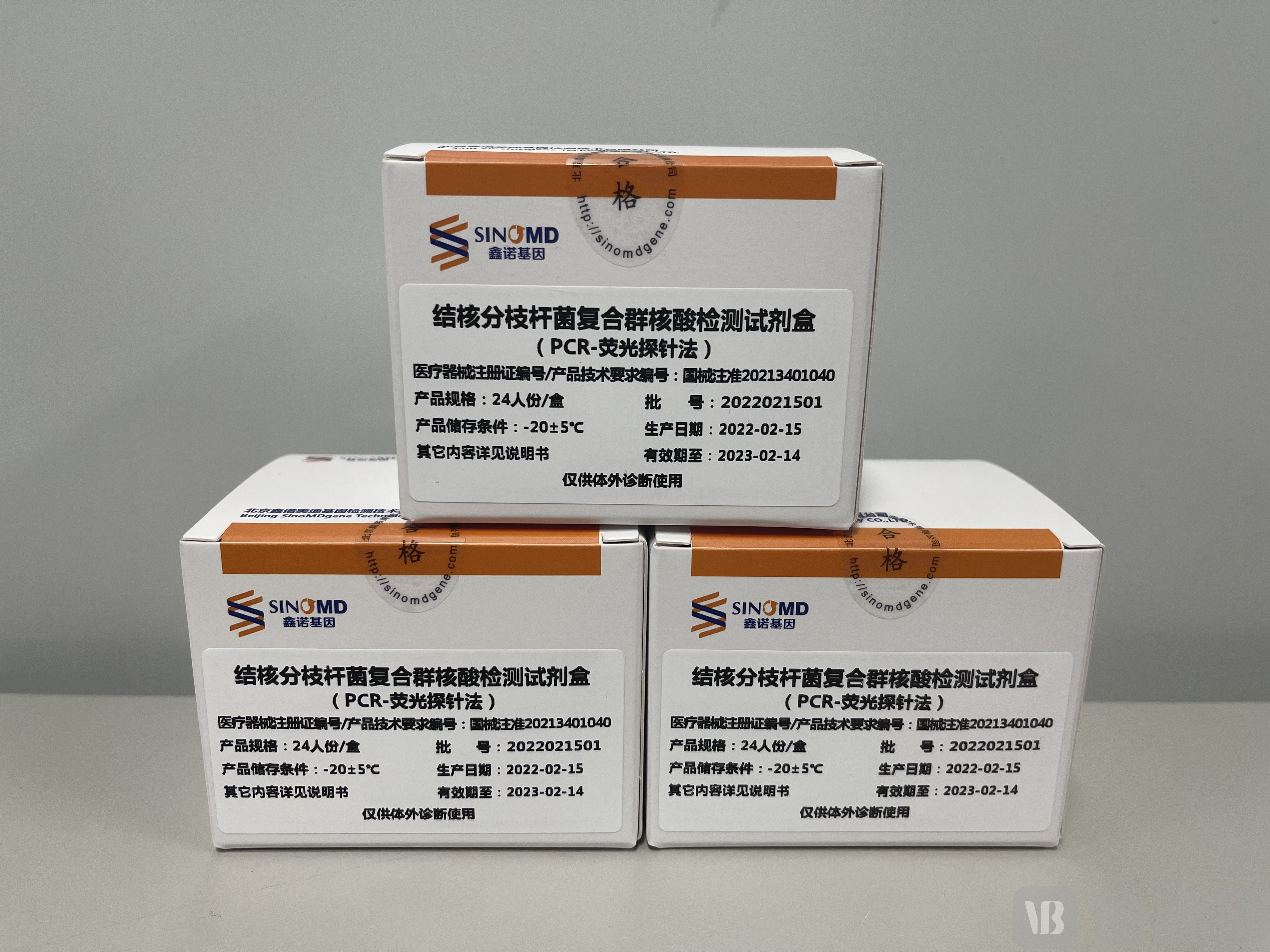
SinoMDgene stated that Jiehekang TB® can accurately diagnose smear-negative pulmonary tuberculosis, extrapulmonary tuberculosis, and other forms of tuberculosis that are difficult to confirm with conventional tests, thereby promoting early diagnosis and treatment and contributing to global tuberculosis prevention and control.
To date, SinoMDgene has established contact with hundreds of Grade A tertiary hospitals, earning high recognition from both the institutions and their experts. Among them, over 50% of departments have expressed an urgent need for its services, while 10% have already entered the tendering and hospital admission process.
Previously, the General Office of the State Council issued“13th Five-Year” National Plan for Tuberculosis Prevention and Control, requirementsStrengthen Screening for Individuals with Suspected Symptoms of Pulmonary Tuberculosisand other related tasks to strengthen the prevention and control of tuberculosis. We believe that Jiehekang TB®, as a disruptive product, offers significant advantages in the detection and diagnosis of tuberculosis and will drive the rapid development of SinoMDgene in the future.
In fact, in addition to its disruptive product Jiehekang TB®, Beijing SinoMDgene Technology Co., Ltd. has also strategically developed innovative products such as pan-cancer microsatellite instability (MSI) testing for solid tumors and methylation detection for lung cancer. It is anticipated that the approval and market launch of these innovative products will enable Beijing SinoMDgene Technology Co., Ltd. to rapidly expand its innovative business footprint.
Taking microsatellite instability (MSI) testing for pan-cancer solid tumors as an example, it can guide the formulation of tumor treatment plans and achieve precision medication for cancer patients. For instance, patients with stage II colorectal cancer who are MSI-H/dMMR are resistant to 5-FU, while patients with MSI-H/dMMR solid tumors respond well to Opdivo and Keytruda.
Meanwhile, MSI testing can be used for prognostic assessment in colorectal cancer. Clinically, patients with MSI-H have a 35% lower risk of mortality compared to those with MSS, and patients with stage II MSI-H colorectal cancer may not require postoperative chemotherapy.
Additionally, MSI testing can be used to screen for hereditary nonpolyposis colorectal cancer (Lynch syndrome). The NCCN Guidelines state that Lynch syndrome screening should be performed for all colorectal cancer patients under 70 years of age and those over 70 who meet the Bethesda Guidelines.
Given the vast number of global cancer patients and their urgent needs, we anticipate that SinoMDgene’s self-developed pan-cancer solid tumor MSI assay will be rapidly adopted upon market launch, thereby driving the company’s rapid growth.
Finally, SinoMDgene told VCBeat that it is currently undertaking a new round of financing, with the funds raised primarily intended for establishing an NGS R&D platform and a third-party medical laboratory.