

BioMap Unveils "ImmuBot" Immune Robotics Platform with First-in-Class Drugs Expected to Enter Global Clinical Trials Next Year
On September 9, 2022, BioMap, a breakthrough innovative drug R&D platform powered by its biological computing engine, officially launched its Beijing Central Laboratory and publicly unveiled for the first time “ImmuBot,” a novel protein drug designed de novo using its biological computing engine. ImmuBot aims to achieve precise reprogramming of the immune system to treat hundreds of immune-related diseases.
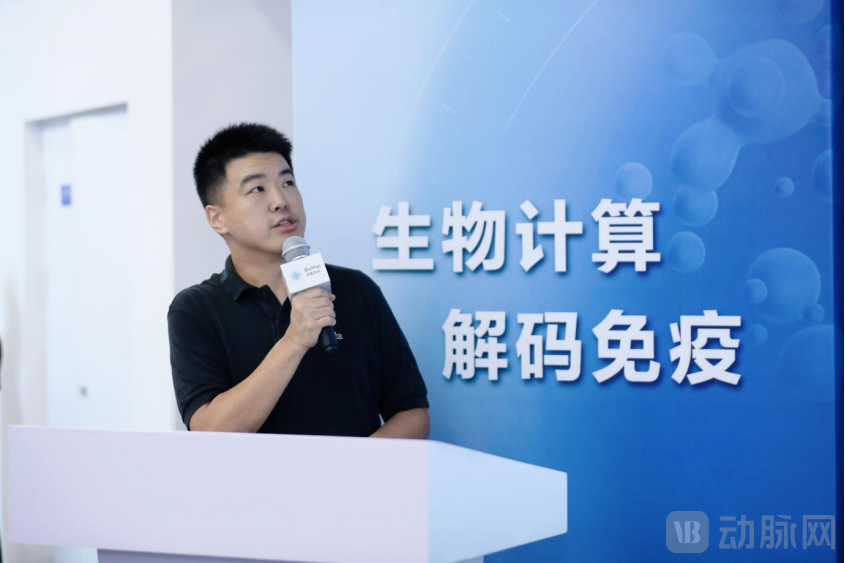
Figure: Liu Wei, CEO of BioMap
According to Liu Wei, CEO of BioMap, each “robotic” drug on the ImmuBot platform is assembled from multiple components, including immune function warheads, tissue-navigation warheads, microenvironment sensors, and programmable controllers. It features four key innovations: high-performance warheads, multi-target combinatorial capabilities, programmable control, and modular assembly. This enables complex mechanisms of action unattainable by traditional antibody drugs, offering promising new solutions for a wide range of unmet clinical needs.
Since its inception, BioMap has been dedicated to integrating cutting-edge AI and biotechnology to build a high-throughput dry-wet closed-loop biological computing engine, modeling the complex patterns of proteins, immune cells, and the immune system. Leveraging this biological computing engine, ImmuBot features four key capabilities:
The first feature is the high-performance warhead. Leveraging the powerful capabilities of artificial intelligence, ImmuBot equips each target with a high-performance warhead characterized by optimal affinity, precise epitope targeting, and accurate functional activation. It also enables highly specific design relative to other proteins within the same family, thereby significantly enhancing both efficacy and safety.
The second feature is multi-target combination. Leveraging target combination mining based on a bio-computational engine and multi-warhead bridging drug design, ImmuBot enables combinatorial targeting of multiple tissue-specific targets and immune function targets. This endows it with significant advantages, including powerful precision targeting, immune cell recruitment, modulation of multiple immune mechanisms, and prevention of drug resistance escape.
The third feature is programmable control. Through innovative protein design, ImmuBot can sense the human microenvironment, cytokines, and other factors via biosensors, enabling conditional triggering functions such as AND, OR, and IF logic gates. This facilitates advanced capabilities including activation within specific disease microenvironments, selective activation tailored to individual patient conditions, and sequential warhead activation, thereby achieving precise reprogramming of the immune system.
The fourth feature is modular assembly. Each ImmuBot is assembled by a bio-computing engine on a suitable scaffold, integrating multiple functional modules including immune warheads, tissue-navigation warheads, microenvironment sensors, and programmable controllers. All components can be pre-fabricated, reused multiple times, and rapidly assembled. This approach not only ensures optimal performance of individual therapeutic agents but also enhances overall drug development efficiency by 10- to 100-fold, enabling new possibilities for precision drug design tailored to specific patient subgroups, disease subtypes, and rare diseases.
Liu Wei stated, “The immune-robotic drugs developed by BioMap are highly complex innovative proteins, most of which do not exist in nature. Since their design cannot rely on traditional biological screening, the potential design space is virtually infinite, posing significant challenges to protein engineering. However, powered by high-performance computing, BioMap’s efficient de novo design capability enables rapid evaluation of numerous functional and developability metrics across a vast pool of candidate proteins. This is followed by high-throughput experimental validation and iterative optimization, thereby making de novo protein design feasible.”
AI requires data as fuel, and the quality and quantity of data are concerns for many professionals in AI-driven drug discovery. BioMap has introduced new methods for collecting multi-omics biological data to obtain larger volumes of more precise data. Liu Wei cited examples such as the widespread use of single-cell technologies in target discovery, the extensive application of various high-resolution protein observation and characterization techniques in the field of proteomics, and the generation of large-scale cellular perturbations through gene-editing technologies—all of which yield more granular data. However, previous utilization models by some pharmaceutical companies were insufficient to fully leverage these technologies.
In terms of specific application scenarios, Liu Wei introduced that the immune robot is both a drug and a platform.First, conceptualizing this class of drugs at an abstract level, immune robots function within the human body like proteins with multiple arms, each capable of binding to different targets and performing distinct functions in various parts of the body. Second, these drugs are programmable, allowing for predefined responses upon encountering specific targets. Furthermore, as a platform, BioMap’s diverse immune robot therapeutics are all developed based on this underlying technology. Many drug components are reusable, akin to LEGO bricks that can be assembled into various configurations; each assembly constitutes an immune robot. This comprehensive system is referred to as the Immune Robot Platform.
From individual drugs to platform development and disease research, BioMap continues to expand the scope of “AI + Drug Discovery.”
Liu Wei believes that upstream of target discovery lies more fundamental biosensing technology, which involves analyzing cellular proteins at a finer microscopic scale and performing rapid imaging to enable deeper research into targets and disease mechanisms. Downstream, as real-world clinical trials advance, AI and intelligent tools will be leveraged to conduct more precise analyses of the resulting data. This creates a closed-loop system that guides and updates the earlier stages of target discovery and iterative refinement of disease mechanism models. These are the areas BioMap aims to explore in the coming years.
Behind the Large-Scale Innovative Drug Portfolio: AI-Driven High-Throughput Wet-Dry Closed-Loop Biological Computing Engine
Leveraging the distinctive advantages of its efficient R&D capabilities built on an immune robotics technology platform, BioMap is constructing a large-scale portfolio of innovative drug assets. This portfolio encompasses over 10 proprietary target discovery programs, more than 30 component development projects, and upwards of 10 independent and collaborative drug development initiatives. Covering a broad spectrum of oncology and autoimmune diseases, this extensive asset portfolio specifically addresses conditions with significant unmet clinical needs that are highly prevalent in China, such as gastric cancer and liver cancer. Furthermore, it spans nearly ten major types of immune cells, for each of which innovative warheads have been developed.
As the R&D of a large number of component-based projects advances, BioMap will independently or in collaboration with partners efficiently launch more drug pipelines. Currently, BioMap has achieved progress such as HIT and LEAD identification in over 10 projects, and expects the first batch of ImmuBot projects to enter global clinical trials next year.
Behind the large-scale asset portfolio lies a high-throughput, closed-loop wet-dry biological computing engine driven by large AI models. This engine leverages a series of “big science” infrastructure innovations at the foundational level, including: multi-omics immune atlases with trillions of relationships, protein/immune foundation models with hundreds of billions of parameters, and high-throughput immune simulation experimental systems capable of generating hundreds of millions of data points. These key technologies establish an efficient wet-dry closed loop, making it possible to decode the complex immune system and perform de novo design of novel protein therapeutics.
To accelerate the development of ImmuBot, BioMap has also established the “Excellence Program” open platform, collaborating with elite developer partners—including experts in frontier biotechnology, drug development, and clinical practice—to leverage their respective strengths and jointly develop immune-robotic drugs targeting a broader range of disease areas and regulatory mechanisms. Currently, more than 30 excellence developer projects in target discovery and drug design are underway.
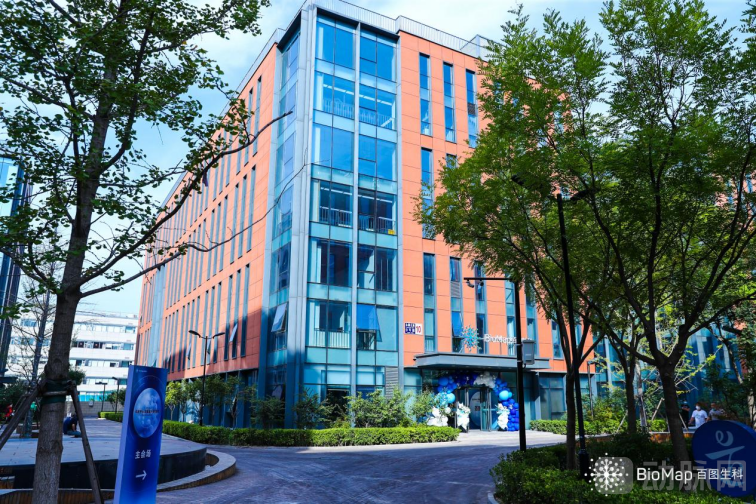
The Beijing Central Laboratory of BioMap is located in the core area of Haidian District, with a construction area exceeding 5,000 square meters. It is another large-scale R&D center established following the 6,000-square-meter laboratory at the Suzhou Industrial Park R&D Center.
This laboratory will serve as the core base for BioMap’s independently developed “High-Throughput Immune Assay System.” By integrating a suite of advanced technologies—including gene editing, organoids, machine vision, single-cell omics, and automation—it will achieve high-fidelity simulation of the human immune system. This capability provides critical dry-wet closed-loop support for immune target discovery and validation of immunotherapeutic drugs by robotic systems. Together with the high-throughput protein system established in BioMap’s Suzhou R&D Center, which spans thousands of square meters, this laboratory will provide key momentum for the development of BioMap’s ImmuBot immune robotics platform.
It is reported that the laboratory generates hundreds of millions of real-world data points annually, enabling high-fidelity simulation of the editing and perturbation of human immune cells. This capability facilitates efficient large-scale experimental validation, while AI large-scale pre-trained models enhanced with domain-specific knowledge are employed to conduct rapid analysis of immune cells and the immune system. All experimental outcomes are fed back into the biological engine to support continuous iteration.