Cardiovascular Leader LePu Medical Reports 290% Net Profit Surge, Bets Big on Brain-Computer Interface with Dual-Track Strategy

Lepu Medical
Developer and Manufacturer of Cardiac Interventional Medical Devices and Pharmaceuticals

RxHEAL
Developer of Rehabilitation Robots

Lepu Medical
Interventional Pacemaker Manufacturers and Distributors
Pioneer in Medical Device Media Reports
Share Professional Medical Device Knowledge
As centralized procurement continues to reshape the landscape of China's medical device industry, the transformation paths of traditional leading enterprises consistently capture the attention of the sector.
Recently, Lepu Medical released its 2025 annual report and held an earnings briefing.OfficiallyNeuromodulation and Brain-Computer Interface, Metabolic and Cardiovascular Innovative Drugs,Dermatology drugs and devices are listed as three major core transformation directions.
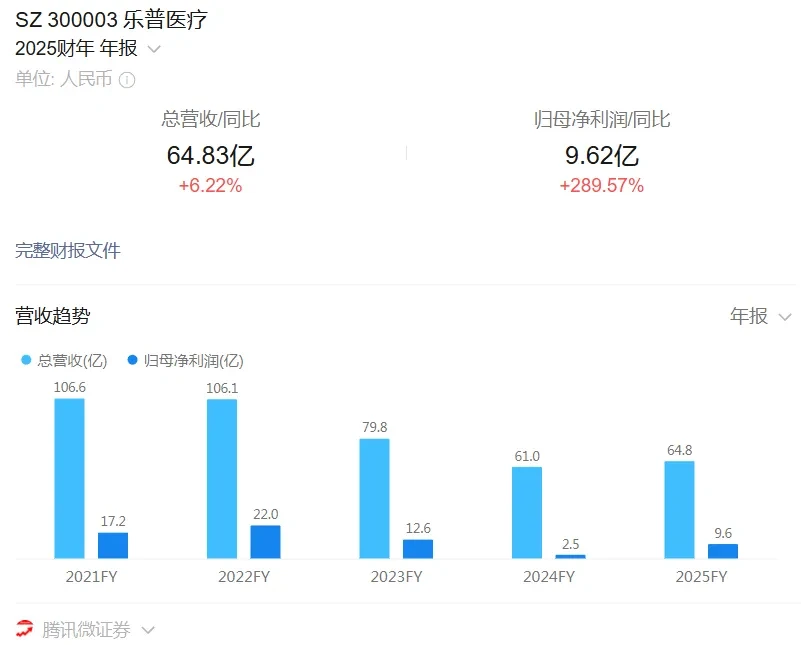
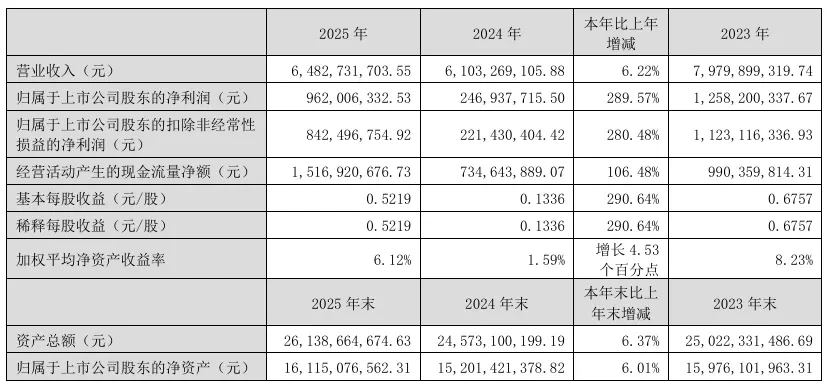
The annual report shows that in 2025, the company achieved operating revenue of 6.483 billion yuan, a year-on-year increase of 6.22%; net profit attributable to shareholders was 962 million yuan, a year-on-year increase of 289.57%.Against the backdrop of a rebounding performance and a stabilizing core business under pressure, brain-computer interface is becoming a key variable for this company to break through growth bottlenecks and unlock long-term growth potential.
Lepu Medical's brain-computer interface layout has followed a dual-track approach of non-invasive and interventional invasive methods from the start, forming a clear division of labor and technical complementarity through two subsidiaries.
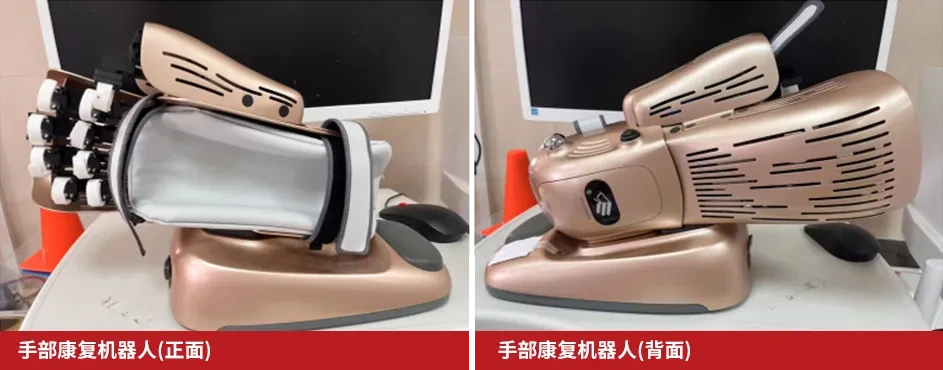
In the field of non-invasive brain-computer interfaces,Lepu Medical's key focus is its holding subsidiary, RxHEAL, which is also one of the earliest companies in China to engage in the R&D of non-invasive BCI.RxHEAL has launched the world's first commercially available brain-computer interface (BCI) robotic system for hand function rehabilitation. Multiple products, including digital electroencephalographs and rehabilitation training equipment, have received NMPA approval, entered over a hundred renowned medical institutions and scientific research institutes in China, and have achieved small-scale revenue. The company is currently focusing on advancing its next-generation non-invasive BCI products, which can perform EEG sensing, analysis, intervention, and form a closed loop, targeting critical needs in neurorehabilitation, cognitive rehabilitation, and pediatric rehabilitation, with a clear path to commercialization.
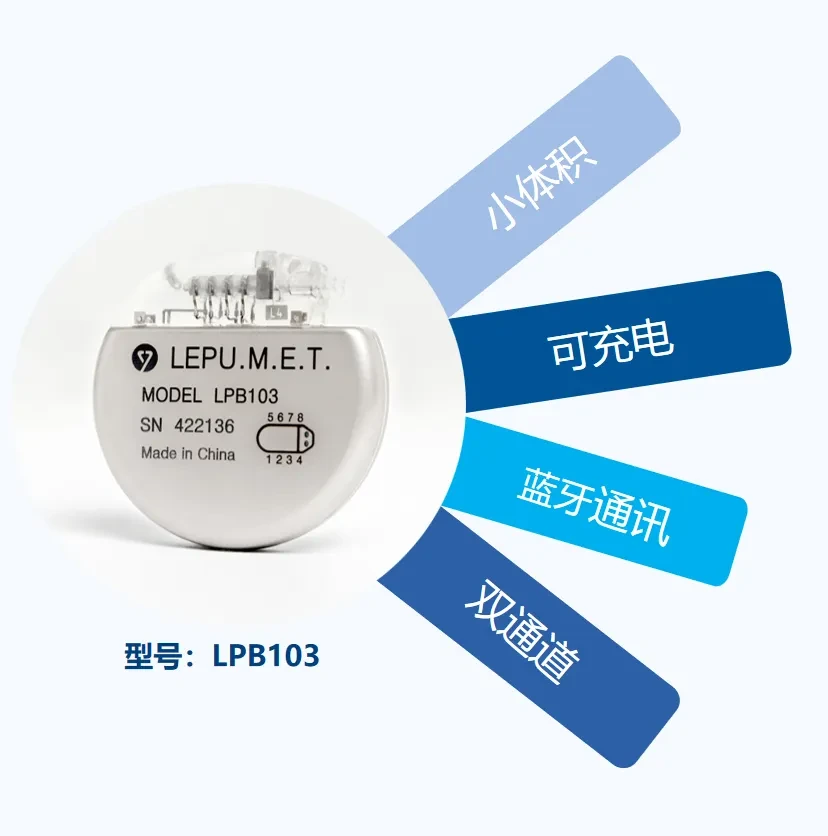
In the field of invasive brain-computer interfaces with higher technological barriers, Lepu Medical Electronic Instrument Co., Ltd. has taken on the core task of overcoming challenges. This company, whose origins can be traced back to 1986, has long been deeply engaged in active implantable medical devices. It has achieved several breakthroughs as the first China-produced innovations in the cardiac pacemaker field, with over 30,000 cumulative implants. The company possesses mature capabilities in the research, development, production, and clinical translation of implantable devices.
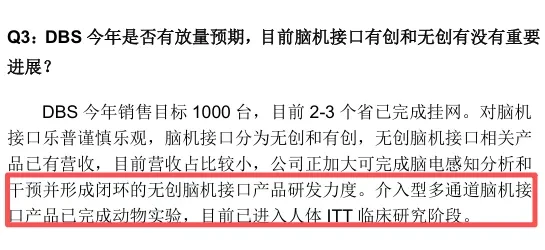
Currently, Lepu Medical's multi-channel invasive brain-computer interface product has completed animal experiments and officially entered the human ITT clinical research phase., which belongs to the first-tier progress among domestic medical device companies. More importantly, Lepu Medical is not advancing brain-computer interface technology in isolation, but rather withNeuromodulation Product Matrix as the Underlying Support: The company's implantable deep brain stimulation system (DBS) has obtained the registration certificate, completed listing in 2-3 provinces, with a target sales volume of 1,000 units by 2026, corresponding to revenue of 50 million yuan; vagus nerve stimulator (VNS), spinal cord stimulation system (SCS), and sacral nerve stimulation system (SNM) are all in the clinical stage.
This means that Lepu's brain-computer interface is not merely a signal-reading device but is deeply integrated with neuromodulation, possessing closed-loop capabilities from sensing, decoding to precise stimulation, making it a typicalMedical-Grade Brain-Computer Interface, forming a clear distinction from consumer-grade and experimental products.
The current brain-computer interface track is not short of technically impressive startups, but the competitiveness of Lepu Medical is more reflected inComprehensive capabilities in industrialization, clinical translation, and commercializationAbove all, this is also the core value for traditional medical device giants to enter the cutting-edge field.
Lepu Medical's Bold Investment in Innovation and Transformation is Backed by a Significant Recovery in Fundamentals by 2025.
The annual report shows that in 2025, the company achieved operating revenue of 6.483 billion yuan, a year-on-year increase of 6.22%; net profit attributable to shareholders of 962 million yuan, a year-on-year increase of 289.57%.; Operating net cash flow of 1.517 billion yuan, with both profitability and cash flow quality improving simultaneously. This achievement was made against the backdrop of multiple rounds of centralized procurement and channel inventory reduction, indicating that the company's traditional main business has basically completed its bottoming out.
Reviewing this round of adjustments, Lepu Medical faced procurement pressures across its entire product line. From the second half of 2025 to early 2026, the company successively participated in inter-provincial joint procurements for special coronary balloons, drug-coated coronary balloons, structural heart disease occluders, as well as follow-up national procurements for batches 1-8 of its pharmaceuticals sector. Almost all core existing businesses encountered a rebalancing of price and volume.
In the inter-provincial joint procurement of coronary drug-coated balloons, Lepu Medical's product was selected at the highest price of 2,678 yuan under Rule One, directly securing 90% allocation of medical institutions' demand. In subsequent secondary allocations, its share further increased by 10%-20%, while the ex-factory price remained unchanged, laying the foundation for a "volume-for-price" strategy. In the 16-province coronary functional balloon procurement led by Henan Province, the company’s cutting balloons and scoring balloons were both successfully selected. Although the ex-factory price of cutting balloons decreased slightly, the overall market share remained stable. The impact of occluder procurement on performance has been largely absorbed in Q4 2025 and Q1 2026, with subsequent effects expected to gradually diminish.
In the first quarter of 2026, the company's revenue was 1.672 billion yuan, a year-on-year decrease of 3.70%; the non-net profit decreased by 28.45% year-on-year, and after excluding the one-time factor of convertible bond redemption, it decreased by 3.71% year-on-year., which has performed basically in line with expectations amid the ongoing impact of centralized procurement. In the inter-provincial joint procurement of coronary drug balloons, Lepu Medical was selected at the highest price under Rule One, securing 90% of the initial demand allocation. Further increases are expected in subsequent secondary allocations, while the ex-factory price remains stable, potentially achieving volume-price compensation.
Overall, although Lepu Medical's traditional cardiovascular business is still affected by centralized procurement, the fluctuations have narrowed and the bottom is clear. The company expects that its core business will enter a mid-to-long-term stable phase after 2026, with controllable revenue volatility and consistently robust cash flow, sufficient to support R&D and market investments in three key areas: innovative drugs, brain-computer interfaces, and dermatology pharmaceuticals and devices.
Elevating brain-computer interfaces to a strategic level has opened up an entirely new realm of possibilities for Lepu Medical, but rationally speaking, its actual contribution to performance will still require a longer cycle.
In the short term, non-invasive brain-computer interfaces are mainly used in rehabilitation scenarios, with a relatively small share of revenue and moderate growth; DBS, as a core product of neuromodulation, has a clear revenue target of 50 million by 2026 and is expected to become the first stable growth point in the neuroscience sector.
In the medium to long term, if invasive brain-computer interfaces successfully complete clinical trials and gain approval, they will open up vast markets in areas such as Parkinson's disease, epilepsy, stroke rehabilitation, and movement disorders. Combined with the successive launches of products like VNS and SCS, this could create a neurology solutions ecosystem worth tens of billions. However, factors such as technological iteration, clinical progress, regulatory timelines, and market competition all carry uncertainties, making it difficult to significantly boost profits in the short term.
If brain-computer interfaces represent the future frontier of Lepu Medical, then innovative drugs and dermatological pharmaceuticals and devices constitute an important pillar for the company to摆脱集采依赖and achieve independent pricing in the mid-term. The synergy of these three areas is driving Lepu Medical's transformation from a traditional device manufacturer pressured by centralized procurement into a high-value, high-barrier, and anti-cyclical medical technology platform.
In the field of innovative drugs, Lepu Medical focuses on the GLP-1 triple-target drug and small nucleic acid technology platform through its holding subsidiary Minwei Biotechnology. Clinical data for both oral and injectable formulations of MWN109 have reached best-in-class levels. The oral formulation shows a significant weight loss advantage over similar products within 4 weeks, while the injectable formulation achieves a maximum weight loss of 16.67% within 14 weeks, demonstrating global competitiveness in the weight management and metabolism field. Meanwhile, the company systematically deploys pipelines related to hyperlipidemia, hypertension, and other cardiovascular conditions around the siRNA platform. Multiple products have entered clinical stages, gradually building a new generation of long-acting and convenient therapeutic solutions.
In the dermatological pharmaceuticals and devices field, Lepu Medical leverages its advantages in material and process platforms to enter the self-pricing track. It has already launched polylactic acid facial fillers and multiple hyaluronic acid products. Among them, the PLLA (Poly-L-lactic acid) product exceeded expectations in sales volume, covering large chain medical aesthetics institutions and reaching a channel cooperation agreement with Meituan. Thermage has submitted registration and started production preparation, with a revenue target of 200 million yuan by 2026; PDRN is expected to be the first domestically approved product in Q3 2026. Combined with subsequent product advancements such as botulinum toxin, dermatology is expected to become a stable high-margin growth driver.
At this point, the new growth framework of Lepu Medical has become clear: traditional cardiovascular and pharmaceutical businesses act as a stabilizer, maintaining robust cash flow after the centralized procurement clearance; innovative drugs and dermatological devices serve as mid-term engines, rapidly contributing to revenue and profits; brain-computer interface and neuromodulation function as long-term strategic directions, opening up the company’s growth space for the next decade.
From Cardiovascular Leader to Brain-Computer Interface Layout: Lepu Medical's Transformation Reflects a Common Challenge for China’s Top Medical Device Companies
More exciting content
Welcome to follow WeChat Video Channel


GE Healthcare Global CEO Bets on Tianjin Again
A Century-Old Medical Device Giant: "China's First" Lands in Shanghai
Minimally Invasive Bets on Surgical Robotics Company, Completes Major Acquisition
Siemens Announces: Timeline for Healthcare Business Spin-off
Well-known Innovative Medical Device Company, Layoffs 16%
Beijing High-End Vascular Intervention Company Completes 200 Million Yuan Financing
For the First Time, Mindray Adjusts Its Business Segments
Global Dental "Top Player" Undergoes Major Management Shakeup
750 Million, Leading Chinese Imaging Company Plans Acquisition
A New Era in Surgery Has Arrived, United Imaging Breaks Through with an Ecosystem

BusinessBusiness cooperation email: qxzj@landianyiliao.com