

NaviMed Raises Tens of Millions in Angel Funding to Advance Robotic System for Radioactive Seed Implantation

NAVI SEED
Developer of Robotic Systems for Minimally Invasive Interventional Oncology Surgery
Suzhou Navie Medical Technology Co., Ltd. (hereinafter referred to as “Navie Medical”) has recently completed a tens-of-millions-level angel financing round, exclusively invested by the Yuanming Xin Zhaoyuan Fund, with the proceeds primarily allocated to pre-clinical research and various certifications.
Navi Medical was established in April 2021 and is registered in the Suzhou High-Tech Zone. It is an innovative medical technology company specializing in minimally invasive interventional surgical robot systems for oncology. The company’s core productRadioactive Seed Implantation Robotic SystemOriginating from China's first industrialization platform for medical robots—the Suzhou Institute of Collaborative Innovation for Medical Robotics—it was officially established as a project in 2017, and isChina's First Translational Project for Particle Implantation Robots in the Treatment of Systemic Solid Tumors。
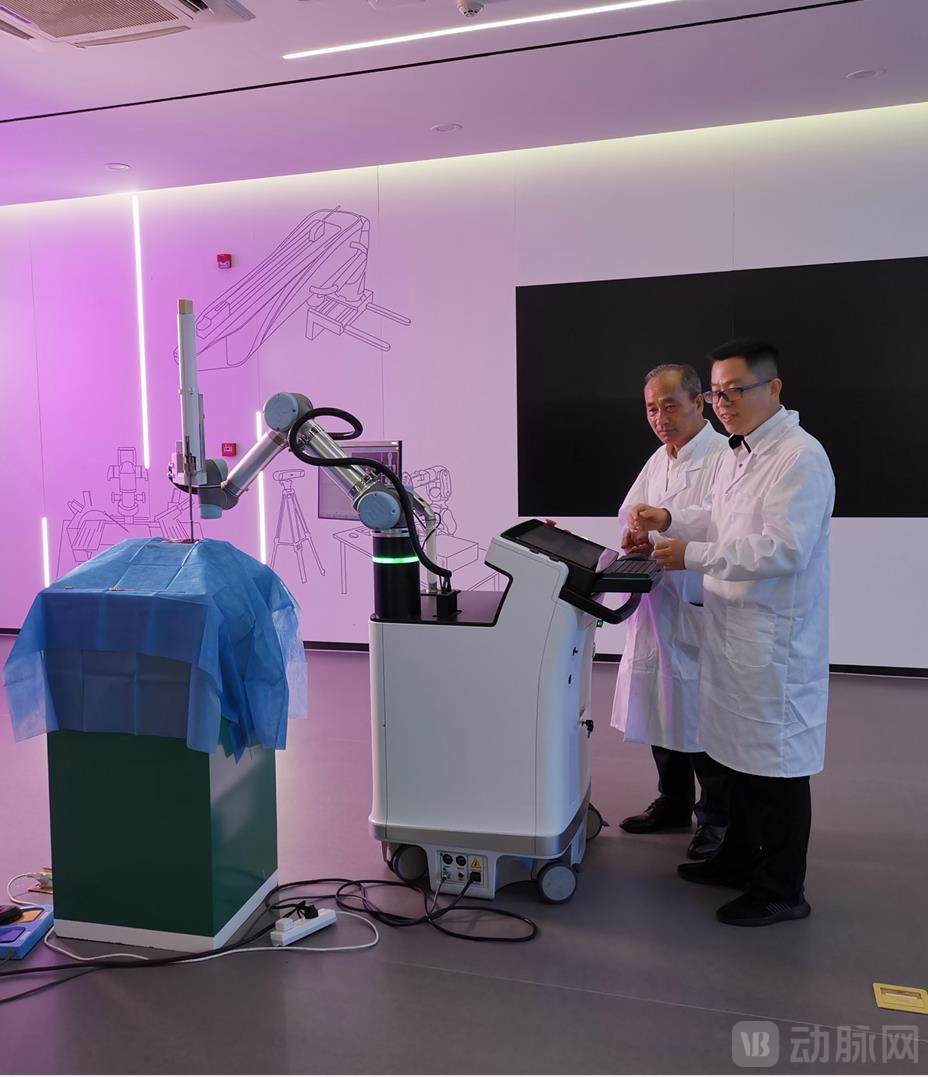
This project, driven by clinical needs and aligned with clinical medical guidelines, has undergone years of development and validation,Achieved multiple core technological breakthroughs, including the design of modular end-effector therapeutic tools, high-precision robotic control technology, precise dose distribution algorithms, and multi-modal image fusion and navigation., established a minimally invasive interventional oncology technology platform and is currently conducting all preparatory work for preclinical trials.
The company's radioactive seed implantation robot system can perform whole-body percutaneous puncture positioning and puncture path management,Provides automated radioactive seed implantation system solutions for solid tumors in the head and neck, chest, abdomen, and pelvis, featuring multi-needle puncture positioning with a minimum needle spacing of 10 mm, a positioning accuracy of 0.8 mm, and an automatic seed implantation error of <1 mm.
Meanwhile, leveraging the core technologies of its radioactive seed implantation robotic system, Navie Medical has conducted in-depth research into the clinical pain points associated with current manual seed implantation procedures. Adhering to the philosophy of independent R&D and surpassing comparable foreign products, the company has developed a series of related semi-automatic and automated equipment, as well as auxiliary materials.Reduce Medical Costs, Improve Treatment Quality, and Effectively Minimize Ionizing Radiation Exposure to Healthcare Workers: Empowering Manual Radioactive Seed Implantation with Intelligent Technologies。
Radioactive seed implantation presents exceptionally high technical barriers, medical robots are subject to stringent national regulation, and foreign manufacturers hold a dominant advantage in the high-end medical device sector. These factors collectively impose rigorous demands on China’s domestic innovative medical device enterprises.
Navi Medical’s core team comprises researchers and clinical experts from Harbin Institute of Technology, Soochow University, University of South China, and Peking University Third Hospital. The team has extensive experience in high-end medical robotics projects, including stereotactic radiotherapy robots and endoscopic surgical robots. By integrating clinical needs, fundamental R&D, robotic engineering applications, and advantageous resources across the upstream and downstream industry chain, the company has established a technology application and commercialization platform that seamlessly combines R&D, manufacturing, clinical practice, regulatory registration, and marketing. Currently, the radioactive seed implantation robot system has passed type testing, with 22 patents applied for or granted.
Starting with the radioactive seed implantation robot system, the Company will develop an integrated intelligent solution for minimally invasive interventional oncology, tailored to clinical needs and application scenarios. It aims to deliver superior products to patients, provide physicians with more diverse and safer therapeutic options, and offer the industry a broader range of surgical treatment strategies, striving to become a leader in China’s field of minimally invasive interventional oncology.
Wen Yaxin, Managing Partner of Yuanming Xin Zhaoyuan Fund, stated“Since its introduction to China from abroad, brachytherapy with radioactive seed implantation has made significant strides, demonstrating unique advantages in tumor treatment and serving as an important complement to existing oncology therapies. However, current seed implantation procedures rely entirely on manual operation, making it difficult to effectively ensure procedural standardization and dosimetric accuracy. Addressing these clinical pain points, Navie Medical has developed a robotic system for seed implantation that achieves full-process automation. This innovation standardizes surgical operations, facilitating clinical adoption, while enabling precise seed placement to guarantee dosimetric accuracy. The robotic system has gained recognition from leading domestic experts in the field of seed implantation. We believe that Navie Medical has identified a strategic breakthrough for medical robotics within the specialized niche of seed implantation.”
About Yuanming Xin Zhaoyuan
Yuanming Xin Zhaoyuan Fund is an early-stage medical device angel fund under Yuanming Capital, focusing on innovative projects in the early-stage medical device sector. Its key areas of focus include cardiovascular, neurological, orthopedic, in vitro diagnostics, medical robotics, and high-end radiotherapy industries. The fund has offices in Beijing, Shanghai, Suzhou, and New York.
The team members possess extensive business experience and a proven track record in successful investments, focusing on early-stage innovative medical device projects with strong development prospects and growth potential. By integrating domestic and international industrial resources, we deeply uncover the value of target companies and provide value-added services across multiple dimensions, including product R&D validation, regulatory registration and clinical trials, and academic promotion. We cultivate core competencies in “investment + management” to build a robust industrial ecosystem and resource network.