

Shukang Launches LASE Layered Ability Structure Engine™: A Novel Digital Therapeutic Platform for ADHD and Cognitive Development
“Everyone else was quiet, but he just wouldn’t stop making noise!”
“Others can listen attentively in class, but he is constantly fidgeting!”
“He’s a smart guy, but his grades just won’t improve!”
“He’s just a child,” so are these behaviors all normal? Parents should be vigilant: your child may have Attention-Deficit/Hyperactivity Disorder (ADHD).
ADHD is a behavioral disorder commonly seen in children. It was first described in 1902, and the World Health Organization (WHO) classified this syndrome as "Hyperkinetic Disorder of Childhood" in the 10th Revision of the International Classification of Diseases (ICD-10).
Data indicate that approximately 7.2% of the global population aged 18 years and younger has ADHD, corresponding to roughly 129 million affected children. An analysis published in Children and Adolescents found that the prevalence of ADHD ranges from 4.6% to 12.2%, with rates among children and adolescents estimated at 5.29% to 7.1%. According to data from the 2016 National Survey of Children’s Health (NSCH) in the United States, approximately 6.1 million children in the U.S. had been diagnosed with ADHD. The Journal of Child Psychology and Psychiatry also reported that the prevalence of ADHD in China is approximately 6.4%, affecting more than 23 million individuals, yet only 10% seek medical care.
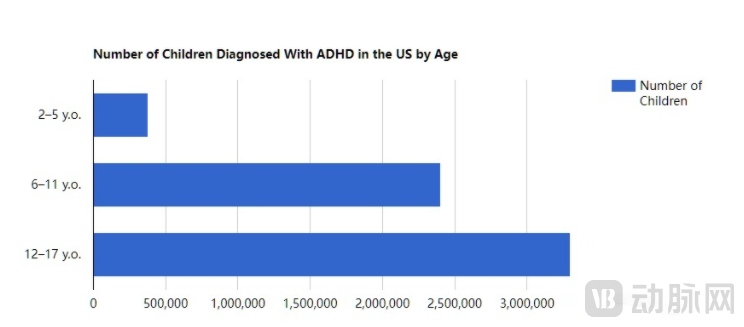
Number of ADHD Diagnoses by Age Group in the United States
(Figure from the 2016 NSCH Survey Report)
Due to parental neglect and limited public awareness of ADHD, many children with ADHD do not receive evidence-based treatment. Data indicate that 60%–80% of childhood ADHD cases persist into adolescence, and 50.9% progress to adult ADHD, significantly impairing occupational functioning, social interactions, and daily life.
Currently, the primary clinical treatments for ADHD include pharmacotherapy, psychotherapy, and behavioral therapy; however, the therapeutic efficacy of these interventions is quite limited. A study published in 2021 in the American Journal of Psychiatry followed 558 children with ADHD for 16 years, terminating observations when the subjects reached age 25. The study found that over 90% of children with ADHD continued to exhibit relevant symptoms into adulthood, with only 9.1% achieving remission (i.e., no longer meeting the diagnostic criteria for ADHD).
Traditional pharmacotherapy modulates existing neurons using neurostimulants and neuroinhibitors; however, some users experience adverse effects such as loss of appetite and, in severe cases, diarrhea. Others encounter difficulty falling asleep and reduced sleep quality. Coupled with many patients’ inherent psychological resistance to medication, these factors contribute to poor adherence to pharmacological treatment.
Psychotherapy requires doctors and parents to provide long-term, correct guidance, encouragement, and care for the child; however, most ordinary parents lack professional intervention knowledge and the patience required for sustained guidance.
Behavioral therapy is currently the most common treatment for ADHD, aside from pharmacological and psychological interventions. It enhances sensory and motor stimulation through specific training methods, selectively targeting or activating neurons in the brain to promote neuronal development and improve cognitive function. Behavioral therapy requires the formulation of a training regimen based on rigorous medical logic, with periodic and personalized sessions to achieve therapeutic goals.
Since in-hospital care primarily relies on pharmacotherapy, there is a scarcity of medical institutions in the market that genuinely provide behavioral therapy. As the popularity of “brain science” has continued to rise over the past two years, various training organizations claiming to treat children’s ADHD, enhance attention span, and promote brain development have sprung up everywhere, leading to widespread chaos. However, many of these institutions merely leverage this trend to market their existing training courses without any medical rationale, resulting in parents spending money without observing any improvement in their children, or even causing increased resentment and rebellious behavior in the children.
Under such circumstances, the Shukang Cognitive Training Program, developed through the joint efforts of international experts in brain development, neurologists, and a top-tier IT team, integrates cutting-edge advances in neuroscience with state-of-the-art information technology to create a digital therapeutic product capable of providing non-pharmacological treatment for conditions such as ADHD.
The human brain is a complex structure, and its holistic nature must be considered when designing targeted training interventions. Based on the various executive functions of the brain, and after analyzing extensive clinical research data and case studies, the Shukang Cognitive Training Team pioneered the "Shukang | LASE Layered Ability Structure Engine™." This engine categorizes the brain’s executive functions into "Foundational Abilities," "Core Abilities," and "Higher-Order Abilities." "Foundational Abilities" encompass basic information tracking essential for daily life, such as visual, auditory, linguistic, and spatial processing. "Core Abilities" primarily involve response inhibition, adaptability, and task management, which require robust neural processing capacity. "Higher-Order Abilities," including working memory and emotional regulation, demand more advanced cognitive capabilities.
Currently, many ADHD training paradigms are primarily designed to target three levels within the “LASE Hierarchical Capability Construction Engine”: EF1 (Self-control), EF4 (Flexibility), and EF8 (Planning). However, in practice, most patients exhibit weaknesses in foundational cognitive abilities. Training built on such an unstable foundation often fails to meet desired outcomes, much like attempting to teach writing to a child who has not yet learned to recognize characters. Only when the brain has mastered the accurate acquisition and processing of information can inhibitory control and attention training targeting the prefrontal cortex achieve effective results.
In traditional treatment, the cultivation of the brain’s “foundational capabilities” and higher-level therapeutic interventions are conducted in entirely separate settings. However, improving brain function is akin to building a pyramid: a solid foundation must be established before progressively constructing the upper levels.
“ShuKang | LASE Tiered Capability Building Engine” takes into account the holistic nature of the brain. Based on this, cognitive training begins with a standardized assessment of patients to identify individual areas of weakness and generate targeted training plans. This approach enhances neuronal stimulation in the brain, rapidly improving “foundational capabilities.” As these basic abilities strengthen, the program proceeds to comprehensively upgrade “core capabilities” and even “higher-order capabilities,” thereby achieving superior training outcomes.
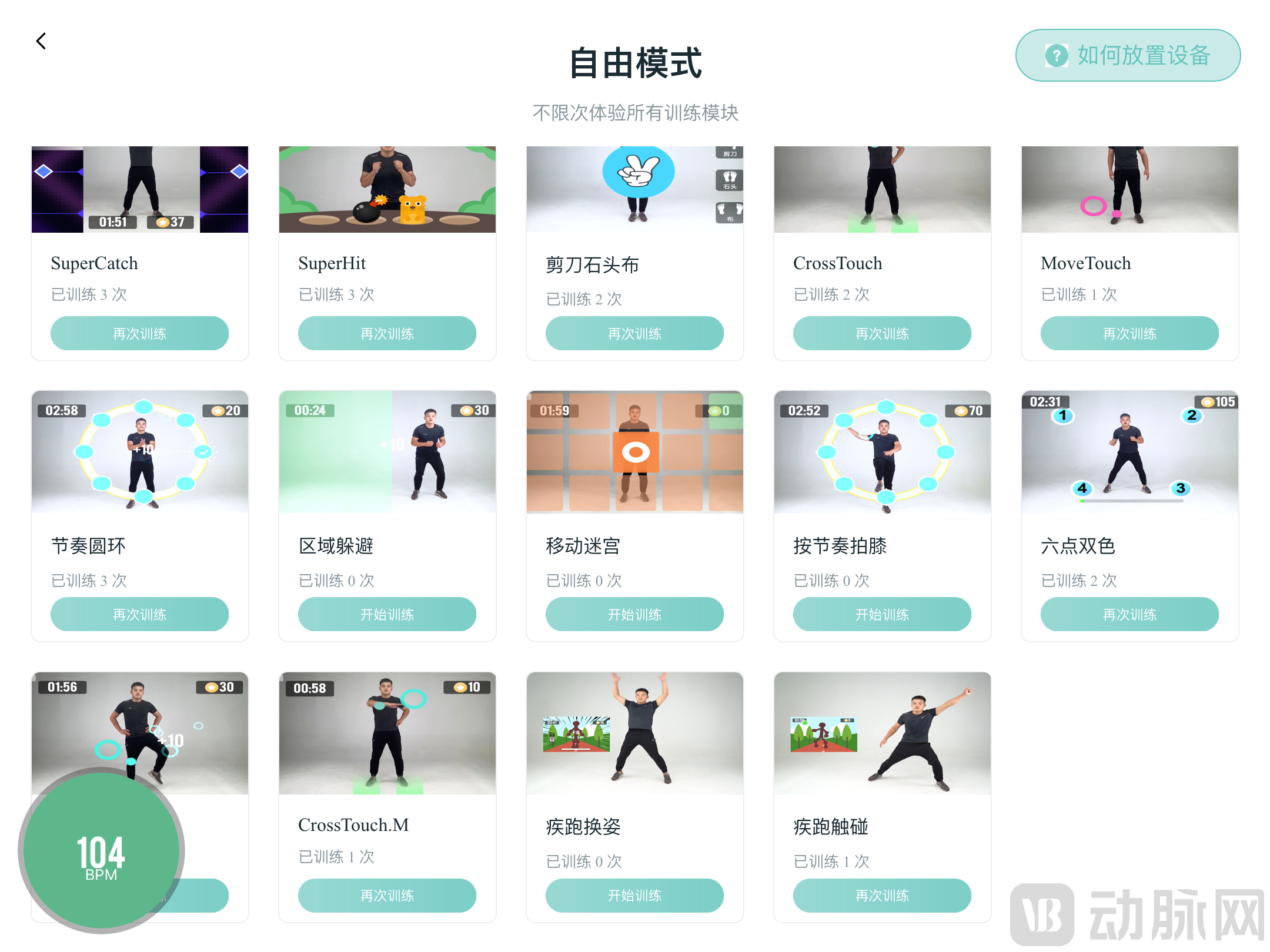
BrainFit Cognitive Training Games (Partial)
Based on the "ShuKang | LASE Capability Stratification Engine," the ShuKang Cognitive Team has developed the BrainFit cognitive training product matrix.
Globally, the most widely watched product is EndeavorRx, developed by the U.S. digital therapeutics company Akili. It is the first digital therapeutic approved by the FDA (U.S. Food and Drug Administration) with the primary aim of improving ADHD-related symptoms. EndeavorRx treats patients with ADHD by using interactive video games to intensely and repeatedly activate neural networks in the brain responsible for cognitive functions.
ShuKang cognitive training features three types of training tools: touchscreen interaction, external device interaction, and AR interaction. It guides users to complete various tasks through gamified instructions, free from time and location constraints, allowing all training to be completed with just one device.
As one of the first companies in China to obtain NMPA (National Medical Products Administration) approval for digital therapeutics with Shukang, cognitive training perfectly integrates heart, brain, and body, establishing itself as a comprehensive enhancement expert.
In addition to treating patients with ADHD, Shukang Cognitive Training has also demonstrated significant efficacy in improving attention, self-control, and academic performance among typically developing children during their growth years, both in school and home settings.
In 2021, Shukang partnered with Chengdu Chenghua District Jiaxiang Foreign Languages School to implement “Digital Cognitive Training” courses for students in grades 1–4. The curriculum, centered on cognitive training, consisted of three 80-minute sessions per week. After six months, backend usage data revealed a 300%–400% improvement in students’ attention and self-control. Feedback from teachers and parents further highlighted significant positive changes in the children’s academic performance and daily life.
Jiaxiang Students’ In-Class Performance and Teachers’ Course Evaluations
Meanwhile, the BrainFit Shukang Cognitive Team has also been piloting small-scale home-based training programs. Notably, during Shanghai’s citywide lockdown from April to June this year, the team delivered AR-enabled interactive training integrating cardiac, cognitive, and physical exercises to select residents in Shanghai, achieving highly favorable outcomes.
User is undergoing home-based training
Although Shukang’s cognitive training products currently focus primarily on children aged 6–10 with issues related to brain development, ADHD, and ASD, the team is well-prepared to further pioneer the field of brain development and cognition. From the initial development of the “LASE Tiered Capability Building Engine™” to a mature product ecosystem, home-based training solutions, and collaborations with educational institutions, Shukang is poised for growth. We look forward to more positive developments from Shukang Cognitive Training in the near future.