

MedBot Intelligence Launches AI-Powered Clinical Documentation Robot Driven by Medical Computing Engine to Empower Healthcare Institutions in Navigating DRG/DIP Reimbursement Reform
As a lever among medical institutions, health insurance, and patients, the payment method is of great significance in promoting the return of medical activities in public and private hospitals to their essential nature, controlling unreasonable and excessive medical care, and reducing medical costs. The state has been exploring reforms in DRG/DIP payment methods for many years.
Since the “Two Rivers Pilot” program, China has encouraged various regions to explore payment method reforms over the past three decades. These efforts have included fee-for-service, capitation, per-diem payments, Diagnosis-Related Groups (DRG), Disease Diagnosis-Related Intervention Points (DIP), and per-unit-of-service payments, among others. Ultimately, DRG and DIP payment models have emerged as leading approaches due to their advantages in incentivizing hospitals to proactively reduce service costs, lowering patients’ out-of-pocket expenses, shortening hospital stays, and improving resource utilization efficiency.
In November last year, the "Notice of the National Healthcare Security Administration on Issuing the Three-Year Action Plan for DRG/DIP Payment Method Reform" proposed that by the end of 2025, the DRG/DIP payment method would cover all eligible medical institutions providing inpatient services, basically achieving full coverage of disease types and medical insurance funds.
However, this is no easy task. During the implementation of DRG/DIP payment reforms, ensuring that medical institutions accurately submit medical record data—particularly by standardizing medical coding to correctly reflect the diagnosis and treatment processes during a patient’s hospitalization—is critical to guaranteeing the accuracy and effectiveness of DRG/DIP grouping schemes. This step is vital for the smooth advancement of DRG/DIP payment reforms, yet it remains particularly challenging.
Amid the wave of healthcare reform, companies leveraging artificial intelligence for medical record quality control have emerged to address the aforementioned pain points. One such company is Maibo (Shanghai) Health Technology Co., Ltd. (hereinafter referred to as “Maibo Intelligence”), which has long been dedicated to DRG/DIP-based healthcare payment solutions and AI-driven medical quality control services.
In the view of Zhang Yi, General Manager of Maibo Intelligence,Digital healthcare is advancing into a new phase of intelligent digitalization 3.0, represented by “AI + Healthcare.” By effectively integrating artificial intelligence technologies with medical expertise, this approach creates technical architectures tailored to specific medical scenarios that assist physicians in making clinical decisions, serving as a key solution to the imbalance in the supply of medical resources.
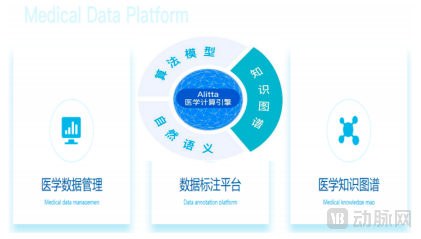
Based on this assessment, Maibo Intelligence has built a “Medical Computing Engine” anchored by its self-developed MEDATA medical data platform and integrating AI technologies such as medical knowledge graphs, medical natural language processing, and healthcare scenario-specific algorithmic models.Develop medical robot (RPA) applications and artificial intelligence solutions for relevant healthcare scenarios, providing AI-powered medical robot services to the healthcare industry. This aims to enhance medical productivity while alleviating physician shortages and addressing significant regional disparities in the distribution of medical resources.
This medical computing engine consists of three components,namely, the MEDKNG Medical Knowledge Graph, the MEDDL Medical Algorithm Model, and MEDNLP Medical Natural Language Processing.
Among them, the MEDKNG medical knowledge graph is based on evidence-based medicine and contains over 100,000 entities and more than 2 million medical knowledge concepts. It supports mapping to nearly 10 mainstream medical terminologies, including UMLS, ICD, SNOMED CT, LOINC, MeSH, and ATC. It establishes a medical knowledge graph covering diseases, drugs, laboratory tests, diagnostic examinations, surgeries, and procedures, with traceable causal logical relationships.
The MEDDL medical algorithm model enables complex intelligent medical decision-making by leveraging deep learning-based models for medical text recognition and generation, diagnostic and surgical procedure coding, as well as graph feature-based algorithms for disease reasoning and drug recommendation.
MEDNLP Medical Natural Language Semantics leverages medical natural language processing technologies to deeply analyze medical texts such as electronic health records and literature, identify diagnostic and treatment information, extract medical knowledge, and comprehend medical semantics.
Zhang Yi told VCBeat“The scarcity of medical resources is, at its core, a shortage of specialized medical knowledge. Therefore, providing decision-support capabilities grounded in medical knowledge will create genuine value for the healthcare industry. By building a medical computing engine that can interpret electronic health records, medical literature, and other data, Maibo Intelligence constructs decision-making models tailored to the professional requirements of diverse clinical scenarios. Through the expansion of application scenarios, it has developed a suite of products, thereby making a modest contribution toward addressing the imbalance in the supply of high-quality medical resources.”
It is understood that Maibo Intelligence has implemented the “Intelligent Medical Record Robot + DRG/DIP Integrated Solution” based on its medical computing engine technology framework.
It is worth mentioning the “Alitta Xiao Ai Doctor Medical Record Robot,” independently developed by Maibo Intelligence. Leveraging medical computing engine technology, this product mimics physicians in comprehensively reviewing electronic medical records (EMRs) to understand the connotative information within medical records related to patients’ physiological and pathological conditions, disease diagnoses, surgical procedures, pharmacological treatments, and other therapeutic interventions. By integrating clinical medicine with professional knowledge graphs of medical records and relevant decision-making models, it enables intelligent decision-making for medical records and related healthcare scenarios, thereby providing professional and sustainable productivity for medical record management and other business operations.
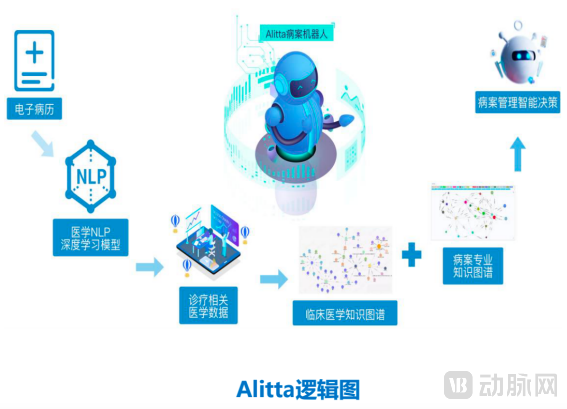
To address the imbalance in the supply of high-quality medical resources using a medical computing engine, it is essential to equip this technology with the capability for future multi-scenario deployment and comprehensive coverage of the entire workflow of medical management and clinical diagnosis and treatment. However, due to the specialized and complex nature of medical knowledge, relying solely on a single technology is insufficient to fully resolve issues across all application scenarios.
“Alitta Xiao Ai Doctor Medical Record Robot” is a solution developed by Maibo Intelligence for the business scenario of medical record front sheets. This solution features high technical barriers and addresses strong market demand, directly assisting physicians and medical record coders in tasks such as interpreting medical records, coding, and medical record management.
Having established this core application solution, Maibo Intelligence will continue to develop based on its proprietary “Medical Computing Engine” technical framework, creating additional solutions tailored to diverse business scenarios that enhance medical decision-making capabilities.
By introducing an “Intelligent Medical Record Robot + Comprehensive DRG/DIP Solution,” we collaborate with healthcare institutions and regulatory authorities to align medical quality with payment requirements. We further provide Artificial Intelligence Medical Robot (RPA) services to empower the digital transformation of healthcare institutions and deliver intelligent medical health management services to users. Repetitive medical tasks that require extensive medical knowledge and clinical experience are delegated to medical robots and AI-driven intelligent decision-making systems.
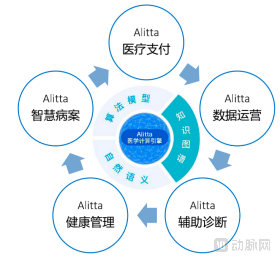
Zhang Yi commented on this.“The shift in health insurance payment reform from fee-for-service to diagnosis-related group (DRG)-based payment models will profoundly influence medical practices and reshape the industry chain. Medical records and electronic health records (EHRs) form the foundation of hospital operational data, linking healthcare institutions, physicians, health insurers, regulatory authorities, as well as pharmaceutical and medical device suppliers and health IT providers across the entire value chain. Currently, Maibo Intelligence focuses on DRG/DIP scenarios. In the future, it will leverage its medical computing engine to empower healthcare providers, insurers, and pharmaceutical and consumable suppliers, delivering comprehensive healthcare and payment solutions to users, thereby offering broad business prospects.”
It is reported that the company currently provides intelligent medical record robots and AI solutions for healthcare institutions, targeting medical payment and regulatory scenarios. These services include robot-assisted coding based on DRG/DIP logic, comprehensive quality control of medical records, pre-grouping analysis for DRG/DIP, and operational management analytics. In the future, the company plans to expand from hospital-based medical insurance payment scenarios to commercial health insurance payment and intelligent enrollment and claims adjudication. Additionally, it will extend its service scope from medical record management to broader applications such as hospital medical quality control and the digitalization of various clinical and administrative operations.
Moreover, MedBot Intelligence will leverage its medical computing-driven technology platform to expand application scenarios into digital healthcare services and the research and development of pharmaceuticals and medical devices. By forging collaborations among hospitals, insurance companies, and enterprises, it aims to provide users with comprehensive medical and health services.
The emergence of technologies such as artificial intelligence, informatization, big data, cloud computing, and the Internet of Things has ushered in a new transformation in the healthcare sector and sparked a surge in the development of smart hospitals.
As the “Healthy China 2030” Planning Outline calls for China’s healthcare industry to transition from providing “medical security” to delivering “health services,” advancing toward future smart healthcare, the deep integration of digital technologies with medical services has become a pivotal element of healthcare reform—an unstoppable trend. At its core, this integration leverages digital technologies to help the healthcare industry achieve “equitable distribution of medical resources” and “enhanced efficiency of medical services.”
Whether it is the rising public expectations for healthcare service quality, the rapid growth of health insurance fund expenditures amid shifts in disease patterns, or the pressure on hospitals to control costs and the need to ensure medical safety, all these factors are accelerating the implementation of smart hospital initiatives. Meanwhile, research conducted by VCBeat has found thatCurrently, the comprehensive informatization overhaul of hospitals constitutes the largest project cluster in this industry. The construction of big data infrastructure, smart hospital modules, and internet-based systems forms the core of hospital smartification initiatives.
Under this trend, AI-driven intelligent services based on DRG/DIP logic—such as medical payment, medical record management, medical quality control, and operational performance management—have emerged as a market worth tens of billions of yuan in recent years. This shift is also propelling healthcare informatization into the era of intelligence, enabling cost reduction and efficiency improvement from a management perspective to comprehensive digital transformation across the entire industry, thereby positioning digital medical services to develop into a trillion-yuan market.
Technology will, to a certain extent, drive the development of the healthcare industry. By effectively integrating artificial intelligence with medical expertise, Maibo Intelligence has created a technological framework that assists physicians in making clinical decisions. The implementation of this solution holds significant promise for addressing the imbalance in healthcare resource distribution.