

Pharmaceutical Marketing Enters the 'Deep Water Zone': How Can Digital Marketing Break Through?
In recent years, the trend toward digital marketing in the pharmaceutical industry has continued to intensify.
From an industry perspective, driven by the dual forces of healthcare reform policies and the COVID-19 pandemic, digital marketing in China’s pharmaceutical sector has gradually entered a new phase. Both physicians’ acceptance of digital and compliant approaches and pharmaceutical companies’ urgency to adopt digital marketing have reached new peaks.
Amid the fervor and transformation of digital pharmaceutical marketing, on September 15, at the “2022 Digital Pharmaceutical Industry Forum & Ali Health Pharmacy’s 6th Anniversary” event held in Hangzhou,Alibaba HealthVCBeat Research Institute in collaboration with Zhongkang TechnologyOfficially ReleasedFirst Issue《Online Medication TrendsWhite Paper》and“Full-Scope DigitalizationMarketingModel”,A noticeable change is that,OTCNew Trends Have Fully Erupted Online。
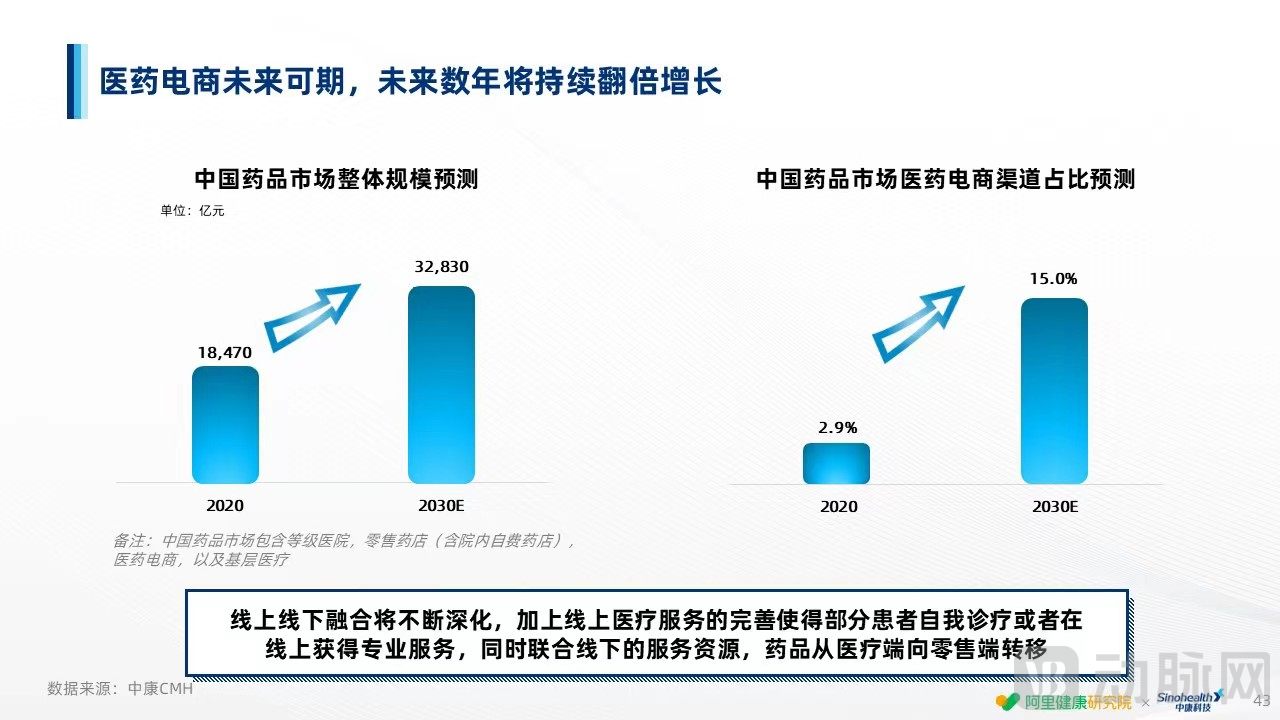
The white paper reveals a strong growth trend in pharmaceutical e-commerce, with a 25% increase in 2021, and Alibaba Health Pharmacy outpacing the overall growth rate of the sector. Sinohealth predicts a promising future for pharmaceutical e-commerce, expecting it to continue doubling in size over the coming years.

Notably, over the past year, numerous new products have been incubated online solely on Alibaba Health Pharmacy, while some legacy products have been revitalized through digital channels. Meanwhile, a large number of pharmaceutical brands (particularly in the OTC segment) have begun to prioritize online platforms as their primary channel for incubating and launching trend-driven medications.It is evident that the current pharmaceutical industry's“The marketing system” is undergoing changes and has become completely different from the original path of new product and new brand development for pharmaceutical companies.
As New Opportunities Emerge, How Should Pharmaceutical Companies Seize the Moment?
Pharmaceutical companies’ reforms are entering the “deep-water zone.”
With the implementation of healthcare reform policies such as consistency evaluation, volume-based procurement, medical insurance cost containment, and Diagnosis-Related Groups (DRGs), traditional offline visits by pharmaceutical companies have encountered obstacles, and the commission-driven sales model is gradually becoming a thing of the past. In February this year, Chen Jinfu, Deputy Director of the National Healthcare Security Administration, further pointed out that “the average price reduction for the first six batches of centrally procured drugs was 53%.”
It is not difficult to find that,Volume-Based Procurement: Restoring Reasonable Pricing for Pharmaceuticals While Presenting New Challenges to Pharmaceutical Companies: namely, how to identify new growth opportunities in the out-of-hospital market and adjust the cost structure of pharmaceutical companies to ensure their profitability. These are challenges that pharmaceutical companies must confront.
It is against this backdrop thatFor medical enterprises in the Chinese market, digital pharmaceutical marketing has already transitioned from“Better Options” Become “Essential Choices.”
“At the time those policies were implemented, pharmaceutical companies faced significant pressure, prompting widespread efforts to transform and identify new breakthroughs,” said Tian Zhihui, Vice President and General Manager of Marketing at Zhiyuan Pharmaceutical. “Policy-driven imperatives are forcing an industry-wide upgrade: pharmaceutical companies must either strive to participate in centralized volume-based procurement—trading price for volume (scale)—or pursue market-oriented strategies by accelerating the R&D of innovative drugs and expanding into non-reimbursed markets.”
Zhiyuan Pharmaceutical has chosen to focus on consumer-oriented B2C segments, such as dermatology, nephrology, and rheumatology. Based on the characteristics of its products, Zhiyuan Pharmaceutical has decided to leverage new channels, including the internet, for marketing.
Apart from the policy side,Amid the trend of shifting medical resources, demand for digital pharmaceutical marketing is also rapidly emerging.This is because medical resources are continuously being decentralized to the grassroots level. China has nearly one million grassroots medical and health institutions, which are numerous and geographically dispersed. However, offline visits struggle to reach this vast grassroots market, especially given the frequent disruptions caused by epidemics. Therefore, there is a need to gradually penetrate the grassroots healthcare market through efficient, low-cost, and compliant approaches.
The "White Paper on Online Medication Trends" also reveals that the growth in demand for online medication purchases is accelerating more rapidly in lower-tier markets. Notably, the number of users purchasing medications exclusively online increased by 40% last year, outpacing the growth rate observed in higher-tier cities. Furthermore, nearly 90% of medication buyers in lower-tier markets value the comprehensive product assortment offered by e-pharmacy platforms.
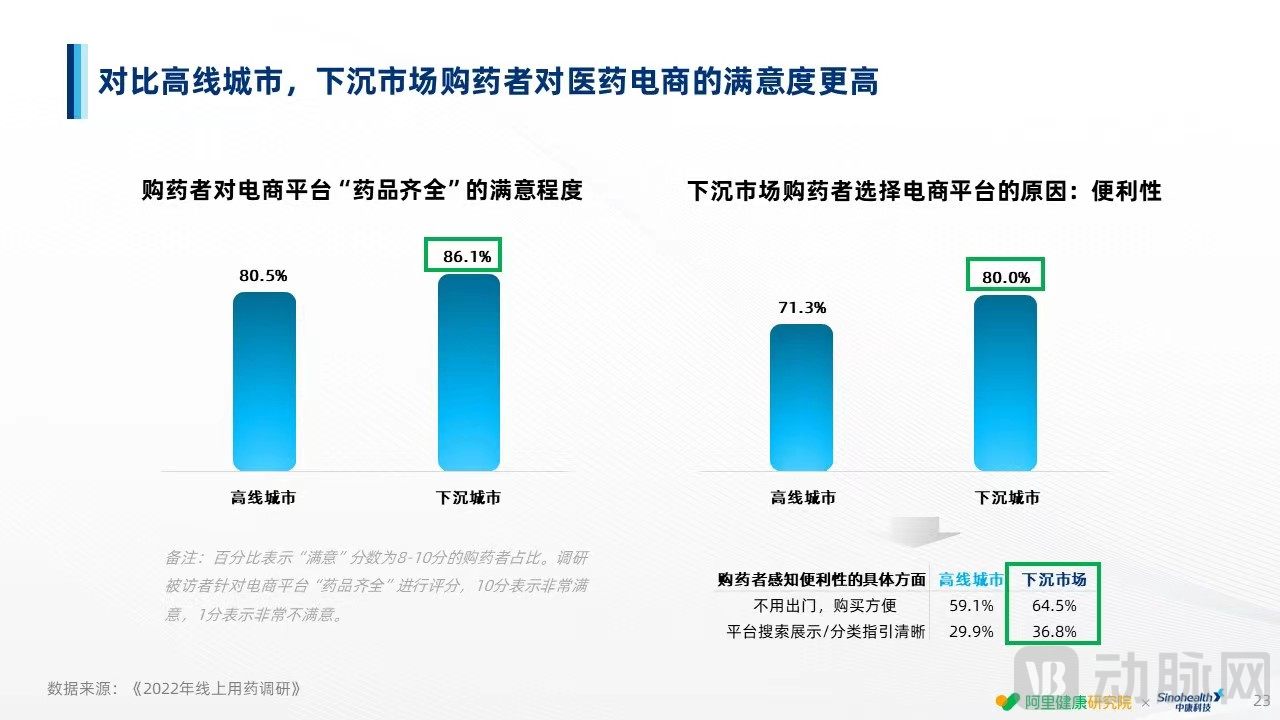
In light of this, pharmaceutical companies are in urgent need of new solutions. Digital marketing, with its “low cost and high efficiency,” continues to gain favor among pharmaceutical companies.
Having identified the right direction,How to implement it has become an important proposition for pharmaceutical companies.
Why Is Digital Pharmaceutical Marketing Attracting Widespread Investment from Pharma Companies?
In addition to the aforementioned challenges, it is also crucial to recognize the multiple values offered by online pharmaceutical services—such as accessibility, adherence, and supply chain efficiency—underlying the fundamental shift in drug marketing logic.
“China’s 1.4 billion people have continuously growing demand for pharmaceutical and healthcare products, which includes not only basic medications but also innovative drugs. From this perspective, online platforms can transcend temporal and spatial constraints, providing a broader population with newer, better, and more diverse medications.” Tian Zhihui cited an example regarding accessibility: when some innovative drugs are first launched, they may be unavailable even at several leading hospitals, yet they can be purchased promptly through online platforms.
More importantly, given China’s vast territory, many medications struggle to reach tier-4 and tier-5 cities. However, online platforms can deliver drugs to remote areas. The underlying reason is that the internet, with its connectivity, enables pharmaceuticals and healthcare services to transcend time and space, achieving equitable access for all.
It is precisely by leveraging these advantages,Digital Marketing in the Pharmaceutical IndustryThe sector has gained momentum and gradually expanded into diverse business directions., such as launching online academic promotion projects, SaaS cloud services, physician platforms, retail terminals (including offline pharmacies and pharmaceutical e-commerce), proactive management by pharmacists/physicians, and family doctor services, thereby forming a relatively rich ecosystem.
This launch by AliHealthGlobalDigital marketing models leverage population insights to identify trending sectors within the pharmaceutical industry, collaborating with brand partners to deliver greater value to patients.
Specifically, Alibaba Health has achieved breakthroughs in trending categories and led industry-wide category growth by strategically progressing from category positioning, to comprehensive consumer education and brand mindshare building across both on-platform and off-platform channels, and finally to focused on-platform deployment.
How should this be understood? It means leveraging insights into consumer needs to help pharmaceutical companies select appropriate niche categories, while providing services such as user insights, omnichannel operations, chronic disease management, and smart supply chain solutions. Additionally, it involves conducting product seeding and promotional campaigns across various platforms to strengthen user awareness and foster self-care consciousness, thereby better addressing users’ healthcare needs.
Taking Zhiyuan Pharmaceutical as an example, the company initiated a partnership with Alibaba Health in 2019, a critical period for its strategic transformation. “Alibaba Health is a leading player in the internet healthcare sector and boasts extensive expertise in digital pharmaceutical marketing. Collaborating with Alibaba Health enables us to accelerate our growth,” stated Tian Zhihui.
Over the course of more than three years of collaborative development,Internet healthcare has become a core business segment for Zhiyuan Pharmaceutical, with its sales volume exceeding that of the company's total revenue.50%Above.Among these, Zhiyuan’s metronidazole gel (Liv) recorded over 500,000 transactions in a single month on the Ali Health platform, placing it at the forefront of the industry.
Moreover, Zhiyuan Pharmaceutical’s marketing team has evolved from a two-person group into an independent New Retail Business Division, with a staff of nearly 100.
“The advantage of online platforms is that we can promptly see user feedback and comments, which brings us closer to our users,” said Tian Zhihui. “We feel a deep sense of satisfaction and pride when we see more and more people using Zhiyuan’s products to resolve minor everyday health issues.”
For example,Zhongjing Wanxi Pharmaceutical and AliHealth have engaged in deep cooperative expansion in areas such as brand promotion and pharmacist services.
As a time-honored brand of traditional Chinese medicine, Zhongjing Wanxi Pharmaceutical has been pursuing innovation and breakthroughs, and has piloted Alibaba Health’s omnichannel digitalization model. “Our understanding of ‘omnichannel’ encompasses both online and offline realms, covering all scenarios on and off platform as well as in and out of store, with the core strategy being to stay close to potential consumers,” said Du Kai, Director of the E-commerce Division at Zhongjing Wanxi Pharmaceutical.Online platforms deliver personalized and more precise content, enabling more efficient outreach to a larger target audience compared to offline promotion.。
For many consumers, despite having certain symptoms and medication needs, they often remain unclear about which products can address their issues and lack authoritative, convenient, and engaging channels to access such pharmaceutical information. In response, Zhongjing Wanxi Pharmaceutical has experimented with online promotion and external content marketing (“zhongcao”) to help more potential users understand the efficacy and value of classic traditional Chinese medicine (TCM) formulations.
“Within this strategic framework, Zhongjing Wanxi Pharmaceutical has not only identified promotional channels suited to its brand and products but also supplemented them with high-quality content, thereby attracting and retaining users.”Content refinement requires data feedback and is data-driven.“During this process, various digital tools such as Alibaba Health’s Business Advisor have helped us rapidly evaluate, refine, and improve our off-platform promotional content, thereby enabling mutual empowerment between off-platform and on-platform channels and continuously enhancing content quality,” said Du Kai.
Taking its Zuogui Wan and Yougui Wan pills as an example, the large number of pills required per dose made counting difficult for users, resulting in a poor medication experience. In response, Zhongjing Wanxi Pharmaceutical attached great importance to this issue. By leveraging user data and reviews provided by Ali Health, the company gained insights into user needs and experiences, and developed a dedicated dosing cup. Each box of medication now includes a dosing cup, facilitating accurate dosage measurement, improving user experience, and enhancing customer loyalty and repurchase rates.
“Furthermore, empowered by Alibaba Health’s ‘Ma Shang Fang Xin’ system, each of our product bottles is assigned a unique digital identity, enabling full traceability of information from the factory to the consumer. This ensures the healthy development of the overall commercial ecosystem and safeguards medication safety for consumers,” stated Du Kai.Approved5After years of collaboration, Zhongjing Wanxi Pharmaceutical’s sales volume on Ali Health has exceeded RMB 100 million this year, maintaining annual growth.40%the sustained growth rate mentioned above.
In summary, it is evident that Alibaba Health’s omnichannel digital marketing model can genuinely help pharmaceutical companies achieve business breakthroughs and value growth.
Leveraging the Internet, seizing opportunities in digital pharmaceutical marketing has become an industry consensus. After all, commercialization pressures stemming from high R&D costs are driving many pharmaceutical companies to break through in the out-of-hospital market, shorten the time-to-market for products, increase awareness of new launches, and reach a broader patient population.
AndAs the healthcare system reform deepens further, new trends are also emerging.
First, the growing demand for cost containment among pharmaceutical companies,The share of digital marketing in pharmaceutical companies' marketing expenditures will continue to rise.Therefore, in the medium to long term, the market size of China's pharmaceutical industry will continue to expand steadily. This growth has driven an increase in digital marketing expenditures, attracting a growing number of enterprises into this sector and offering pharmaceutical companies more diversified options.
Second, the factors currently emphasized in pharmaceutical digitalization remain limited. In the subsequent digital transformation process, academic promotion will extend beyond physicians reached through traditional offline channels; patient management will no longer target only offline patients; and payment considerations will encompass more than just traditional medical insurance reimbursement.Pharmaceutical digital marketing is inevitably moving toward omnichannel, holistic solutions.
Third,OTC(Over-the-Counter Drugs)New TrendsFull-Scale Online Outbreak, new therapeutic areas, new products, and new brands present significant opportunities. This is because the rich data accumulated on online platforms can help pharmaceutical companies quickly gauge market trends, identify opportunities in specific category segments, and gain insights into patient needs, thereby providing strategic guidance for product and service innovation and shaping brand identity.
Throughout this process, innovation remains the driving force behind the industry’s sustained and rapid development. Benefiting from breakthroughs in digital capabilities such as the internet, data technology, and artificial intelligence, the healthcare sector is accelerating innovation, thereby continuously optimizing the accessibility, affordability, and cost-effectiveness of the pharmaceutical industry.
However, it should be noted thatDigital marketing in the pharmaceutical industry is not an overnight achievement, but rather a long-term strategy.
From the perspective of current industry development and evolution, digital marketing in the pharmaceutical sector has entered a phase of deep-water complexity. Therefore, the industry needs to exercise greater patience with digital marketing. Under the premise of compliance, it is essential to adopt more diverse and reasonable metrics to evaluate the effectiveness of digital marketing efforts, and to introduce solutions that are lower in cost, higher in efficiency, and more effective in capturing consumer mindshare.
Only in this way can digital pharmaceutical marketing truly emerge from the deep waters and thrive.