

Nortis Advances Kidney-on-a-Chip Research in Microgravity with NASA and University of Washington Collaboration
Nortis
Organ Chip Developer
Leveraging advantages such as high biomimicry, controllability, and reproducibility, the organoid sector has become a strategic priority for many multinational corporations (MNCs). In particular, organoid-on-a-chip technology integrates the strengths of biomedical science and engineering to effectively address the limitations of traditional organoid culture techniques. It not only enables 3D cell culture, recapitulating the interactions between cells and between cells and the extracellular matrix, but also simulates critical in vivo microenvironmental factors of target organs, such as interstitial fluid flow and mechanical stimuli. Consequently, it offers significant advantages in researching individual genetic development, elucidating disease pathogenesis and progression, drug screening, and immunological evaluation.
Currently, representative companies have emerged in the organoid sector. Among them, the U.S. company Nortis has carved out its own niche by leveraging its R&D strengths in kidney organoid-on-a-chip technology.
Nortis, founded in 2011 and headquartered in Seattle, USA, was among the earliest companies to initiate research and development in the field of organ-on-a-chip technology. Established by former faculty members of the University of Wisconsin and incubated by the University of Washington, the company has developed technologies to generate partial human tissues and organs within microfluidic chips for in vitro study of human diseases. Its CEO is Thomas Neumann, a former executive at VisionGate, a U.S.-based startup dedicated to non-invasive early screening for lung cancer.
Over the 11 years since its establishment, Nortis has completed seven rounds of financing, totaling $12.7 million. The most recent round occurred in August 2022, when Nortis announced the completion of a $6 million Series A financing.
Currently, Nortis has developed the distinctive ParVivo™ system. While other organ-on-a-chip platforms use porous membranes or synthetic scaffolds to create human tissue or organ structures,Nortis organ-on-a-chip systems can create tubular structures within a biological matrix, allowing cells to self-assemble and migrate in all dimensions, thereby enabling adaptation to organ tissues of varying complexity.Meanwhile, the ParVivo™ platform is capable of generating true 3D tissues, making it highly suitable for chambered tissue structures with dense perfusion.
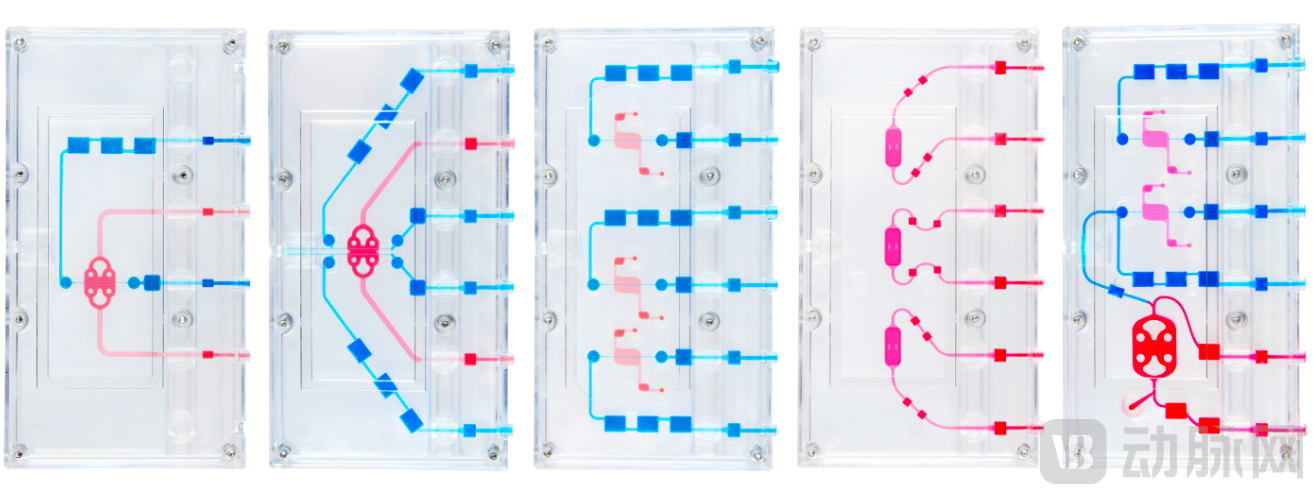
Under this system architecture, Nortis offers a variety of chip designs capable of accommodating tissue architectures with varying levels of complexity. Furthermore, as the world’s first and only pre-fabricated chip, it enables plug-and-play functionality without the need for customized design. Leveraging Nortis’s automated systems and tissue microenvironments, customers can conduct preclinical experiments and assays on demand, thereby accelerating clinical research.
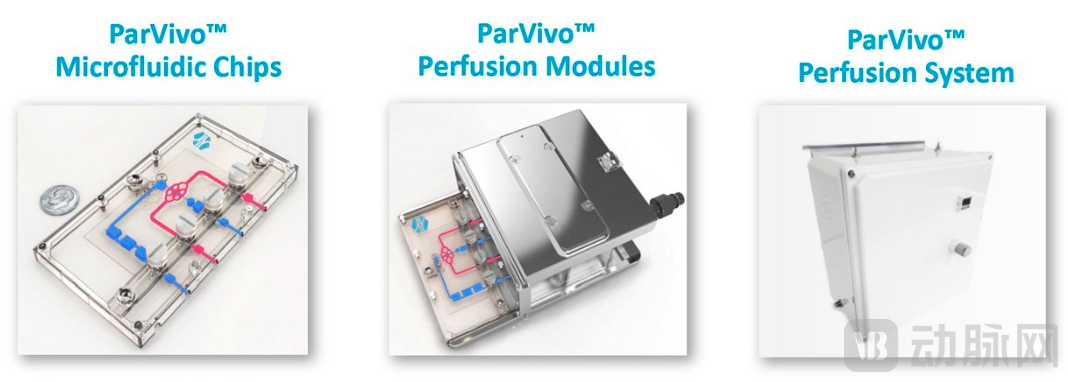
The ParVivo™ platform comprises three components: microfluidic chips, perfusion modules, and the perfusion system.Among these, the microfluidic chip provides relevant matrices and cells for effective flow-based imaging analysis; the perfusion module mimics in vivo unidirectional fluid flow via the chip to nourish microtissues and enable perfusion of test compounds; the perfusion system can drive independent perfusion of up to 24 modules, allowing each incubator to conduct up to 72 experiments simultaneously.
Leveraging the ParVivo™ technology platform, Nortis’s organ-on-a-chip systems enable rapid assessment of the safety and efficacy of candidate compounds. By utilizing off-the-shelf tissue chips for preclinical studies, this approach reduces time and costs while generating high-quality, real-time data.
Currently, leveraging the ParVivo™ platform technology, Nortis is capable of manufacturing various organ-on-a-chip models, including blood vessels, renal tubules, liver sinusoids, and the blood-brain barrier.
As a highly anticipated company in the organoid sector, Nortis has established partnerships with multiple universities, including the University of Pittsburgh, the University of Washington, and Harvard Medical School.
Nortis was originally incubated by the University of Washington and maintains its closest collaboration with this institution. In 2017, Nortis launched its liver and kidney microfluidic 3D organ-on-a-chip platforms for the first time. These chips are capable of identifying interactions related to the toxicity of known compounds across different organ-on-a-chip models, thereby enhancing understanding of drug mechanisms and reducing the risk of introducing new drugs with excessive side effects to the market.
What is more noteworthy isNortis, in collaboration with the University of Washington and NASA, has developed a kidney-on-a-chip primarily aimed at addressing conditions such as kidney stones and osteoporosis in astronauts living under microgravity conditions.This project received funding support from the Bill & Melinda Gates Foundation at its launch.
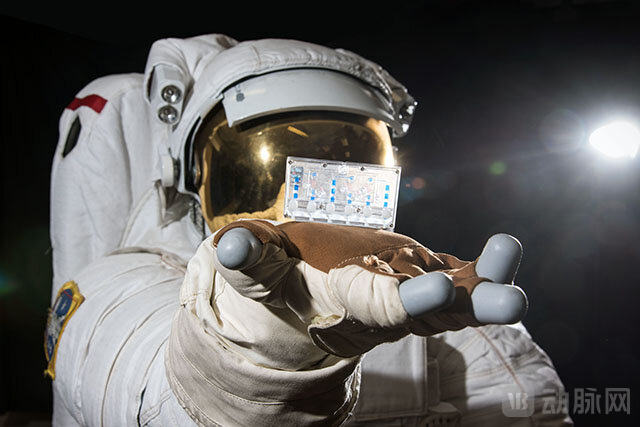
Astronauts on long-duration space missions are prone to issues such as kidney stones, alterations in urinary chemical composition, and accelerated aging of renal cells. Therefore, renal protection before and during flight, along with in-transit therapeutic interventions, is crucial for long-term deep-space missions.
This space-based kidney-on-a-chip mission has lasted for more than three years. On May 4, 2019, Nortis and the University of Washington sent the first batch of kidney tissue chips to the International Space Station (ISS). They launched 24 Nortis Triplex chips to the ISS, which were divided into four groups using four syringe pumps, with each group accommodating six chips. Once aboard the ISS, the four syringe pumps were placed into two BioServe SABL incubators, which provided controlled temperature and carbon dioxide levels. At predetermined time points, scientists removed two syringe pumps from the SABL incubators and placed them into the Life Sciences Glovebox. Inside the glovebox, the syringe pumps received continuous power to maintain temperature control, allowing for the replacement of media and fixative cassettes. All media cassettes were frozen to facilitate subsequent analysis of the media effluents upon return to Earth.
These 24 kidney tissue chips were launched into space with three primary objectives: to determine the impact of microgravity on the polarized structure of proximal and distal tubular epithelia in 3D microphysiological systems, such as its effects on ion and solute transporters OAT1 and OAT3, the glucose transporter SGLT2, the protein transporter Megalin, ZO-1, and Na+/K+-ATPase; to determine whether the uptake of 25-hydroxyvitamin D [25(OH)D] by renal proximal tubules and its bioactivation into 1α,25-dihydroxyvitamin D are impaired by microgravity; and to create disease state models of proximal tubular proteinuria and distal tubular kidney stone formation to evaluate the detrimental or adaptive regulatory effects of microgravity.
On June 10, 2019, Nortis and the University of Washington retrieved this batch of chips.
On June 3, 2021, the second batch of kidney tissue chips was launched into space aboard a SpaceX cargo rocket. This mission also carried 24 kidney tissue chips to investigate the mechanisms underlying kidney stone formation.
Today, Nortis has become a recognized pioneer in the field of organ-on-a-chip technology. The company believes that the development of organ-on-a-chip systems will lead advancements in in vitro biomedical research and drug discovery. Moving forward, Nortis will begin with kidney chips sent into space to continue investigating the origins of certain kidney diseases and the mechanisms of renal aging, while accelerating the optimization and upgrading of organ-on-a-chip platforms through continuous refinement of its ParVivo™ technology platform.