

Jinhai Med Tech Pioneers Post-Fluorescence Endoscopy Market with 4K Fluorescence + 3D Endoscopy Systems
With advantages such as minimal incisions, reduced pain, lower risk of infection, and shorter hospital stays and recovery times, minimally invasive interventional therapy has not only become one of the three major clinically effective diagnostic and treatment modalities—alongside internal medicine and surgery—but also represents a key direction for the future development of healthcare.
As a key branch of minimally invasive medicine, endoscopic diagnosis and treatment technologies are increasingly accounting for a larger proportion of clinical practice, driven by the widespread adoption of minimally invasive surgery and advances in the early screening, diagnosis, and treatment of cancer. These technologies are extensively applied across multiple specialties, including general surgery, urology, gastroenterology, pulmonology, orthopedics, otolaryngology, and gynecology. Furthermore, endoscopes have been identified as one of the priority medical devices for development in the “Technology Roadmap for Key Areas of Made in China 2025.”
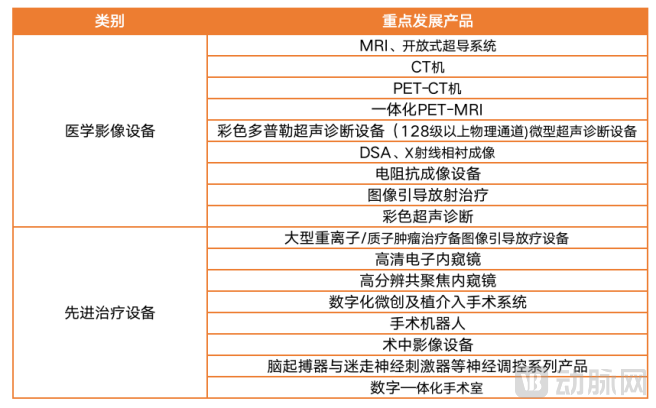
Partial List of High-Performance Medical Devices for Priority Development
However, “insufficient domestic production” remains a major challenge for the Chinese market. According to data from the China Medical Industry Association, foreign enterprises dominated China’s endoscope market in 2019, with the localization rate of endoscopes remaining below 5%. Domestic manufacturers need to overcome the high technical barriers in endoscope R&D, strengthen innovation, and ultimately break through to achieve competitive superiority.
Shanghai Jinhai Medical Technology Co., Ltd. (hereinafter referred to as “Jinhai Medical”) is a company that VCBeat recently learned about, which specializes in providing comprehensive solutions for minimally invasive medical devices, such as high-end medical endoscopes. Currently,Leveraging independent innovation, the company has completed the research and development of products including 4K ultra-high-definition endoscopy systems, 3D and glasses-free 3D image processing systems, 4K fluorescence and future multi-spectral ultra-high-definition endoscopy systems, 8K endoscopy systems, and related equipment, establishing a closed-loop industrial chain encompassing R&D, production, sales, and services.
In the future, Jinhai Medical will also leverage “fluorescence + artificial intelligence (AI)” to proactively position itself in the post-fluorescence endoscopy system market.
Jinhai Medical was established in January 2021 through an investment by Jinhai International (HK02225), a company listed on the Main Board of The Stock Exchange of Hong Kong.
Following its establishment, the company experienced rapid development. In less than two years, it achieved independent R&D and manufacturing of components, camera control units, and endoscopes. The products were submitted for testing in mid-June, and the registration application was filed in early October. Technical review was passed in Q1 2022, with NMPA approval imminent for the 4K, 3D, and 4K fluorescence projects.
Jinhai International Discusses Its Bullish Outlook on the Endoscopy Sector and the Rationale Behind Jinhai Medical“Medical devices, particularly high-end domestically produced ones, represent a high-potential sector, while the endoscopy niche currently has a low rate of domestic substitution. With the future widespread adoption of endoscopic applications, the domestic substitution rate is poised to rise rapidly. From a technological perspective, this field not only presents numerous innovation opportunities awaiting breakthroughs, but endoscopes themselves are undergoing continuous iterative development, demonstrating strong vitality and a long product lifecycle. The team at Jinhai Medical boasts extensive experience and robust technological reserves, positioning it for significant competitive advantage in this sector.”
It is reported that Liu Lei, General Manager of Jinhai Medical, previously held positions in the Aesculap endoscopy marketing department of B. Braun, as well as at Stryker and Mindray. Mr. Liu received the 2012 Asia-Pacific Elite Award during his tenure at Stryker. At Mindray, he participated in establishing the rigid endoscopy business unit and completed the planning for its first-generation products; this business unit has become one of Mindray’s two core seed businesses for the future. He later joined Suzhou Caring (Caring), the first company in China to obtain a registration certificate for fluorescence endoscopes, where he led the team in pioneering the nationwide expansion of fluorescence endoscopy products. In February 2019, he founded “Minimally Invasive Surgery Industry Observer,” a non-profit industry platform that facilitates communication across the entire industry chain, promotes industry operations, strengthens industry connections, and organizes the annual “China Minimally Invasive Medical Devices (Tonglu) Summit Forum.”
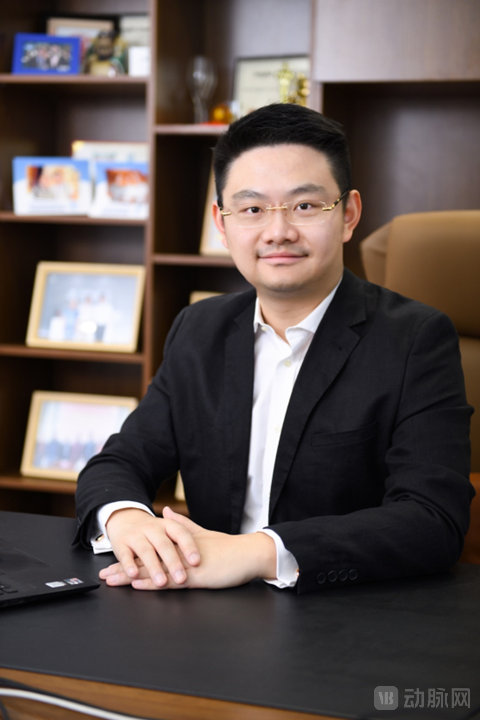
Liu Lei, General Manager of Jinhai Medical
Song Chengli, Medical Science Advisor at Jinhai Medical, graduated from Cardiff University in the United Kingdom. He has engaged in endoscopic technology research for many years at the School of Medicine, University of Dundee, where he successfully commercialized multiple technologies. Notably, he developed the world’s first infrared endoscope and completed animal trials. Professor Song’s mentor was Professor Alfred Cuschieri, a Fellow of the Royal Society and one of the pioneers of minimally invasive surgery.
Song Chengli is currently a Professor at the University of Shanghai for Science and Technology, an Eastern Scholar of Shanghai, and the Executive Deputy Director of the Ministry of Education’s Engineering Research Center for Minimally Invasive Medical Devices. Professor Song has extensive research experience in the fields of minimally invasive medicine and medical devices. He holds multiple patents in endoscopic technologies and has facilitated the establishment of several high-tech medical device companies through technology transfer. Professor Song also serves as the Chief Medical Science Advisor to the Shanghai Hi-Med National Medical Device Incubator. He published the Chinese edition of Biodesign and founded the Biodesign Medical Innovation Camp, playing a significant role in advancing education in healthcare technology innovation in China.
Endoscopes are medical devices that require multidisciplinary and multi-sector collaboration in both R&D and manufacturing, characterized by complex supply chains and intricate production processes. Liu Lei’s in-depth research across the entire industry chain, combined with Professor Song Chengli’s technological expertise, will undoubtedly inject greater potential and innovation into the development of China’s endoscopy industry.
“User-centricity” has been the goal of Jinhai Medical since its inception. To achieve this goal, we have also achieved innovative breakthroughs in endoscopic products.The company adopts fingerprint-resistant technology in its production processes, while refining material management, product management, and source-control workflows, continuously optimizing product design and manufacturing processes.
Liu Lei told VCBeat“Product quality is paramount. Building on this foundation, we will pursue product differentiation aligned with our strategic objectives and drive a complete technological disruption rooted in enhanced product performance. As Jinhai Medical is currently in its early stages, we are committed to delivering an ultimate user experience for our fluorescence imaging products—such as ‘4K Fluorescence + 3D’—through optimized process design, image tuning, and parameter configuration for various typical clinical scenarios.”
Today, Jinhai Medical continues to actively explore innovative endoscopic technologies and deeply uncover the technical value of its fluorescence imaging products. In parallel, the company is advancing R&D in 8K resolution and multi-chip sensor technologies to address challenges related to depth of field, focal length, and image clarity.Meanwhile, focusing on its core product pipeline, Jinhai Medical is developing various auxiliary equipment, including high-end disc burners and high-end insufflators. The company is also advancing R&D in energy-based surgical devices, multispectral fluorescence technology, integrated operating rooms, and artificial intelligence, with the ultimate goal of delivering a comprehensive solution for minimally invasive surgical products.
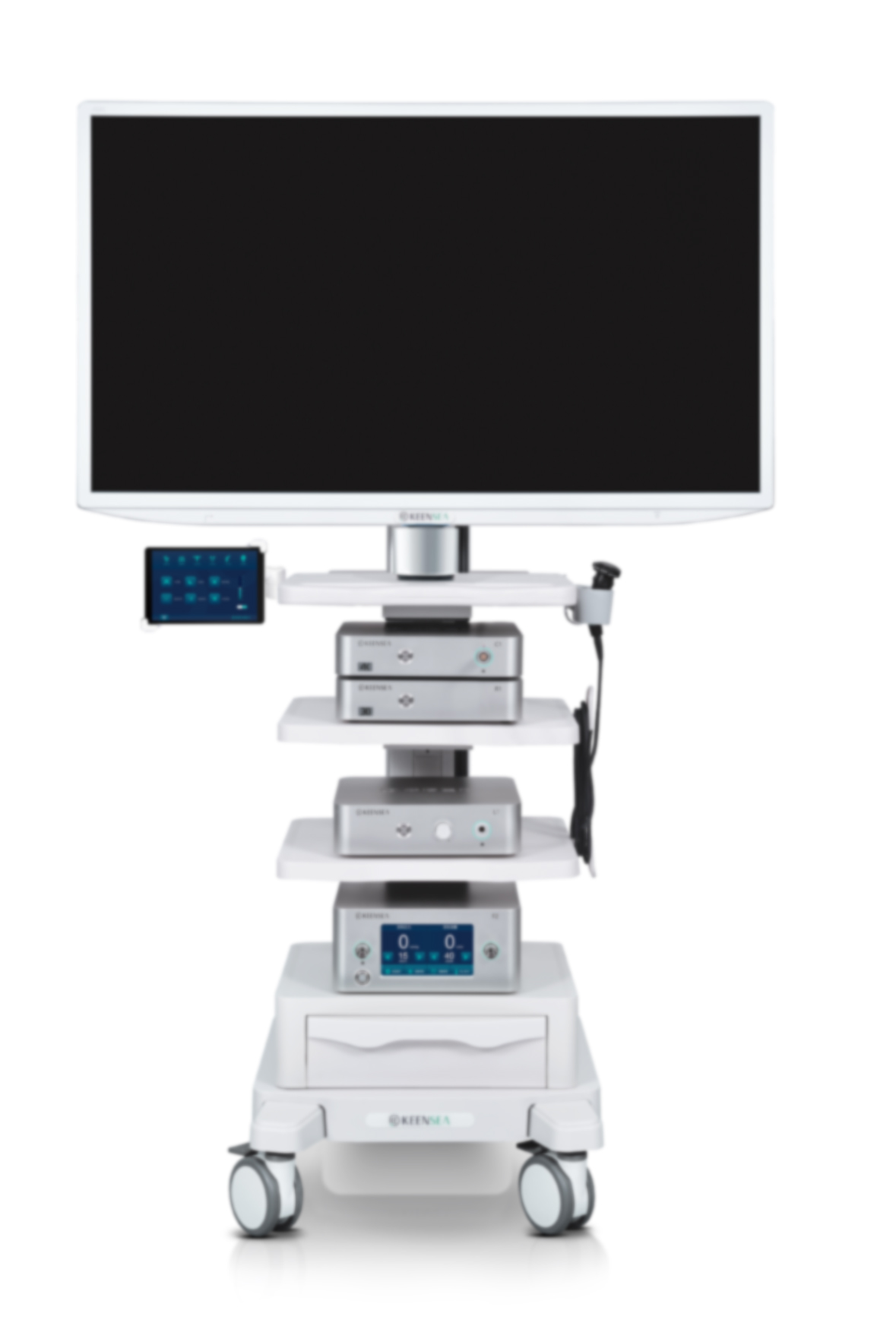
Jinhai Medical 4K 3D Fluorescence
Notably, companies have already made certain progress in the research and development of “fluorescence + artificial intelligence (AI)” products.Jinhai Medical utilizes color feature information to identify and track targets, enabling real-time switching of tracking targets through a "transfer" operation. Additionally, by identifying and tracking organs, the system assists physicians in locating operational targets while monitoring for adverse events such as bleeding or tissue damage, thereby reducing surgical risks and improving procedural efficiency.
This method has achieved accurate identification of tumor boundaries and key targets in surgical simulations, effectively improving diagnostic accuracy for physicians and reducing the steep learning curve.Furthermore, this feature can later enable automatic control of the endoscope-holding robot, keeping the surgical instruments centered in the field of view and avoiding the inconvenience caused by loss of visualization.
At the end of the conversation, Liu Lei stated:“In 2016, Stryker intensified its efforts in fluorescence imaging technology, leveraging this innovation to reclaim a leading position in the market. This prompts us to consider: what is the future technological direction for endoscopy? We ultimately believe that fluorescence multispectral technology, molecular probe technology, and robotic arms integrated with artificial intelligence hold significant potential and value, as they can make minimally invasive surgeries safer and more effective. Accordingly, Jinhai Medical has devoted substantial effort to aligning with this strategic assessment, continuously exploring the possibilities of cutting-edge technologies and turning them into reality.”