

How the UK Builds a Global Hub for Medical Education and Training: Insights from an International Forum
The “2022 International Exchange Conference on Health Cooperation and Talent Development” was successfully held in Nanning, Guangxi, on September 20–21, 2022. The conference was hosted by the Talent Exchange and Service Center of the National Health Commission of China, organized by the First Affiliated Hospital of Guangxi Medical University, co-organized by the Guangxi Hospital Association, and specially supported by the UK Department for International Trade.
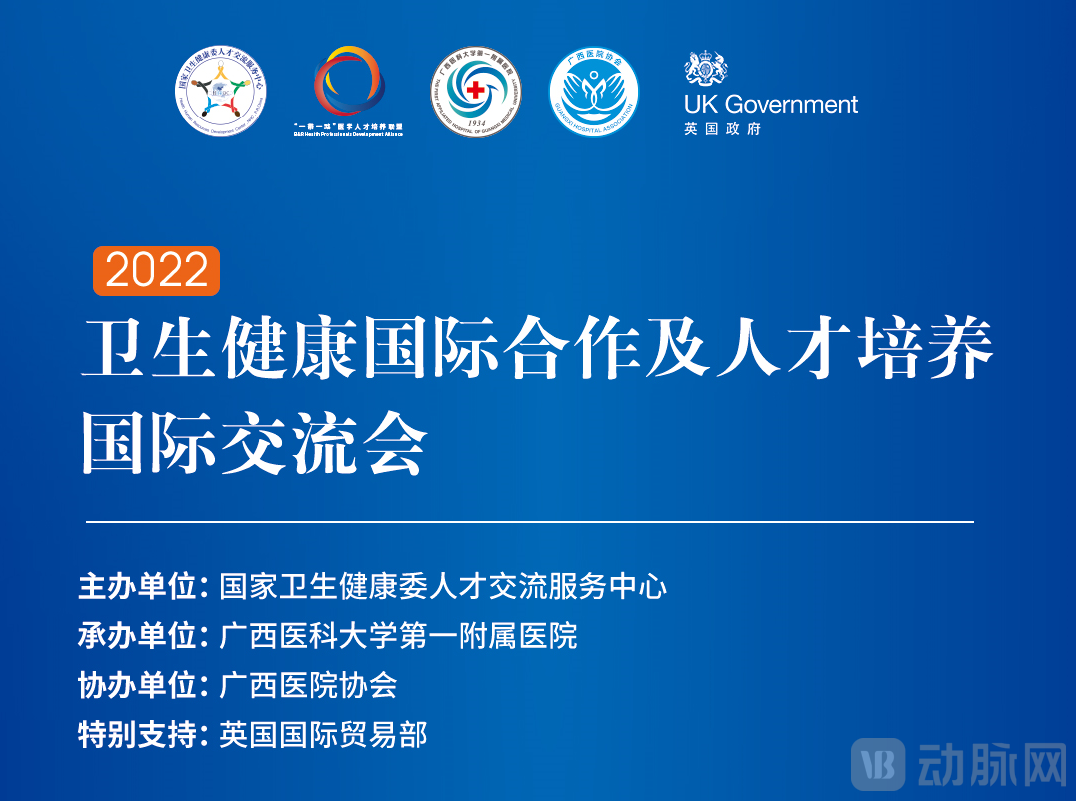
The conference invited representatives from renowned UK medical institutions and universities, including Health Education England (HEE), the Royal Society for Public Health (RSPH), University College London (UCL), Elsevier, and the London Medical Education Centre (LME), to deliver online keynote speeches and engage in interactive exchanges.
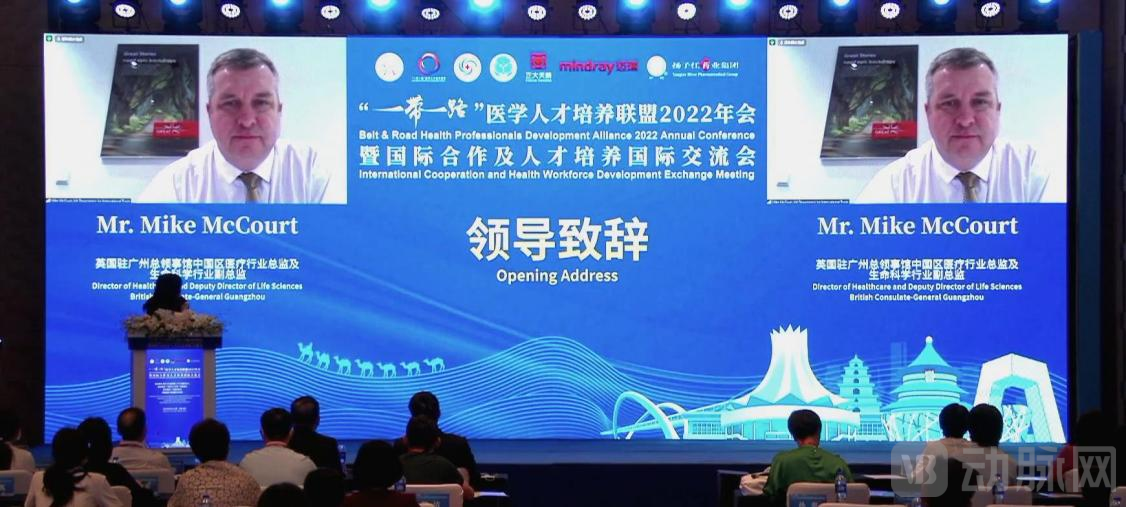
In his opening remarks, Mr. Mike McCourt, Director of the Healthcare Sector and Deputy Director of the Life Sciences Sector for China at the British Consulate-General in GuangzhouProvided a comprehensive overview of the UK's medical education and training system.
He stated that population aging, the burden of non-communicable diseases, and healthcare coverage pose significant challenges to health systems worldwide, necessitating more accessible, affordable, patient-centered services and more sustainable, adaptable healthcare models. These new models rely on new skills, requiring every medical specialty and all healthcare professionals to play a pivotal role. This has spurred substantial demand for professional medical education and training.
As global experts in responding to evolving healthcare demands, the UK’s medical education and training system advocates lifelong learning and drives healthcare professionals’ skills to the highest level.The National Health Service (NHS) in the UKWe have established close collaborations with professional institutions, not only to disseminate medical information but also to implement the patient-centered healthcare values and services.
Training of healthcare professionals is a key factor in the NHS becoming a leading healthcare system in developed countries. Four of the world’s top ten medical schools are located in the United Kingdom.Health Education England (HEE)Spearheaded nationwide coordination and planning of medical teams, including the recruitment of medical talent, accreditation of modern career development training programs adapted to current challenges, and the provision of professional education.
The Royal Society for Public Health (RSPH)It is also an international leader in improving public health through education and training.
Meanwhile, more than 140 colleges and universities in the United Kingdom offer healthcare management programs, including MBA and EMBA programs with a focus on healthcare.Among them,University College LondonUCL Global Business School for Health (UCL GBSH), is the world’s first business school dedicated to the health sector. These programs offer high flexibility and are delivered through various training models, providing either international or locally based courses.
Healthcare education and training encompass curriculum design, assessment, accreditation, degree programs, clinical observerships, professional continuing education, and healthcare workforce planning. In these areas, the United Kingdom offers highly structured educational and training pathways along with internationally recognized qualification and accreditation standards.
The conference centered on topics such as “International Comparison of Health Education Pathways and the Development of Health Workforce,” “Enhancing Senior Leadership in Healthcare and Promoting High-Quality Hospital Development,” and “Development of Health Human Resources in the Asia-Pacific Region.” The event garnered over 4,000 cumulative online viewers.
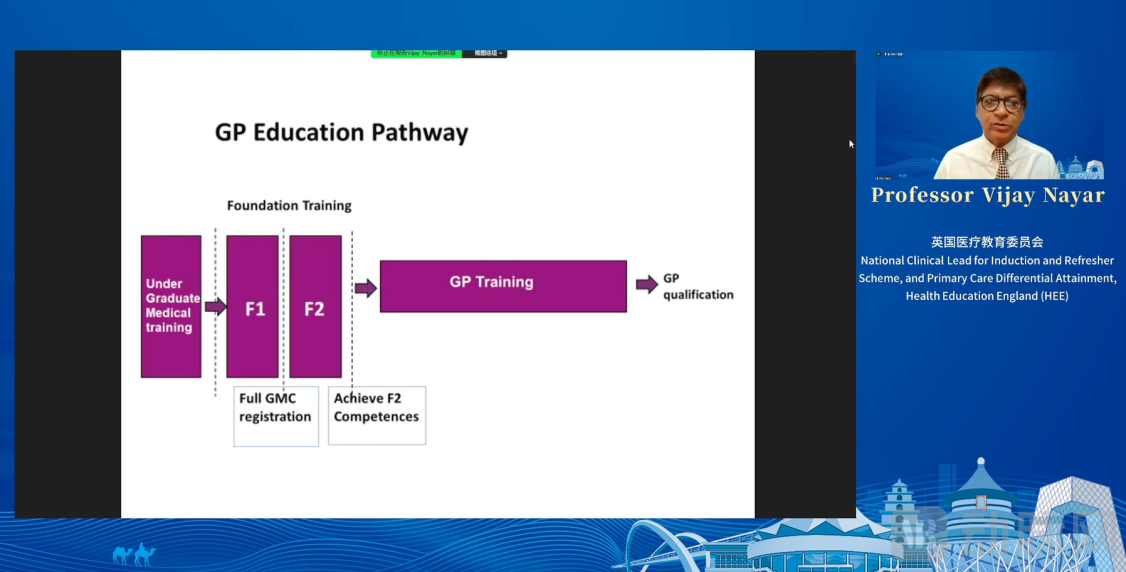
EnglandHealth Education England (HEE) Vijay NayarProfessorShared insights on the training pathway for general practitioners in the United Kingdom.
He stated that general practitioners place greater emphasis on the breadth rather than the depth of specialist skills, and typically participate in a three-year General Practice Specialty Training (GPST) program. The United Kingdom has a comprehensive training framework for general practitioners, managed by professional specialty under the General Medical Council (GMC), with medical curricula designed by the Royal Colleges, and Health Education England (HEE) ensuring the implementation of these programs. As of April 2023, HEE became an arm’s-length body of the NHS, responsible for providing education and training services for healthcare professionals.
Meanwhile, training programs for general practitioners also include curriculum guidance in three key areas: patient life cycle, specialized clinical topics, and professional ethics. All training programs are conducted under rigorous instruction, supervision, and evaluation, with only those who pass the certification becoming qualified general practitioners.
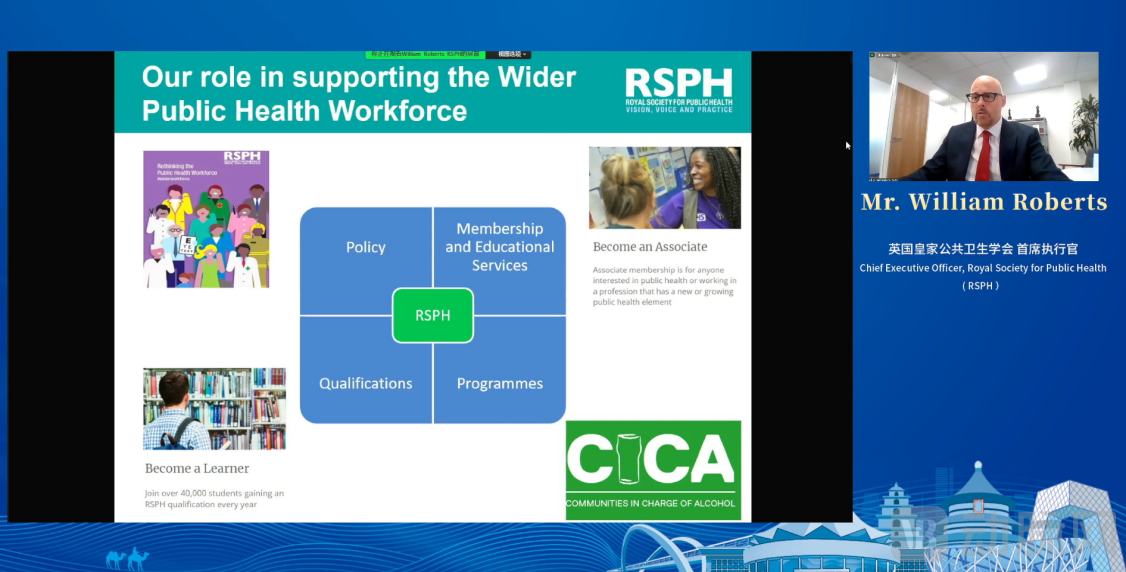
William Roberts, Chief Executive Officer of the Royal Society for Public Health (RSPH)Mr.This article highlights the work of the Royal Society for Public Health in the United Kingdom and shares insights into the cultivation of public health professionals in the UK.
He stated that the impact of the COVID-19 pandemic has posed significant challenges to the global public health system. A robust and rapid public health response requires not only healthcare professionals but also the participation and contributions of a broader range of stakeholders. In this regard, the Royal Society for Public Health (RSPH) has proposed the coordinated utilization of a wider public health workforce. Currently, RSPH’s members and participants come from diverse sectors, ranging from barbers to members of the House of Lords, and their work is categorized into four areas.
First, policy work: Engage in consultations with relevant policy-making departments to ensure that not only doctors and nurses but also other healthcare roles are taken into account. Second, training work: As a membership organization, RSPH offers short-term or professional development courses for its members. Third, certification work: Provide qualification certification for trainees to ensure a high-quality training system and outcomes. Fourth, management work: Implement various projects to ensure effective community-level execution and enable trainees to assume responsibilities within their communities.
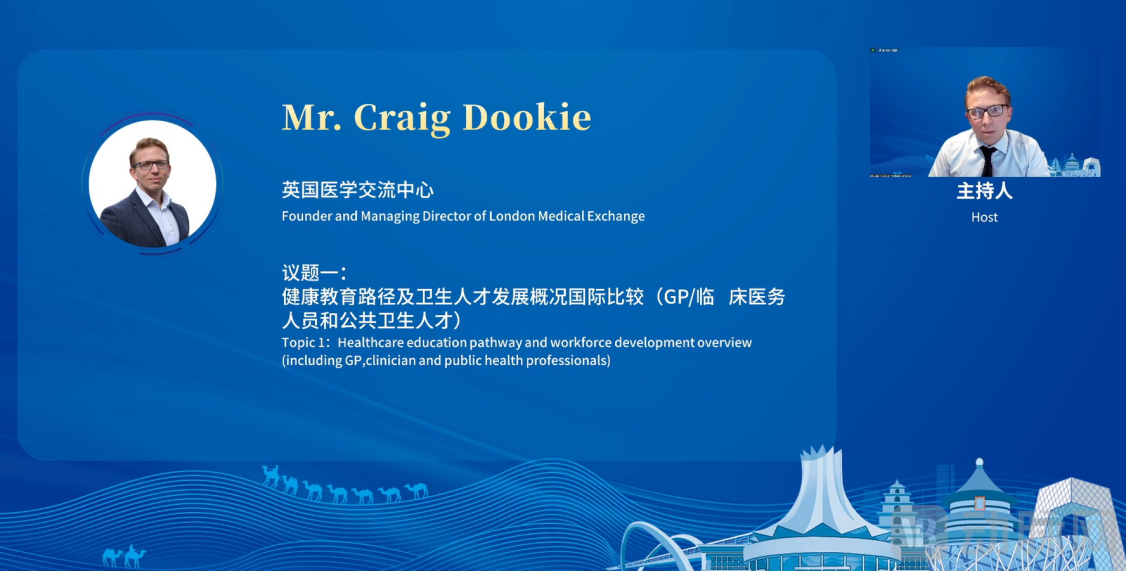
Craig Dookie, CEO and Founder of the UK Medical Exchange Centre (LME)Mr.Overview of LME’s Core ActivitiesLME has long been dedicated to the exchange, training, and collaboration of healthcare professionals between China and the UK, with a primary focus on the education and training of hospital administrators, physicians, and nurses. As the pandemic has impacted offline training activities, LME has relied mainly on online platforms in recent years to conduct training programs in areas such as medical English, healthcare leadership, and academic paper writing.
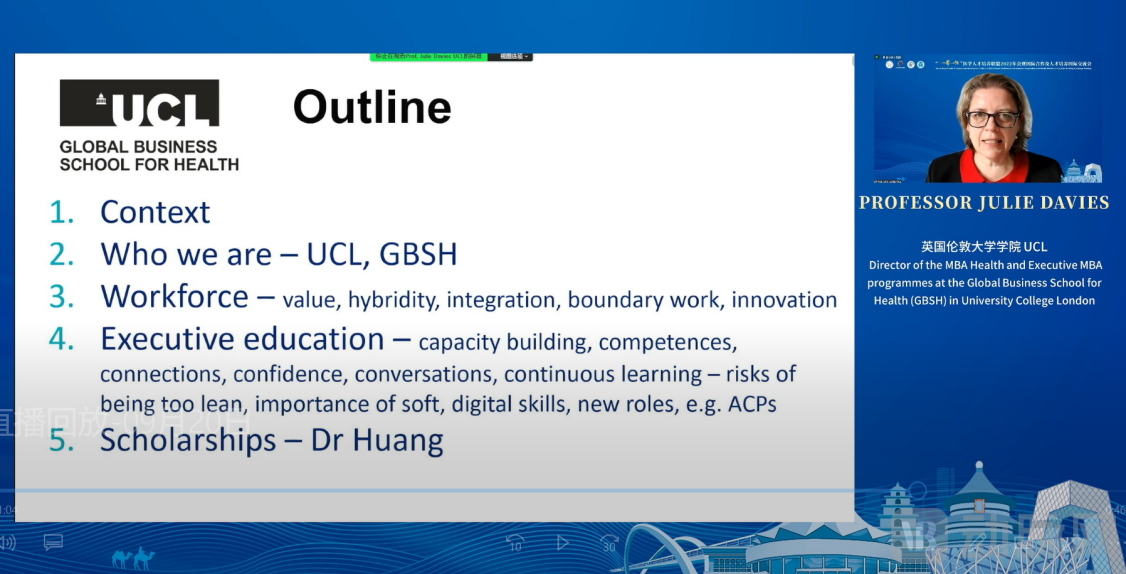
Professor Julie Davies, University College London (UCL), UKDelivered a keynote speech on “Building Medical Leadership and Advancing Executive Education to Promote High-Quality Hospital Development.”
On September 29, 2021, the UCL Global Business School for Health (UCL GBSH) was officially established as the world’s first business school entirely dedicated to cultivating leaders for the new era of health and healthcare. Professor Julie Davies stated that building a leadership-capable workforce is crucial to achieving high-quality development in public hospitals and to retaining and motivating medical talent. In terms of leadership development, raising awareness, enhancing capabilities, and facilitating dialogue are viable approaches. To this end, UCL GBSH offers targeted and more systematic MBA, EMBA, and DBA programs.
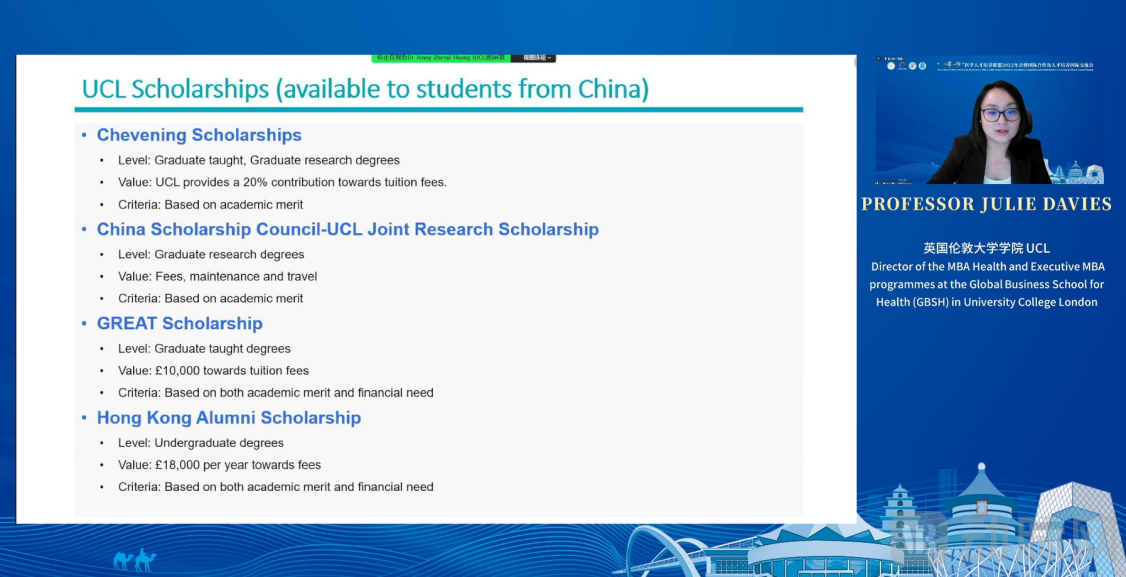
Jenny, University College London (UCL), UK (Zhenyi)Dr. HuangWe have supplemented information on exchange opportunities with UCL’s Global Business School for Health (GBSH) and scholarship application schemes available to Chinese students, including the UK Foreign Office Chevening Scholarships, joint research scholarships offered by the China Scholarship Council (CSC) and UCL, the GREAT Scholarships, and the UCL Hong Kong Alumni Scholarship. In addition, a variety of scholarship programs are open to all international students; interested international scholars are encouraged to contact us and apply.
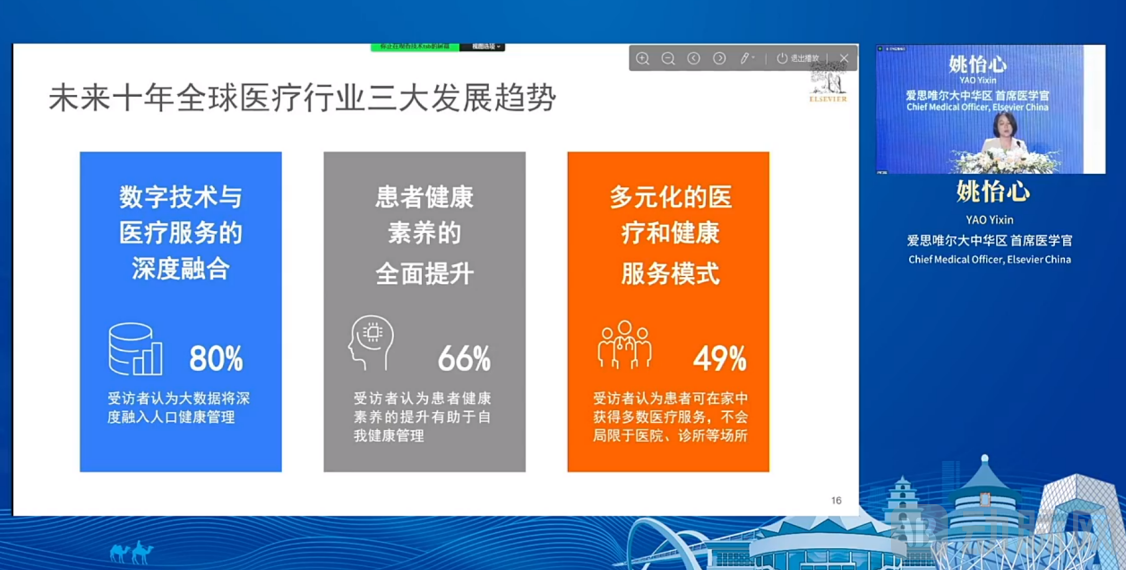
Dr. Yixin Yao, Chief Medical Officer, Elsevier Greater ChinaDrawing on insights from the "White Paper on Future Physicians," she shared perspectives on global trends in healthcare digitalization. She noted that over the past decade, the COVID-19 pandemic, chronic diseases, and population aging have been the three major drivers of significant transformation in the global healthcare industry. Meanwhile, clinical healthcare professionals believe that proficiency in digital technologies, knowledge of health economics, and enhanced doctor-patient communication skills are becoming increasingly important for clinical practice.
Over the next decade, the deep integration of digital technologies and healthcare services will further drive the transformation of the global healthcare industry; a comprehensive improvement in patients’ health literacy will help enhance their ability to manage their own health; while diversified healthcare service models improve diagnostic and treatment efficiency, they also pose new challenges to the skills of healthcare professionals.
Among them, Chinese healthcare professionals are the most optimistic about the development prospects of digital health. They are more proactive in adopting innovative technologies such as big data from electronic health records (EHR), personalized diagnosis and treatment, real-time patient data analytics, and AI-assisted clinical decision-making, while also placing the greatest emphasis on clinical research. China is poised to lead the transition from a disease-treatment model to a disease-prevention model and demonstrates the highest level of attention to public health. By fully leveraging the advantages of medical big data, China can drive the development and utilization of automation technologies and AI-assisted clinical decision support systems.

Join the WeChat Group for the Conference of the China-UK Medical Talent Development Alliance
Get Your Questions Answered by UK Trade & Investment Commissioners and Connect with UK Experts

UK Department for Business and Trade’s Life Sciences and Healthcare Digital Platform