

How China's Managed Care Model Is Taking Root: Ping An Provides a Reference Blueprint
On September 9, Ping An announced the launch of its 2022 “99 Health Festival,” themed “Your Health, Safeguarded by Ping An.” Focusing on users’ medical and healthcare needs across their entire life cycle, Ping An introduced a comprehensive suite of health solutions under the “Ping An Select” brand, covering services in multiple dimensions, including health management, chronic disease management, and home-based elderly care.
During the event, Ms. Wu participated in the “Lucky Delivery Station” activity at the online main venue of the “99 Health Festival” and won a home-based genetic testing product called “Health Guardian,” which is primarily used to assess genetic risks for cancer, cardiovascular and cerebrovascular diseases, and endocrine disorders. The convenience of conducting early disease screening at home was an unexpected bonus for Ms. Wu during this year’s “99 Health Festival.”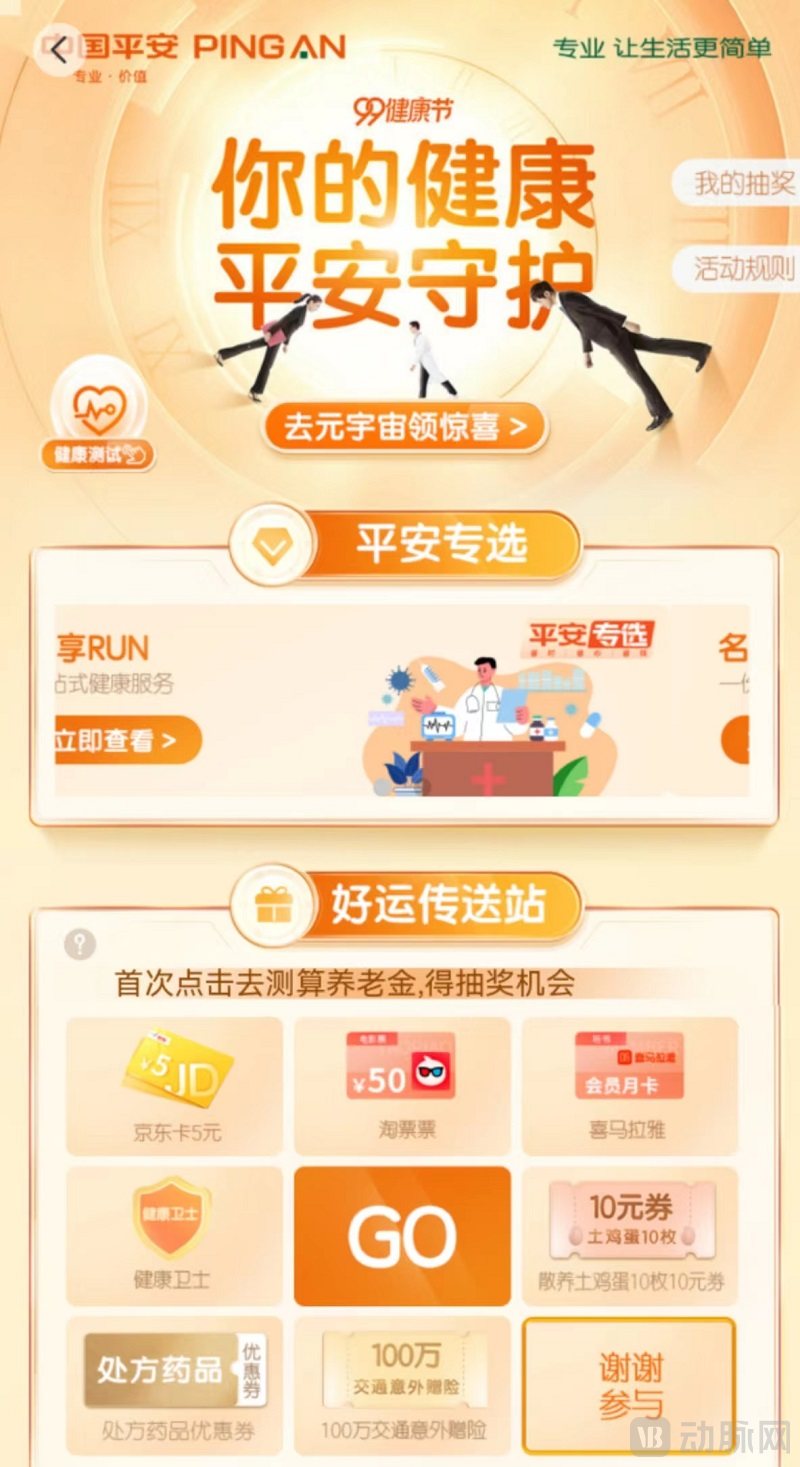
It is reported that the product was submitted by Ping An Health (Testing) Center, a member of the Ping An Medical Ecosystem. Its affiliated medical testing laboratory offers a range of at-home self-testing kits for various cancers, including cervical and breast cancer (“two cancers” in women), liver cancer, gastric cancer, and colorectal cancer, enabling consumers to take the first step in early cancer screening from home. For customers with positive indicators, Ping An Health (Testing) Center’s offline stores will provide targeted precision examinations, health management, and nationwide referral services.
It is evident that, through the “99 Health Festival” campaign, Ping An has launched its inaugural “Ping An Select” product list. By addressing the specific pain points and needs of different customer segments, it has established a product and service ecosystem integrating “comprehensive finance + healthcare,” representing a beneficial exploration of the managed care model in China.
Managed Care Model Implementation Gains Momentum, Huge Opportunities for China’s “UnitedHealth”
The emergence and development of the HMO model are closely linked to the evolution of Managed Care Operations in developed overseas countries, which aim to control healthcare costs.
HMO, or Health Maintenance Organization, is a healthcare model that tightly integrates health insurance companies with medical providers. Enrollees typically need only prepay a small portion of the costs to receive consultations and related medical services within the HMO network.
In the traditional healthcare payment model, healthcare providers often hold pricing power, while patients, as the payers, are typically in a weaker position and usually pay on a fee-for-service basis. In contrast, managed care creates a win-win scenario for healthcare providers, patients, and insurance companies, thereby incentivizing providers to proactively seek medical solutions with the optimal cost-effectiveness ratio.The HMO model is one of the organizational models within managed care and currently ranks among those with the largest market share.
In fact, the original prototype of HMOs was the prepaid health plan. In 1910, a clinic in Washington State promised to provide medical services to local logging company owners and workers on the condition that each person paid a monthly fee of 50 cents. Subsequently, multiple clinics across various U.S. states adopted this model to deliver healthcare services. This is regarded as the earliest precursor to HMOs in the United States. Furthermore, with the enactment of the Health Maintenance Organization Act of 1973 and the implementation of related specific measures, the HMO model experienced rapid development.
Taking UnitedHealth Group as an example, we may better understand the advantages of the HMO model within the managed care framework.
From the development of UnitedHealth,On one hand, UnitedHealth’s health insurance business leverages managed care as a strategic approach to aggregate medical resources and build an extensive healthcare network, thereby attracting a large number of users to become its members. This, in turn, provides a stable user base for its health services. On the other hand, UnitedHealth’s health services segment further strengthens the company’s capabilities in monitoring clinical behaviors through its specialized expertise in health management, information technology services, and pharmacy benefit management (PBM). This enhances risk control and cost containment, thereby raising the competitive barriers for its health insurance business.As a result, the two parties ultimately established a closed-loop service model of “insurance + healthcare.”
In an era where the public is increasingly prioritizing disease prevention, the managed care model has undoubtedly revealed significant development prospects and growth potential for numerous domestic enterprises.
According to relevant data, China's total healthcare expenditure currently stands at approximately $1 trillion, accounting for 10% of the global market, and remains in a phase of rapid growth. Industry experts project that China's healthcare spending is expected to reach $3 trillion within the next decade.
And this has also led a large number of enterprises to truly commit themselves to the field.
Exploring the Managed Care Model: How Did Ping An of China Achieve Implementation?
In reality, although many enterprises have sought to create a Chinese version of “UnitedHealth” and implement the managed care model in China, the challenges have proven far more daunting than anticipated. As a result, many companies have ultimately shelved this idea, or even if they have made attempts, they have struggled to achieve genuine implementation.
How Can China’s Managed Care Model Be Implemented? Ping An Group Offers Its Answer—
While drawing on UnitedHealth Group’s development model, Ping An Group has pursued localized practices and innovatively implemented a “managed care + family doctor + O2O” managed healthcare model. By establishing a multi-party closed loop connecting supply, demand, and payment, it delivers cost-effective, full-lifecycle health and medical services that reinforce its core financial business.
FirstPing An Group has targeted the payment sector by leveraging its strengths in B2C channels to better meet payment-related demands. It has embedded health management and differentiated services tailored to individuals right from the policy design stage. On one hand, Ping An Group has significantly enhanced payer access by upgrading its consumer-facing (C-end) channels and expanding its business-facing (B-end) operations, thereby covering a large number of corporate clients. On the other hand, drawing on UnitedHealth’s approach to addressing payer needs during policy design, Ping An Group provides differentiated services for various population groups, further facilitating precise matching of follow-up services.
Secondly, building healthcare service capacity on the supply side is an essential component. As a key part of Ping An’s medical and health ecosystem, Ping An Health has created an integrated online-to-offline “Medical + Health” service platform. With exclusive family doctors for members as the entry point, it covers five major medical and health service scenarios: health management, sub-health management, disease management, chronic disease management, and elderly care management.
andAs a key offline pillar of the managed care model, Ping An Health (Testing) Center focuses on serious medical care and has built an innovative business ecosystem integrating “medical imaging diagnosis, clinical laboratory testing, premium health checkups, and specialized outpatient services.” It has also established industry-leading referral centers for specific diseases. With 11 flagship testing centers deployed across China, and leveraging advanced medical equipment and expert teams, Ping An Health (Testing) Center provides comprehensive, one-stop medical service solutions covering the entire patient journey. The center offers differentiated screening and diagnostic services, fully addressing users’ needs throughout the “screening–diagnosis–treatment” continuum.
As of the end of December 2021, Ping An Group’s in-house physician team and externally contracted physicians totaled more than 40,000, with over 10,000 partner hospitals and 96,000 partnered health management institutions. The build-out of medical service capabilities has also delivered tangible benefits to the growth of Ping An Group’s insurance business—throughout 2021, Ping An Group’s health insurance premium income exceeded RMB 140 billion. Among Ping An Group’s more than 227 million individual customers, 63% simultaneously used services provided by the healthcare ecosystem; these customers held an average of 3.3 contracts each and had average assets under management (AUM) of RMB 40,000, which were 1.6 times and 3.0 times, respectively, those of individual customers who did not use the healthcare ecosystem services.
Leveraging Ping An Health (Testing) Center to Build an Entry Point for the Supply of Scarce Medical Services
For most companies currently striving to implement managed care models, delivering high-quality healthcare services and building a closed-loop ecosystem are often among the most challenging issues to resolve.
This year, Ping An Group has embarked on a cultural upgrade and reshaping initiative, leveraging its new value-driven culture to support the company’s strategic upgrading, return to professional value, and make the strategic transformation toward “Integrated Finance + Healthcare” an imperative choice.
Under this model, Ping An Insurance’s “99 Health Festival” serves as a practical example, establishing a product and service system that integrates “comprehensive finance + healthcare” to address the pain points and needs of different customer segments, with the aim of providing customers with peace of mind, time savings, and cost efficiency. At its core, the Ping An Health (Testing) Center leverages high-quality, scarce premium medical services as its competitive advantage, thereby building a professional barrier within the healthcare ecosystem.
During the “99 Health Festival,” Ping An Bank and Ping An Health (Check-up) Center jointly launched the “Ping An Bancassurance Health Club” Health Express, introducing a medical tourism program for VIP bank clients. This initiative allowed customers to immerse themselves in Ping An’s proprietary one-stop comprehensive healthcare services covering the entire course of disease management, while piloting high-end products akin to travel-based health check-ups, which received unanimous acclaim.
The root cause lies in the fact that users often have a demand for high-quality, scarce medical services, but the current market fails to fully meet this demand.In terms of pre-diagnostic health screening services, the market size for health screenings is gradually expanding. The premium health screening segment accounts for approximately 10% of the overall market share and is growing at an ultra-rapid annual rate of nearly 20%. Ping An Health (Testing) Center not only meets patients’ demand for premium health screenings but also serves as a user acquisition channel, thereby enhancing user retention and conversion within Ping An Group’s managed care model.
The creation of differentiated services has met users’ reasonable expectations for the implementation of the managed care model, while also providing more attentive and personalized service. In the past, health management institutions often merely provided patients with test results. In contrast, the reports issued by Ping An Health (Testing) Center typically include detailed health recommendations, and offer referral services to renowned physicians and hospitals across China when patients have such needs. In fact, to better facilitate the implementation of Ping An Group’s managed care model, Ping An Health (Testing) Center is continuously expanding its service scope and enhancing its service capabilities—
In terms of service scope, Ping An Health (Testing) Center is currently expanding its footprint through self-operated and co-built models.Across China, it has established 11 self-operated flagship testing centers and 8 medical laboratories, and through various collaborative models, deployed over 900 medical terminals in 27 provinces.
In terms of service quality, Ping An Health (Testing) Center is currently enhancing its high-end medical testing and healthcare services by forging strong partnerships with public medical institutions to achieve information sharing, joint discipline development, functional complementarity, and regional strength enhancement.For example, it has engaged 135 external authoritative experts, including chairpersons of provincial and municipal radiology societies and renowned imaging specialists from Grade A tertiary hospitals, among whom are 19 chairpersons of provincial radiology societies, to provide users with timely and accurate interpretation of reports.
From the perspective of service types, Ping An Health (Testing) Centers are not merely providing high-end physical examination services. Leveraging its medical ecosystem capabilities, Ping An Health (Testing) Centers are also focusing on full-course health management services. By using early disease screening as an entry point and enhancing the “screening-diagnosis-treatment” service components, the centers aim to enrich medical service scenarios and strengthen customer stickiness—
At the “Screening” level, we provide diversified screening services, including early cancer screening, mid-to-high-end health checkups, mobile external examinations, and at-home self-testing. At the “Diagnosis” level, we focus on imaging diagnosis for complex and critical diseases, high-quality laboratory diagnostic services, specialized outpatient services, multidisciplinary team (MDT) diagnosis and treatment, and remote image interpretation services, thereby extending premium medical resources to grassroots levels and empowering the development of primary healthcare systems. At the “Treatment” level, in collaboration with the Ping An Medical Ecosystem, we continuously expand online and offline medical service scenarios, offering differentiated specialty programs such as referral centers, health management, and specialized disease care, thus comprehensively covering the entire user journey of “Screening–Diagnosis–Treatment.”
As Ping An Health (Check-up) Center further strengthens its capabilities, it will undoubtedly facilitate the implementation of the “Integrated Finance + Healthcare” strategy. Amid current explorations into the localization of managed care models in China, high-end health management built upon premium check-up services offers industry participants an innovative approach to health management. With rising public health awareness and a shift toward earlier disease diagnosis and intervention, we are likely to see more practical implementations of managed care models that leverage premium check-ups as an entry point.