

Yiran Rehabilitation Submits IPO Prospectus for Its Biomimetic, Passive Lower-Limb Exoskeleton Inspired by Horse Locomotion
MaTafeiyan,Vigorous Spirit, oneMaPingchuan、Galloping Horses, speeding up efforts,Instant Success。In Chinese culture, there are numerous idioms and poetic verses that praise the horse as a spiritual animal. As a masterpiece of millions of years of natural evolution, the horse is the most adept runner in the animal kingdom. Horses gallop freely across grasslands, serve as mounts for generals on the battlefield, and act as means of transport between long-distance relay stations. They endow humanity with the strength to conquer enemies and overcome oneself, symbolizing a national spirit of enterprise and upward striving.
“I was thrilled to see the patient don the device, stand up, and successfully take their first step. It was my first time witnessing a lightweight exoskeleton that operates without external power yet delivers rehabilitation outcomes comparable to those of million-yuan robotic systems available in China at the time. My mind immediately filled with visions of countless stroke survivors wearing Kickstart in their homes and communities.”®“Scenarios where lower-limb exoskeletons enable free walking and daily living. Helping patients recover and significantly improving their quality of life is the original aspiration of us healthcare professionals, which also aligns with the national concept and policy of ‘bringing rehabilitation to the community,’” said Dr. Wu Jun.
Five years later, Dr. Wu could still vividly recall the first time he saw a patient with nerve injury at Kickstart in a rehabilitation clinic in Seattle®The look of surprise and emotion that blossomed in their eyes as they slowly rose to their feet with assistance and eventually walked independently! Dr. Wu, a seasoned investor with nearly two decades of experience in the healthcare industry and a Ph.D. in Neurobiology from Columbia University College of Physicians and Surgeons, has long been tracking new developments in the field of neurological rehabilitation. He was immediately captivated by this novel exoskeleton rehabilitation walker—designed based on bionic principles and featuring no motors—and sensed a significant business opportunity.
Since becoming an aged society in the late 20th century, China has witnessed a continuous increase in both the absolute number and the proportion of its elderly population. From 2000 to 2018, the population aged 60 and above grew from 126 million to 249 million, with their share of the total population rising from 10.2% to 17.9%. As population aging intensifies, the overall health status of the elderly remains concerning, with 75% suffering from one or more chronic diseases. Approximately 40 million elderly individuals are disabled or partially disabled, primarily due to stroke, cognitive impairment, age-related physical and mental frailty, joint disorders, as well as falls and fractures. On average, each disabled or partially disabled elder requires care from two to three family members, imposing a heavy burden on families and society.
According to statistics, China sees over 2 million new stroke cases annually. Among stroke survivors, 75% experience varying degrees of loss in work capacity, with 40% suffering from severe disabilities. Evidence-based medicine has confirmed that stroke rehabilitation is the most effective approach to reducing disability rates. Rehabilitation therapy can maximize the recovery of functional impairments, improve the quality of life for elderly and disabled populations, enhance patients’ self-confidence and self-care abilities, and facilitate their earlier reintegration into social life. In the future, driven by factors such as an aging population, rising incidence of chronic diseases, upgraded health consumption demands among residents, and favorable national policies, the population requiring rehabilitation medical services in China will continue to expand, thereby driving the development of the rehabilitation medical device industry.
Wearable exoskeleton rehabilitation robots represent a branch of the medical robotics field and have made significant progress over the past three decades, particularly in the area of neurological rehabilitation. Representative products currently on the market include ReWalk Robotics from Israel, Cyberdyne from Japan, Ekso Bionics from the United States, and Keeogo from Canada. Lower-limb exoskeleton robots can help patients who have lost the ability to walk due to stroke or spinal cord injury regain the capacity to walk, sit up, and climb stairs, thereby reducing the caregiving burden on caregivers and improving patients’ quality of life. However, these devices often lack robust scientific evidence of effectiveness, entail high economic costs, and offer limited user-friendliness, which significantly restricts their adoption in community and home settings, resulting in an overall low adoption rate. Consequently, there is a substantial demand among stroke patients for lightweight, easy-to-don, user-friendly, and low-cost technologies to assist with gait training.
Driven by the vision of developing an affordable exoskeleton gait training device, Dr. Wu engaged in discussions with Kunpeng Medical Angel Partners, an angel investment club comprising over a dozen seasoned investors from the healthcare sector, entrepreneurs, and core executives from Fortune Global 500 companies, and secured their unanimous support. In 2018, initiated by Dr. Wu Jun, Kunpeng Medical incubated and establishedShanghai Real Star Rehabilitation Equipment Co., Ltd. (hereinafter referred to as “Real Star Rehabilitation”), committed to providing novel and convenient intelligent rehabilitation treatment solutions to major rehabilitation hospitals, departments, community rehabilitation centers, and a wide range of patients receiving home-based treatment.

Since ancient times, humans have been learning from nature, developing new devices, tools, and technologies by mimicking the specialized capabilities of organisms and leveraging the structural and functional principles of biological systems. Professor van den Bogert from the Cleveland Clinic in the United States conducted research on animals adept at running, such as horses, and found that their hind limbs possess powerful tendon units spanning multiple joints, which provide the energy required for running through elastic potential energy. Under conditions of equal body weight, the energy conversion efficiency of a horse’s running is twice that of humans. By simulating the tendon units of the horse’s hind limbs, Exotendon®It can effectively enhance the assistive performance of exoskeletons without requiring external power sources.
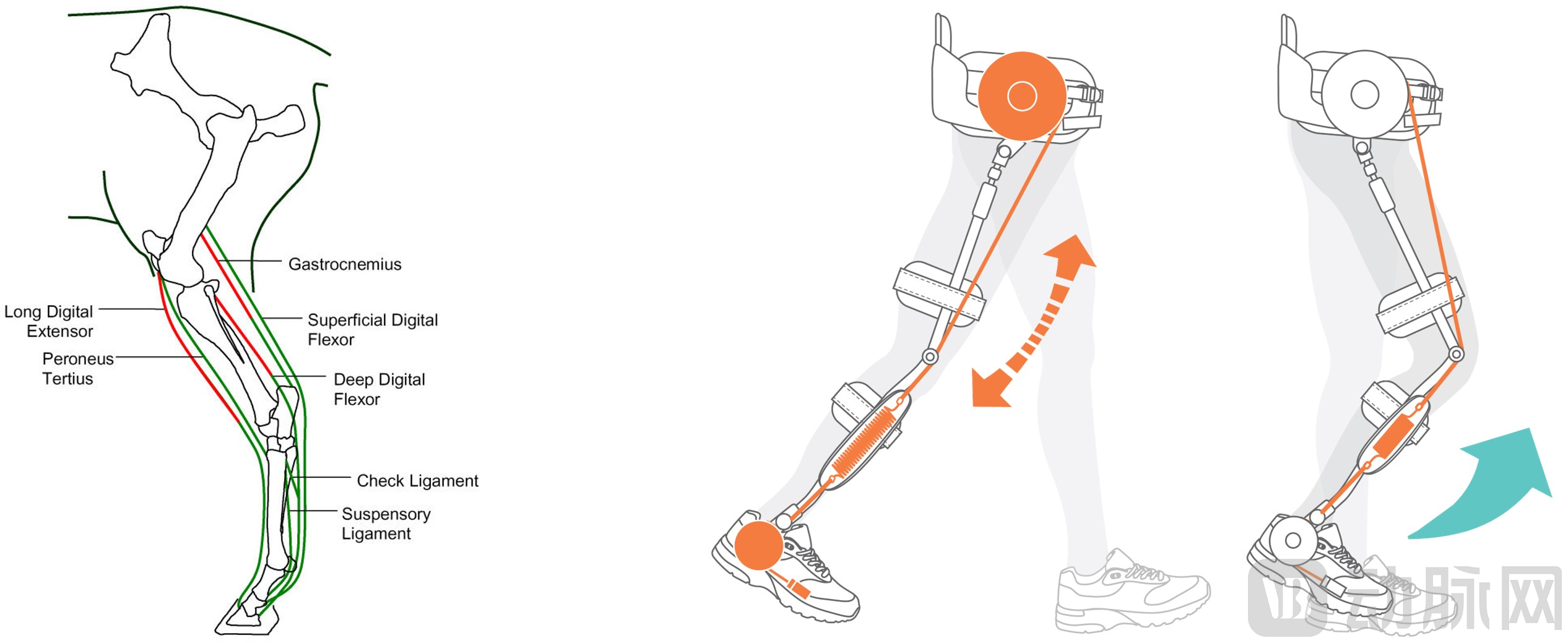
Acquire Exotendon Through Collaboration®Core Patent: After four years of research and development, Shanghai Real Star Rehabilitation Equipment Co., Ltd. has successfully launched a new type of product tailored to the physical characteristics of AsiansPassive Wearable Lower-Limb Exoskeleton Walking Assistance System— Yixing®The KS120, KS160, and KS180 product series are leading passive lower-limb exoskeleton walking aids in China. Inspired by the anatomical features of the equine hind limb, the core patented exoskeletal tendon technology functions similarly to an artificial tendon: it stores elastic potential energy and provides support and control during the stance phase of the gait cycle, and releases energy to provide assistance during the swing phase. This mechanism compensates for muscle weakness, thereby helping patients improve walking efficiency. Furthermore, by standardizing the trajectory of lower-limb movement, the device naturally promotes multi-joint coordination among the pelvis, hip, knee, and ankle, thus correcting gait abnormalities.
This product is applicable toLower Limb Motor and Gait Dysfunction Caused by Neurological Disorders(for conditions such as stroke, cerebral palsy, multiple sclerosis, and incomplete spinal cord injury) by providing support, assisted movement, and orthotic functions. It is reported that there are 15 million stroke patients alone, accounting for 6% of China’s population aged 60 and above, indicating a substantial market size. Additionally, China has over 4 million individuals with spinal cord injuries and more than 5 million children under the age of 14 with cerebral palsy.
Since its establishment, Yixing®The Exoskeleton Lower Limb Rehabilitation Training System has successively launched the “Hospital Edition” and the “Home Edition,” and this year has introduced the “Pediatric Edition” specifically designed for children with cerebral palsy, marking an industry first. The Hospital Edition is suitable for use in rehabilitation hospitals and community centers, enabling rehabilitation training for multiple patients. By integrating with therapists’ training plans, it helps improve and accelerate the recovery of walking function. The Home Edition is customized according to individual height and leg length, supporting home-based rehabilitation training and daily walking assistance, thereby helping patients leave their homes, engage with their communities, and reintegrate into normal community life. The Pediatric Edition primarily targets children with cerebral palsy, facilitating rehabilitative exercises, activating central nervous system plasticity, providing motivational training, consolidating motor patterns, and accompanying children throughout their growth and development.
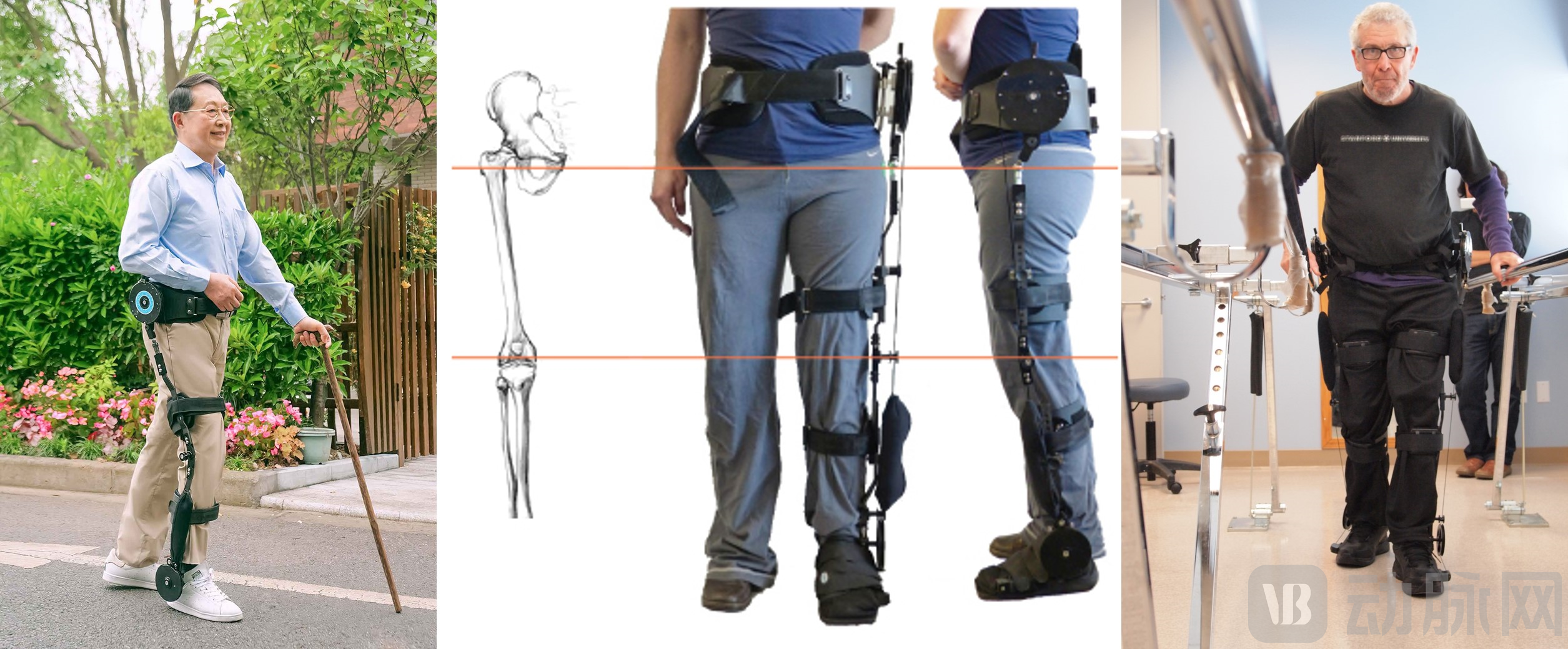
Compared with active exoskeleton robots, which often weigh tens of kilograms and are expensive, this product features a purely mechanical structure without complex motors or control systems, providing assistance through elastic potential energy.The product is lightweight, easy to wear, and offers superior comfort. It is simple to maintain, cost-effective, and suitable for a wide range of usage scenarios.Moreover, without the passive training involving external electrical stimulation, passive devices are better able toStimulating Patients' Active Training, enhance peripheral deep and superficial sensory output stimulation, thereby promoting the reconstruction of neural control mechanisms in patients with lower motor neuron injury, ultimately improving limb motor function and restoring walking ability.
Clinically, Yixing®The lower-limb rehabilitation device has achieved significant intervention outcomes. At Yangzhi Rehabilitation Hospital, affiliated with Tongji University in Shanghai, physicians and rehabilitation therapists monitored and compared various data and functional indicators of multiple hospitalized stroke patients with and without the use of this device. Significant differences were observed in metrics such as balance ability, walking efficiency, and three-dimensional gait analysis. Stroke patients with hemiplegia who trialed Yixing®Following the use of the lower-limb rehabilitation device, overall satisfaction reached 91%. These findings have been published in the journal *Journal of Neuroengineering and Rehabilitation*.
“Our products not only possess core technological barriers in exoskeleton and artificial tendon design, but unlike other products, we have, from day one,”Placing great emphasis on evidence-based medicine and the collection of clinical data.“Ms. Guan Qi, Co-founder and General Manager of Real Star Rehabilitation, told VCBeat. The company’s R&D team adheres to strict review standards for its products; before each product is launched, patients are recruited to conduct”“Million-Step Test”, to identify potential risks associated with the equipment and implement optimizations.
“Although the equipment across several major series may appear similar in appearance, we have in fact undergone more than ten generations of updates and optimizations. With patients in mind, we constantly strive for perfection, aiming to ensure the safety, reliability, and comfort of our products,” emphasized Mr. Guan.
Real Star Rehabilitation remains true to its original mission of benefiting millions of ordinary stroke patients with hemiplegia. Compared to active (motor-driven) exoskeleton robots, Real Star’s devices are priced at only a fraction—often just 1/10th or even 1/100th—of the cost. This approach maximizes affordability for patients’ families while ensuring effective rehabilitation outcomes.
April 2021, Yixing by Shanghai Real Star Rehabilitation Equipment Co., Ltd.®The household model is a designated product included in the “Shanghai Community Leasing Service (Pilot) Product Catalog for Rehabilitation Assistive Devices (2021 Edition),” initiated by four ministries and commissions: the Ministry of Civil Affairs, the National Development and Reform Commission, the Ministry of Finance, and the China Disabled Persons’ Federation.
It is worth noting that only 52 products across China were selected for this catalog, including Yixing by Shanghai Real Star Rehabilitation Equipment Co., Ltd.®It is the only lower-limb exoskeleton-assisted walking training product in its category, bringing the once “luxury” lower-limb exoskeleton robot into ordinary households and establishing it as a domestic civil welfare project that benefits the public.
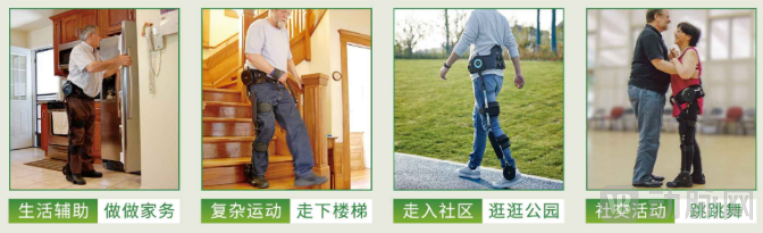
In terms of rehabilitation philosophy, Yixing Rehabilitation advocates for active rehabilitation, enabling users to train while walking and encouraging them to step out of their homes, descend stairs, engage with their communities, return to daily life, and embrace life with a positive attitude.
Upholding its original commitment to patient-centric care and stringent quality control requirements, Real Star Rehabilitation, after years of dedicated development, began to shine in major competitions across China starting in 2020:
In May 2021, Real Star Rehabilitation was honored with the “Annual Most Promising Enterprise Award for Chinese Rehabilitation Robots”;
In June 2021, Real Star Rehabilitation won the bronze award at the 9th China Elderly Welfare Competition;
In October 2021, Real Star Rehabilitation was honored with the Outstanding Enterprise Award at the 10th China Innovation and Entrepreneurship Competition;
In November 2021, Yiran Rehabilitation won the Second Prize in the Shanghai Regional Finals of the First Global USTC Alumni Innovation and Entrepreneurship Competition;
In September 2022, Real Star Rehabilitation won the championship in the rehabilitation robot track of the iFlytek AI Developer Competition.
In terms of commercialization, Real Star Rehabilitation adheres to a dual-drive market strategy for both domestic and international markets.
In the domestic market, Shanghai Real Star Rehabilitation Equipment Co., Ltd. andFushoukang, Sinopharm Health and Elderly CareIt has established strategic partnerships with several large national chain rehabilitation and nursing institutions, covering over one hundred rehabilitation hospitals across China and serving nearly 10,000 patients to date. According to Mr. Guan, Yiran Rehabilitation will establish direct sales teams in the four key markets of Beijing, Shanghai, Guangzhou, and Shenzhen, while hospital channels in other provinces and cities will primarily be expanded through local distributors.
In terms of exports, Shanghai Real Star Rehabilitation Equipment Co., Ltd.’s products have gained market access in Taiwan (China), Hong Kong (China), Malaysia, and Singapore. Notably, the company has secured approval under the Assistive Devices Subsidy Program in Taiwan (China) and is currently undergoing the approval process for innovative rehabilitation equipment with the Elderly Commission in Hong Kong (China). Furthermore, the company has established a strategic partnership with Perkeso, the largest rehabilitation training center in Kuala Lumpur, Malaysia, marking its initial entry into the Southeast Asian market.
Looking to the future, Mr. Guan stated that lower-limb rehabilitation devices will inevitably evolve toward intelligence. In response, Shanghai Real Star Rehabilitation Equipment Co., Ltd. is actively engaged in the technological development and product creation of an intelligent gait analysis system. Reportedly, this product will be used in conjunction with the Yixing series products to collect data generated during users’ daily training sessions. By leveraging AI to integrate this data, the system will generate intelligent reports via a mobile app, thereby assisting patients and physicians in promptly monitoring and adjusting training regimens.The application of intelligent assistive devices will enable remote rehabilitation for patients, facilitate functional reconstruction in individuals with neurological injuries, reduce disability, and promote the realization of universal access to rehabilitation services.