

Navigating the Pitfalls: Key Challenges in Digital Therapeutics Commercialization
“High-quality service + accessibility + low cost” is the ultimate goal of healthcare services.
In traditional healthcare settings, it is difficult to balance all three factors simultaneously, rendering this desirable goal an “impossible trinity.” The emergence of digital therapeutics has digitized the supply of healthcare services, meeting demand through diverse modalities. By transcending traditional care scenarios such as outpatient and inpatient services, digital therapeutics have also achieved significant results in cost reduction and expense control.
With the approval and public listing of overseas digital therapeutics (DTx) products represented by Pear, the DTx trend has also gained momentum in China. According to forecasts by Insight Partners, the global digital therapeutics market size is projected to grow from USD 4.22 billion in 2021 to USD 18.06 billion in 2028, at a compound annual growth rate (CAGR) of 23.1%.
Digital therapeutics, with their immense market potential, have attracted numerous Chinese companies to enter the field. However, there are still many challenges to be addressed in the process of translating digital therapeutics from concept to clinical implementation.
As a typical multidisciplinary “cross-sector” industry, digital therapeutics has attracted a large number of companies from China’s gaming, software, and healthcare sectors to enter the market.
Policy support is also gaining momentum, with Hainan Province taking the lead in incorporating digital therapeutics into its provincial-level plan. This marks the first time that digital therapeutics have received attention and promotion at the provincial level, accelerating their development. Digital therapeutics are transitioning from product innovation—where origins matter less—to the stages of business model construction and market validation.
Precisely because digital therapeutics has evolved from a nascent, unregulated phase to a stage where proving its value is imperative, those merely chanting slogans such as “data-driven,” “disease prevention,” and “patient management” may not truly seize the opportunity. Historical evidence amply demonstrates that only entrants who profoundly grasp the connotations of industry evolution and change are likely to achieve success.
Digital therapeutics should not be viewed merely as an innovation in software functionality; rather, they represent technology-driven transformations in doctor-patient interactions and the expansion and evolution of healthcare providers’ roles. These changes, in turn, influence the development of healthcare delivery models across various fields.
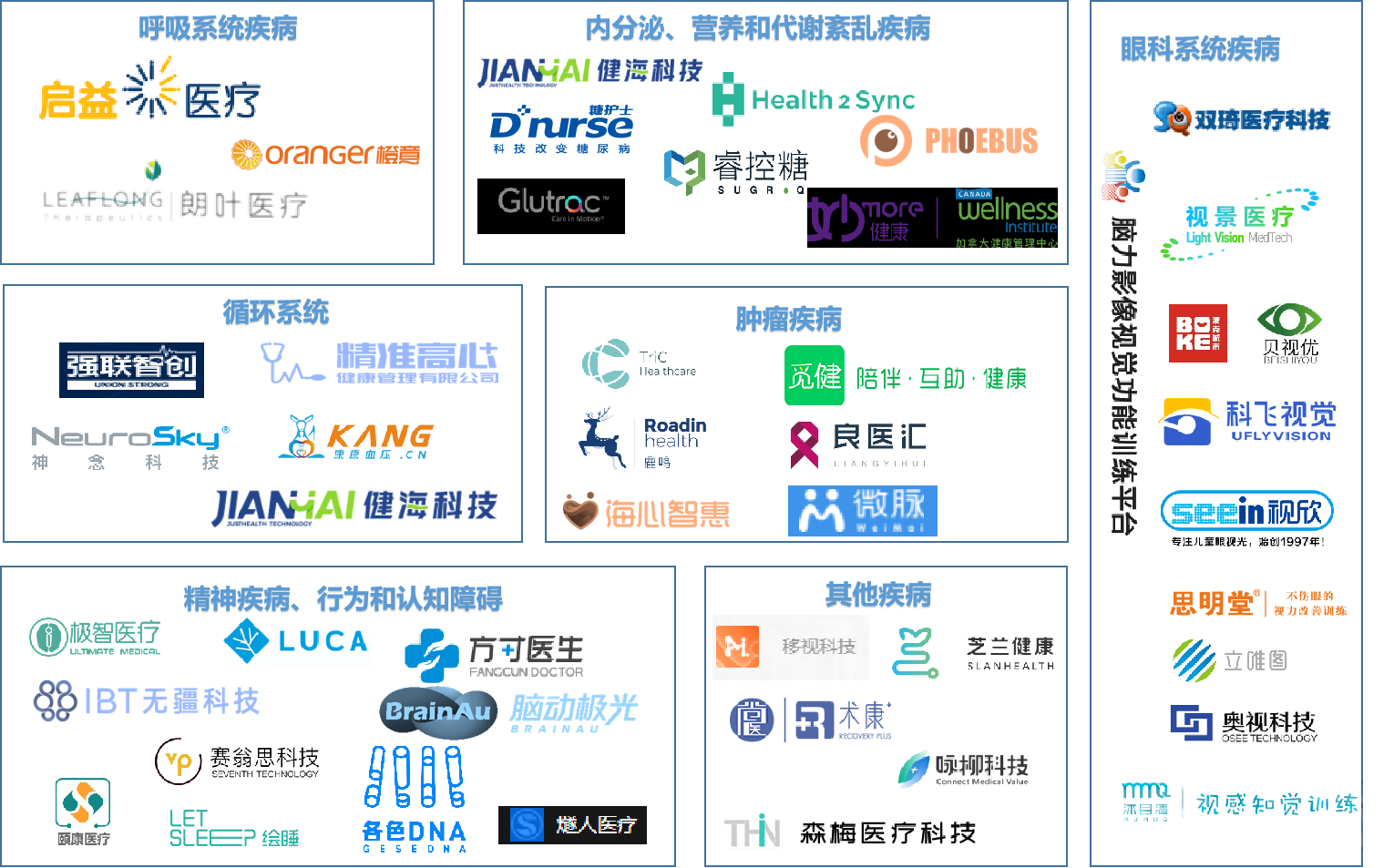
Distribution of Digital Therapeutics Companies in China, Source: VCBeat
According to statistics from VCBeat in the “White Paper on Digital Therapeutics 2.0,” the current digital therapeutics market is categorized into eight major types based on primary indications. Among these, the segments for mental health, behavioral disorders, and cognitive impairments are the most fiercely competitive, while oncology remains the least crowded. Taking childhood autism as a case study, we discuss how digital therapeutics address the shortcomings of traditional medical approaches, demonstrate their core value, and facilitate successful product implementation.
According to the results of China’s Seventh National Population Census, the population aged 0–14 years in China amounts to 253 million. Based on the autism prevalence rate of 2.3% released by the U.S. Centers for Disease Control and Prevention (CDC) in December 2021, there are approximately 6 million children aged 0–14 years with autism spectrum disorder in China. Behind these figures lies the immense life pressure faced by children with autism and their families.
Although the former Ministry of Health issued the Guidelines for Diagnosis, Treatment, and Rehabilitation of Childhood Autism as early as 2010, providing specific guidance on the diagnosis, intervention and treatment, and prognostic implications of autism, the autism rehabilitation industry still faces numerous challenges.
Firstly,Insufficient Diagnostic Capability。
Child psychiatrists play a pivotal role in the timely identification of autism spectrum disorder in children. However, data published in The Lancet indicate that in 2019, China had fewer than 500 child psychiatrists, whereas the United States had approximately 8,000 during the same period, highlighting a pronounced mismatch between supply and demand.
Secondly,Limited Rehabilitation Resources。
Although the total number of autism rehabilitation and education institutions is on an upward trend annually, it remains insufficient relative to the total population of individuals with autism. According to data from the China Disabled Persons’ Federation’s *2021 Statistical Yearbook on Disability Causes in China*, by the end of 2020, the number of rehabilitation institutions for children with autism across China reached 2,681, an increase of 443 compared to 2019. Despite this substantial number of rehabilitation institutions, they still struggle to meet the demand.
Next isLimited Institutional Capacity。
There is no clear standard for assessing the competency levels of rehabilitation institutions. Autism rehabilitation centers vary widely in type and scale, with each institution adopting its own therapeutic philosophies and methodologies; as yet, there is no unified industry standard. This lack of standardized criteria, coupled with a shortage of qualified professionals, has resulted in uneven service quality across different rehabilitation institutions.
Lastly,Heavy Economic Burden。
Children with autism require early intervention of at least 40 hours per week, including both institutional and home-based interventions, sustained for 2–3 years to achieve favorable rehabilitation outcomes. This necessitates that one parent provide long-term companionship and care, resulting in a 50% reduction in household income while simultaneously bearing substantial rehabilitation costs.
These are merely superficial manifestations; deeper underlying issues lie beneath them.
Insufficient diagnostic capacity, driven not only by a shortage of personnel but also by the complexity and time-intensive nature of diagnoses, further exacerbates the scarcity of physician resources. Limited rehabilitation resources translate into inadequate education and training for parents, whose involvement is indispensable for home-based prevention and intervention. With limited service capacity at rehabilitation institutions—some regions even have waiting lists of two to three years—children with developmental disorders often miss the critical window for early intervention, thereby compromising rehabilitation outcomes.
Having clarified these industry issues, how should digital therapeutics enter the market?
In the past, empiricism prevailed in the autism rehabilitation industry, with insufficient attention paid to scientific methods and the value of data. Given the current landscape of autism diagnosis and treatment as well as unmet needs, this field is highly compatible with digital therapeutics. The emergence of digital technologies, such as artificial intelligence and big data, has provided new pathways for autism screening, diagnosis, and intervention.
In July 2022, the National Medical Products Administration (NMPA) officially approved Enqi’s “Software for Early Screening and Assessment of Children’s Cognitive and Behavioral Abilities” as a Class II medical device. This marks the first software product for early screening of children’s cognitive and behavioral abilities in China to receive Class II medical device certification, signifying a major breakthrough in digital therapeutics for childhood autism.
Although it is a screening and assessment software, considerable effort was undoubtedly invested during the R&D process, with numerous challenges overcome, to secure smooth regulatory approval.
01 The Core of Product Digitalization Is Data
During the assessment and diagnosis of childhood autism, clinicians often use scales to aid in diagnosis, but digital therapeutics are far more than just the digitization of these scales.
For physicians, a digitalized scale does not provide substantial assistance in diagnosis. What clinicians require are tools grounded in clinical evidence that can integrate multiple factors—including the child’s age, developmental level, expressive language proficiency, and cultural and environmental context—to aid in the identification of both positive (abnormal) and negative (absent normal) behaviors for diagnostic purposes.
Driven by such frontline needs, Enqi extracts, analyzes, refines, and reconstructs data from a vast accumulation of cases gathered in frontline rehabilitation settings during the development of its digital therapeutics products. The software establishes data models through large-scale, rigorous data training, while relying on long-term tracking, guidance, and comparative analysis by numerous medical experts. Through these efforts, Enqi designs and develops digital therapeutics products on the foundation of specialization, standardization, and scalability.
The value of digital therapeutics in the pediatric autism rehabilitation industry lies in leveraging technological tools such as the internet and big data to enhance professional capabilities. The establishment of specialization, standardization, and scalability is inseparable from the application of data.
02 Behind the Data: The Need for Numerous Partners
Data is merely the foundation; the key lies in the standards used to build data models.
When digital therapeutics are mentioned, most people think of “digital” technologies such as the internet and cloud computing, while overlooking the term “therapeutics.” As the name implies, it is a serious endeavor that must be grounded in evidence-based medicine and underpinned by fundamental clinical medical logic.
Autism early screening software technically detects faces and human behaviors in images, audio, and video. However, its core clinical logic is based on the five warning signs of autism outlined in the "Expert Consensus on Early Identification, Screening, and Early Intervention for Children with Autism Spectrum Disorder" issued by the Chinese Medical Association: "limited or no eye contact," "limited or no response," "limited or no pointing," "limited or no speech," and "inappropriate behavior." The software performs behavioral localization, attribute recognition, and comparative analysis to generate an early risk screening report, assisting medical professionals in the screening and diagnosis of children.
Such a screening and diagnostic system requires the accumulation of large-sample data to establish patient disease progression curves, thereby enabling better identification of patterns and clues. This task cannot be accomplished by a single enterprise alone. Enqi jointly developed the system with Beijing Anding Hospital, Capital Medical University, and the Research Institute for Barrier-Free Development at Tsinghua University. In the process, they established a core teacher database and a child development assessment database for China’s autism rehabilitation industry, laying the foundation for further development.
The software’s validity is grounded in large-scale, multicenter clinical studies. For instance, behavioral data and algorithmic analysis of extensive trial videos—such as assessing the degree of head turning in response to calling a child’s name—are used to identify corresponding positive indicators for autism spectrum disorder (ASD). Only through extensive, iterative calculations and analyses can a standardized metric be established to assess a child’s risk of ASD.
“The medical device certification for early autism screening was a first for both Enqi and the regulatory authorities. We encountered numerous technical challenges during the process, but through iterative testing, we identified and resolved issues, ultimately gaining approval from the National Medical Products Administration,” Wu Jiarui, co-founder of Enqi, told VCBeat.
03 Single-Point Entry to Build a Closed-Loop Digital Service Platform
The traditional medical care pathway for autism comprises six key stages: pre-consultation screening to identify potential issues; in-clinic physician diagnosis and functional assessment; post-discharge development of an Individualized Education Program (IEP) and rehabilitative training; and inclusive education during the rehabilitation phase.
If only screening is performed, the market ceiling will inevitably be limited, which is unfavorable for corporate development.
While co-developing early screening software for autism spectrum disorder (ASD), Enqi has also leveraged its digital capabilities to collaborate with domestic and international industry experts and scholars from institutions such as Beijing Normal University, Capital Medical University, and Peking University, jointly creating the “Series of Behavioral Intervention Courses for Children with ASD.” The company has established a teacher training platform featuring a standardized talent development system, the home-based IDEA program integrating family and school efforts, the OpenK intelligent rehabilitation decision-making management system, the VB-MAPP Assessment Assistant and IDEA-S Assessment Assistant for in-clinic evaluation, and offline IDEA Rehabilitation Centers to ensure the delivery of high-quality rehabilitation services and validate the scientific rigor of its initiatives.
EnQi has established a digital healthcare service loop centered on “early screening and rehabilitation for children with autism.” By entering the market through a dual-arrow cycle of therapist training/education and diagnostic screening, it has expanded to cover the entire medical care process, ultimately building a digitally driven, closed-loop rehabilitation system that integrates “online + offline” and “in-hospital + out-of-hospital” services. Digital management and control services are provided across the full rehabilitation spectrum, from screening and diagnosis, capability assessment, and rehabilitative intervention to subsequent inclusive education.
It is evident that digital therapeutics have implemented a comprehensive strategy for deployment in specialized fields. By addressing a genuine industry pain point (screening and diagnosis), leveraging technologies such as big data and AI to develop digital products, and utilizing their own digital capabilities to empower the entire process and all scenarios within these niche sectors, they achieve the strategic goal of driving industry development through digitalization.
In the future, digital therapeutics should serve as a high-efficiency, high-quality, low-cost, and highly accessible complementary role in the real-world healthcare setting.
Designing the optimal model for integrating digital therapeutics with the existing healthcare industry within the framework of serious medicine. Based on this logic, digital therapeutics have begun to be implemented in multiple specialized fields, such as musculoskeletal rehabilitation following sports injuries.
Fudong Musculoskeletal’s digital therapy product, JOYMOTION, received Class II medical device certification in June this year.TM, it is a remote rehabilitation therapy system that integrates software and hardware, developed through digital means.
This system collects patient information through multi-dimensional methods, including sensor data, questionnaires, medical imaging, and video consultations, to conduct assessments and generate rehabilitation plans. During the training phase, sensors real-time capture motion data and provide error-correction feedback, replacing the traditional one-on-one supervision and guidance provided by rehabilitation therapists.
As the only digital therapeutics team in China with its own medical institution, Fudong Musculoskeletal has deeply integrated “industry, academia, and research” since its inception. It has also recognized that the mainstream B2B2C model for digital therapeutics primarily relies on hospital physician referrals and out-of-pocket payments by patients. Experts do not lower their requirements and standards for serious medical products simply because they are digital.
Therefore, Fudong Musculoskeletal will further integrate AI technology into its R&D efforts to accelerate the approval process for Class III medical device certification.
Currently, JOYMOTION Yue XingdongTMDigital therapeutics products have undergone clinical testing at Grade A tertiary hospitals and Fudong Musculoskeletal Rehabilitation Clinics, covering more than 230 patients. Among them, approximately 142 cases were post-operative knee sports injuries, and about 88 cases involved lower back pain and chronic knee pain. The overall patient satisfaction score (NPS score on a scale of 0-10) was 9.4.
Unlike laboratory studies, where data are more readily accessible, acquiring real-world data for clinical research is considerably more challenging. Fudong Musculoskeletal has been continuously establishing and refining a multi-disease database generated through the digitalization of the entire diagnosis and treatment cycle, providing substantial data support for clinical research projects undertaken by specialist physicians.
Digital therapeutics have evolved from the stage of concept introduction to one focused on demonstrating efficacy. At this juncture, digital therapeutics must prove their core value to gain recognition from all market stakeholders. Recognition by hospitals, physicians, and distribution channels all requires robust clinical data support. Only by achieving such broad-based acceptance can the industry enter a phase of large-scale commercialization.
Digital therapeutics face numerous challenges during implementation. For companies developing digital therapeutics, what areas should they focus on to enhance their competitiveness?
First, from a professional standpoint, it is essential to have substantial accumulation of industry resources to help establish a solid clinical foundation for the product. During product design, academic foresight regarding future industry development should be considered, ensuring the capacity to accommodate emerging research directions. Meanwhile, upon implementation, the digital therapeutic product should be objectively analyzed and evaluated to facilitate targeted market entry and promotion.
Secondly, from a technical perspective, there must be the capability to build a high-barrier technology platform. If a field lacks entry barriers, it will quickly become “hyper-competitive” and turn into a red ocean. Here, “barriers” refer to establishing a comprehensive management platform system that covers the entire process—including monitoring, services, disease management, solutions, and drug supply—by leveraging hardware, software, compliant data, and clinical evidence.
Another key factor is an open and innovative mindset. The iteration cycle in the field of digital therapeutics (DTx) is significantly faster than that of traditional pharmaceuticals and medical devices, requiring companies to maintain an open mindset and embrace innovation. Only in this way can they effectively integrate with the broader ecosystem, including patients, their families, physicians, hospital departments, and payers such as public health insurance and commercial insurers, as well as other ecosystem partners like pharmaceutical manufacturers and medical device companies. A company’s capability for ecosystem collaboration is just as important as its accumulation of industry resources.
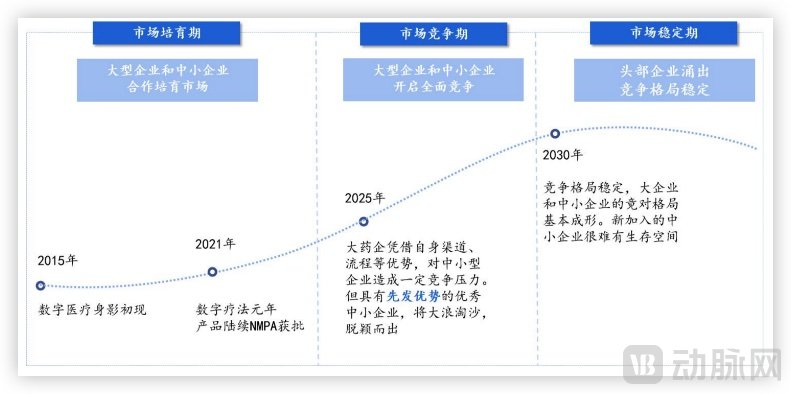
Three Stages of Development in the Digital Therapeutics Market, Source: VCBeat
Finally, commercialization capability. Digital therapeutics products are gradually being implemented in the market. Whether it is gaining recognition from doctors and hospitals through marketing to reach more patients via physician channels, collaborating with pharmaceutical companies, medical device manufacturers, and insurance providers to leverage their distribution networks for promotion, or adopting other business models, all of these rely heavily on strong business development (BD) capabilities.
As a novel medical approach or digital health solution, digital therapeutics (DTx) attracted significant corporate entry and capital attention in recent years. Today, DTx is gradually transitioning from concept to practical application, and expanding into the in-hospital market will become one of the core priorities for DTx companies. Building relevant capabilities will be a key indicator of corporate competitiveness.
At the current stage of development, "efficacy" has become a critical focus for digital therapeutics.
Currently, there are approximately 30 digital therapeutics products in China that have obtained the corresponding qualifications. However, due to a lack of recognition by clinical experts, it is difficult for them to be included in physicians’ prescriptions, and they remain some distance away from widespread clinical adoption.
In the coming years, the most critical factor for digital therapeutics (DTx) will remain the product itself; only high-quality products can yield successful commercialization. Whereas previous efforts focused merely on managing specific aspects of diseases, DTx must now address the entire disease course, with particular emphasis on defining clinical endpoints. Digital therapeutics should be products with clearly demonstrated clinical efficacy. Realizing this vision requires the participation of more competitive enterprises.