

From Widespread Adoption to High-Quality Development: Tencent Shares Practical Insights on WeChat Electronic Health Card Open Platform
Under the multi-stakeholder model of shared development and co-construction, China has essentially completed the foundational work for the widespread adoption of electronic health cards, ushering in a new phase of high-quality development. To consolidate existing achievements and further enhance the innovative application capabilities, secure connectivity, and modern governance of healthcare systems, the "National Electronic Health Card (Code) High-Quality Development Exchange Conference" series was held on September 16. Organized by the Health Card Application and Management Professional Committee of the Chinese Society for Health Information and Medical Big Data, and co-organized by Tencent Health, the inaugural session focused on the theme "Deepening Standardized Applications for High-Quality Development." Participating experts provided in-depth interpretations, explored future directions, and shared experiences regarding the new requirements for the high-quality development of electronic health cards, thereby charting a course for all nodes in the electronic health card industry chain to meet new standardization requirements.
 See the end of the article for the detailed agenda.
From its nationwide debut in December 2017, to the National Health Commission’s issuance of the “Opinions on Accelerating the Popularization and Application of Electronic Health Cards” in December 2018—which propelled electronic health cards onto a fast track of rapid development—and further to a cumulative issuance exceeding one billion cards, China’s electronic health card system progressed from initial establishment to near “universal coverage” in less than five years. Data shows that by the end of August 2022, electronic health cards had been officially launched and operational in 29 provinces (autonomous regions and municipalities) and the Xinjiang Production and Construction Corps, achieving a permanent resident population coverage rate of approximately 71%; they were available in 261 cities (excluding districts directly under municipalities), representing a city coverage rate of about 72%; and they had been integrated into 2,137 tertiary hospitals and 4,088 secondary hospitals nationwide.
Today, a nationwide pattern of widespread adoption and application of electronic health cards has been established. Their role in supporting and promoting the effectiveness of “Internet + Healthcare” convenience applications is highly evident, and a development ecosystem with multi-party participation from social forces is gradually taking shape. Meanwhile, with the release of the Guidelines for the Construction and Management of Electronic Health Cards (V3.1) (hereinafter referred to as the “V3.1 Construction Guidelines”), the development of electronic health cards has officially entered a new stage of transition toward high-quality development. So, what are the future development directions and specific construction goals for electronic health cards?
Regarding the blueprint for future directions, Jin Xiaotao, former Deputy Director of the National Health and Family Planning Commission and current President of the Chinese Society of Health Informatics and Medical Big Data, stated, “We should exert greater efforts, drive further innovation, break new ground, and forge ahead in four key areas: adhering to correct guidance and direction, promoting technological innovation, fostering coordinated development, and upholding Chinese characteristics, so as to achieve the goals and tasks for the high-quality development of electronic health cards.”

Mao Qun’an, Director of the Department of Planning, Development, and Informatization under the National Health Commission, outlined specific pathways for innovative application development. He stated that the nation will prioritize four key initiatives in the future: First, ensure that every resident has a dynamically managed electronic health record (EHR) and a fully functional electronic health card (code), achieve family doctor contracting services for every household, establish several regional health and medical big data centers and “Internet + Healthcare” demonstration provinces, and basically form a national health information service system characterized by digitalized institutions, networked resources, intelligent services, and integrated supervision within the health sector. Second, promote the digitization, automation, and paperless operation of government management services, remove institutional barriers, break down information silos, and actively facilitate seamless switching among residents’ electronic health codes, medical insurance settlement codes, and financial payment codes, thereby strengthening information and business interoperability to enhance convenience for the public. Third, relying on the National Population Health Information Platform and the National Basic Population Information Database, build a national cross-domain master index service system for electronic health codes, establishing a unique master index for residents primarily based on their ID numbers, supplemented by other identification numbers. Fourth, promote the standardization of in-hospital patient master indices in public hospitals at Level II and above, and gradually phase out physical medical cards that are limited to use within single medical institutions. These measures aim to connect electronic health cards with more innovative application scenarios for “Internet + Healthcare” convenient services, opening up broader and clearer avenues for development.

In this regard, Zhou Gongwei, Deputy Director and Research Fellow of the Statistical Information Center of the National Health Commission, and Chairman of the Health Card Application and Management Professional Committee of the Chinese Society for Health Informatics and Medical Big Data, speaking as a representative of the national department promoting electronic health card applications, stated, “In 2022, under the leadership of the Chinese Society for Health Informatics and Medical Big Data and the guidance of the Statistical Information Center of the National Health Commission, the Health Card Application and Management Professional Committee will continue to fully leverage its vitality, work with colleagues to deeply explore the application value of electronic health codes, further promote the secure and standardized operation of electronic health codes, deepen convenient and beneficial applications, provide residents with whole-life-cycle health services, and support the high-quality development of the health sector.”

From strategic direction to work deployment, the attending leaders have charted a new blueprint for the high-quality development of electronic health cards in the new era, providing builders engaged in the new infrastructure construction of electronic health cards with more concrete goals.
Electronic Health Cards emerged alongside the rapid development of information technology, representing an effective integration of technological advancements and healthcare informatization. The application of mature technologies serves as their foundational infrastructure. To this end, the Information Statistics Center of the National Health Commission introduced professional strategic partners to develop application scenarios for Electronic Health Cards, aiming to promote card issuance through practical applications and benefit the public through enhanced services, thereby establishing a comprehensive Electronic Health Card service system. Tencent is one such partner. On January 21, 2019, the Information Statistics Center of the National Health Commission entered into a strategic cooperation agreement with Tencent on innovative applications of Electronic Health Cards. Leveraging WeChat’s powerful reach via its ecosystem of 1.3 billion active users and its robust technical infrastructure, WeChat became the primary channel for the rapid adoption and popularization of Electronic Health Cards, achieving 1 billion registered users.
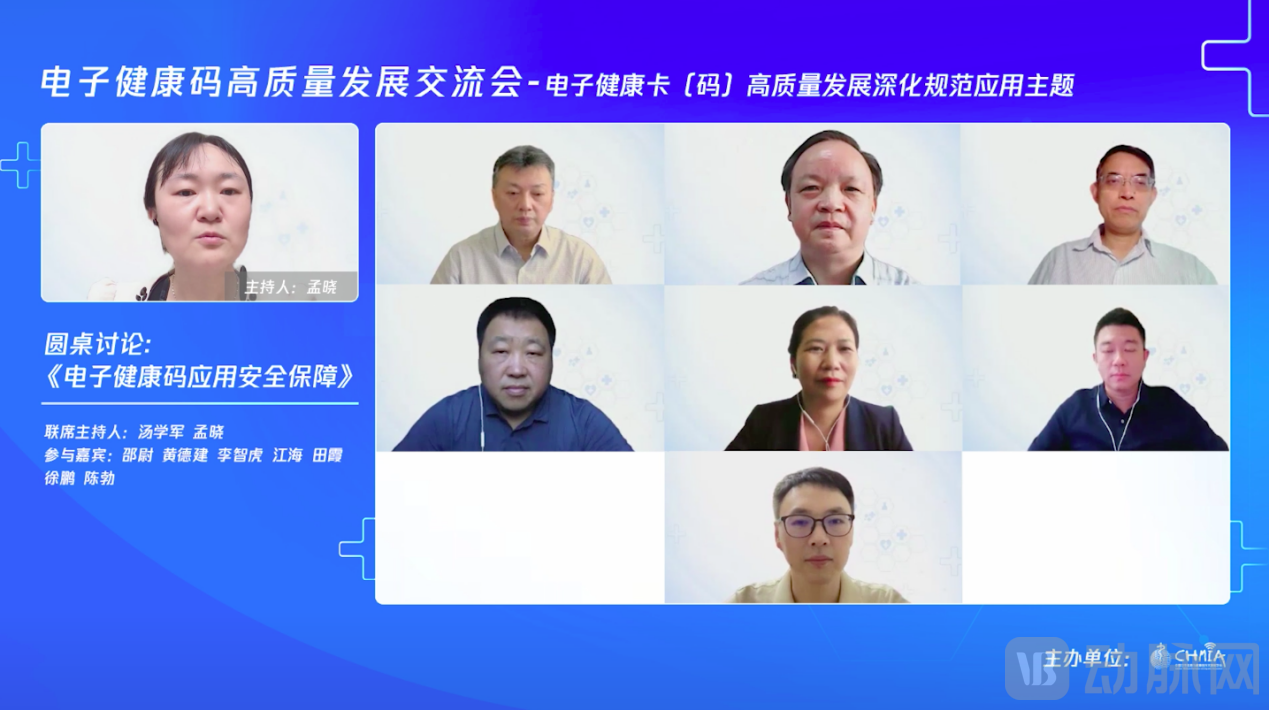
At the conference, Chen Bo, Product Director of Tencent Health’s Electronic Health Card Division, introduced Tencent’s experience in developing electronic health cards.
First, we aim to create incremental value through the WeChat channel, enabling healthcare institutions to achieve rapid and efficient integration, widespread adoption, rich application scenarios, and a secure environment when leveraging WeChat. Specifically, we are building an Open Platform for Electronic Health Cards on top of the WeChat ecosystem, providing targeted support for the integration and widespread adoption of health cards in the medical vertical, while also offering WeChat-specific capabilities. These include a suite of PaaS-level features such as “Real-Person and Real-Name Identity Verification,” “AI Engine,” “Account Security,” “Message Delivery,” and “Structured Reporting.” Meanwhile, we continuously deliver tailored solutions aligned with various business scenarios, including medical consultations, epidemic control, integration of medical care and disease prevention, health management, and vaccination.
“Secondly, by integrating internal and external resources, we have promoted the electronic health card to increase public awareness and continuously optimized the product experience to encourage actual adoption. ‘We have segmented healthcare-related scenarios—such as pre-consultation, during consultation, post-consultation, hospitalization, and laboratory and imaging tests—to identify high-frequency touchpoints for residents. Through promotional materials, themed content, volunteer guidance, and media publications, we have expanded our reach and enhanced user perception. Additionally, we have upgraded solutions and iterated products by addressing service bottlenecks. For instance, we introduced intelligent pre-triage to reduce waiting times before consultations; upgraded self-service kiosks to allow login via scanning the electronic health card for residents who forget their identification documents; and implemented electronic escort passes and electronic hospitalization certificates to minimize the need for paper documentation prior to admission,’ said Chen Bo.”
Currently, the WeChat Electronic Health Card Open Platform has been integrated across 23 provincial-level administrative regions in China and more than 5,000 hospitals, including Hunan Province, one of the national benchmarks for electronic health cards.
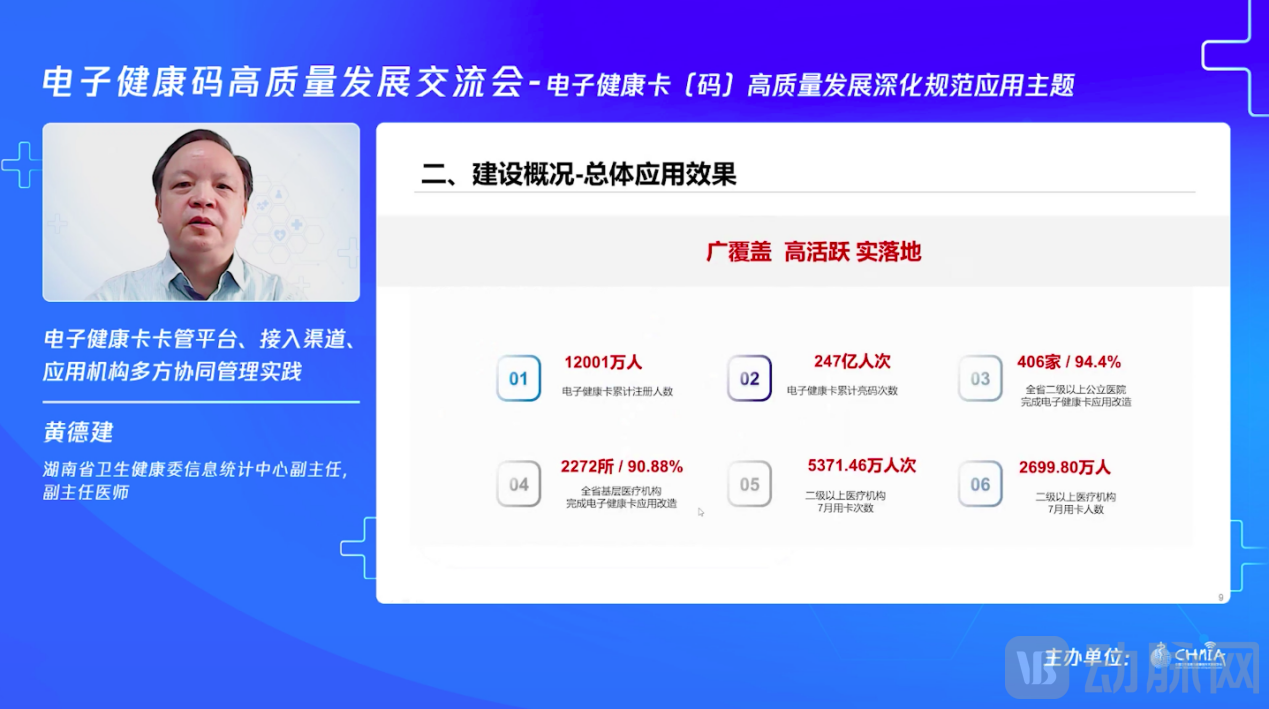
Hunan was among the first pilot provinces where Tencent Health implemented its solutions. The Electronic Health Card system of the Hunan Provincial Health Commission was entirely developed by Tencent Health. “As of August 31, the cumulative number of registered users for the Electronic Health Card in Hunan Province had reached 120 million, with the card being presented a total of 24.7 billion times. In July 2022 alone, 53.7146 million visits were made using the Electronic Health Card at public hospitals at secondary level or above, involving 26.998 million unique individuals.” As a firsthand witness to the popularization and application of the Electronic Health Card in Hunan Province, Huang Dejian, Deputy Director of the Information and Statistics Center of the Hunan Provincial Health Commission, shared practical experience from the collaboration between Hunan and Tencent Health. “The cooperation with the WeChat Electronic Health Card Open Platform has enabled the construction and upgrading of Electronic Health Card systems across medical institutions at all levels in Hunan Province, achieving the four advantages of ‘greater scale, faster implementation, better quality, and cost efficiency,’” Huang introduced.
This primarily refers to the ability of the WeChat channel to facilitate rapid user adoption. Since nearly every user has WeChat installed on their mobile phone, the cost of penetration is extremely low. Furthermore, WeChat offers multiple access points, such as Service Accounts and Mini Programs, enabling ubiquitous integration of the Electronic Health Card (EHC). For instance, healthcare institutions can batch-upgrade massive numbers of existing users to EHCs with a one-click activation, while new users can complete registration in just three steps. This approach significantly increases the number of users registering for the Electronic Health Card.
“Fast” refers to the ability to go live quickly. Since most hospitals have already launched WeChat Service Accounts, they can integrate the service with only minor modifications, eliminating the need for new infrastructure; the fastest deployment can be completed in just three days. Furthermore, “the WeChat Electronic Health Card Open Platform can flexibly adapt to both online and offline medical processes across different types of hospitals, while providing integration guidelines and technical training,” emphasized Huang Dejian.
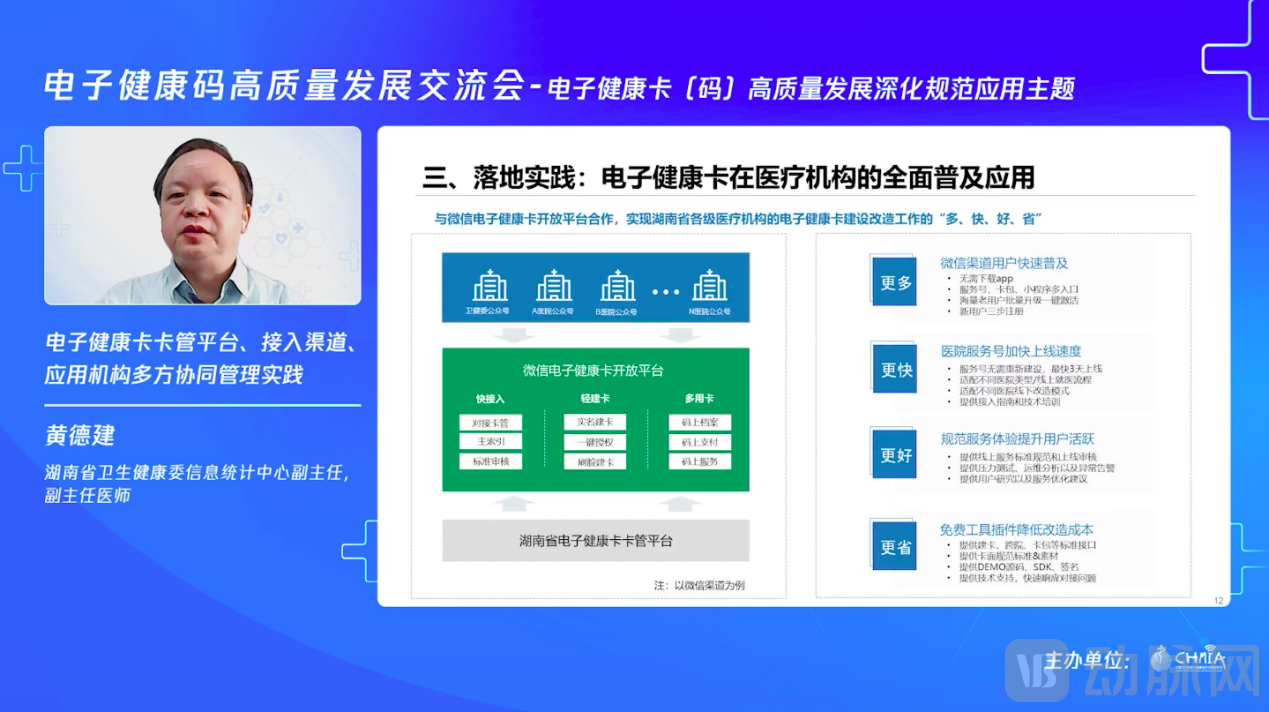
“Good” refers to enhancing the quality of medical services. Tencent has established online service standards and implementation review processes, which help standardize medical services and improve user satisfaction. Meanwhile, it also provides stress testing, operations and maintenance analysis, anomaly alerts, as well as user research and recommendations for service optimization, thereby making primary healthcare services more refined and patient-centered.
“The term ‘savings’ refers to the various free tools available on the WeChat Electronic Health Card Open Platform. For instance, standard interfaces such as cross-institutional card creation and usage, card wallet functionalities, card face specifications and design assets, DEMO source code, SDKs and signature tools, along with technical support and rapid-response integration services, can effectively reduce the costs associated with system upgrades for healthcare institutions,” said Huang Dejian.
It is reported that, at present, 406 public hospitals at the secondary level and above in Hunan Province have completed the application upgrades for electronic health cards. Among 2,500 primary healthcare institutions, 2,272 have also completed their upgrades. This includes areas with relatively high poverty levels, such as the Xiangxi Tujia and Miao Autonomous Prefecture and Huaihua City, where application systems have been fully upgraded. The next step will involve the deployment of barcode scanning devices.
“In recent years, the Electronic Health Card has seen extensive innovative development in areas such as internet-based healthcare, convenient and beneficial public services, optimization and restructuring of internal hospital processes, and particularly in the prevention and control of the COVID-19 pandemic. Our reliance on it has grown significantly. Therefore, under an open and interconnected environment, the security assurance of the entire Electronic Health Card platform warrants thorough research,” stated Tang Xuejun, Director of the Department for Primary-Level Informatics and Health Card Management at the Statistical Information Center of the National Health Commission, and Research Fellow.
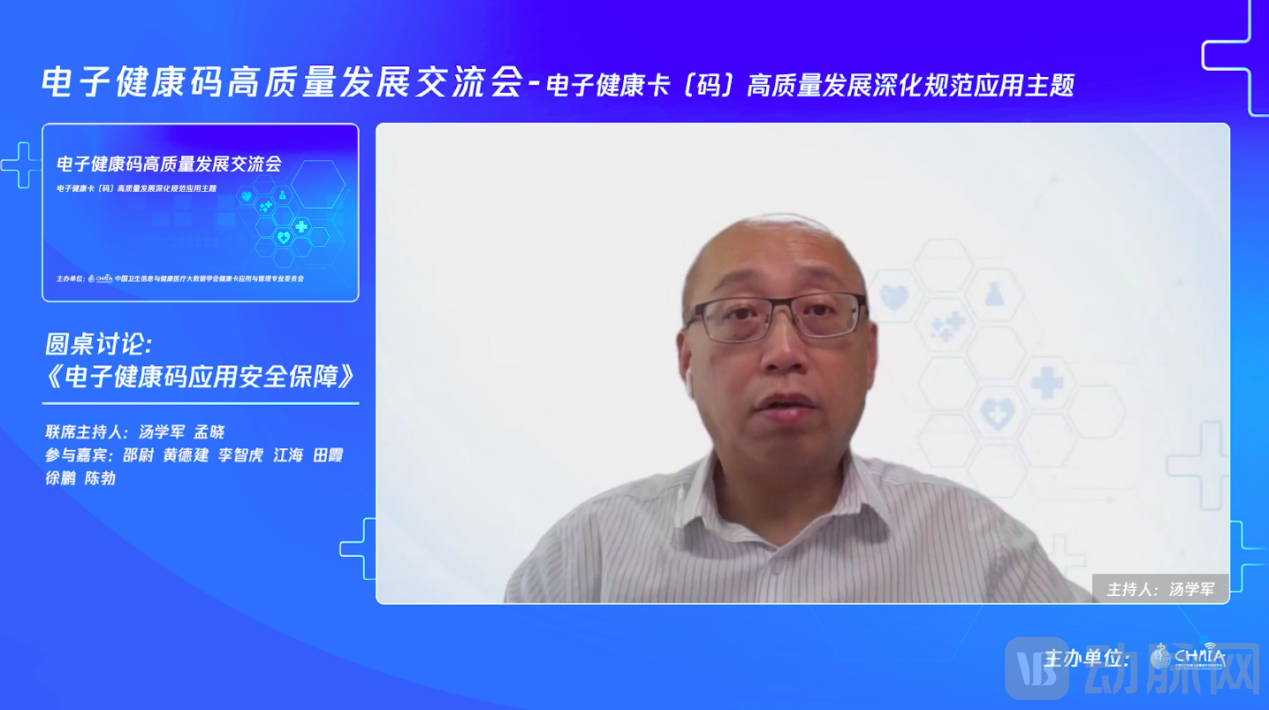
“Security is the baseline for the construction and operation of the electronic health card system, and it is also another key topic of this conference. On one hand, if the electronic health card system platform is compromised, public access to medical care will inevitably be affected. On the other hand, the platform stores a vast amount of personal information, including sensitive data; any data breach could harm citizens’ personal interests in minor cases, or even jeopardize national security in severe cases,” explained Tian Xia, Secretary-General of the China Critical Information Infrastructure Technology Innovation Alliance.
“As the builder and operator of the Health Card Platform,” said Shao Wei, Director of the Liaoning Provincial Health Commission’s Office for the Promotion of Health Informatization, “our primary focus is on the platform’s legal and technical compliance.” This further translates to ensuring information security and system stability.
“In fact, the Statistical Information Center of the National Health Commission has adopted cryptographic technologies to provide comprehensive lifecycle security protection for electronic health cards, thereby ensuring the foundational security of healthcare information systems,” said Li Zhihu, a senior technical expert at the China Electric Power Research Institute. The newly revised “Version 3.1 Guidelines” also impose stricter requirements on information security and equipment stability. “In terms of equipment management, not only have regulatory requirements been established for the management of cryptographic devices, but additional technical measures have also been introduced, along with significant adjustments to the application of cryptography,” stated Jiang Hai, a senior engineer at the National Information Technology Security Research Center.
Regarding standardization, Xing Fugong, Deputy Director of the Wuhan Health Information Center, Senior Engineer, and Hubei Provincial Regional Interconnectivity Review Expert, proposed that, first, a baseline awareness must be established; second, the foundation of security must be solidified.
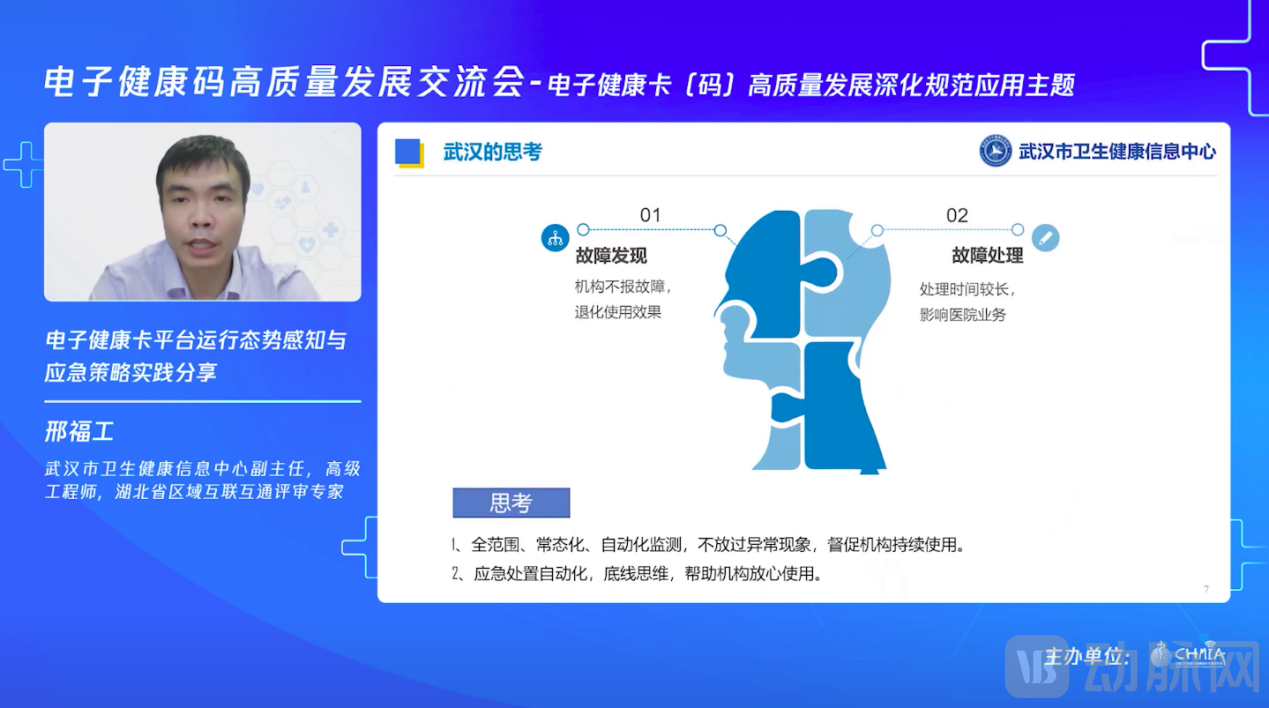
Xu Peng, a security expert at the China Software Testing Center, stated that addressing specific security issues requires, on the technical front, ensuring problem detectability and implementing robust prevention and emergency response measures; on the management front, establishing sound security management systems to constrain platforms’ secure, stable, and standardized operations, thereby minimizing risks.

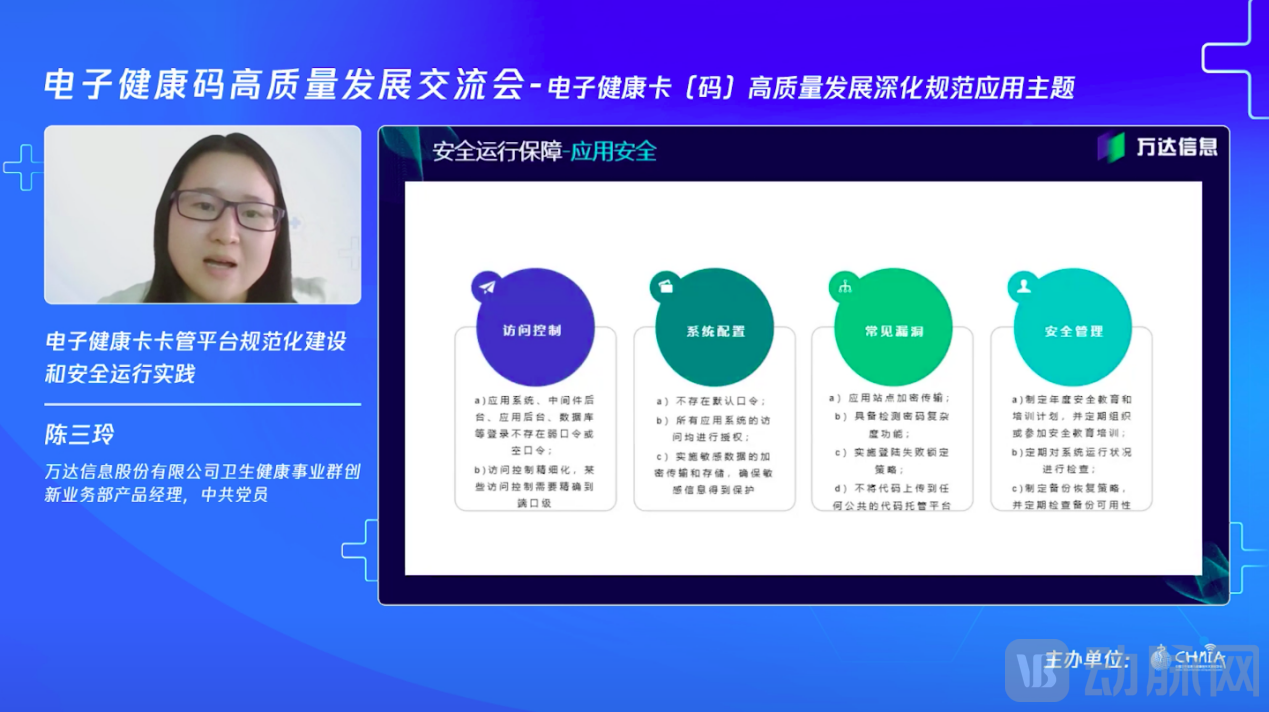
Chen Sanling, Product Manager of the Innovative Business Department under the Health and Wellness Business Group at Wanda Information Co., Ltd., shared practical insights as a representative of the application co-construction party. “Wanda Information conducts regular application security checks, primarily covering the operating environment, service components, application backend, and security protections. Meanwhile, in terms of data compliance, we have also adopted security measures from a management perspective, such as data classification and grading.”
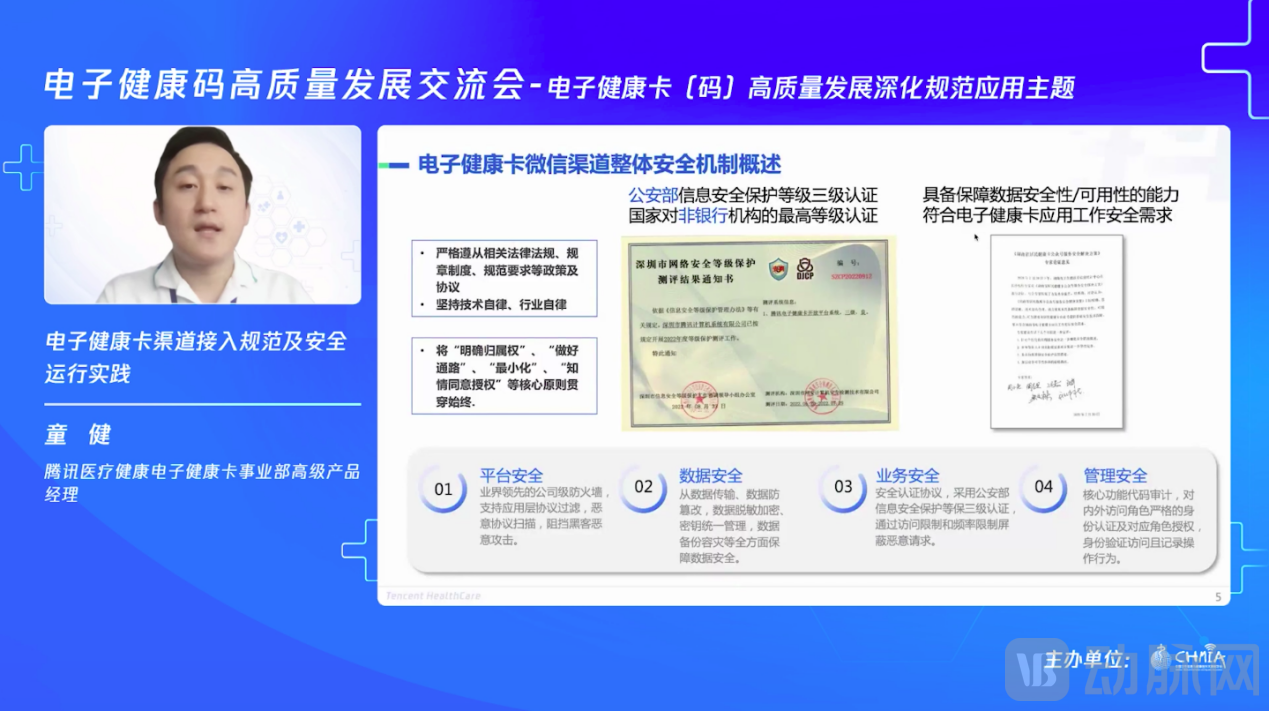
The WeChat Electronic Health Card Open Platform has also established a relatively comprehensive and standardized framework encompassing access procedures, application promotion, and security safeguards. Tong Jian, Senior Product Manager of the Electronic Health Card Division at Tencent Health, stated that the WeChat Electronic Health Card Open Platform has built an integrated security mechanism covering four dimensions: platform security, data security, business security, and management security, thereby forming a robust system that spans from onboarding processes to application rollout and ongoing security protection.
“Tencent supported the development of access guidelines for the WeChat channel, enabling healthcare institutions to strictly adhere to national standards and specifications for electronic health card integration, thereby laying a solid foundation for their high-quality development. Meanwhile, it provided security standards to ensure page security, data security, access security, and QR code security. Furthermore, Tencent supplied us with protocol standards for HTTPS and JSON. Through a series of functionalities—including review processes, access testing, launch audits, and regular inspections—it not only enhanced system stability but also ensured efficient data transmission, thereby improving the service quality of electronic health cards,” stated Huang Dejian when introducing Hunan’s experience in the standardized development of its electronic health card system.
Today, the electronic health card is no longer merely a “card” that resolves bottlenecks in public access to medical care; it also plays a vital role in enabling cross-institutional and cross-regional mutual recognition and interoperability of patient identification cards, promoting the mutual recognition and sharing of electronic health records and electronic medical record information, facilitating regional healthcare service coordination, improving healthcare quality and patient safety, and supporting the new paradigm of tiered diagnosis and treatment services. In the future, guided by the principles and direction of high-quality development, the electronic health card will contribute to the high-quality advancement of public health initiatives, the construction of a Healthy China, and the great rejuvenation of the Chinese nation.
It is understood that the “National Electronic Health Card (Code) High-Quality Development Exchange Conference” will be held online in four sessions. The first session will take place on September 16, followed by three consecutive sessions at the end of the month (specific topics and agenda are listed below). Professionals from the healthcare system and related industries are warmly welcome to participate actively.
Meeting Agenda:
Session 1: September 16, 2022 — Theme: High-Quality Development and Deepened Standardized Application of Electronic Health Cards (Codes)
9:00 AM, Tencent Meeting ID: 317-3325-3132
14:00, Tencent Meeting ID: 317-3325-3132
Session 2: September 27, 2022 – Theme: Electronic Health Cards (Codes) Supporting Epidemic Prevention and Control and Healthcare Services Applications.
2:00 PM, Tencent Meeting ID: 317-3325-3132
Session 3: September 28, 2022—The Theme of Deepening the Application of Electronic Health Cards (Codes) to Support National Health Services
14:00, Tencent Meeting ID: 317-3325-3132
Session 4: September 29, 2022—Theme: Electronic Health Card (Code) Supporting One-Stop Settlement and Credit-Based Medical Services
14:00, Tencent Meeting ID: 317-3325-3132