

HealthMatch Raises $6.8M in Series C Funding to Scale AI-Powered Clinical Trial Matching Platform

HealthMatch
Patient and Clinical Trial Matching Platform Provider

January Capital
Venture Capital Firms

Folklore
Venture Capital Firm

Square peg Capital
A venture capital firm based in Melbourne, Australia
On September 12, 2022, HealthMatch, a digital health company focused on matching patients with clinical trials, completed a AUD 10 million (USD 6.8 million) Series C financing round. The round was led by Folklore Ventures, with participation from Square Peg Capital. The funds will be used to further expand its team and platform coverage in the United States.
Prior to this, the company secured USD 6 million in Series A financing on November 5, 2019, and AUD 18 million in Series B financing on December 8, 2020.
HealthMatch was founded in 2017 and is headquartered in New South Wales, Australia,To date, more than 1 million patients have used the matching services provided by the platform.Last month, more than 2,000 patients enrolled in clinical trials through HealthMatch, covering studies on post-traumatic stress disorder, Phase I/II trials for sleep apnea, Phase III trials for atopic dermatitis, major depressive disorder, and neuropathic pain.
Total Matches Exceed 3.6 Million
As is well known, due to their long duration and high investment requirements, clinical trials have always been the most challenging aspect for pharmaceutical companies striving to reduce costs and improve efficiency. Generally, costs in the clinical phase account for more than 66% of the total cost of new drug development. The FDA estimates that the average cost of conducting a Phase I, II, or III clinical trial across therapeutic areas in the United States is $4 million, $13 million, and $20 million, respectively.Approximately 40% of these costs are patient-related, with per-patient expenses ranging from $2,000 to $15,500.
Meanwhile, patient recruitment remains a major bottleneck for many clinical trials. Studies estimate that due to the inability to reach target sample sizes,80% of trials ultimately fail to proceed as scheduled.Even if the trial is conducted,Delays in the recruitment phase can result in daily losses of $600,000 to $8 million.Exerts immense financial pressure on new drug development.
Nowadays, 75% of clinical trials are outsourced to Contract Research Organizations (CROs). However, many CROs rely excessively on hospitals or other traditional offline relationships for patient recruitment, a method that covers a limited population and has significant constraints. Furthermore, traditional CROs manage data using paper-based systems, preventing operators from performing real-time statistical analysis, which makes providing efficient patient matching extremely challenging.
From the patient’s perspective, due to a lack of specialized medical knowledge, they are often unaware that certain clinical trials may exist and could serve as alternatives to existing treatment options. Even among subjects who actively seek out clinical trials, many struggle to comprehend the complex, trial-specific eligibility criteria and comprehensive information.
HealthMatch emerged in response to this landscape. The platform applies artificial intelligence to clinical data processing, helping patients match with clinical trials in the fastest and simplest way possible, free of charge, based on their medical conditions. It generates revenue from pharmaceutical companies, biotechnology firms, and contract research organizations, thereby creating value for all stakeholders involved.
Currently, HealthMatch is involved in over 300 clinical trials, with total matches exceeding 3.6 million. Since its U.S. launch last October, HealthMatch has averaged 100,000 new user registrations per month.
How has HealthMatch delivered such impressive results in just a few years by addressing the many pain points in patient recruitment for clinical trials?
Recruitment efficiency is 7 times higher than that of traditional methods
HealthMatch, guided by its patient-first philosophy, delivers a novel patient-trial matching solution through extensive multi-channel marketing, strategic partnerships, and large-scale specialized expertise. Specifically, its exclusive advantages are as follows:
First, sponsors have access to the largest pool of subjects.HealthMatch, as an integrated platform, employs a “multi-channel” marketing strategy to build and expand its patient network, including but not limited to patient questionnaires, industry partnerships, news coverage, medical expert communities, community events, traditional advertising, and digital advertising. Currently, HealthMatch boasts a rapidly growing user base encompassing a wide variety of patient conditions, making it highly representative of the general population. Moreover, these patients are generally outside the networks of traditional clinical trial sites and databases, enabling sponsors to identify larger patient populations beyond those captured in electronic medical records.
Second, to achieve a barrier-free user experience for patients.HealthMatch’s Patient Success team collaborates with trial sites to reduce barriers in the user registration process, improve user retention, and streamline operational workflows for patients, enabling them to complete clinical trial application questionnaires within minutes. Meanwhile, HealthMatch’s Discovery section provides patients with educational articles on various diseases, helping them better understand treatment options tailored to their conditions. Sarah, a 30-year-old patient with Crohn’s disease, stated that HealthMatch’s matching process is very straightforward and easy to navigate without requiring extensive medical knowledge, which is exactly what ordinary patients need.
Third, implement automated solutions for real-time, large-scale matchingHealthMatch collects and structures the latest data on patients and clinical trial eligibility, enabling deterministic matching rather than probabilistic matching based on inclusion and exclusion criteria. As a result, trial sites and researchers receive only pre-screened applications through the platform. They can then review patients’ medical records, batch-accept or reject candidates, and automatically notify patients of next steps via the platform’s notification system. This approach significantly eliminates redundancies in the selection process.
Beyond addressing the key issues in traditional matching processes, HealthMatch’s meticulous attention to detail is the secret weapon that sets it apart from similar platforms.
First, HealthMatch’s user interface is highly appealing.Healthcare websites are accessible to every potential patient; therefore, their design must account for users’ visual and auditory capabilities, physiological and psychological characteristics, and health conditions. This requirement renders their UI design more complex than that of other industries.
HealthMatch’s website features a soft overall color scheme, with well-positioned and appropriately sized buttons and fonts, as well as intuitive and easy-to-understand icons. All these elements significantly enhance the site’s readability and overall comfort of use, thereby further improving the user experience.
In addition, HealthMatch places great emphasis on data security.They collaborated with industry legal counsel to develop comprehensive privacy policies governing the collection, use, and storage of patient data. The platform’s database employs AES-256 encryption for data at rest, while patient details are encrypted via SSL/TLS during transmission across all application layers. Additionally, HealthMatch has implemented stringent internal controls aligned with security, privacy, and third-party usage standards, enforcing multi-factor authentication for all employee and contractor credentials.
Currently, HealthMatch’s recruitment efficiency is eight times that of traditional methods, helping some clinical trials enroll hundreds of participants in less than three months, while providing a concierge-level experience for both sponsors and patients throughout the process.
From Founding to Expansion: A Medical Student’s Journey of Chasing Dreams
HealthMatch founder Manuri Gunawardena graduated from the University of New South Wales Faculty of Medicine. During her internship at Johns Hopkins Hospital, she conducted research in neuro-oncology, focusing on glioblastoma multiforme (GBM) tumors. During this period, Gunawardena witnessed the difficulties faced by patients seeking access to clinical trials. At the same time, she recognized that researchers also struggled to identify suitable participants. This experience inspired Gunawardena’s vision to build a bridge between patients and clinical trials.
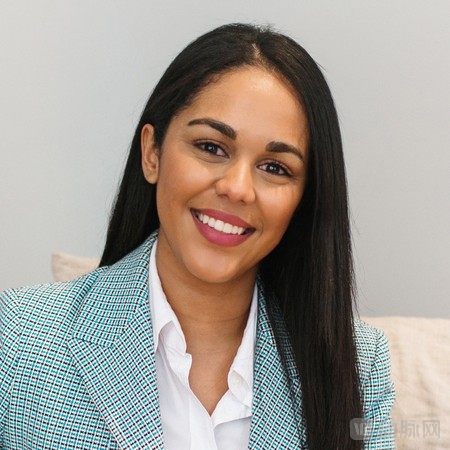
Founder, Manuri Gunawardena
Image source: HealthMatch official website
A friend who transitioned from physician to software engineer introduced her to the developments in health tech and Silicon Valley, proposing to leverage technology to bypass geographical and specialist constraints by directly connecting patients with clinical trials.
Thus, Gunawardena began building her own “flywheel.” She actively engaged in gatherings related to healthcare, technology, and investment, where she connected with many like-minded partners, including Paul Bassat, co-founder of Square Peg, and Alister Coleman, founder and managing partner of Folklore Ventures.
Ultimately, Gunawardena raised a small amount of angel investment to outsource prototype development. She then validated the product’s value through patient feedback. Subsequently, HealthMatch conducted optimization tests and recruited doctors, engineers, and designers.
Since 2018, the team has been dedicated to building depth and liquidity in patient supply, while simultaneously establishing commercial relationships with CROs and trial sponsors on the demand side. This has propelled HealthMatch’s development into the fast lane.
In 2020, HealthMatch's user base grew from 8,000 in June to 80,000 by early December,This means that the number of patients entering clinical trials through this platform increased tenfold in less than six months.
In 2021, HealthMatch further expanded its patient base, achieved increasingly accurate decision-making, and established deeper commercial relationships with supply-side partners.
On May 19, 2022, while establishing a partnership with Roche,HealthMatch Announces Its Services Will Cover the Greater Bay Area of China.This move will provide more opportunities for Asian patients and also reflect HealthMatch's forward-thinking approach.
Due to the high proportion of patients who have not participated in clinical trials and lower operational costs, among other advantages, the Asia-Pacific region is currently the most active region for sponsoring clinical trials. GlobalData estimates that from 2017 to 2021, more than 50% of global clinical trials were conducted in the Asia-Pacific region. Therefore, HealthMatch has chosen the Greater Bay Area as its third destination.
Although still in the early stages of expansion and commercialization, HealthMatch has garnered growing support from research organizations and enterprises, including pharmaceutical companies such as Boehringer Ingelheim and AbbVie, as well as emerging biotechnology firms like Imugene and Earli.
Implications for Patient Recruitment Platforms in China
In recent years, the patient recruitment industry in China has experienced explosive growth, with many patient-matching websites launching accordingly; however, these platforms have not truly achieved “time and effort savings” in aspects such as process design.
Taking a domestic online patient recruitment platform as an example, patients must review the trial details to assess their eligibility, complete a registration application, and then undergo manual screening by platform professionals. The entire enrollment process involves multiple stringent checkpoints from registration to application acceptance.
The success of HealthMatch offers us valuable insights:
First, the patient-centered philosophy is the cornerstone of delivering high-quality services.HealthMatch is designed entirely from the perspective of ordinary patients, taking into account their limited understanding of diseases and potential barriers when browsing websites. It strives to expand marketing channels and simplify the patient registration process, complemented by a clean and aesthetically pleasing UI design that guides users to quickly find the information they need, thereby fostering user engagement.
Second, AI facilitates efficient matching.HealthMatch leverages artificial intelligence to enable sophisticated machine learning algorithms to identify eligible candidates for clinical trials based on physician criteria and pathology reports, significantly accelerating the trial matching process.
Third, conduct global multi-center patient recruitment.Regulatory stringency varies across countries, and therapeutic efficacy may differ due to ethnic variations; therefore, many multinational pharmaceutical companies conduct clinical trials that encompass overseas regions. Building on this, HealthMatch has leveraged market research to successively establish operations in the United States and the Asia-Pacific region, sourcing external resources to improve the global clinical trial landscape.