

Shanghai's Medical 'Specialized, Sophisticated, Distinctive, and Innovative' Industry Landscape: Leaders and Startups Advance in Tandem, with Medical Devices and Biotech Driving Innovation
When discussing the key industrial development keywords of 2022, “Specialized, Refined, Differential, and Innovative” (Zhuan Jing Te Xin) is undoubtedly one of them.
Amid the new international landscape, promoting the development of small and medium-sized enterprises (SMEs) toward being “specialized, refined, distinctive, and innovative” has been elevated to a national strategic level, serving as a crucial component of China’s efforts to drive industrial innovation and strengthen and supplement supply chains.
“Specialized, Refined, Distinctive, and Innovative” (SRDI) is a major national initiative designed to guide small and medium-sized enterprises (SMEs) toward a development path characterized by specialization, refinement, distinctiveness, and innovation. This initiative aims to enhance independent innovation capabilities and core competitiveness, while continuously improving the quality and level of development. SRDI SMEs primarily refer to early-stage small and medium-sized enterprises concentrated in mid-to-high-end industrial sectors such as next-generation information technology, high-end equipment manufacturing, new energy, new materials, and biopharmaceuticals.
In June this year, the Ministry of Industry and Information Technology issued the Interim Measures for the Tiered Cultivation and Management of High-Quality Small and Medium-Sized Enterprises (SMEs), which uniformly clarified the certification criteria for innovative SMEs, specialized and sophisticated SMEs with unique and novel products, and specialized and sophisticated “Little Giant” enterprises. Meanwhile, the Measures also proposed to “enhance the innovation capability and specialization level of SMEs, promote their high-quality development, and support the advancement of industrial foundations and the modernization of industrial chains.”
In the healthcare sector, “specialized, refined, distinctive, and innovative” small and medium-sized enterprises (SMEs) focus on niche markets, possess strong innovation capabilities, and master key core technologies, holding promise for resolving long-standing “bottleneck” challenges in the medical field.
This article takes Shanghai as an example, systematically reviewing the “Specialized, Refined, Differential, and Innovative” (SRDI) enterprises in Shanghai from 2020 to 2022, and conducting a multi-dimensional analysis of those in the healthcare sector. As the backbone of Shanghai’s healthcare industry, what common characteristics do they share? How can they further drive the specialization, refinement, differentiation, and innovation of Shanghai’s healthcare industry?
Multiple Support Measures for Financial and Economic Talent to Accelerate the Cultivation of "Specialized, Refined, Differential, and Innovative" Enterprises
In recent years, the international environment has become increasingly complex, with persistent pandemic outbreaks highlighting supply chain vulnerabilities. Technological constraints have intensified, making “chokepoint” bottlenecks more pronounced. There is an urgent need to shift from factor-driven and investment-driven growth to innovation-driven development, transitioning from demographic dividends to innovation dividends, and from business model innovation to technological innovation.
At this pivotal historical juncture, the national key strategy of “Specialized, Refined, Distinctive, and Innovative” (SRDI) has emerged with strong momentum. A flurry of state-level support policies have been intensively rolled out to accelerate the cultivation of a cohort of technology enterprises characterized by specialization, refinement, distinctiveness, and innovation.
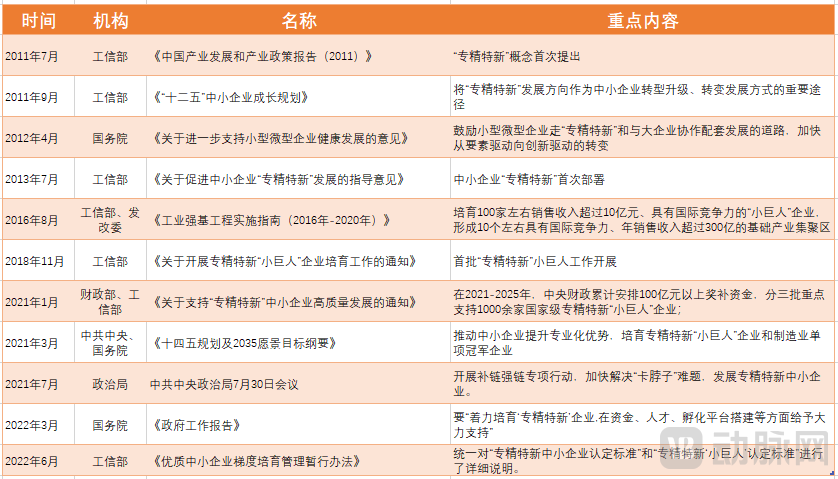
Overview of National Policies on “Specialized, Refined, Differential, and Innovative” Enterprises (Incomplete Statistics)
In active response to national strategies, Shanghai has also introduced a series of supporting policies. The first measure is to increase the number of “Specialized, Refined, Differential, and Innovative” (SRDI) enterprises. Starting this year, Shanghai has adjusted its application process from an annual cycle to one that accepts applications year-round and releases approvals in batches. Meanwhile, regarding dynamic qualification management, Shanghai has extended the validity period of SRDI certification from two years to three years and will further streamline the review process.
Secondly, expand coverage in terms of financial support and guide district-level fiscal funds to provide robust support for enterprises. Currently, 12 districts in Shanghai have introduced municipal-level support policies for “Specialized, Refined, Differential, and Innovative” (SRDI) enterprises, and six districts have rolled out support policies for SRDI “Little Giant” enterprises.
Meanwhile, financial support has been strengthened. Currently, the four major state-owned banks in Shanghai have introduced special credit loan facilities for specialized, refined, distinctive, and innovative (“SRDI”) enterprises, with corresponding preferential interest rates on loans.
Finally, strengthen the development of R&D institutions and support enterprises in establishing academician and expert workstations. Currently, 249 such workstations across the city have been set up within specialized, refined, distinctive, and innovative (“Little Giant”) enterprises, accounting for nearly 50% of the total number established citywide.
Shanghai’s municipal government and its district-level authorities have both introduced targeted incentive measures for enterprises successfully certified as “Specialized, Refined, Differential, and Innovative” (SRDI) firms or “Little Giant” enterprises.
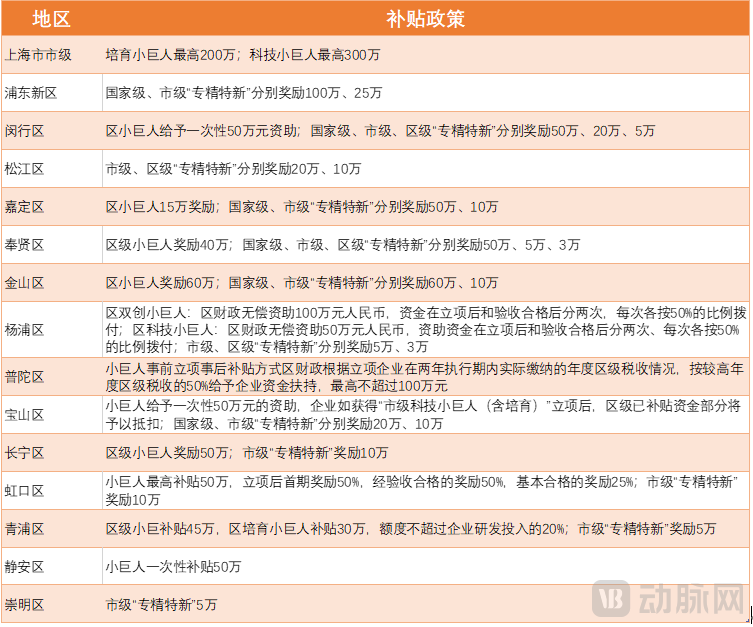
Subsidy Policies for Specialized, Refined, Differential, and Innovative Enterprises in Shanghai Districts (2021)
Healthcare Companies Account for 9.26%, with Pudong New Area Far Ahead
Driven by policy, funding, and talent support, according to data from the Shanghai Municipal Commission of Economy and Informatization, 2020 to 2022 (first batch)ShanghaiThere are a total of 3,176 “Specialized, Refined, Differential, and Innovative” (SRDI) enterprises, including 262 national-level SRDI “Little Giant” enterprises. Among them, 294 are medical-related SRDI enterprises, accounting for 9.26% of the total.
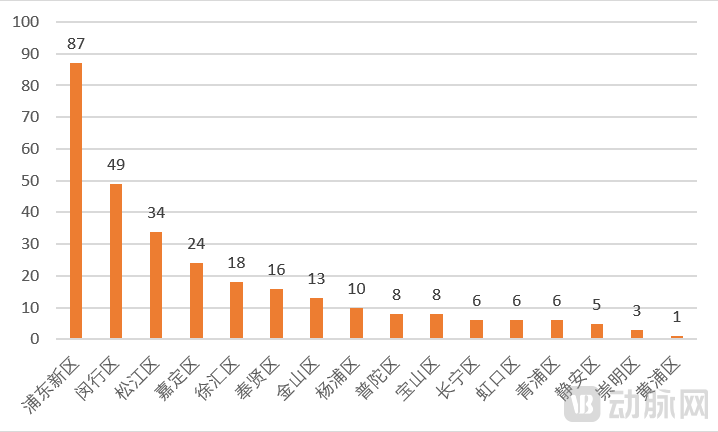
Geographic Distribution of “Specialized, Refined, Differential, and Innovative” SMEs in Shanghai’s Healthcare Sector | Chart by VCBeat
In terms of regional distribution, Pudong New Area boasts 87 specialized and innovative (“Little Giant”) medical enterprises, far outpacing other regions, with its landscape dominated almost entirely by medical device companies and firms within the biotechnology industry chain.
As one of the regions in China with a high concentration of innovative talent in biomedicine, dense R&D institutions, a complete innovation chain, outstanding innovation achievements, and a well-developed industrial system, Pudong New Area has given rise to 15% of China’s original new drugs and 10% of its innovative medical devices.
To understand the reasons, one must mention Zhangjiang Pharma Valley located here. As China’s earliest biopharmaceutical industrial park, Zhangjiang Pharma Valley has achieved remarkable development in the biopharmaceutical industry, boasting the highest concentration of R&D institutions, strong innovation capabilities, and outstanding achievements in new drug creation. Statistics show that one-third of China’s new drug R&D institutions are based in Zhangjiang, one-third of China’s special research funding for new drug innovation is invested in Zhangjiang, and one-third of Class 1 innovative drugs approved in China originate from Zhangjiang.
Moreover, as a vital component of Zhangjiang’s medical industry and one of the earliest specialized industrial parks for medical devices in China, the Zhangjiang Modern Medical Device Park forms the foundational bedrock for the prosperity of the medical device sector in Pudong New Area.
Financing Rounds Show a Two-Tier Distribution, with Early-Stage Companies Focusing on Technological Innovation
An analysis of the financing rounds of “specialized, refined, distinctive, and innovative” medical enterprises reveals a pronounced bimodal distribution in their development stages. Specifically, 29 companies are at pre-Series A stages, while 31 have reached the IPO or New Third Board listing stage, accounting for a significant proportion.
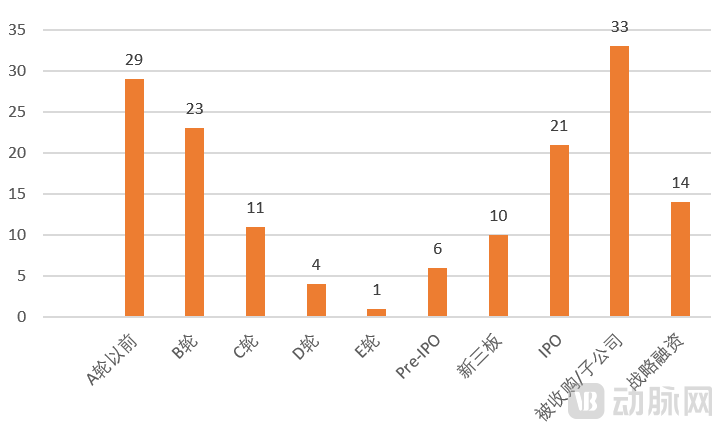
Shanghai's "Specialized, Refined, Differential, and Innovative" SMEs in the Medical Sector: Financing Rounds (Excluding Companies with Undisclosed Rounds)
From the perspective of core business operations, half of the companies at the IPO stage are medical device enterprises. Among companies prior to Series A financing, biotechnology and digital health companies account for the largest proportion.
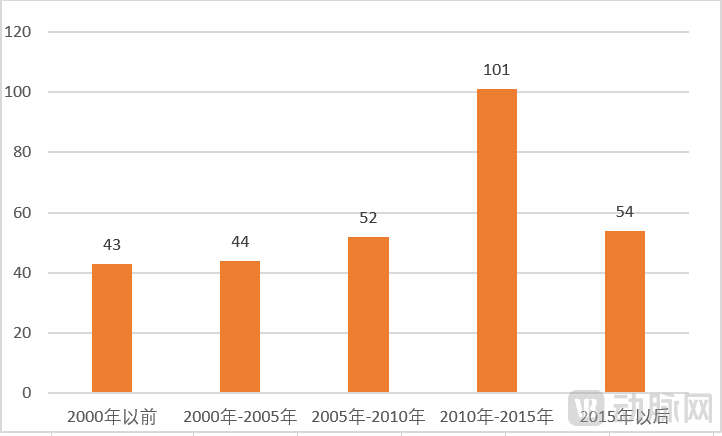
Establishment Time of Shanghai's "Specialized, Refined, Differential, and Innovative" SMEs in the Medical Sector
Based on the establishment dates, there are 43 enterprises that have been in operation for over 20 years. These companies have accumulated extensive industrial resources over time and are predominantly leading players in their respective niche sectors. The majority of these enterprises were included in the list of “Specialized, Refined, Differential, and Innovative” (SRDI) enterprises in 2020.
The highest number of enterprises established between 2010 and 2015 was 101, with the majority being included in the list of “Specialized, Refined, Differential, and Innovative” (SRDI) enterprises in 2022. Over the past decade, China’s healthcare industry has entered a period of rapid development, witnessing flourishing growth across multiple sectors, including biotechnology, innovative drugs, medical devices, and digital health. The wave of overseas talent returning to China for entrepreneurship has driven technological advancements. Meanwhile, the development of the internet, 5G, and big data has accelerated the progress of digital health in China.
Therefore, enterprises established during this period have achieved rapid growth, possessing core technological platforms and talent teams, and have emerged as a new force driving innovation in the healthcare industry.
It is worth noting that there are 33 subsidiaries of listed companies, accounting for a relatively high proportion. Their business segments mostly consist of peripheral businesses of their parent companies or represent the parents’ strategic layouts in innovative fields. Leveraging the strong backing of their parent companies, these subsidiaries benefit from robust capital and industrial resources, thereby enabling rapid development.
Medical devices and biotechnology account for over half, with a focus on IVD, high-value consumables, and life science tools
Among the 3,176 “Specialized, Refined, Differential, and Innovative” (SRDI) enterprises certified in Shanghai over the past three years, 294 are medical companies, primarily concentrated in sectors such as medical devices, biotechnology, chemical active pharmaceutical ingredients (APIs), digital health, and general healthcare.
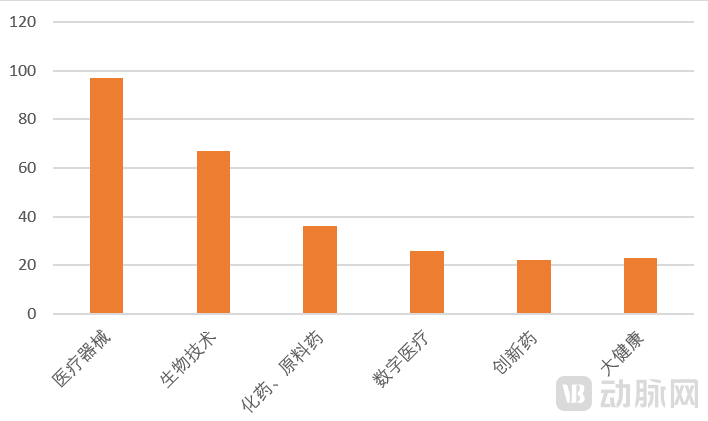
Types of Medical Enterprises Among Shanghai’s “Specialized, Refined, Differential, and Innovative” SMEs
Among them, there are 97 medical device companies, accounting for the highest proportion, nearly one-third, and they are concentrated in fields such as in vitro diagnostics, neurovascular intervention, and high-value consumables.
Biotechnology follows closely behind, with a total of 67 companies, accounting for nearly one-quarter of the total. These companies are concentrated in areas such as life science tools and molecular diagnostics, and most of their financing rounds are at Series B or earlier.
Why Medical Devices and Biotechnology? As stated in the meeting of the Political Bureau of the CPC Central Committee last July, “specialized, refined, distinctive, and innovative” small and medium-sized enterprises should be capable of supporting the “special campaign to shore up and strengthen industrial chains” and resolving “chokepoint” challenges.
As is well known, “Specialized, Refined, Differential, and Innovative” (SRDI) enterprises are generally small in scale, with “innovation” serving as their shared core ethos. Typically operating in niche segments of the industrial chain, they wield significant influence and constitute a backbone force in resolving critical technological bottlenecks.
Therefore, supporting and cultivating as many “specialized, refined, distinctive, and innovative” (SRDI) enterprises as possible is an essential pathway for driving the industry’s transformation and upgrading from low value-added, low-tech, low-quality, and weak-brand models to those characterized by high value-added, high-tech, high-quality, and strong brands.
Looking back at the development trajectory of China’s healthcare industry, large-scale, speed-driven growth models have significantly contributed to its rapid expansion. However, historical weaknesses—including limited innovation, a lack of independent intellectual property rights, constrained international competitiveness of products, and insufficient risk resilience—have long left China in a “chokehold” situation regarding core technologies and products. This issue is particularly pronounced in the upstream segment of the biopharmaceutical industry.
The impact of the COVID-19 pandemic can also be described as historic. The three-year outbreak has repeatedly fueled surging interest in fields such as in vitro diagnostics (IVD) and life science tools. Furthermore, a significant number of overseas-educated professionals have returned to China to launch startups, rapidly expanding the pool of biotech innovation talent and projects. This has provided endogenous momentum for domestic biotechnological innovation, with new technologies, novel targets, and fresh discoveries continually emerging, thereby driving frequent waves of innovation in the biotechnology sector.
In addition to external changes, the industry’s trajectory is closely aligned with China’s policy direction. Shifting from a sales-driven to an R&D-focused model, and from imitation to innovation, China’s biopharmaceutical industry has entered an innovation cycle.
Furthermore, although impacted by policies such as volume-based procurement and centralized bidding, the medical device and consumables sector is entering a new phase. This shift is driven by the increasing entry of domestic manufacturers offering substitute products, coupled with incentives for innovation and localization among domestic players in niche segments such as neurology and peripheral vascular interventions.
Excluding medical devices and biotechnology, the next largest categories comprise 36 chemical drug and active pharmaceutical ingredient (API) companies, primarily engaged in APIs, chemical formulations, and pharmaceutical intermediates; 26 digital health companies, concentrated in internet healthcare, pharmaceutical digitalization, and AI-driven healthcare; 22 innovative drug companies, focusing on therapeutic areas such as oncology, autoimmune diseases, and cardiovascular conditions; and 23 companies in the broader health and wellness sector, distributed across sub-segments including health management, chronic disease care, elderly care, and dental services.
507 National-Level “Specialized, Refined, Differential, and Innovative” Little Giants Lead Industrial Innovation and Development
“Little Giant” firms specializing in refinement, innovation, and niche markets are the elite among specialized, refined, distinctive, and innovative small and medium-sized enterprises (SMEs). Enterprises recognized as national-level “Little Giants” are possessors of key core technologies in critical industries, capable of resolving most “chokehold” bottlenecks, achieving autonomous and controllable industrial and supply chains, and fulfilling the national strategic objective of strengthening and supplementing these chains.
Compared with specialized, refined, distinctive, and innovative (SRDI) small and medium-sized enterprises (SMEs), the certification criteria for “Little Giant” enterprises are naturally more stringent. To be certified as a national-level SRDI “Little Giant” enterprise, a company must simultaneously meet indicators across six dimensions: specialization, refinement, distinctiveness, innovation, industrial chain integration, and product quality. Only after undergoing a series of procedures—including preliminary review and recommendation by provincial competent authorities, demonstration of restrictive conditions by industry associations, and expert evaluation—can it be officially included in the list.
Recently, the Ministry of Industry and Information Technology (MIIT) released the list of the fourth batch of 4,328 specialized, refined, distinctive, and innovative “Little Giant” enterprises, a figure equivalent to the combined total of the first three batches. To date, the MIIT has cumulatively fostered 8,997 such “Little Giant” enterprises.
Shanghai has 245 enterprises selected for the fourth batch of national-level “Specialized, Refined, Differential, and Innovative” (SRDI) “Little Giant” firms. Adding to the 262 previously cultivated, Shanghai has now nurtured a total of 507 national-level SRDI “Little Giant” enterprises, ranking second among all cities in China.
It can be said that Shanghai has achieved initial success in cultivating national-level “Specialized, Refined, Differential, and Innovative” (SRDI) enterprises and “Little Giant” firms. The “Shanghai Model” may serve as a better template for other regions to cultivate and support SRDI enterprises.
First, it is necessary to further optimize the business environment by providing support in terms of policies, funding, and talent. Second, we should improve the tiered cultivation system by adopting a graduated approach for innovative small and medium-sized enterprises (SMEs), “Specialized, Refined, Differential, and Innovative” (SRDI) enterprises, and national SRDI “Little Giant” firms. This involves building a robust industrial ecosystem to foster benign cyclical interactions within the industry, thereby enabling leading industries to play a guiding role in rapid development. Finally, companies should be encouraged to increase their investment in research and development, market expansion, and digital transformation, while more high-quality SMEs should be supported in going public and raising capital through equity listings.
A New Era, New Challenges, and New Opportunities. As the main force of industrial innovation, “Specialized, Refined, Differential, and Innovative” (SRDI) medical enterprises are deeply rooted in niche medical sectors, mastering core cutting-edge technologies, and poised to lead the new future of healthcare.