

Building a Distinctive Ophthalmic Service System: Beijing Huade Eye Hospital's 20-Year Journey
For patients, Beijing Huade Eye Hospital is “old in some respects, yet new in others.”
It is considered old becauseHuade Eye Hospital was established in 2003, with a development history of nearly 20 years.As a well-established specialized ophthalmic hospital, it has developed more than ten subspecialty departments, including those for fundus diseases and ocular trauma, cataracts, and refractive surgery, thereby meeting the diagnostic and treatment needs of most ophthalmic conditions.
Its novelty stems from Huade Eye Hospital’s commitment to staying at the forefront of therapeutic equipment and surgical techniques. The hospital is equipped with advanced devices for the diagnosis and treatment of ocular diseases, including the Alcon LenSx Femtosecond Laser System (USA), the Optos Ultra-Widefield (non-mydriatic) Fundus Camera (UK), and the ZEISS RESCAN 700 Intraoperative OCT Navigation Microscope (Germany).Even in Beijing, certain diagnostic and therapeutic devices for ophthalmic diseases are considered highly advanced, cutting-edge high-tech equipment.
In 2014, Aier Eye Hospital Group acquired it. As Huade Eye Hospital marks its 20th anniversary, how is it strategizing its layout and development? The answer may offer valuable insights for reference.
Founded by experts from Tongren Hospital, with a deep-seated commitment to talent.
Valuing talent may be part of the DNA of Huade Eye Hospital.
Initially,Huade Eye Hospital was founded in 2003 by experts formerly from Beijing Tongren Hospital.As a continuation, to this day, a large number of physicians from Beijing Tongren Hospital, Peking Union Medical College Hospital, and Beijing Hospital continue to practice at Huade Eye Hospital through multi-site practice arrangements.
It was also due to the recognition of Huade Eye Hospital’s talent advantages in the field of ophthalmic diseases that Purui Group successfully acquired Huade Eye Hospital in 2014.
Following the acquisition, Huade Eye Hospital has been infused with “fresh blood,” bringing in more experts and physicians specializing in ophthalmology to build a robust talent pipeline, while also introducing operational professionals who were previously lacking.

Chai Wanbiao, Current Executive Director of Huade Eye Hospital
Chai Wanbiao, the current Executive President of Huade Eye Hospital, serves as a prime example. He joined Huade Eye Hospital in 2017. Prior to this, Dr. Chai had already accumulated over 20 years of experience in the healthcare industry. Early in his career, he served as a clinician at China-Japan Friendship Hospital. Later, he transitioned to the corporate sector, holding positions such as Regional/National Sales Director and Commercial Director at multinational ophthalmic companies including Allergan and Bausch + Lomb. The recruitment of Dr. Chai likely reflects the hospital’s recognition of the operational advantages derived from his multifaceted background, which encompasses not only an understanding of physicians’ perspectives but also deep insights into patient psychology.
Huade Ophthalmology has also made significant contributions to both the development of academic platforms and the cultivation of a tiered talent pipeline in ophthalmology.Since 2018, Huade Eye Hospital has consecutively held related academic symposia for two years. In 2021, with the pandemic under control, Huade Eye Hospital, in collaboration with the China Non-Public Medical Institutions Association, organized the “Summit Forum on Ophthalmic Imaging and Information.” This initiative aimed to promote the widespread adoption and clinical application of new ophthalmic diagnostic and treatment technologies by popularizing and advancing new technologies in ophthalmic medical imaging and focusing on hot topics in ophthalmic imaging technology. Through these academic exchanges, the hospital has not only demonstrated its professional capabilities to attract talented individuals committed to joining Huade Eye Hospital, but also fostered the development of its own team members.
In fact, Huade Eye Hospital, backed by Purui Eye Care Group, has established its own internal training system. Through continuous training and assessment of specialized personnel, it enhances the capabilities of the entire team, particularly junior physicians.
“To better retain talent, Dean Chai Wanbiao also pointed out that Huade Eye Hospital offers competitive compensation and benefits packages, along with a relatively flexible and ideal work and living environment. More importantly, it provides a platform for professionals of all kinds to fully utilize their expertise.”
Through a series of initiatives, Huade Eye Hospital has built an impressive team lineup.For example,
Ding Zhenqiang, Dean of Huade Eye Hospital, who studied under Professor He Shouzhi, a renowned cataract specialist in China, and has repeatedly participated in and completed projects funded by the National Natural Science Foundation of China in the fields of clinical practice and related basic research on refraction, cataracts, and presbyopia;
Fan Jianguo, Dean of Huade Eye Hospital, who studied under Professor Ma Zhizhong, a nationally renowned vitreoretinal specialist in China, and has extensive clinical and surgical experience in various fundus diseases—particularly complex vitreoretinal disorders—as well as cataracts, glaucoma, high myopia, and corneal diseases;
With over 20 years of experience in clinical ophthalmology, Dr. Zheng Hui has conducted in-depth research into various refractive errors and fundus diseases. She specializes in excimer laser treatment for myopia, hyperopia, and astigmatism, and possesses extensive clinical experience with SMILE, femtosecond LASIK, and transPRK procedures. As one of the earliest practitioners of refractive surgery in China, Dr. Zheng serves as the Vice President of Beijing Huade Eye Hospital and Director of its Refractive Surgery Center.
An Xiaoling, Vice President of Huade Eye Hospital, who has been engaged in ophthalmology for nearly 30 years and studied under Professor Zhang Jinsong, a renowned cataract specialist in China;
Lu Chengrong, Deputy Director of Huade Eye Hospital, who has studied under Professor Wei Shihui, a nationally renowned neuro-ophthalmology expert, and has been engaged in ophthalmic medicine for over 20 years, specializes in the prevention and treatment of diabetic retinopathy and is highly proficient in performing phacoemulsification with intraocular lens implantation for cataracts.
The emphasis on talent has continued after the acquisition. As the patient population grew, the original office space became crowded, so Huade Eye Hospital chose to reserve the main building for doctors and relocate administrative staff out of the original main building.
Currently, Huade Eye Hospital has nearly 200 staff members and 79 hospital beds. Due to the impact of the pandemic, outpatient visits have decreased. By August this year, monthly outpatient visits had exceeded 8,000. Dr. Chai Wanbiao, the hospital director, stated that annual outpatient visits have remained above 80,000 for the past two years and are expected to increase further in the future.
The Four-Horse Carriage Model: Driving Standardized Services through the 7S Diagnostic and Treatment Service System
To expand its service reach for patients, Huade Eye Hospital has established multiple clinical departments, leveraging its strong foundation of medical talent.
Currently, Huade Eye Hospital has established more than ten specialized service departments, including the Fundus and Ocular Trauma Department, Cataract Department, Refractive Surgery Department, Corneal Disease Department, Glaucoma Department, Oculoplastic Surgery Department, Pediatric Ophthalmology and Strabismus/Amblyopia Department, Optometry and Glasses Fitting Center, Lacrimal Duct and Dry Eye Department, General Ophthalmology Department, and Traditional Chinese Medicine (TCM) Ophthalmology Department.
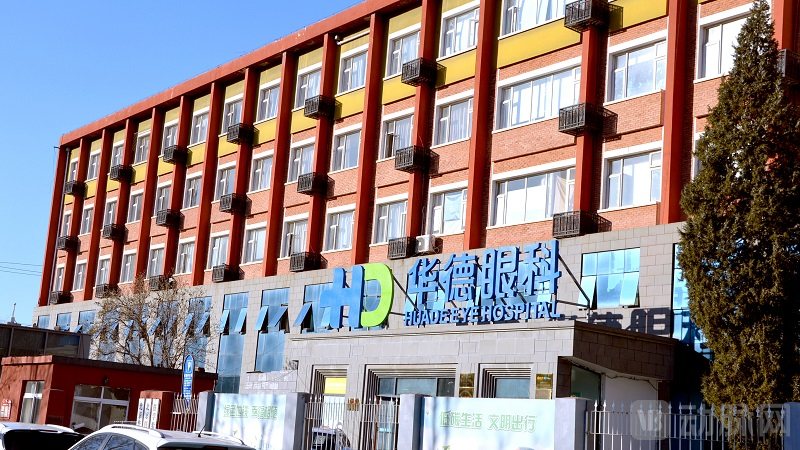
According to Dr. Chai Wanbiao, Dean of Beijing Huade Eye Hospital, the hospital has leveraged its established strengths to serve as the “National Center for Consultation on Complex Ocular Diseases” under the Purui Eye Care Group, bringing together a large number of experts and scholars in ophthalmology from prestigious institutions such as Tongren Hospital, Peking Union Medical College Hospital, and Beijing Hospital. From the perspective of Beijing Huade Eye Hospital itself,“Optometry Center, Refractive Surgery Department, Cataract Department, and Fundus Disease Department are the four pillars driving our development.”President Chai Wanbiao added.
This is attributable to two factors: on the one hand, the aforementioned ophthalmic diseases affect a large patient population; on the other hand, the substantial demand for care remains inadequately met.
For example,Optometry FieldDriven by multiple factors, including the widespread adoption of electronic devices and reduced outdoor physical activity among students, the number of myopia patients continues to rise, with a notable trend toward earlier onset. Huade Eye Hospital is currently dedicated to myopia prevention and control, focusing on early intervention and prevention.
Customized refractive surgery services are tailored to the unique conditions of each adult myopia patient. From preoperative examinations and selection of surgical procedures to follow-up visits during postoperative recovery, dedicated medical staff provide guidance at every stage. This ensures that a personalized care plan is developed for every patient based on their individual clinical circumstances throughout the entire treatment journey.
For another example, inCataract Disease(According to statistics from the Ophthalmology Branch of the Chinese Medical Association, the incidence of cataracts in China's population aged 60 to 89 years
(approximately 80%). As China’s population ages at an accelerating pace, the number of cataract patients is showing a year-on-year upward trend. Currently, although the number of cataract surgeries per million population has increased significantly compared to previous years, reaching over 3,000 cases, there remains a substantial gap relative to the 12,000 cases seen in Europe and the United States. Huade Eye Hospital has also chosen to focus its efforts in this area.
In reality, the diseases affecting patients are complex, and the aforementioned specialties on which Huade Eye Hospital has focused its efforts cannot address all clinical challenges. To better meet patients’ needs for diagnosis and treatment, Huade Eye Hospital has established multiple specialized departments centered around various ophthalmic conditions. Notably, the introduction of new ophthalmic equipment and technologies has provided clinicians and specialists with valuable tools to facilitate accurate diagnosis and effective treatment. In this regard, Huade Eye Hospital has proactively introduced a wide range of instruments and equipment widely used by international peers.
Taking the Refractive Diagnosis and Treatment Center as an example, perhaps to better understand the advantages of Huade Ophthalmology in the diagnosis and treatment of ophthalmic diseases—
First, there is the advantage of advanced diagnostic and therapeutic technical capabilities.As a key department, the Refractive Diagnosis and Treatment Center has established a Consultation Center for Complex Ocular Diseases, composed of the Huade Eye Hospital President Expert Panel—jointly formed by three presidents—and experts from other hospitals. The center ensures high standards of diagnostic and therapeutic expertise through regular surgical consultations and academic exchanges.
Secondly, there is the support of cutting-edge international medical devices.Huade Eye Hospital has made substantial investments in importing a wide range of advanced overseas medical devices, such as the German ZEISS VisuMax SMILE laser system, the German Schwind Amaris 1050RS excimer laser, the Rescan 700 intraoperative OCT microscope, the Pentacam anterior segment analysis and assessment system, and the Corvis corneal biomechanical analyzer, thereby enabling precise diagnosis and treatment.
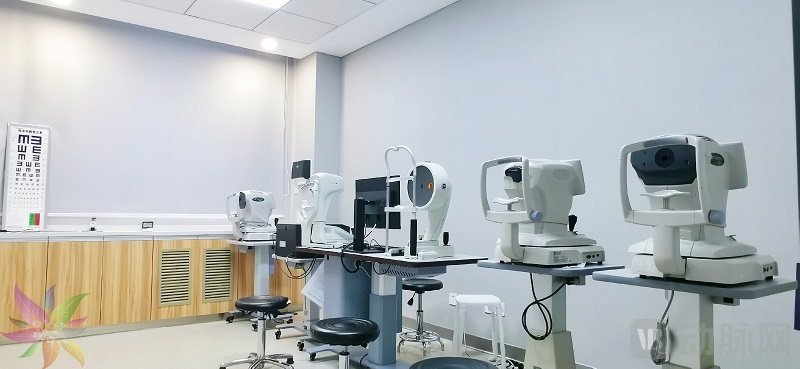
Once again, leveraging advanced surgical instruments and expert specialists, Huade Eye Hospital can provide patients with comprehensive myopia correction surgery solutions., offering a variety of procedures including ZEISS SMILE, femtosecond LASIK, Thousand-Frequency Optimized Vision, and ICL implantation, to achieve "personalized eye care";
Finally, leveraging its chain network advantages, patients who undergo myopia surgery at Beijing Huade Eye Hospital can enjoy high-quality postoperative services at any Purui Eye Hospital across China, along with the benefit of a “lifetime warranty on postoperative care.”
To standardize the diagnostic and treatment process, Huade Eye Hospital has also developed protocols for cataract and presbyopia series surgeries,Developed the 7S Prebo Clinical Diagnosis and Treatment Standard System.In simple terms, Huade Eye Hospital has established industry standards (Standard), provides patients with a professional medical team (Specialist), customizes surgical plans based on individual patient needs (Special), employs cutting-edge technologies synchronized with global advancements (Science), performs minimally invasive surgeries (Safety), delivers a more comfortable and efficient diagnosis and treatment experience (Speedy), and offers comprehensive end-to-end services (Service) to ensure a hassle-free medical journey and peace of mind for patients after consultation.
Sustain the competitive advantages of the refractive diagnosis and treatment specialty, and strengthen departments with shortcomings.
Currently, Huade Eye Hospital is continuing to optimize its service processes, further building its reputation by providing better patient care.
As a private hospital, Huade Eye Hospital is also shouldering social responsibilities.Huade Eye Hospital hosts over 200 public welfare lectures on eye health annually, serving more than 8,000 residents, and provides free eye health screenings for over 60,000 children and adolescents each year. Recently, in collaboration with the Shande Special Fund of the Beijing Charity Association, it launched a city-wide public welfare initiative titled “Honoring the ‘Reverse Marchers’ in the Fight Against the Epidemic: Helping to Achieve Clear Vision Through Refractive Surgery,” offering discounted medical services to anti-epidemic personnel. It is reported that by the end of August, more than 400 frontline anti-epidemic workers had registered for the program.
Ultimately, strengthening the capabilities of an ophthalmic hospital hinges on the development of specific clinical departments. For Huade Eye Hospital, while it holds significant advantages in specialized areas such as refractive care, certain departments remain relatively weak. Dr. Chai Wanbiao, the hospital’s director, stated, “We will continue to advance specialization and establish comprehensive departments for various ocular diseases. While expanding our strong specialties, we will also focus on recruiting talent and training core staff for our weaker departments.” In Beijing, Huade Eye Hospital plans to open one or two additional facilities to better meet patients’ growing demand for ophthalmic diagnosis and treatment.
“The ophthalmic healthcare industry is a sunrise sector. The inability of public hospitals to address and meet the demands of a large number of patients with ophthalmic diseases has created opportunities for the development of private hospitals.”Huade Eye Hospital will leverage the high-quality medical service system of Purui Eye Care Group, and by strengthening its talent pool and enhancing clinical expertise, further narrow the capability gap with top-tier hospitals, evolving into a healthcare institution trusted by the public."Thus stated President Chai Wanbiao."