

2022 Digital-Intelligent Healthcare Innovation Online Salon: Upholding Service Quality with Digital Intelligence, Huawei Cloud Supports Sichuan in Building a National Model for Smart Healthcare
In the post-pandemic era, digital, networked, and intelligent facilities and solutions are accelerating their integration with healthcare scenarios. The implementation of various application scenarios, such as remote consultations and internet hospitals, has greatly enriched the forms of medical care.
Industrial transformation has long been underway, reshaping development models. What is the current state of digitalization and intelligentization in the healthcare industry? Which digital and intelligent technologies are influencing its development? Returning to the essence of healthcare, what further possibilities does digital-intelligent integration hold? Can digital-intelligent healthcare become a new engine for the high-quality development of the healthcare service system? On September 27, during the “Healthy Sichuan, Digital-Intelligent Protection: 2022 Online Salon on Innovative Development of Digital-Intelligent Healthcare,” a special event under the Sichuan 828 B2B Enterprise Festival’s healthcare sector—hosted by Huawei Cloud and organized by VCBeat—six guests from diverse fields, including industry associations, hospitals, cloud technology companies, and internet healthcare enterprises, offered their insights and perspectives on these questions.
Wu Yin, Director of the Ecosystem for Huawei Cloud’s Sichuan-Tibet Region, delivered a keynote address prior to the official commencement of the event. He stated that Sichuan is witnessing strong momentum in the smart development of healthcare and medical services. Huawei Cloud will continue to deepen its engagement in the region by creating more people-centric, innovative, and intelligent application scenarios to support the “Healthy Sichuan” initiative.
In the Internet era, only by bringing together more ecosystem partners can we support the future development of hospitals.
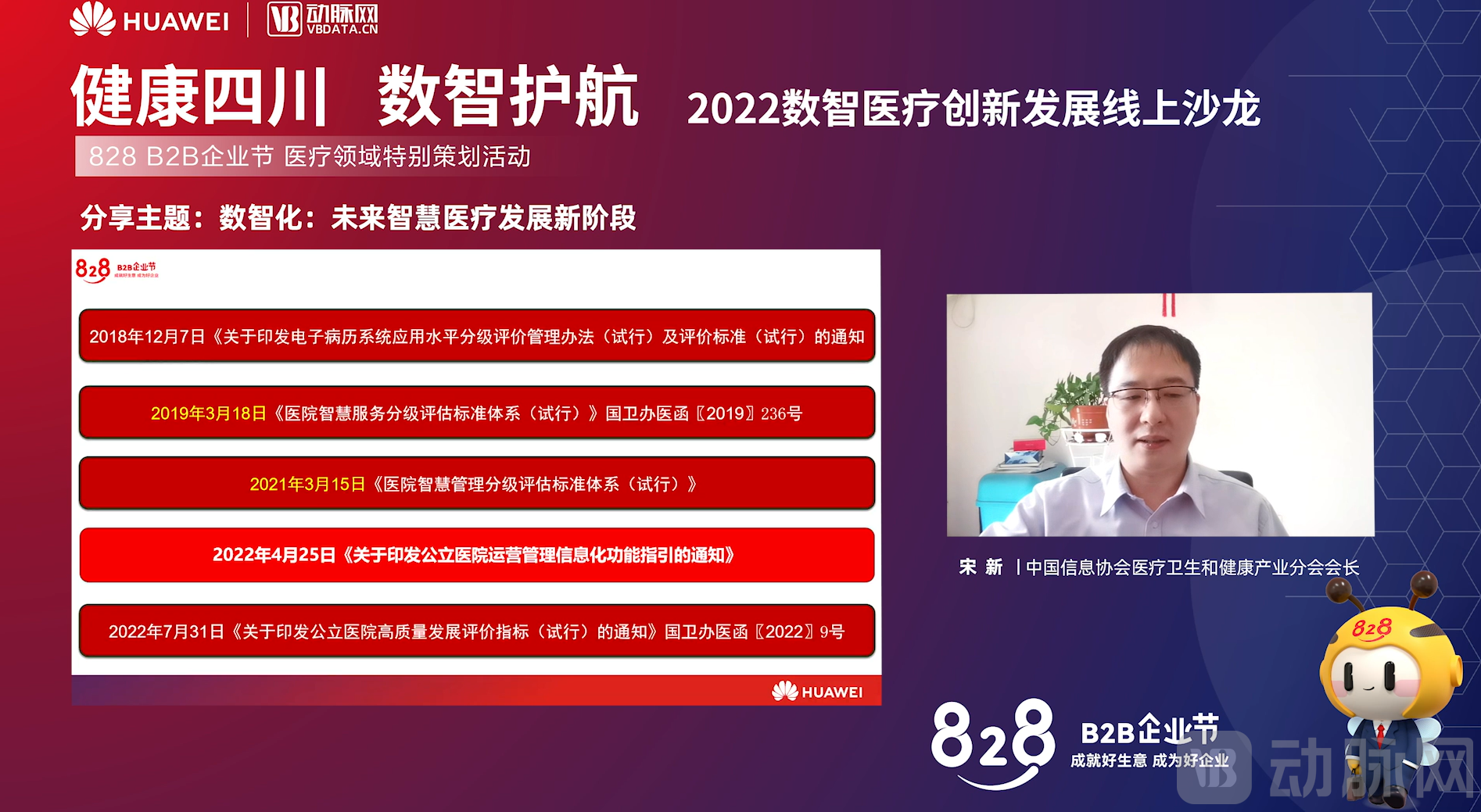
The digitalization of healthcare inevitably encompasses the intelligent development of hospitals. As a key component of smart hospitals, internet hospitals are experiencing rapid growth, with over 2,000 such establishments already launched across more than 30 provincial-level regions in China. Song Xin, President of the Medical and Health Industry Branch of the China Information Association, believes that the future development of hospitals will be underpinned by comprehensive informatization both within and outside hospital premises. Hospitals must collaborate with ecosystem partners in the health sector to effectively implement medical services.
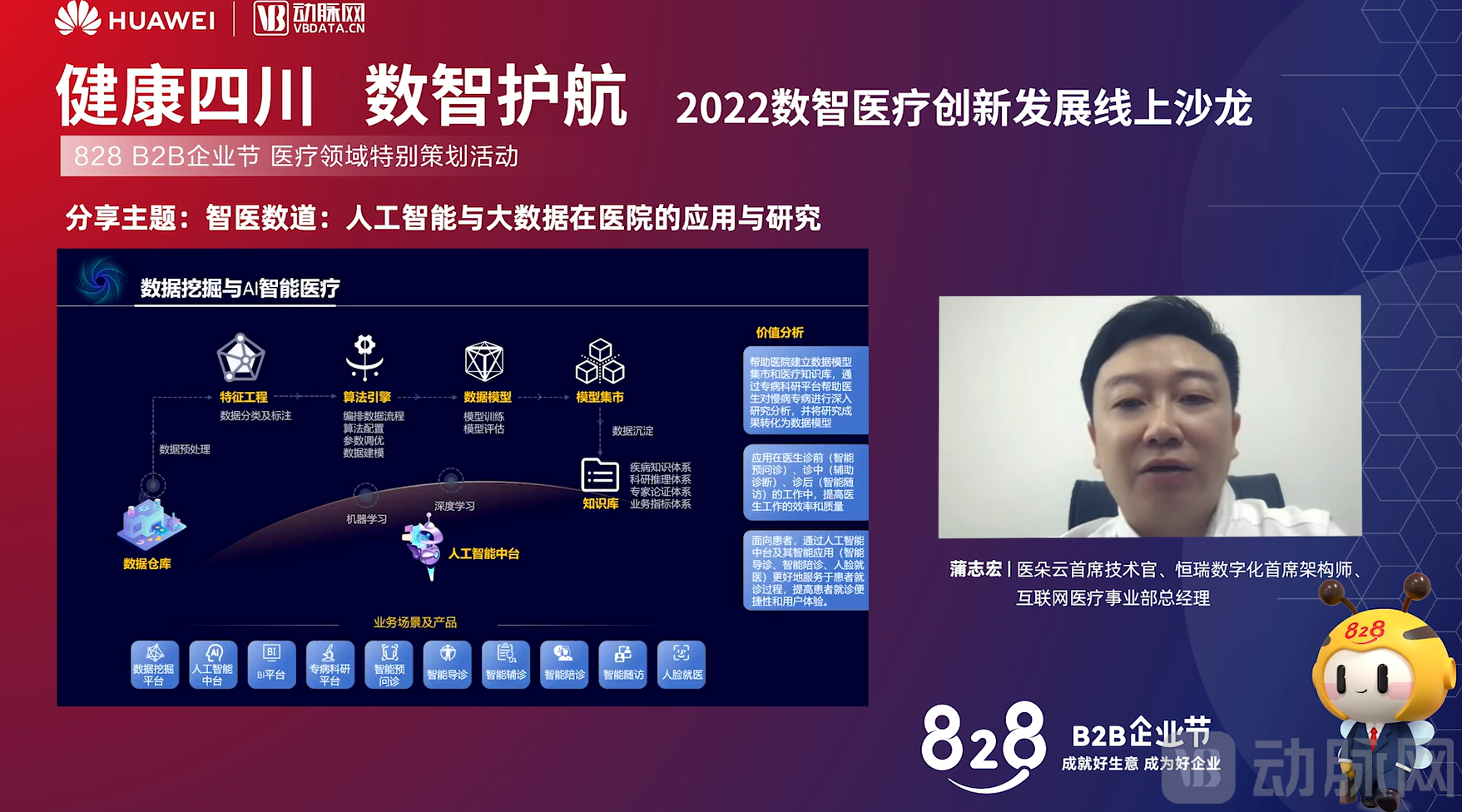
Yidu Cloud has developed solutions grounded in digital and intelligent technologies to address pain points in medical data and support the development of smart hospitals and internet hospitals. These solutions optimize medical services, facilitate clinical research, and assist in management decision-making. Pu Zhihong, Chief Technology Officer of Yidu Cloud, Chief Digital Architect at Hengrui Medicine, and Head of the Internet Medical Business Division, summarized: “Artificial intelligence and big data can better transform our healthcare industry, delivering improved services for both patients and hospitals.”
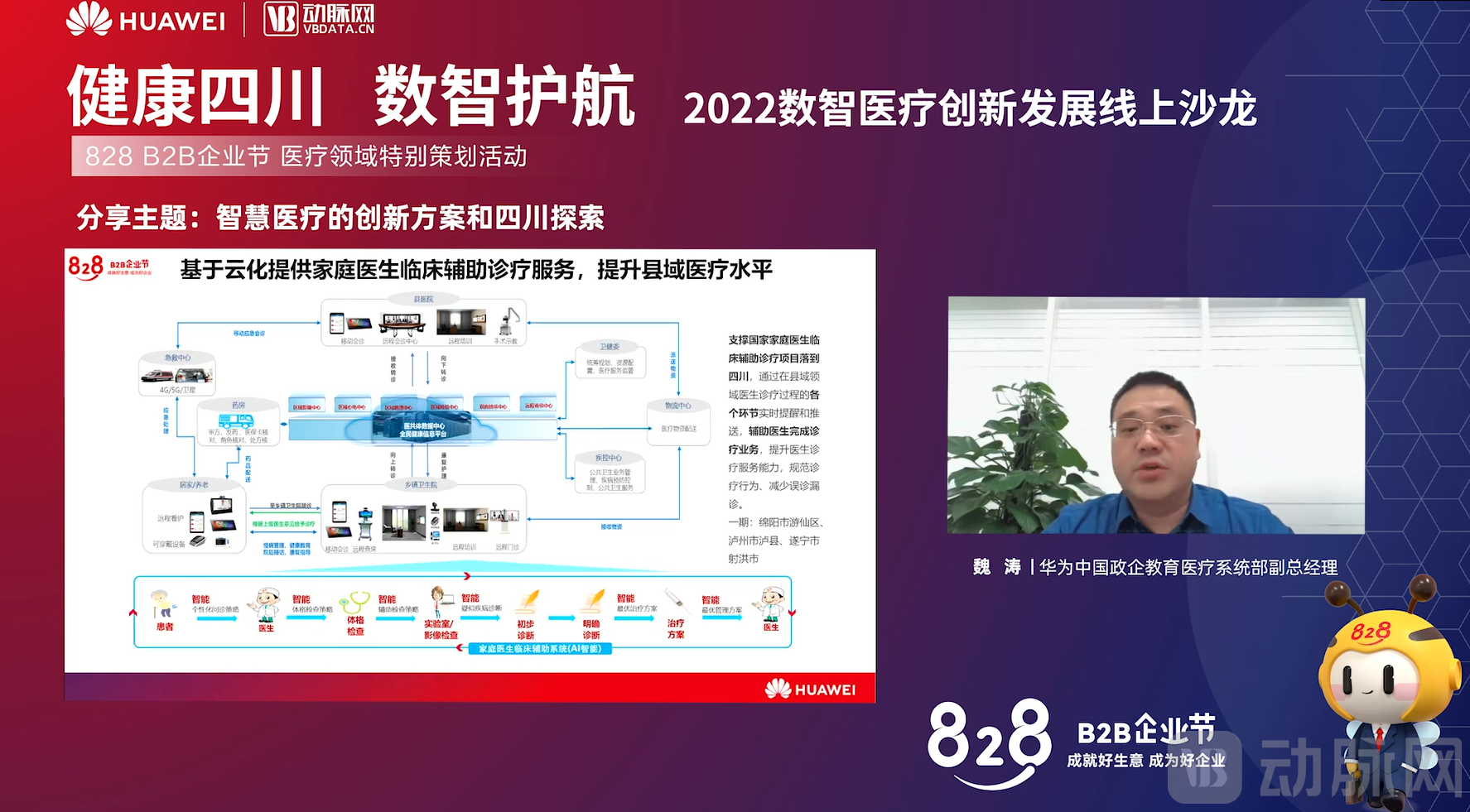
As a key partner in the innovative development of digital and intelligent healthcare in Sichuan, Huawei Cloud has facilitated the digital transformation of more than 200 hospitals, health commissions, and centers for disease control and prevention in the Sichuan region. It has established benchmark cases such as medical and big health data platforms, telemedicine, and smart hospitals, thereby contributing to the creation of the “Sichuan Model” for innovative development in digital and intelligent healthcare. “We aim to leverage cloud-based technologies to effectively extend high-quality medical resources to the grassroots level, enhancing public access to and satisfaction with premium medical resources and services,” said Wei Tao, Deputy General Manager of the Education, Healthcare, and Government Systems Department at Huawei China’s Enterprise Business Group.
Future hospitals will evolve into fully perceptible, fully connected, and fully intelligent institutions.
During the roundtable discussion, Zhou Hong, Director of the Telemedicine Consultation Center at Sichuan Provincial People’s Hospital; Zheng Liping, Director of the Internet Hospital Management Office at Chengdu Second People’s Hospital; and Wang Wei, Director of Huawei’s Medical and Health Industry Development, shared their practices and insights on leveraging digital intelligence technologies to enhance the quality of medical services.
Sichuan Provincial People’s Hospital has been engaged in the development and application of telemedicine for nearly a decade. It has currently established collaborations with more than 400 primary healthcare institutions across Sichuan Province, implementing applications such as a teleconsultation center linking central hubs, bedside-to-physician-mobile connectivity, intelligent multi-campus management, diverse forms of remote education, a remote multi-parameter ICU real-time monitoring platform, 5G-enabled emergency care, a 5G-supported gastroenterology specialty alliance, and 5G-based remote cloud diagnosis and treatment. “Only by fully understanding patient needs and leveraging technological innovation to transform service models and enhance patient experience can telemedicine be truly utilized effectively,” said Director Zhou Hong.
As the first internet hospital to commence operations among municipal-level hospitals in Chengdu, Chengdu Second People’s Hospital has established a smart service system that integrates online and offline services, featuring capabilities such as automated online prescription review and contactless medication delivery offline. The hospital has also implemented an integrated medical quality control system spanning both online and offline settings. Among more than 40,000 online consultations conducted, there have been no complaints related to medical quality. Director Zheng Liping stated, “Medical quality is the core of hospital management. We monitor and control the quality of online medical care through multiple measures.”
The upgrade of new ICT infrastructure will inevitably bring new possibilities for promoting the upgrading of the medical and healthcare service industry. There is still significant room for expansion in the deep integration of current technology and industry. From a technological perspective, Huawei is exploring and practicing in multiple specific scenarios: all-optical and IoT-enabled upgrades of hospital infrastructure, secure connectivity and sharing of medical data to meet information security requirements, AI-assisted pathological screening, auxiliary diagnosis of common diseases, smart hospital management, and patient-centric whole-course disease management. These are all areas where Huawei has been exploring and implementing solutions in the healthcare sector. Wang Wei stated, “We hope to leverage digital technologies to support medical technical needs and management practices, helping hospitals achieve closed-loop services from pre-admission to post-discharge, thereby enhancing the sense of gain for both patients and healthcare providers.”
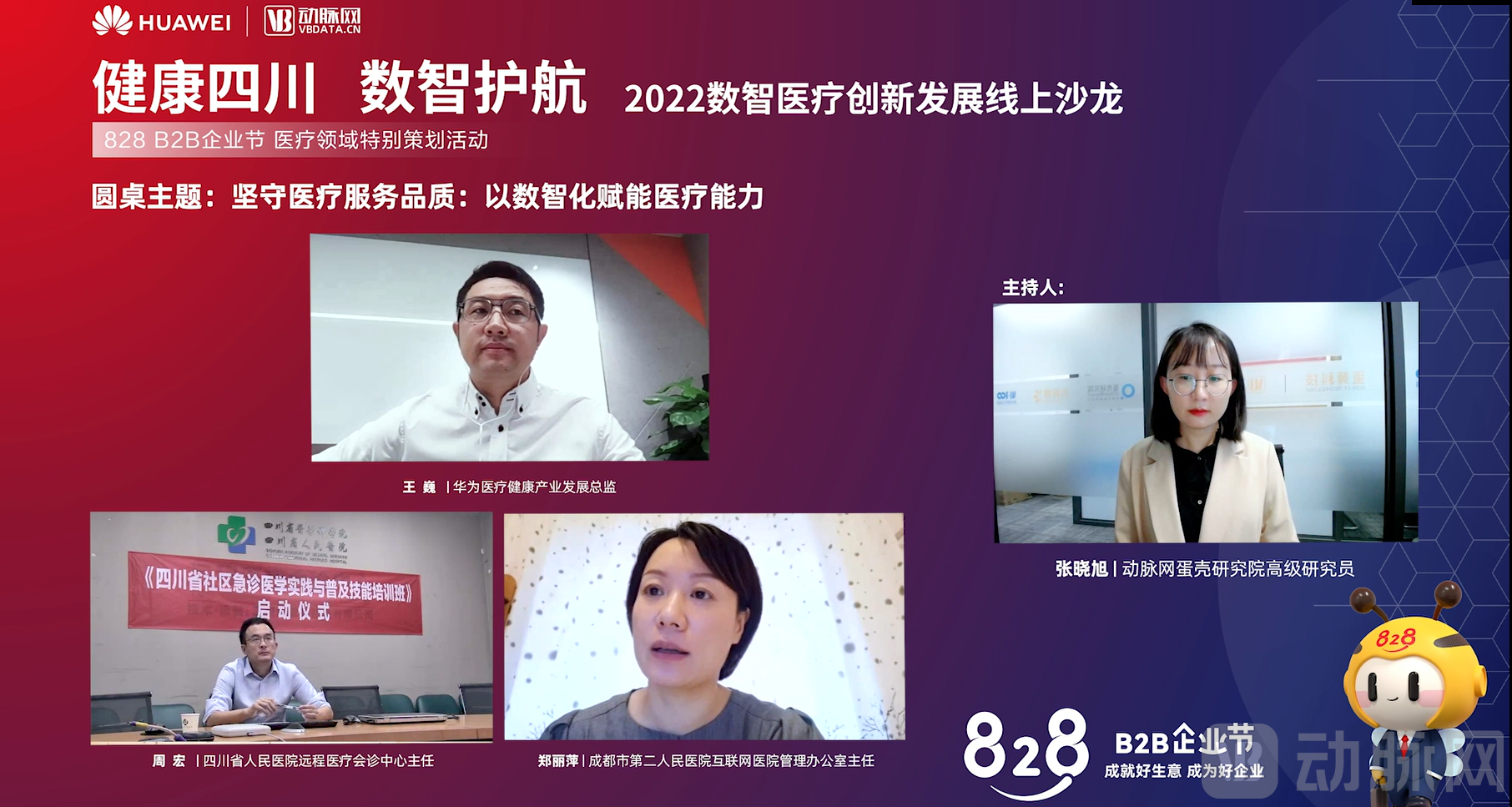
In the future, empowered by digital technologies and tools, the boundaries between hospitals, primary healthcare institutions, communities, and households will be dissolved, enabling integrated, patient-centered diagnosis and treatment to safeguard people’s lives and health.
Sichuan828 B2B Enterprise Festival: Accelerating Services to Empower Innovative Corporate Development
The 828 B2B Enterprise Festival, jointly initiated by Huawei and its ecosystem partners, is China’s first “B2B Enterprise Festival” centered on digital empowerment. In collaboration with VCBeat, the festival hosted a special healthcare-focused event titled “Healthy Sichuan: Digital Intelligence Safeguarding—2022 Online Salon on Innovative Development of Digital-Intelligent Healthcare.” Using Huawei Cloud’s digital-intelligent transformation of regional healthcare in Sichuan as a model, the event aimed to develop replicable frameworks and solutions for building regional digital-intelligent healthcare systems, explore how cutting-edge technologies empower core medical services, and look ahead to the broader possibilities of digital-intelligent healthcare.
To date, Huawei and its partners have successfully held multiple empowerment initiatives. Looking ahead, Huawei will continue to deepen its commitment in Sichuan by delivering tangible services, leveraging its technological capabilities, healthcare service ecosystem, and best practices in digital transformation to support the innovative development of more enterprises.