

Digital Transformation Enables Premium-Quality, Fair-Priced Traditional Chinese Medicine from Farm to Patient
In the fields during the autumn harvest, the air is filled with the cheerful sounds of busy labor and the joy of a bountiful yield. On September 23, the 2022 Chinese Farmers’ Harvest Festival, themed “Celebrating the Harvest, Welcoming the Grand Event,” opened in Chengdu. The dazzling array of agricultural products on display showcased China’s new achievements in strengthening agriculture through science and technology, new progress in industrial development, and the renewed visage of rural revitalization.
A display area showcasing premium, authentic medicinal herbs has attracted widespread attention. Xinhui dried tangerine peel, sliced red Reishi mushroom, Fucheng Ophiopogon japonicus... It is reported that these high-quality traditional Chinese medicinal materials, sourced from core production regions known for their authenticity, are not only cultivated using scientifically standardized ecological farming practices but also benefit from end-to-end digital management—from planting and harvesting to processing and preparation, and from finished-product testing to warehousing. This ensures potent and consistent therapeutic efficacy, with full traceability available via a single QR code.
Cultivation of Chinese medicinal herbs is a vital component of China’s traditional Chinese medicine (TCM) industry, and the quality of such cultivation directly impacts the final therapeutic efficacy. To enhance the quality of TCM products, efforts must begin at the source by addressing key issues in herb cultivation, including low standardization of seeds and seedlings, inadequate regulatory oversight during the growing period, and insufficiently scientific cultivation practices.
Sichuan Daidaiwei Ben Agricultural Technology Co., Ltd. has joined forces with the Southern Medicine Joint Trading Market and the Inter-Provincial Traditional Chinese Medicine (Herbal Materials) Procurement Alliance Trading Center of the Sanming Procurement Alliance (also known as the “Shandong Internet Traditional Chinese Medicine (Herbal Materials) Trading Center”) to integrate resources across the upstream and downstream of the industrial chain. By innovating the “Origin Warehouse” model and focusing on the quality of authentic traditional Chinese medicinal materials, the partnership aims to resolve quality control challenges at the cultivation source. The “Origin Warehouse” establishes an integrated quality assurance system covering production, processing, and sales within authentic producing regions, encompassing standardized cultivation, on-site harvesting, on-site processing, on-site storage, and direct shipment from the origin. Through a digital platform, it supplies high-quality authentic traditional Chinese medicinal materials for alliance-based procurement and market-oriented transactions.
“Origin Warehouses” are constructed under a 7S management model featuring unified standards, unified plant protection, unified processing, unified testing, unified certification, unified traceability, unified packaging, centralized warehousing, and centralized supply. A digital cloud platform for whole-industry-chain management of authentic medicinal materials has been established to ensure full-process traceability of production operations, including soil and water testing at production bases, land preparation, seedling grading and sourcing, fertilization, irrigation, weeding, harvesting, primary processing at the place of origin, quality testing, color-based grading, warehousing, and distribution. Building upon standardized cultivation and end-to-end quality traceability management, the initiative innovatively introduces third-party authoritative testing and certification institutions to further enhance quality control management.
With Chinese herbal medicines as the source of quality control, the Sanming Procurement Alliance Inter-Provincial Traditional Chinese Medicine (Herbal Materials) Procurement Alliance Trading Center leverages a digital platform. By integrating five core systems—quality assurance, quality insurance, volume-based price negotiation, transaction settlement, and warehousing and distribution—the center facilitates the transition of online trading for all categories of traditional Chinese medicine (TCM), including herbal materials, decoction pieces, and formula granules, from offline to online channels. It provides nationwide TCM (herbal material) supply characterized by “quality assurance, grade enhancement, and stable supply,” thereby accelerating the industry’s development of a high-quality ecosystem based on the principle of “premium quality at premium prices.”
On January 6, 2022, the Sanming Procurement Alliance’s Inter-Provincial Traditional Chinese Medicine (TCM) Materials Procurement Alliance launched centralized procurement for TCM products. The initial phase focused on TCM decoction pieces (including formula granules), with participation from 9,547 medical institutions across 86 cities in 19 provinces, reporting a procurement volume exceeding RMB 10 billion. Recently, the trading center of the Sanming Procurement Alliance’s Inter-Provincial TCM Materials Procurement Alliance opened a dedicated section for authentic regional herbs on its official website. The first “direct-from-origin” product, Chuan Maidong (Ophiopogon japonicus from Sichuan), was sold out within seconds of listing, demonstrating robust sales momentum.
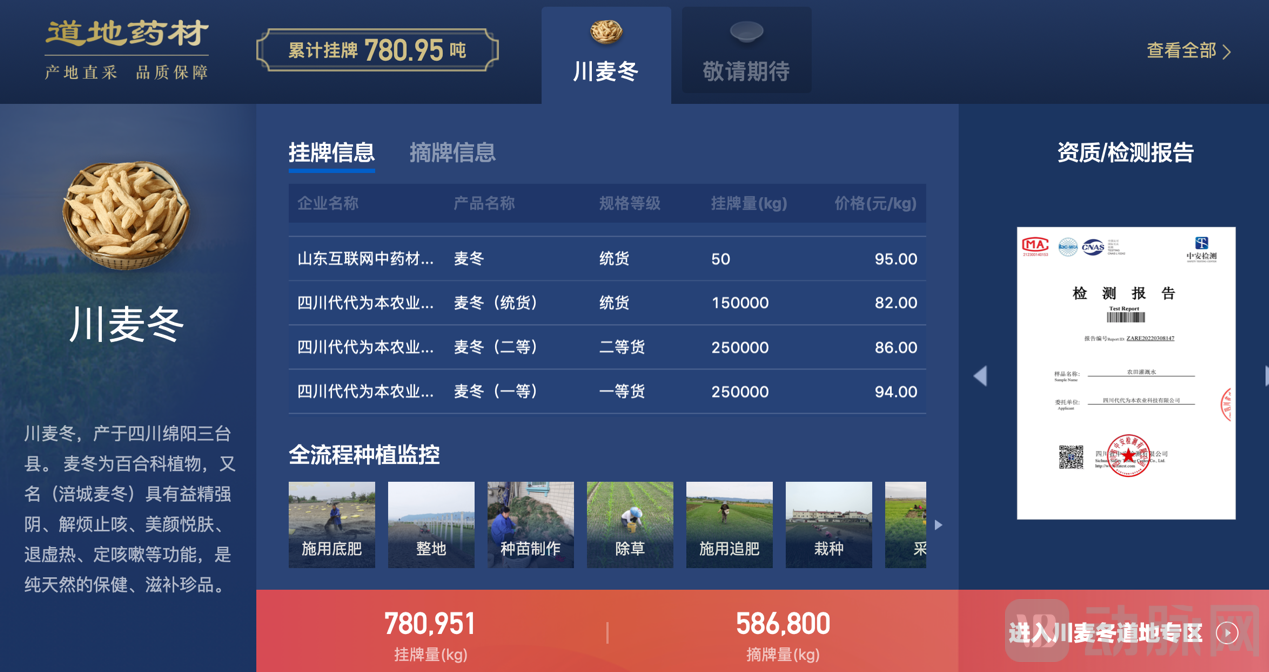
Figure | Sanming Procurement Alliance Inter-Provincial Chinese Herbal Medicine (Materials) Procurement Alliance Trading Center: Authentic Medicinal Materials Zone
Digital trading platforms can extensively connect Chinese herbal medicine producers, operating enterprises, medical institutions (including internet hospitals), and patients across China, integrating information flows, logistics, invoice flows, and capital flows. They establish full-process quality control and traceability from the place of origin to patients, enabling integrated online services for joint procurement, price negotiation, transaction, payment, settlement, and supervision. This improves distribution methods, reduces circulation costs, ensures rapid supplier payments and smooth operations, and precisely matches diverse procurement needs with accurate information, thereby promoting the alignment of “high quality” with “fair pricing.”
Meanwhile, leveraging the cloud-based digital management platform for the entire industry chain of authentic medicinal herbs enables fixed-quota accounting of labor, workforce, and material costs for each operational step. This achieves transparency in planting costs and resolves the challenge of ambiguous calculation of basic cultivation expenses. It also provides the necessary conditions for building a supply chain finance cloud platform and innovating supply chain financial and insurance products, thereby facilitating further exploration of a mutually beneficial linkage mechanism based on contract farming, which ultimately promotes the sustainable development of the traditional Chinese medicine (TCM) and broader health industry.
Standardized cultivation of authentic medicinal herbs facilitates the integrated innovation, demonstration, and promotion of green production technologies and farming models, thereby fostering the vigorous development of new agricultural technologies. Under the deeper integration and alignment of agriculture with the traditional Chinese medicine (TCM) industry, this approach has achieved a “double harvest” of rural revitalization and high-quality development of TCM.
As a leading enterprise in the production of Chuan Maidong (Ophiopogon japonicus from Sichuan), Daidai Weiben has introduced the “Company + Base + Cooperative + Farmers/Family Farms” operational model locally. This approach transitions from industrial drive by a single leading enterprise to the establishment of an industrialization consortium led by the leading enterprise. By fully leveraging the resource advantages of consortium members in scientific research, technology, capital, and labor, the company organically integrates the entire industry chain—including the selection and promotion of new varieties of authentic medicinal herbs, the construction and production management of standardized planting bases, primary processing at the place of origin, graded processing and controlled-atmosphere warehousing services, and market-oriented marketing and promotion. This effectively addresses the challenges of standardization and large-scale production in the cultivation of authentic medicinal herbs.
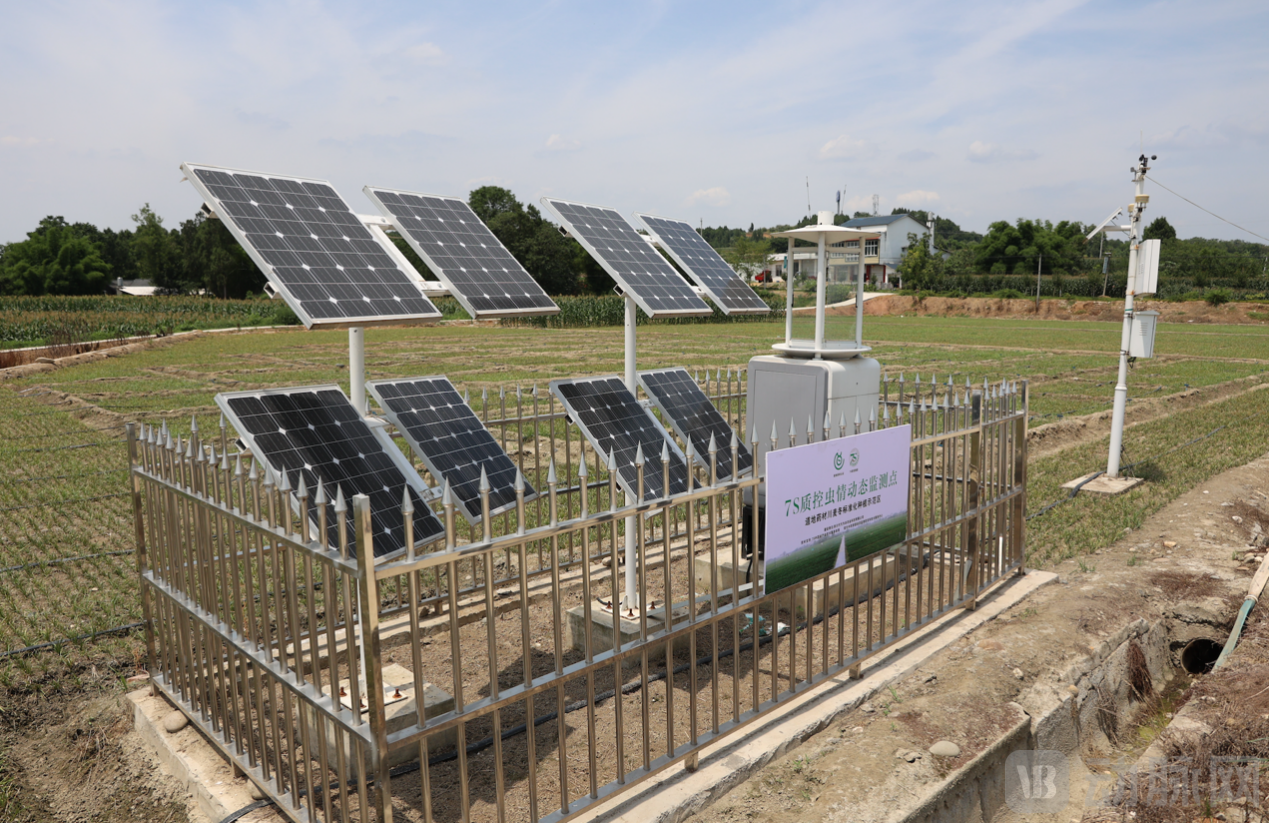
Figure | Sichuan Ophiopogon japonicus Planting Research Base Adopting the 7S Management Model
The industrialization consortium is also playing a positive role in increasing farmers’ income and accelerating the comprehensive revitalization of rural areas. Currently, the consortium collaborates with 31 farmer cooperatives on medicinal herb cultivation, benefiting more than 1,700 households and over 5,000 residents in the local area. It has established technical partnerships with five research institutions, including Chengdu University of Traditional Chinese Medicine, to develop innovative models such as scientific planting and multi-layered (stereoscopic) cultivation. These approaches not only achieve biological pest control and reduce pesticide residues but also significantly increase yield-based income per mu. Through standardized “herb–grain–vegetable” rotation planting, farmers can earn more than RMB 30,000 per mu, doubling their previous income.
Currently, China is continuously advancing toward modernization, with the modernization of agriculture and traditional Chinese medicine (TCM) serving as key areas in this national modernization process.
Focusing on the quality of authentic medicinal materials, we will accelerate the scientific management of specialty agriculture and enhance the quality of traditional Chinese medicine (TCM), fully leveraging the therapeutic advantages of TCM. Daidai Weiben, the Nan Yao Joint Trading Market, and the Sanming Procurement Alliance Inter-Provincial TCM (Medicinal Materials) Procurement Alliance Trading Center will join hands to deepen the “One Body, Two Wings” strategy. With a digital platform as the core service entity, we will integrate resources from authentic medicinal material planting bases and production areas across China upstream, while connecting with medical institution resources downstream. This will achieve a full-chain service loop for high-quality TCM products—from field to patient—enabling the entire population to share in the benefits of TCM development.