

Trinomab Leverages Fourth-Generation Antibody Technology to Disrupt the Multi-Billion-Dollar Immunoglobulin Market
Trinomab
Developer of Natural Fully Human Monoclonal Antibody New Drugs
Monoclonal antibodies (mAbs) are characterized by strong targeting and specificity, representing the class of biopharmaceuticals with the highest compound annual growth rate in recent years.
To date, there have been100+ typesTherapeutic monoclonal antibody drugs have received FDA approval for market launch. In 1997, global annual sales of monoclonal antibody drugs were approximately $300 million; by 2017, global annual sales had reached $100 billion. In just 20 years, monoclonal antibody drugs surpassed the $100 billion annual revenue milestone, and this growth rate continues to accelerate rapidly—In 2020, the global market size of antibody drugs increased to $158 billion; currently, more than 500 monoclonal antibody drugs are undergoing clinical trials.
A Detailed Analysis of the Development History of Monoclonal Antibody Drugs: Four Major Stages—Murine Monoclonal Antibodies (First Generation) → Chimeric and Humanized Monoclonal Antibodies (Second Generation) → So-Called Fully Human Monoclonal Antibodies Represented by Transgenic Animals and Phage Display Libraries (Third Generation) → Natural Fully Human Antibodies (Fourth Generation).
Among these, technologies represented by single-cell isolation/culture combined with RT-PCR amplification and high-throughput sequencingFourth-generation technology-derived natural fully human monoclonal antibody drugs,As they mature through immune system selection within the human immune tolerance environment, they are “truly human antibodies,”minimizing or even avoiding the ADA responses caused by immunogenicity in antibody drugs developed through traditional R&D approaches, thereby significantly improving the druggability success rate,Characterized by favorable safety, high specificity, and strong affinity, it has garnered significant market attention in recent years.
Undoubtedly,Natural Fully Human Antibodies Have Become an Inevitable Trend in the Development of Therapeutic Antibody Drugs.Companies that are the first to master this technology and apply it to the development of related drugs will possess greater growth potential and a higher likelihood of success. However, among the more than 500 monoclonal antibody clinical trials currently underway worldwide, the vast majority of therapeutic monoclonal antibodies remain humanized animal antibodies or so-called “fully human antibodies.” The few companies that have mastered fourth-generation antibody technology will leverage it as their core competency to build a moat around their R&D capabilities.
When discussing fourth-generation antibody technology, one must first mention a researcher: the co-founder of Trinomab and former Director of Research at the Duke Human Vaccine Institute (DHVI) of the Duke University Medical Center.Dr. Liao Huaxin, and is also a renowned international expert in virology, viral immunology, and immunology.
In the early years, Dr. Liao led his team to achieve a breakthrough in the cutting-edge field of isolating fully human monoclonal antibodies using single B-cell technology, enabling the efficient isolation of natural fully human monoclonal antibodies from human memory B lymphocytes or plasma cells.
To translate this cutting-edge technology into practice and benefit more patients, Dr. Liao Huaxin joined forces with Mr. Zheng Weihong, who has successful experience in entrepreneurship and corporate management, to co-found Zhuhai Trinomab Biotechnology Co., Ltd. (hereinafter referred to as "Trinomab") at the end of 2015. Building on the existing technology, they establishedHitmAb: An Integrated Platform Technology for High-Throughput Development of Natural Fully Human Monoclonal Antibodies®, to develop novel natural fully human monoclonal antibody drugs with independent intellectual property rights, high differentiation, and high efficacy.
VCBeat has learned that Trinomab’s core technology platformHitmAb®It effectively avoids the time-consuming, labor-intensive, and lengthy processes associated with traditional antibody expression that require cloning and vector construction, thereby achieving"High-Throughput," "High-Efficiency"and“Operable”, can be in the shortestwithin 7-10 daysthereby obtaining the target antibody requiring isolation.
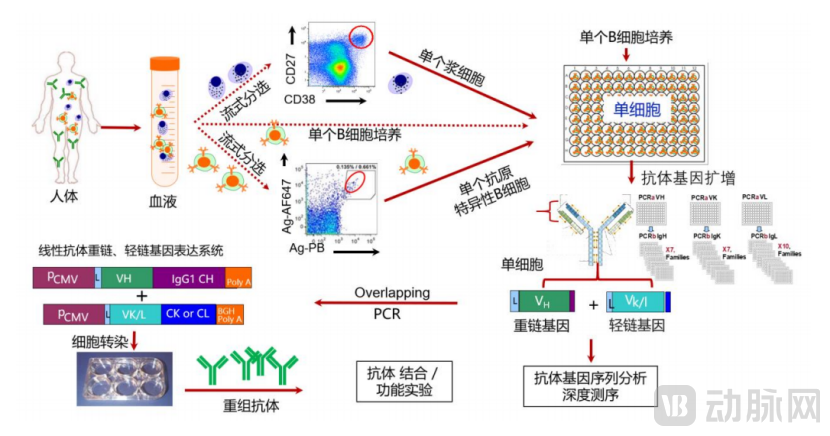
HitmAb: Trinomab’s Integrated Technology Platform for the Development of Natural Fully Human Monoclonal Antibodies®Technical Route
Powered by HitmAb®Core Technology Platform, Trinomab CanContinuous DevelopmentIssuing those with significant clinical valueDifferentiated Drug Pipeline; meanwhile, the company can also leverage HitmAb®Providing personalized, fully human natural antibody drug development services to external clients.Generate cash flow through technical service fees and post-launch sales royalties, achieving self-sustaining “hematopoiesis.”This has enabled the company to achieve rapid development through a “dual-engine” model driven by both financing and cash transaction revenue.
Based on the HitmAb Core Technology Platform®, Trinomab has currently obtainedTargeting Multiple Disease TargetsofHundreds of strainsMonoclonal antibodies, including20+Differentiated drug pipeline with significant clinical value under development, covering product portfolioInfectious Diseases, Autoimmune Diseases, Neurological DisordersandOncology, Painand other disease areas.
Among them, products including TNM001 injection (a long-acting monoclonal antibody against RSV) and TNM002 injection (a monoclonal antibody against tetanus toxin) have successively entered clinical stages. Notably,Both TNM001 and TNM002 are dual-filed in China and the United States. Currently, TNM001 is in Phase I clinical trials, while TNM002 has entered Phase III clinical trials and has received Breakthrough Therapy Designation from China’s Center for Drug Evaluation (CDE) as well as Fast Track designation from the U.S. FDA.Additionally, 3–5 products are in the PIND stage, and nearly 10 early-stage development projects are under continuous R&D.
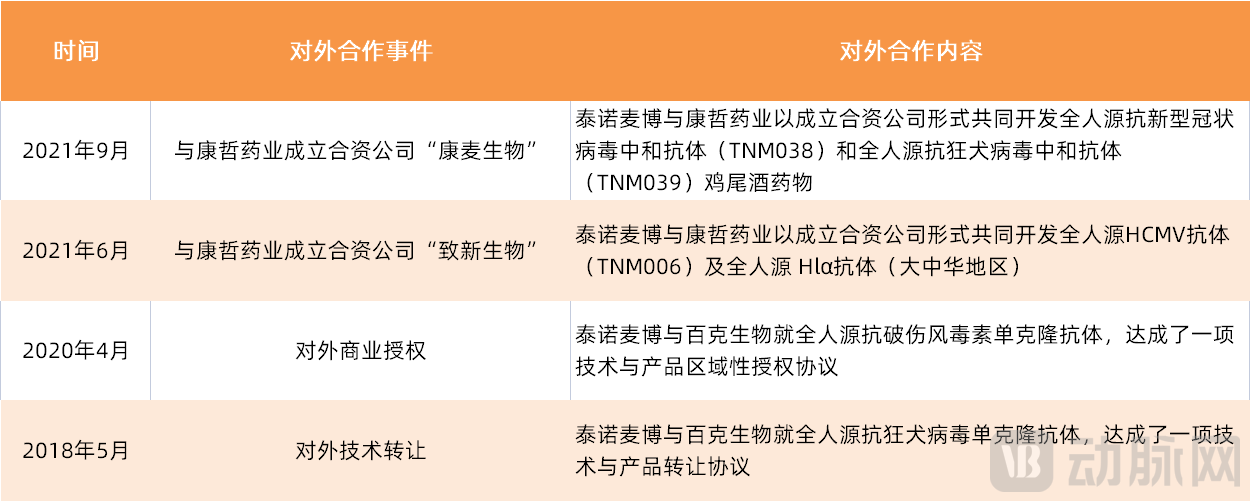
In addition, six products, including TRN006 (anti-rabies virus monoclonal antibody) and TNM006 (anti-human cytomegalovirus monoclonal antibody), have successfully achieved external commercial licensing or established joint ventures with listed pharmaceutical companies for co-development.
VCBeat noted that Trinomab’s first-tier products, on the whole, areIntended to replace the specific immunoglobulins currently used in clinical practice.What is Trinomab’s strategy in placing such a significant bet on replacing immunoglobulins? What market potential does the substitution of immunoglobulins with gene-recombinant monoclonal antibodies imply?
On one hand, as naturally occurring fully human antibodies matured through selection within the human immune tolerance environment, recombinant gene-derived fully human antibodies completely overcome the various drawbacks of animal-derived and humanized antibodies. On the other hand, compared with human immunoglobulins, naturally occurring fully human antibodies offer multiple advantages. VCBeat primarily summarizes these advantages into the following four aspects:
(1)High Safety Profile——As is well known, source plasma for blood products carries a potential risk of viral contamination, whereas fully human monoclonal antibodies can completely eliminate the risk of infection with other pathogens due to plasma contamination.
(2)High Efficacy——Recombinant monoclonal antibodies exhibit high-titer antiviral or antitoxin neutralizing activity and specificity, with milligram-level doses sufficient to achieve complete protection.
(3)High Accessibility—The raw materials for the production of recombinant genetic drugs are highly accessible, do not rely on plasma collection, and can be manufactured through large-scale cultivation of mammalian cells using modern industrial standards.
(4)Low Cost, High Gross Margin, Large Market Potential— The production cost of recombinant DNA drugs is relatively low, while their retail price is relatively high, resulting in a substantial profit margin. In terms of market potential, taking Trinomab’s flagship product, the tetanus toxin monoclonal antibody, as an example, the corresponding global market involves an annual demand of at least 25 million doses of human-derived tetanus antitoxin and at least 100 million doses of equine-derived tetanus antitoxin. The estimated annual market share in China will reach several billion yuan, while the global market share will amount to tens of billions of yuan.
Furthermore, from an ethical and moral perspective, the comprehensive replacement of blood-derived products by fully human monoclonal antibody drugs is an inevitable trend of technological advancement and a significant progress for society.
No matter how rapidly a company grows, the most critical factor behind its success remains people. WithTop Scientist Dr. Liao HuaxinWith extensive experience in operations managementMr. Zheng Weihong, a Successful EntrepreneurWith leadership at its core, Trinomab has successively recruited numerous top-tier international talents over the past two years, building a high-caliber team covering the entire industry chain—from new drug R&D, pilot-scale process development, and clinical development to commercial manufacturing. This elite force boasts exceptional execution capabilities and a global perspective.
Trinomab's multiple products are allWorld's First, thereby directly avoiding red-ocean competition. This is attributable to its team’s focus on the global drug development landscape in innovative drug discovery and project initiation, conducting comprehensive analyses across multiple dimensions—including clinical needs, market demand, competitive landscape, profit margins, technical feasibility, and clinical trial execution—to fully ensure the advancement, innovativeness, and feasibility of project selection.
Meanwhile, to meet the future industrialization needs of its product pipeline, in 2021, Trinomab built a facility at Zhuhai International Health PortTwo GMP-compliant antibody production lines with capacities of two 1,000-liter lines and one 200-liter line, covering approximately 12,000 square meters. In the first half of this year, construction was recently completed on a vial formulation workshop and packaging workshop, along with supporting facilities, spanning approximately 11,000 square meters.It can meet the needs for preclinical development, clinical sample production, and commercial-scale manufacturing of its key fully human natural antibody projects at this stage. This marks Trinomab’s gradual transition from an R&D-focused technology company with innovative capabilities to an innovative biopharmaceutical enterprise.
It is evident that, in terms of talent, Trinomab recruits international elites from around the world to join its team. In product portfolio planning, the company consistently adopts a global perspective for project initiation and layout. Regarding external collaborations, Trinomab has established close ties and deep partnerships with numerous leading research institutions, prominent listed pharmaceutical companies, and CRO/CDMO firms both domestically and internationally. Trinomab’s overall international strategy not only demonstrates its global vision but also underscores the company’s robust core competencies.
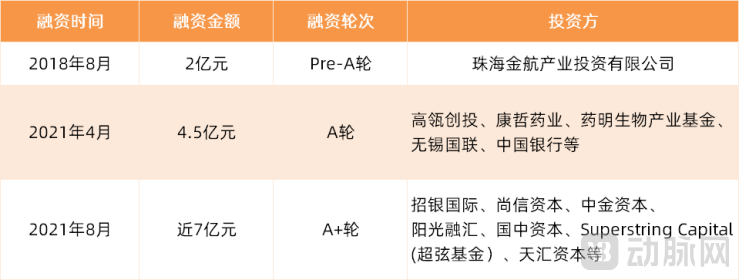
Based on recognition of Trinomab’s team and its business philosophy, numerous prominent funds from the industry have frequently extended investment offers to the company. To date, Trinomab has completed three rounds of financing, totaling RMB 1.35 billion.
To date, multiple leading listed pharmaceutical companies, including CMS Pharmaceutical and Changchun BCHT Biotechnology, have successively entered into deep strategic collaborations with Trinomab. These partnerships extend beyond out-licensing arrangements to include the establishment of joint ventures for the collaborative development of drug pipelines.
A close analysis of Trinomab’s development model reveals that the company has a profound understanding of the wisdom behind “win-win cooperation.”
▶ In terms of management, Dr. Liao Huaxin, a top-tier scientist, leads the scientific R&D team in tackling key challenges, providing a continuous source of momentum for the development of the company’s product pipeline. Meanwhile, Mr. Zheng Weihong, a successful entrepreneur, oversees corporate management and operations, ensuring rapid and efficient functioning across the entire organization.
▶ In terms of external collaborations, Trinomab has actively engaged in close partnerships with CRO/CDMO giants such as WuXi AppTec and WuXi Biologics. Beyond meeting the basic need to enhance product development efficiency, the company particularly values the internationally standardized service capabilities of the WuXi group companies, thereby preparing its own products for global market entry. On the other hand, Trinomab provides external clients with natural fully human antibody drug development services, generating cash flow and achieving self-sustainability through technical service fees and post-launch sales royalties.
▶ In terms of pipeline development, Trinomab leverages its strengths in antibody drug development to accelerate the creation of more first-in-class and best-in-class proprietary candidates. This strategy allows the company to avoid the saturated market competition seen with drugs such as PD-1 inhibitors, while identifying alternative monoclonal antibody innovation tracks with broad market prospects. Meanwhile, Trinomab actively collaborates with leading listed pharmaceutical companies and international CROs/CDMOs. By combining complementary strengths, these partnerships not only expedite pipeline development but also lay a solid foundation for global market entry through high-quality, high-standard product development.
Every initiative and the underlying strategic thinking at each of these levels exemplify Trinomab’s profound understanding of the wisdom behind “win-win cooperation.” As innovative pharmaceutical companies spring up like bamboo shoots, how can one break through the pack and go global? Trinomab’s development strategy may offer us some valuable insights.
Many hands make light work. Whether delving into corporate operations or extending into the broader industry landscape, “win-win cooperation” is not only the secret to individual success but also the key to team victory. We believe that this spirit of collaborative win-win will be reflected in the commercial development and international expansion of Trinomab’s products. Let us look forward to it together.