

Diagsensor Medical: Empowering Intelligent Upgrading of Minimally Invasive High-End Consumables – Making Catheters Smarter
With the advancement of science and technology, the concept of “minimally invasive” has permeated various fields of surgical practice. Monitoring systems are no longer limited to endoscopes; instead, they increasingly adopt interventional approaches and are making significant strides toward precision and intelligence. Minimally invasive interventional catheter technology has seen steady development over the past few decades. Driven by the emergence of more advanced technologies and biocompatible materials, the global market for sensor-based smart catheters is experiencing rapid growth in both development and application. In 2021, the global market for sensor-based smart catheters was valued at approximately USD 3.5 billion. From 2022 to 2031, the compound annual growth rate (CAGR) of the global market is projected to be 8.0%. By 2031, the global market for sensor-based smart catheters is conservatively estimated to exceed USD 7 billion.
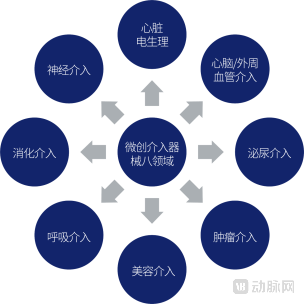
Taking electrophysiology catheters as an example, advancements in 3D technology enable the creation of three-dimensional models of cardiac chambers and the precise localization of inserted catheters, facilitating accurate diagnosis of abnormalities such as arrhythmias and driving market demand for mapping catheters. Similarly, demand is growing for smart catheters used in minimally invasive brain monitoring, catheters for vascular disease ablation and imaging, and catheters for the treatment of urological disorders. The increasing preference among physicians for advanced smart catheters in complex interventional procedures is further propelling the development of the sensor-based smart catheter market.
Internationally, multinational medical device companies such as Abbott, J&J, Medtronic, Teleflex, Biometrix, and B. Braun have heavily invested in the research and development of active interventional devices for many years. For instance, they have integrated various sensing technologies—including temperature, pressure, magnetic positioning, and optical positioning—to achieve precision, convenience, safety, and efficiency in minimally invasive interventional procedures.
The primary challenge in the application of smart catheters is achieving bidirectional signal transmission, electrical conduction, and feedback loops between the proximal and distal ends. By integrating bidirectional feedback and control mechanisms, smart catheters can utilize distal-end information to perform additional functions, enabling diagnostic and therapeutic procedures at the distal tip under real-time guidance from the bidirectional feedback loop. In this process, multiple sensors and functional modules are housed within the inherently confined space of the catheter.Integrationis a huge challenge.

An increasing number of companies in China are heavily investing in the research and development of smart catheters. However, most of these enterprises face numerous challenges, including outdated manufacturing processes and equipment, a shortage of talent with relevant experience, high assembly difficulty leading to persistently high manufacturing costs, and reliance on imported core components such as sensors. Leveraging years of research and experience in minimally invasive interventional devices, Zhejiang Diagsensor Medical Technology Co., Ltd. has seized this opportunity to address critical industry pain points. By confronting the opportunities and challenges associated with smart catheter applications, the company aims to support the continuous innovation of Chinese manufacturers of high-end consumables for minimally invasive medical devices through the application of new technologies.
Diagsensor Medical has independently developed core components to replace imported products—ultra-miniature sensors—and provides integrated sensor design services for catheters, enabling the expansion of multi-sensor arrays (including temperature, pressure, optical fiber, and positioning) in interventional active catheters. Currently, Diagsensor Medical has developed miniature pressure sensors, electromagnetic positioning sensors, and miniature temperature sensors, along with supporting sensor signal acquisition and conversion modules. Leveraging its capabilities in manufacturing high-precision miniature interventional devices, the company systematically enhances the intelligence, high precision, and high sensitivity of interventional catheters.
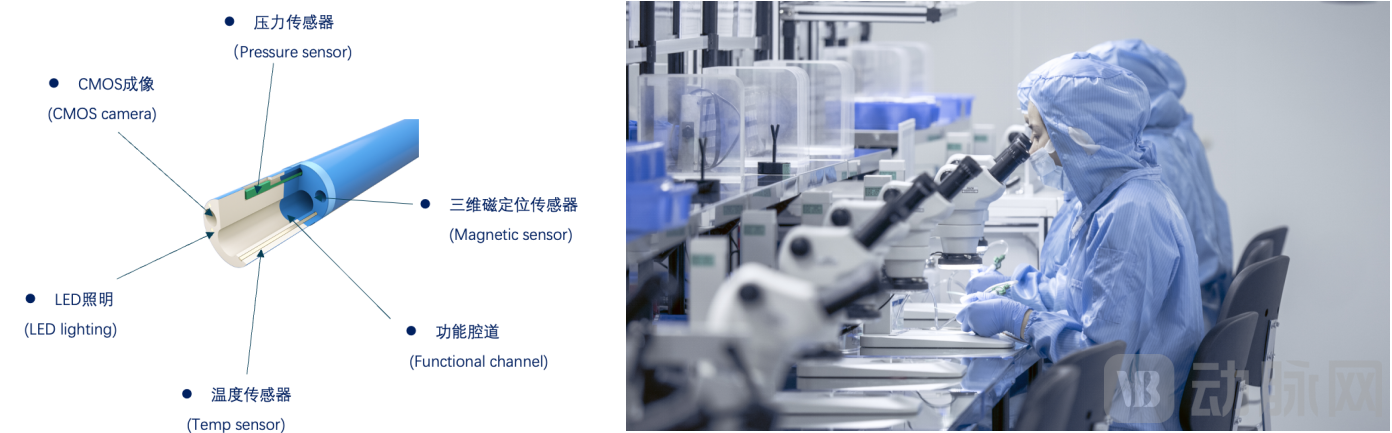
“Diagsensor Medical is dedicated to developing a range of specialized sensors for interventional devices, addressing the critical challenge of import dependency for key components. We understand the complexities involved in handling precision sensors during intricate assembly processes and possess the expertise to rationally design the structure and tolerance stack-up of fragile components subjected to strain and compression,” introduced Mr. Wang Xuguang, CEO of Diagsensor Medical. “Leveraging our years of product experience, we know how to ensure high quality and reliability through design improvements and manufacturing process optimization across various application scenarios. We have strategically laid out R&D efforts for multiple sensor types, including pressure, temperature, and magnetic sensors, and can integrate sensor array systems into micro-catheters. This enables us to assist customers in completing new product design and manufacturing, allowing for rapid response to the ever-changing market environment!”
Diagsensor Medical, established in March 2021 and secured angel-round funding from Shanghai Lanwan Sci-Tech Innovation, has built an R&D center in Shenzhen as well as manufacturing facilities in Dongguan, Guangdong, and Xianju, Zhejiang. The company provides end-to-end services including product design, prototyping, functional testing, and mass production. Notably, its Shenzhen R&D center is ISO 9001 certified, while the Dongguan and Taizhou factories are ISO 13485 certified and comply with FDA/GMP requirements. Both factories feature Class 10,000 cleanrooms and have an annual production capacity of over one million catheters of various types.
Diagsensor Medical possesses multiple platform technologies for the manufacturing of interventional devices. Furthermore, its team has extensive experience in the research and development of automated and semi-automated equipment, which reduces costs by improving production efficiency and enhances the market competitiveness of customer products. In terms of soft power, Diagsensor Medical’s core team brings years of experience in the R&D and manufacturing of high-precision, miniaturized, active interventional medical devices. To address challenges such as the complexity of assembling miniature high-precision components and the lengthy employee training cycles, the company has established a scientific training system to ensure both production efficiency and product quality.
Interventional micro-scale, high-precision medical devices require excellent mechanical strength, biocompatibility, and shapeability. Their development involves a multidisciplinary intersection of medicine, materials science, biology, mechanical engineering, and physicochemistry, presenting significant R&D challenges and high entry barriers. Zhejiang Diagsensor Medical Technology Co., Ltd. actively engages in deep collaborations with universities such as the University of Shanghai for Science and Technology and Shanghai Jiao Tong University, leveraging industry-academia-research partnerships and medical-engineering translation platforms to rapidly commercialize scientific achievements. Furthermore, in joint efforts with universities and government entities, the company is establishing an interventional product testing center, platforms for medical-engineering and scientific achievement translation, and a research institute for interventional products and materials engineering, thereby accelerating the development of a fully functional interventional CDMO platform. Through its systematic platform services and professional product solutions, Diagsensor helps clients reduce average product development cycles by 1–2 years and lower manufacturing costs by 20%–50%.
In the future, Zhejiang Diagsensor Medical Technology Co., Ltd. will uphold the business philosophy of “discerning the significant from the subtle, and achieving excellence through accumulation,” dedicate itself to the vertical integration of the supply chain for minimally invasive interventional devices, build a one-stop enterprise service platform, facilitate the intelligent industrial upgrading of domestically produced minimally invasive interventional devices, and continuously create opportunities and value for customers!