

WeDoctor Shares Insights on Building and Operating Internet Hospitals at National Outpatient Management Conference
On September 25, the 19th National Academic Annual Conference on Outpatient and Emergency Management and the Academic Training Course on Outpatient and Emergency Management, hosted by the Outpatient and Emergency Professional Committee of the Chinese Hospital Association, were convened. Themed “A New Starting Point for Refined, High-Quality Care and Smart Services for the Future,” the conference focused on hot topics, challenges, and patient needs in outpatient and emergency management, jointly exploring refined and smart management solutions to enhance patients’ healthcare experience. Among these, operational practices of internet hospitals emerged as a key discussion highlight at the conference.
According to incomplete statistics, by early 2022, more than 1,700 internet hospitals had been established in China. The majority of these are independently built and operated by individual hospitals; however, over 90% remain either unused or only superficially utilized. How to effectively leverage internet hospitals to maximize their intended advantages in facilitating public access, improving convenience, and enhancing quality and efficiency has become a key concern for hospital administrators.
In this regard, Kong Xiangpu, Senior Vice President of WeDoctor Group, delivered an invited presentation titled “Operational Practices of Internet Hospitals.” Focusing on the development trajectory, industry policies, and operational practices of internet-based healthcare, he shared WeDoctor’s practical experiences and case studies in co-building closed-loop service systems for internet hospitals with public hospitals, providing valuable references for hospital administrators to more effectively carry out the construction and operation of internet hospitals.
“As an operator of platform-based internet hospitals, WeDoctor has supported the construction and operation of internet hospitals for numerous medical institutions. In this process, we collaborate with hospital partners to evaluate patients’ overall experience throughout the closed-loop service journey of internet hospitals from a patient-centric perspective, across different hospitals and regions. This approach highlights the operational advantages of platform-based internet hospitals.”
According to Kong Xiangpu, since the establishment of WeDoctor’s predecessor, “Guahao.com,” in 2010, which began by assisting hospitals with appointment scheduling and diagnosis and treatment services; to the creation of China’s first internet hospital, the Wuzhen Internet Hospital, in 2015; to the launch of the “Real-Time Assistance Platform for COVID-19” via the internet hospital during the outbreak of the pandemic; and up to the present, where it assists regional healthcare systems in building chronic disease medical consortia and digital health communities, WeDoctor has consistently strived to collaborate closely with hospitals at all levels, leveraging complementary strengths. By applying internet technologies and platforms, WeDoctor aims to provide the public with more convenient and accessible medical services.
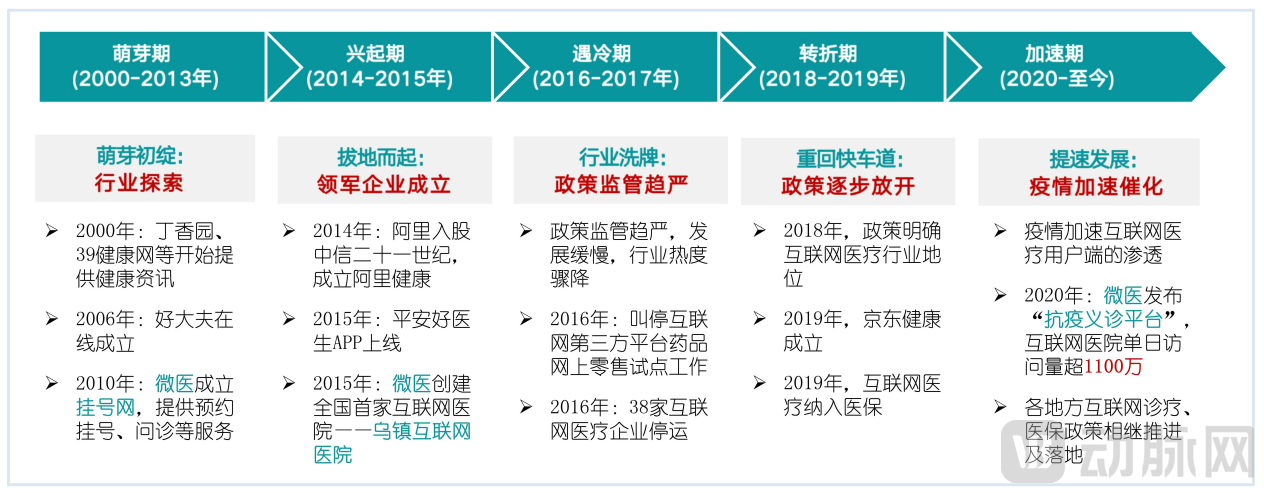
The Development History of Internet Healthcare
Reflecting on the 20-year development journey of internet healthcare, Kong Xiangpu stated that China has successively introduced various policies encouraging “Internet + Healthcare,” which have strongly promoted the rapid growth of internet healthcare at the policy level and facilitated the compliant and lawful development of internet hospitals.
In 2018, with the successive issuance of policy documents such as the “Opinions on Promoting the Development of ‘Internet + Healthcare’” and the “Administrative Measures for Internet Diagnosis and Treatment (Trial),” China clearly defined for the first time the definitions, market access, practice planning, and supervision and management of internet healthcare and internet hospitals. During the outbreak of the COVID-19 pandemic in 2020, the release of several supportive policies, including the “Guiding Opinions on Actively Promoting Medical Insurance Payment for ‘Internet +’ Medical Services,” facilitated the leapfrog development of internet hospitals in China.
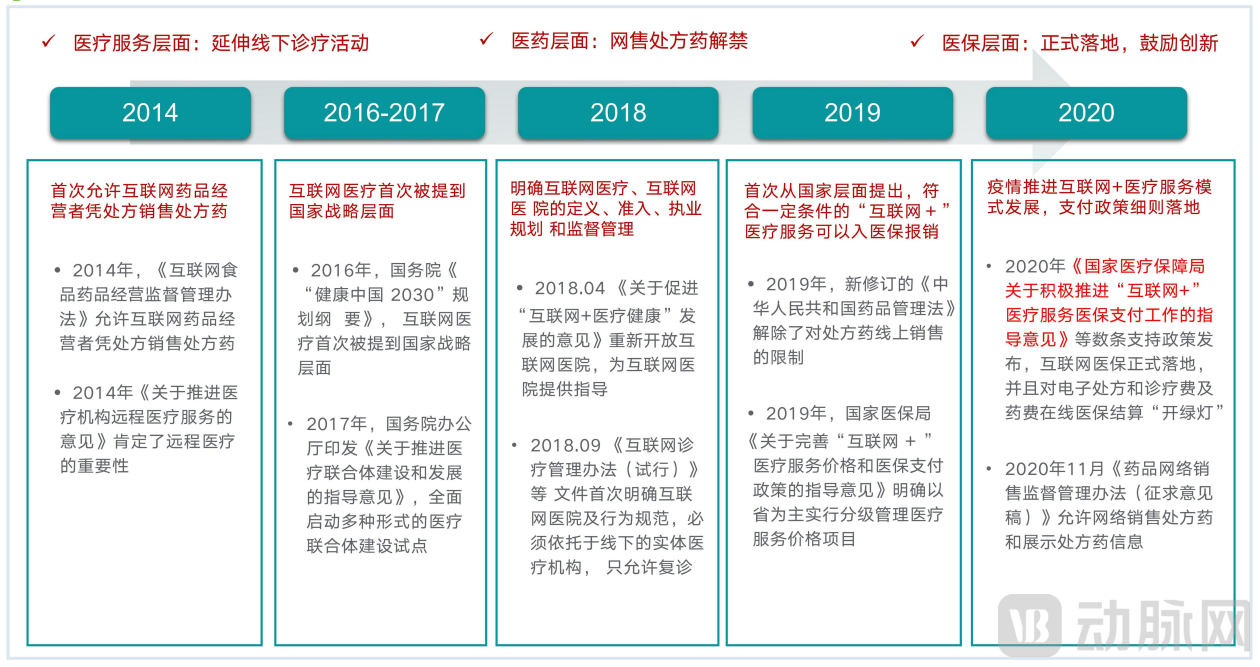 Internet Healthcare Industry Policies
“During the fight against the COVID-19 pandemic, internet hospitals played a significant and widely recognized role,” introduced Kong Xiangpu. In the early stages of the outbreak in 2020, WeDoctor took the lead in launching the “Real-Time Assistance Platform for COVID-19” through its internet hospital, mobilizing experts nationwide to provide online support to Wuhan. The platform recorded a peak daily traffic of over 11 million visits, alleviating pressure on the public healthcare system under lockdown conditions and effectively ensuring access to online diagnosis and treatment for patients with severe chronic diseases.
During the Shanghai COVID-19 outbreak in April this year, Shanghai Weiyi Hospital Internet Hospital enabled citywide online medical insurance payments and fully integrated end-to-end services, including online follow-up consultations, medical insurance settlement, prescription renewals, medication purchases, and home delivery. Furthermore, Weiyi collaborated with the Shanghai Digital Medicine Innovation Center, Shanghai Ruijin Hospital, and other medical institutions to establish the “Shanghai Medical Treatment and Medication Emergency Platform.” This initiative pooled resources from various stakeholders and streamlined medication distribution channels, striving to ensure that patients in Shanghai had access to necessary medical care and medications during the pandemic.
“Therefore, WeDoctor’s Internet Hospital is not a closed, isolated entity; rather, it collaborates with public hospitals, primary healthcare institutions, and pharmaceutical and medical device supply chains, among other stakeholders, to better complete the operational loop of the Internet Hospital and enhance the overall efficiency of the healthcare system. On this basis, we strive to meet patients’ differentiated service needs.”
Kong Xiangpu stated that it is precisely due to its “openness and connectivity” approach that WeDoctor has grown into China’s largest internet healthcare platform. To date, WeDoctor has connected with more than 8,000 hospitals across China, including over 95% of Grade III Class A hospitals. Meanwhile, WeDoctor operates 34 internet hospitals, 20 of which have integrated online medical insurance payment services. The platform has onboarded more than 300,000 physicians and serves over 270 million registered users.
“Internet-based healthcare must center on internet hospitals, which in turn must be anchored to physical hospitals in compliance with laws and regulations. Therefore, physical hospitals, including public hospitals, can serve as the main players in internet-based healthcare,” said Kong Xiangpu. He noted that especially after the outbreak of the pandemic in 2020, the service volume of internet hospitals increased significantly, user habits underwent substantial changes, and public hospitals have placed growing emphasis on the development of internet hospitals.
According to industry statistics, during the 2020 pandemic, a significant proportion of internet healthcare users utilized online hospitals for virtual consultations, appointment scheduling, and online medication purchases. Meanwhile, user habits such as online chronic disease management and the use of wearable devices were in the process of being cultivated. Correspondingly, 67.1% of users reported an increased acceptance of internet healthcare, laying the foundational conditions for internet hospitals in China to play a more substantial role.
Internet hospitals have also played a major role in alleviating the pressure on hospital outpatient services and preventing cross-infection, which has become one of the primary reasons why public hospitals value the significance of internet hospitals, significantly boosting their utilization rates.
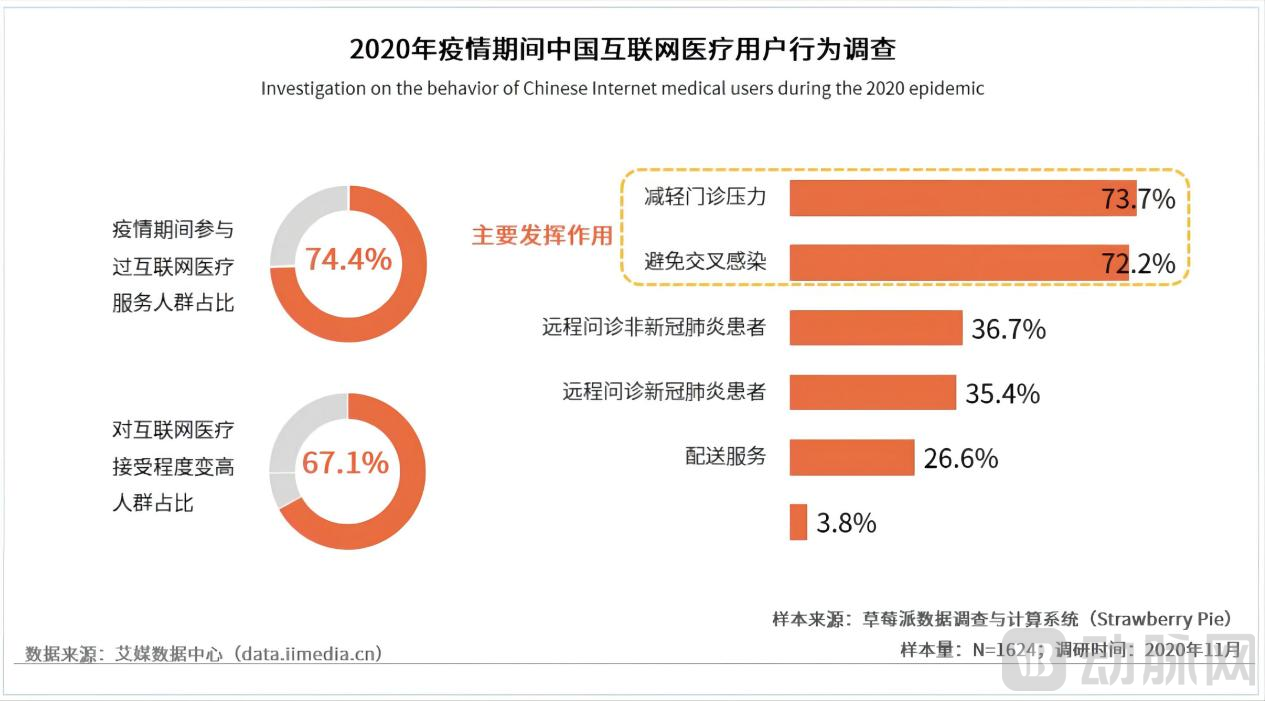 Survey on User Behavior in Internet Healthcare
“Throughout the implementation of internet hospitals, WeDoctor has established in-depth collaborations with public hospital systems. Leveraging our mature operational framework for internet hospitals, we assist healthcare institutions in constructing a more efficient, closed-loop patient service system that spans pre-consultation, during-consultation, and post-consultation phases. Furthermore, using internet hospitals as a platform, we facilitate multi-tiered healthcare systems to develop diverse models of digital healthcare.”
According to Kong Xiangpu, the digital health communities facilitated by WeDoctor, with internet hospitals as their core platform, have been validated in practice across multiple cities and have accumulated extensive operational experience. For instance, in Tai’an, Shandong Province, WeDoctor entered into a strategic partnership with the Tai’an Municipal Government to jointly establish the Tai’an Digital Health Community and China’s first internet hospital dedicated to chronic disease management, successfully pioneering a comprehensive, full-course management model for chronic diseases that integrates “internet + medical insurance + healthcare + pharmaceuticals.” In Tianjin, the grassroots digital health community, led by Tianjin WeDoctor Internet Hospital and comprising 266 primary healthcare institutions across the city, provides residents with integrated online and offline medical and health services. By focusing on chronic disease management to implement a health accountability system, it has achieved a transition from “fee-for-service/fee-for-volume” to “pay-for-performance.”
“During this process, the establishment of dedicated service zones for chronic disease patients in both tertiary hospitals and primary care institutions, along with the implementation of standardized chronic disease management services, has significantly improved the healthcare experience for these patients,” introduced Kong Xiangpu. He noted that patient waiting times decreased from 2–3 hours to under 30 minutes, while outpatient pressure on hospitals dropped by 20%. “Meanwhile, by implementing capitation or diagnosis-related group (DRG) payment models within the Health Community Consortium, healthcare providers have been incentivized to control costs, leading to reduced health insurance expenditures and allowing for the retention of surplus funds.”
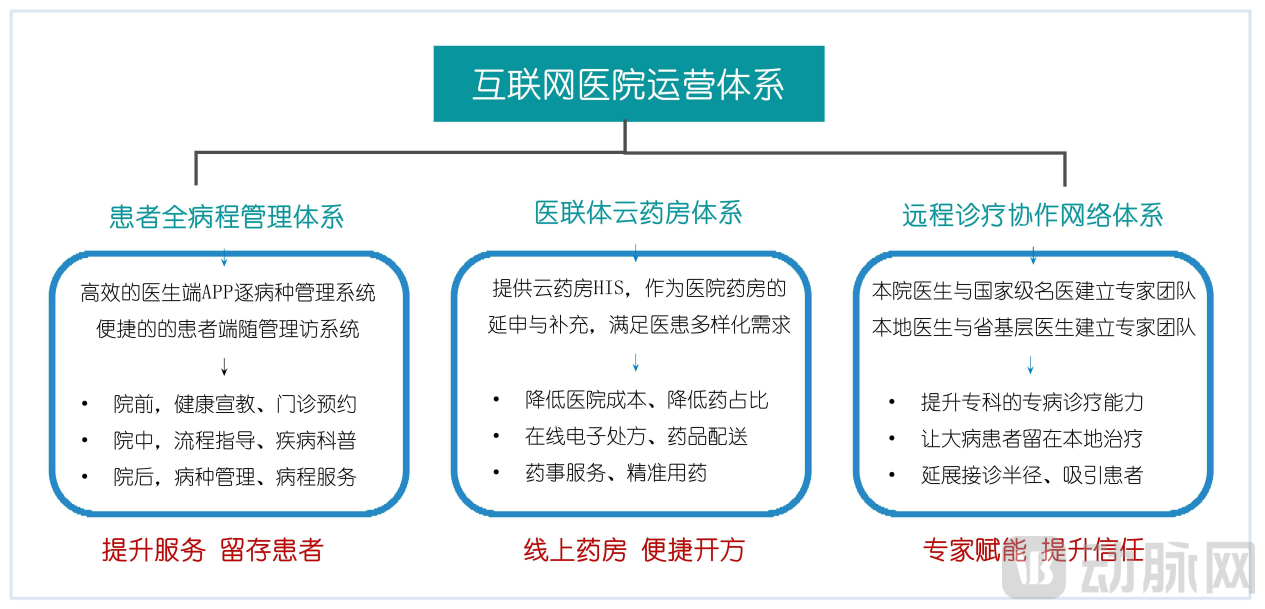 Internet Healthcare Operations System
However, in the process of building and operating internet hospitals, how can we break down “data silos” within hospitals, achieve data and information sharing across different hospitals and regions, and truly harness the synergistic power of interconnectedness among internet hospitals? This is not only a challenge for the internet healthcare industry but also a subject that requires further exploration and practice across the entire healthcare sector.
“The era of integration and interoperability has arrived; this is the ongoing evolution of internet hospitals...” Kong Xiangpu concluded, “I also call on the industry to jointly research and discuss the establishment of a nationwide, secure, compliant, and standardized data sharing and management mechanism, truly realizing the vision of ‘letting data do the running so that people have to run less.’ I hope that the development of internet hospitals and internet healthcare will reach new heights.”