

Nasheng Microelectronics CEO Dr. Bai Xu: Allergy Rate Below 0.01%, Nacrystall 4.0 Enables Precise, Painless Microneedle Drug Delivery
Nearly a century later, Dr. Xu Bai was inspired by his child’s crying during an injection to develop"Change the Injection Method"the idea, he co-founded in 2004 with seven senior scientistsSuzhou Nasheng Microelectronics Co., Ltd.(hereinafter referred to as “Nasheng Microelectronics”), which first introduced the microneedle concept to China and successfully achieved product commercialization, obtaining approval from the National Medical Products Administration (NMPA) of China. This marked the beginning of the nascent microneedle industry in China.
Dr. Xu Bai earned his Ph.D. from the French National Centre for Scientific Research (CNRS), specializing in Materials Science. Prior to returning to China, he served as the Chief Scientist for Nano/Micro Systems Technology at the University at Albany, State University of New York (SUNY), where he was involved throughout the entire establishment of the first College of Nanoscale Science and Engineering in the United States, which had a total investment of $4.2 billion. During his tenure, he also successfully led collaborative initiatives with companies such as IBM, Intel, and Applied Materials, overseeing projects with a total investment exceeding$100 Million Integrated Construction Project for a 200mm Silicon Wafer MEMS Development and Fabrication Line—This experience laid a solid foundation for his subsequent entrepreneurial ventures.
2022 marked the 18th year since the founding of NaSheng Microelectronics. Over these 18 years, Dr. Xu Bai and his team have been dedicated to the research and development of microneedle products with medical value, with their flagship product, Nachip, having been upgraded toVersion 4.0, completed five randomized double-blind clinical trials in both China and the United States.
The update to Nacris 4.0 primarily addresses the issues of lacking positioning and precise control over drug dosage, as well as the difficulty in self-adjusting concentration, which were present in the first three generations of Nacris products. Its underlying principle requiresMaterials Science, Pharmacokinetics, Pharmacodynamics, Dermatology, and Pharmaceuticssupport from various disciplines. The journey from identifying needs to product realization is not as simple or smooth as Xu Bai described, “gradually developing it.” Especially in the past two years, influenced by policies and regulations such as centralized procurement, innovative enterprises have undergone significant changes in their strategies across all directions, urgently requiring a shift in mindset to keep up with the situation.
Specialization is key. Dr. Xu Bai deeply understands the importance of technological innovation to product performance. To enable Microneedle 4.0 to deliver superior results, he chose to collaborate with top-tier research institutions in the industry, such as the Chinese Academy of Sciences and Harvard Medical School. By chance, VCBeat’s Orange Fruit Bureau had a conversation with Dr. Xu Bai about hisCAS Industry-Academia-Research Collaboration...experience, discussing the differences between nanocrystals and conventional microneedles, how Nanocrystal 4.0 overcomes challenges in drug delivery, and future plans.
Nanochips for Truly Painless Microneedling
In the public’s conventional understanding, microneedling is equated with microinjection, and roller microneedling is often regarded as synonymous with medical aesthetic procedures. Dr. Xu Bai and Nascent Microelectronics, the company he founded, aim to pursue endeavors of greater value. He stated, “Our ‘Nanocrystal’ technology can be applied not only in the field of medical aesthetics, but also inClinical Practice Also Holds Great Promise。”
The most notable feature of microneedles is their ability to achieveEasy, Comfortable, Safeto achieve drug delivery. Due to their operational safety, microneedles can be self-administered by anyone. While this technology is more widely recognized in the field of medical aesthetics, Dr. Xu Bai believes that the potential of microneedles extends far beyond this domain.
In addition to delivering molecules such as hyaluronic acid, microneedles can also accomplish the task of drug delivery. Compared with traditional injection methods, which are prone to trauma, bleeding, and issues associated with multi-point manual needle operations, transdermal microneedlesThe skin does not form wounds., and its sustained- and controlled-release drug formulations demonstrate high applicability in pediatric patients as well as those with dysphagia or requiring continuous injectable medication.
Building on patented nanochip technology, Naisheng Microelectronics has developed a nano-scale microneedle product known as the Nanochip (hereinafter referred to as “Nanocrystal”). Dr. Xu Bai stated that the tip diameter of the Nanocrystal is less than 80 nanometers, with precisely controllable length typically measuring only a few hundred micrometers. This allows it to penetrate the stratum corneum without reaching pain-sensing nerves, thereby creating transdermal drug delivery channels on the skin surface. This enables drugs to reach specified depths within the skin, increasing local drug concentration, or to be absorbed into the subcutaneous capillary network, thus maintaining stable systemic therapeutic levels.
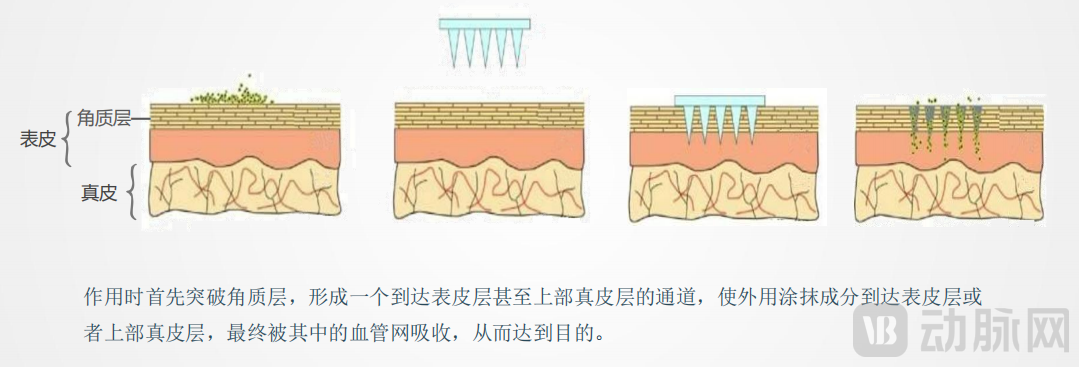
Furthermore, due to the viscoelastic properties of the skin, the microchannels created by “nano-crystal” treatment achieve “self-closure” within 20–30 minutes. Compared with conventional microneedling, this approach causes less tissue injury and enables faster recovery, thereby achieving true"Non-invasive Microneedling"。
This feature helps improve medication comfort and enhance adherence to injectable therapies for patients requiring long-term injections. For instance, diabetic patients who need frequent, long-term insulin injections may suffer significant skin damage from traditional injection methods, potentially leading to psychological resistance and reduced adherence over time. In contrast, painless microneedle-based transdermal drug delivery causes neither pain nor skin injury, substantially improving the patient experience and boosting medication adherence.
Dr. Xu Bai told VCBeat’s Orange Bureau: “In addition to insulin, NanoCrystal can be used in the transdermal delivery of small molecules, biologics, vaccines, DNA/RNA, and other areas.”In the future, we will continue to develop the applications of nanocrystals in the medical field.。”
“NanoCrystal 4.0” is the result of industry-academia-research collaboration
If the updates of the first three generations of Nacryl represented self-upgrades, then the 4.0 upgrade was achieved based on market feedback, particularly from pharmaceutical companies and clinical needs.
A patient experienced skin discomfort after using nanocrystals. Investigation revealed two primary causes for the adverse reaction. First, in pursuit of enhanced efficacy, the patient extended the application duration to ten times the recommended period. Second, impurities present in the active ingredients were delivered into the deeper layers of the skin via the nanocrystals, triggering an adverse response.
This case made Dr. Xu Bai realize the importance of selectively excluding allergenic ingredients and controlling the delivery dosage—nanocrystals need to be iterated and updated to further addressLocalization, Layering, and QuantificationIssues with drug administration.
“Even ‘novices’ without professional expertise can operate it; only such products can be considered truly user-friendly,” stated Dr. Xu Bai. He believes that if NanoCrystal technology were limited to use by professionals, its greatest advantage—non-invasive microneedling—would fail to be fully realized.
This story also featured in Dr. Xu Bai’s case presentations. During a lecture, a researcher from the Chinese Academy of Sciences approached him, and they engaged in extensive discussions on the concepts and visions surrounding microneedle injection and transdermal microneedles. They decided to jointly investigate the functionality of nanocrystal-assisted targeted delivery into the dermis. One year later, with support from China’s National 863 Key Special Project and through industry–academia–research collaboration, Nasen Microelectronics successfully addressed the issue of cortical targeting with microneedles and introduced additional “targeted positioning and precise dosing” capabilities, giving rise to Nanocrystal 4.0.
“Najing 4.0” Launches: Precise Control of Drug Delivery via Targeted Positioning, Layering, and Dosage
Najing 4.0 represents the most significant upgrade in the Najing series, incorporating features absent from the first three generations.Positioning Patch and Drug-Administration PatchDesign and implementation of precise drug delivery.
First, the positioning patch determinesContact Surface for Dermal Administration. Some medications for treating skin conditions can be irritating and have side effects on the skin. During treatment, patients with skin diseases need to apply medication precisely to the affected areas in order to minimize adverse effects on healthy skin.
At this point, the positioning patch can play a significant role. Patients only need to apply the positioning patch to the skin at the affected area to precisely control the drug delivery points of the nanocrystals, avoiding the all-around drug administration typical of conventional microneedles.
Secondly, the skin is divided into five layers from the inside out, and different drugs require"Tailor-Made"Optimal efficacy is achieved only when targeting different skin layers. When delivering drugs to various cortical layers, users can select nano-crystal chips of different models according to their specific needs, enabling precise control of delivery through the skin-contact points. The Nano-Crystal 4.0 system facilitates three-dimensional, precision drug administration starting from the epidermis and reaching the dermis, thereby maximizing therapeutic effectiveness.
Finally, the dosage of the drug is also critical. Unlike traditional injections, nanocrystals utilize"Non-injection"method of administration, allowing the drug to be absorbed transdermally through millions of channels. Therefore, both the dosage and concentration of drugs delivered via "nanocrystals" need to be redefined.
Whereas Nacell 4.0 relies solely onDrug-Administering PatchThis issue was easily resolved. Since the vibration frequency of the nanocrystal infusion device has been optimized through multiple clinical trials, users can control the amount of drug delivered simply by adjusting the duration of contact between the device and the skin.
In addition, Dr. Xu Bai has determined the optimal drug concentration for microneedle patches based on skin drug resistance, thereby enabling more precise control of drug delivery per unit time.Infiltration Volume。
Dr. Xu Bai told VCBeat’s Orange Fruit Bureau: “Nanocrystal 4.0 is an upgrade based on the previous three generations, better aligned with clinical needs. Current clinical data show that,”4.0 version has an allergy rate of less than one in ten thousand。”
The Most Challenging Aspect of Industry-Academia-Research Collaboration Is Achieving Balance
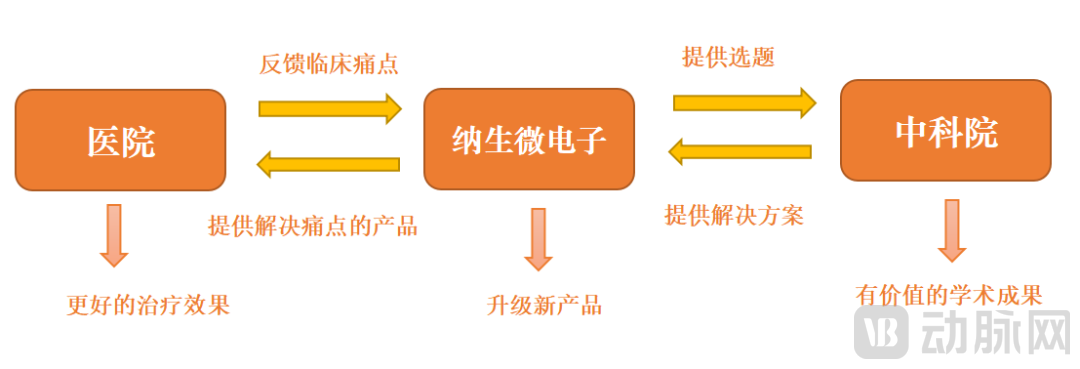
“"The most challenging aspect of industry-academia-research collaboration is achieving balance."“This is Dr. Xu Bai’s deepest insight.”
For researchers, publishing high-impact papers is a crucial task for demonstrating academic achievements. Similarly, researchers excel in foundational, frontier research. For enterprises, however, only products that align with market demands and address clinical pain points hold market potential. Highly innovative scientific achievements can realize their value only when they are transformed from “papers” into “products.” Researchers are well-versed in scientific inquiry, while enterprises are attuned to the market; both parties must find balance within their respective roles to successfully achieve the translation of technological achievements.
“In simple terms, everyone performs their respective duties and reaps their corresponding rewards,” he concluded.
Dr. Xu Bai explicitly stated that NanoCrystal 4.0 is by no means the end of the NanoCrystal series. Future upgrades will continue to enhance the technology, enabling microneedles to unlock greater potential in integrated clinical sampling and diagnosis/treatment, thereby giving rise to subsequent product lines such as NanoCrystal 5.0, 6.0, and beyond. Dr. Xu expressed strong confidence in this trajectory, noting that Nascient Microelectronics boasts a multidisciplinary team of experts spanning medicine, pharmacy, physics, chemistry, materials science, and engineering, along with extensive experience in navigating regulatory approval pathways for novel medical products in both China and the United States.
Meanwhile, Nasheng Microelectronics has established close ties with research institutes and hospitals such as the Chinese Academy of Sciences, Harvard Medical School, the University of California, Davis, Stanford University, Shanghai Ninth People’s Hospital, Huashan Hospital, Beijing 301 Hospital, and Jiangsu Province People’s Hospital. Nasheng Microelectronics’Collaboration among industry, academia, and research institutions, as well as technological upgrades, will continue.